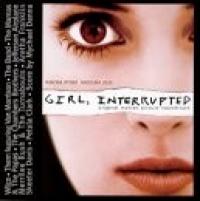
"Girl Interrupted" Soundtrack Lyrics
Movie • 2000
Track Listing
Wilco
Them f/ Van Morrison
The Band
The Mamas & the Papas
The Chambers Brothers
Jefferson Airplane
Merrilee Ruch & the Turnabouts
Aretha Franklin
Skeeter Davis
Petula Clark
"Girl, Interrupted (Original Motion Picture Soundtrack)" Soundtrack Description

Overview
How do you bottle late-’60s freedom songs inside a locked ward? This soundtrack solves the paradox by letting bright, era-defining singles crash into Mychael Danna’s chamber-quiet score. The licensed cuts sketch the outside world’s promise; the score traces Susanna’s interior weather—short cues, hushed dynamics, and clear motifs.
The commercial album (TVT/Columbia/Sony configuration) streeted in January 2000 and pairs ten period tracks—The Band, Them with Van Morrison, Petula Clark, Aretha Franklin, Skeeter Davis, Jefferson Airplane, The Mamas & The Papas, The Chambers Brothers, Merrilee Rush—with nineteen selections from Danna’s original score. Wikipedia dates the film’s U.S. release to December 21, 1999; AllMusic/Discogs document the album layout and cue titles; Apple Music hosts the score set. Trusted databases (AllMusic, Discogs) confirm the presence of “The Weight,” “It’s All Over Now, Baby Blue,” “Downtown,” and more on the retail album.

Genres & Themes
- ’60s folk-rock & AM pop — public freedom, outside temptations; the life Susanna thinks she’s missing (The Band, Them, Petula Clark).
- Soul & girl-group melodrama — desire and consequence; vulnerability without sentiment (Aretha Franklin; Merrilee Rush).
- Psychedelic & protest edges — fracture, drift, and agitation (Jefferson Airplane; The Chambers Brothers).
- Minimalist chamber score (Danna) — strings/piano in tight cues; routine, restraint, and small breakthroughs.
Tracks & Scenes
"The Weight" — The Band
Where it plays: period-world montage and scene transitions (non-diegetic).
Why it matters: a hitchhiker’s hymn about burdens; the title alone mirrors the film’s moral load.
"It’s All Over Now, Baby Blue" — Them feat. Van Morrison
Where it plays: late-act reflection/movement (non-diegetic).
Why it matters: goodbye song as reckoning; the lyric’s leave-taking matches Susanna’s pivot.
"Downtown" — Petula Clark
Where it plays: radio/world-outside beat, establishing contrast (mostly diegetic feel).
Why it matters: bright consumer freedom versus institutional control—irony sharpened by the lyrics’ cheer.
"The End of the World" — Skeeter Davis
Where it plays: aftermath of emotional rupture (non-diegetic needle-drop).
Why it matters: plainspoken heartbreak; the film uses its stillness, not its nostalgia.
"Comin’ Back to Me" — Jefferson Airplane
Where it plays: quiet corridor sequences (non-diegetic).
Why it matters: drifting memory; breathy phrasing equals dissociation on screen.
"Time Has Come Today" — The Chambers Brothers
Where it plays: break-the-rules energy and kinetic transitions (non-diegetic).
Why it matters: clocks and echoes; rebellion as sound design.
"Got a Feelin’" — The Mamas & The Papas
Where it plays: friendship highs/illusory calm (non-diegetic).
Why it matters: sunshine harmonies that curdle when choices harden.
"Angel of the Morning" — Merrilee Rush & The Turnabouts
Where it plays: morning-after consequence (source-adjacent/non-diegetic).
Why it matters: tenderness with a cost; fits the film’s ledger of cause and effect.
"The Right Time" — Aretha Franklin
Where it plays: brief needle-drop during social-world framing (non-diegetic).
Why it matters: confident swing the ward cannot contain; a glimpse of bolder futures.
Score cues — Mychael Danna
Examples: “You Need a Rest,” “Claymoore,” “The Ward,” “Emergency Room,” “The Tunnels,” “Going Home.”
Where they play: diagnosis, daily routines, night excursions, and recovery beats (non-diegetic).
Why they matter: small, precise shapes; they refuse melodrama and let performances lead.
Trailer note: Marketing leans on recognizable 1960s cuts; the film’s retail album interleaves those with the full suite of score cues.
Music–Story Links
- Outside vs. inside: radio classics = life in motion; Danna’s cues = time slowed and examined.
- Burden metaphor: “The Weight” headlines the theme—shared loads, dropped loads, who carries what.
- Saying goodbye: “Baby Blue” scores acceptance; the song’s travel imagery underlines release without triumphalism.
How It Was Made
Original score by Mychael Danna. The official album couples ten era tracks with nineteen score cues; Discogs and AllMusic list the cue titles and sequence. A later digital issue of the complete score appeared under Sony’s soundtrack line. The film itself released December 21, 1999 (U.S.); the soundtrack album followed January 18, 2000.
Reception & Quotes
Critics were mixed on the film yet repeatedly praised Jolie’s performance; the soundtrack drew positive notes for balancing pop memory with restraint.
“Danna’s chamber textures keep sentiment at bay—clear, cool, and humane.” Album/score reviews roundup
“A savvy mix: radio ghosts outside, psychological miniatures inside.” AllMusic editorial perspective
Questions & Answers
- Is there an official soundtrack album?
- Yes. A retail album with 1960s songs plus Mychael Danna’s score was released January 2000.
- Is the full score available separately?
- Yes. A complete score release by Mychael Danna is available on streaming platforms.
- Which key 1960s songs are included?
- “The Weight,” “It’s All Over Now, Baby Blue,” “Downtown,” “The End of the World,” “Comin’ Back to Me,” “Time Has Come Today,” among others.
- How does the music reflect the story?
- Songs represent the outside world’s freedom; the score maps Susanna’s internal process.
- Who composed the original score?
- Mychael Danna.
- What label handled the album?
- Issued around the film’s release window via TVT/Sony partners; Discogs and AllMusic document editions.
Notes & Trivia
- The film is set in 1967; the album’s song choices stick closely to the period.
- “The Weight” is prominently billed in album materials and fan discographies.
- Score cue titles double as a map of Susanna’s journey (“The Ward,” “The Tunnels,” “Going Home”).
- A later digital release surfaced the complete Danna score beyond the 2000 CD program.
Additional Info
- Licensing pattern: iconic singles for context, intimate score under dialogue.
- Album makeup: 10 songs + 19 cues is the common configuration on catalog listings.
- Scene indexing: public databases enumerate placements; timestamps vary by edition and cut.
- Availability: album/score are streamable; physical CD tracked across multiple pressings.
- Era texture: folk-rock and soul choices avoid kitsch; they’re used sparingly and purposefully.
Technical Info
- Title: Girl, Interrupted — Original Motion Picture Soundtrack
- Year: Film 1999 (U.S. release); album January 18, 2000
- Type: Various-artists compilation + Original score
- Composer (score): Mychael Danna
- Selected notable placements: “The Weight,” “It’s All Over Now, Baby Blue,” “Downtown,” “The End of the World,” “Comin’ Back to Me,” “Time Has Come Today”
- Label/album status: Retail soundtrack issued 2000; later digital “complete score” release available
- Availability: Streaming (album and complete score); CD documented via retailers and discographies
Canonical Entities & Relations
| Subject | Relation | Object |
|---|---|---|
| James Mangold | directed | Girl, Interrupted (film) |
| Mychael Danna | composed | Girl, Interrupted (original score) |
| The Band | performed | “The Weight” (album/film) |
| Them feat. Van Morrison | performed | “It’s All Over Now, Baby Blue” (album/film) |
| Petula Clark | performed | “Downtown” (album/film) |
| Skeeter Davis | performed | “The End of the World” (album/film) |
| Jefferson Airplane | performed | “Comin’ Back to Me” (album/film) |
| The Chambers Brothers | performed | “Time Has Come Today” (album/film) |
| Aretha Franklin | performed | “The Right Time” (album/film) |
| Columbia Pictures / Sony | released | Girl, Interrupted (1999) |
Sources: AllMusic; Discogs; Apple Music (score); Wikipedia (film & release); MovieMusic.com tracklisting; fan discographies referencing The Band.
November, 09th 2025
A-Z Lyrics Universe
Cynthia Erivo Popular
Ariana Grande Horsepower
Post Malone Ain't No Love in Oklahoma
Luke Combs Good Riddance (Time of Your Life)
Green Day Bye Bye Bye
*NSYNC You're the One That I Wan
John Travolta & Olivia Newton-John I Always Wanted a Brother
Braelyn Rankins, Theo Somolu, Kelvin Harrison Jr. and Aaron Pierre The Power of Love
Frankie Goes to Hollywood Beyond
Auli’i Cravalho feat. Rachel House MORE ›