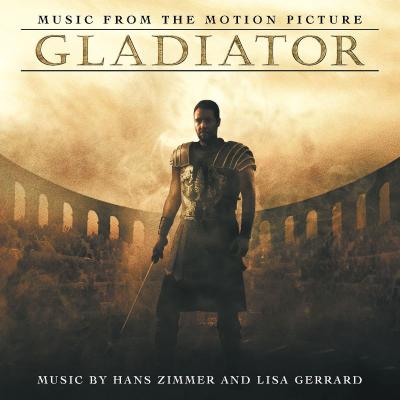
"Gladiator" Soundtrack Lyrics
Movie • 2000
Track Listing
Lisa Gerrard
"Gladiator: Music From the Motion Picture" Soundtrack Description
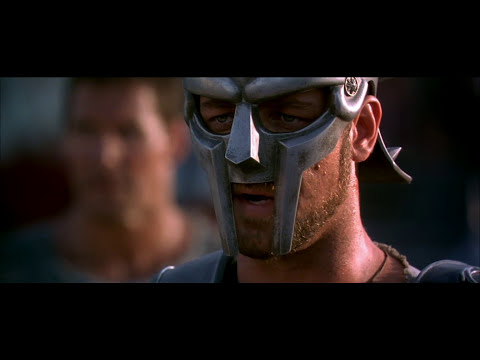
Overview
How do you score grief, glory, and a crowd of fifty thousand? Hans Zimmer and Lisa Gerrard answer with a two-language system: iron and air. Brass-and-taiko weight for empire; voice and duduk for memory and mercy. The album plays like a journey—Germania to Elysium—rather than a cue dump.
The first album, Gladiator: Music From the Motion Picture (Decca, 2000), is a 61-minute suite built from core themes (“The Battle,” “The Might of Rome,” “Now We Are Free”). A companion disc, More Music from the Motion Picture (2001), expands with additional cues/edits (“Duduk of the North,” “Barbarian Horde,” “Busy Little Bee”). Later digital editions add anniversary materials. Credits across label and databases confirm Zimmer and Gerrard as composers, with the Lyndhurst Orchestra conducted by Gavin Greenaway.
Genres & Themes
- Hybrid orchestral (Zimmer) — low ostinatos, brass blocks, and taiko accents = imperial machinery; action cues run long and architectural.
- Vocal/ambient (Gerrard) — idioglossic vocals and modal drones = remembrance, home, and Elysium; human-scale counterweight to spectacle.
- Ethnic color — duduk and frame drums paint distance (Zucchabar, the desert) without pastiche.
- Motivic economy — three nuclei (home, Rome, fate) recur, evolving from brutality to benediction.
Tracks & Scenes
"The Wheat" → "The Battle" — Zimmer
Where it plays: prologue in the wheat fields into the Germania onslaught; non-diegetic.
Why it matters: the entire dialect in one arc—pastoral memory crushed by mechanized war.
"The Might of Rome" — Zimmer
Where it plays: arrival and spectacle in Rome; non-diegetic.
Why it matters: pomp without warmth; power scored as geometry.
"Strength and Honor" — Zimmer
Where it plays: camp camaraderie and Maximus’s code; non-diegetic.
Why it matters: the score’s moral north—noble, restrained, unsentimental.
"Earth" / "Sorrow" — Zimmer
Where it plays: aftermath of the farm massacre; non-diegetic.
Why it matters: strings as lament; time briefly stops.
"To Zucchabar" — Zimmer
Where it plays: transport and sale; non-diegetic with duduk color.
Why it matters: sonic exile; the world goes dry and distant.
"Barbarian Horde" — Zimmer
Where it plays: first major Colosseum victory; non-diegetic.
Why it matters: ten-minute engine; crowd noise becomes instrumentation.
"The Emperor Is Dead" / "Patricide" — Zimmer, Gerrard, Badelt
Where it plays: the palace turning point; non-diegetic.
Why it matters: dread without melodrama; harmony tilts colder.
"The Protector of Rome" — Zimmer
Where it plays: political chess beats; non-diegetic.
Why it matters: slow chords = weight of office without virtue.
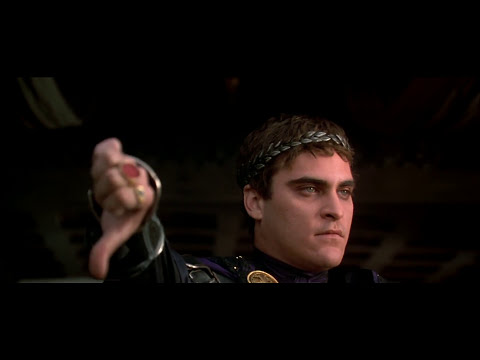
"Busy Little Bee" — dialogue feature
Where it plays: Commodus/Lucilla exchange (album edit with spoken lines).
Why it matters: character psychology on-record; rare inclusion of dialogue as design.
"Am I Not Merciful?" — Zimmer
Where it plays: Commodus’s confrontation with Lucilla; non-diegetic.
Why it matters: one of the era’s great slow-burns; menace wrapped in ceremony.
"Elysium" / "Honor Him" — Zimmer & Gerrard
Where it plays: final passage; non-diegetic.
Why it matters: the home motif returns as benediction—farewell without triumph.
"Now We Are Free" — Zimmer & Gerrard
Where it plays: end titles (film/album); non-diegetic vocal.
Why it matters: Gerrard’s voice (non-lexical/idioglossic) reframes victory as release, not conquest.
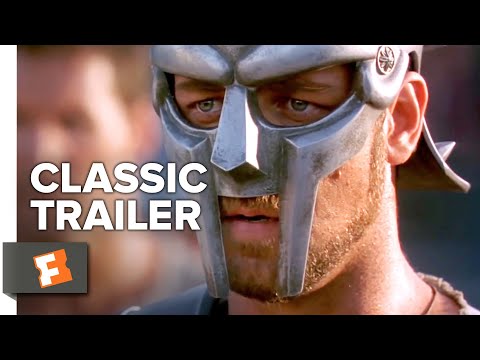
Trailer cues: marketing leaned on album highlights (“The Battle,” “Barbarian Horde,” and the closing vocal).
Music–Story Links
- Empire vs. home: martial ostinatos grind forward; wheat-field strings look back. The plot keeps choosing between them.
- Voice as memory: Gerrard’s timbre appears at losses and thresholds; the body remembers what the state erases.
- Public noise/private truth: arenas roar in percussion; decisive moral beats arrive in near-silence.
How It Was Made
Composers: Hans Zimmer & Lisa Gerrard. Orchestrations/conducting by Gavin Greenaway; performance by the Lyndhurst Orchestra. The two-album configuration (2000 Decca original; 2001 “More Music”) reflects Ridley Scott’s preference for long-form suites over strict cue-by-cue chronology. Official discographies and label notes confirm cue architecture (“The Battle,” “Barbarian Horde,” “Am I Not Merciful?”) and later expanded/anniversary editions.
Reception & Quotes
Industry recognition and long-tail critical praise cemented the score’s canon status.
“The centrepieces… ‘The Battle’ and ‘Barbarian Horde’… rampant, full-blooded sonic assaults.” MovieMusicUK
“Zimmer’s iconic Gladiator score… serene vocals (Gerrard) and memorable themes.” Contemporary soundtrack review summaries
The album won the Golden Globe for Best Original Score and received Oscar/BAFTA nominations.
Questions & Answers
- How many official albums are there?
- Two core releases: Gladiator: Music From the Motion Picture (2000) and More Music… (2001). Anniversary/expanded editions followed digitally and on CD.
- Who actually sings “Now We Are Free,” and in what language?
- Lisa Gerrard; the vocal is non-lexical/idioglossic—phonetic, not a single fixed language.
- What cues score the opening battle and the first arena victory?
- “The Battle” (Germania) and “Barbarian Horde” (Colosseum).
- Is “Am I Not Merciful?” in the film or only on album?
- In the film (Lucilla confrontation) and on album; it’s one of the signature slow-burns.
- Are there diegetic songs?
- Virtually none—chants and crowd percussion aside, the music is score-driven.
- Did the score win awards?
- Yes: Golden Globe win; Oscar and BAFTA nominations for Best Original Score.
Notes & Trivia
- The 2000 album runs ~61:31; the 2001 companion adds alternates/edits and dialogue features.
- Zimmer’s low-ostinato action design from “The Battle” influenced a decade of blockbuster scoring.
- “Busy Little Bee” uniquely includes dialogue from Connie Nielsen and Russell Crowe on the album.
- The home motif is harmonically simple by design, to survive repeat transformations from field to arena to afterlife.
- Later anniversary editions (digital and CD) collect additional material and mixes beyond the original Decca disc.
Additional Info
- Companion/expanded: More Music from the Motion Picture (2001) plus later anniversary digital sets; a multi-disc expansion appeared in 2025 via specialty label.
- Verification: label pages and discographies list cue names, personnel, and catalog numbers; retailer pages provide full sequences.
- Trailer: widely circulated 2000 trailers use album highlights; modern uploads preserve the audio edits.
- Listening tip: play “The Wheat → The Battle” as a single arc; end with “Elysium/Now We Are Free” for the intended symmetry.
Technical Info
- Title: Gladiator: Music From the Motion Picture
- Year: 2000 (album / film release)
- Type: Original score with vocal features
- Composers: Hans Zimmer & Lisa Gerrard
- Orchestra/Conductor: Lyndhurst Orchestra / Gavin Greenaway
- Label(s): Decca (2000); companion More Music… in 2001; later anniversary/expanded editions
- Selected notable placements: “The Battle,” “Barbarian Horde,” “The Might of Rome,” “Am I Not Merciful?,” “Elysium,” “Now We Are Free”
Canonical Entities & Relations
| Subject | Relation | Object |
|---|---|---|
| Ridley Scott | directed | Gladiator (2000 film) |
| Hans Zimmer | composed | Gladiator score |
| Lisa Gerrard | co-composed & performed vocals | Gladiator score |
| Gavin Greenaway | conducted | Lyndhurst Orchestra (album sessions) |
| Decca Records | released | Gladiator: Music From the Motion Picture (2000) |
| Decca/UMG | released | More Music from the Motion Picture Gladiator (2001) and later digital editions |
Sources: Wikipedia (album & credits); Discogs (tracklists & editions); Apple Music / Spotify (companion album & mixes); MovieMusicUK (contemporary review); Hans-Zimmer.com project notes; YouTube/Movieclips Classic Trailers (trailer ID).
November, 09th 2025
A-Z Lyrics Universe
Cynthia Erivo Popular
Ariana Grande Horsepower
Post Malone Ain't No Love in Oklahoma
Luke Combs Good Riddance (Time of Your Life)
Green Day Bye Bye Bye
*NSYNC You're the One That I Wan
John Travolta & Olivia Newton-John I Always Wanted a Brother
Braelyn Rankins, Theo Somolu, Kelvin Harrison Jr. and Aaron Pierre The Power of Love
Frankie Goes to Hollywood Beyond
Auli’i Cravalho feat. Rachel House MORE ›