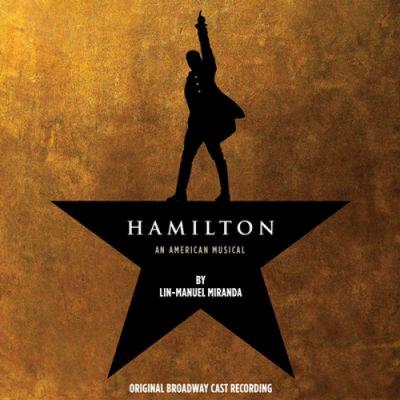
"Hamilton" Soundtrack Lyrics
Musical • 2015
Track Listing
"Hamilton: An American Musical (Original Broadway Cast Recording)" – Album Guide to Tracks and Key Scenes
Overview
How do you tell the life story of a founding father with 46 tracks of hip hop, R&B, and show tunes — and still leave people feeling like it ended too soon? The original Hamilton cast album answers that question by turning biography into a concept album that plays like a history book in motion.
The recording follows Alexander Hamilton from his brutal Caribbean childhood to his fatal duel with Aaron Burr, with the album structured almost exactly like the stage show. Aaron Burr acts as a narrator and rival, the Schuyler sisters frame Hamilton’s emotional life, and George Washington, Jefferson, Lafayette and others orbit his rise and fall. You can listen straight through without ever seeing the stage and still follow the plot: immigration, revolution, nation-building, scandal, grief, and legacy.
Across two discs, the mood keeps shifting: swaggering ambition in “My Shot,” romantic rush in “Helpless,” forensic regret in “Satisfied,” political hunger in “The Room Where It Happens,” quiet devastation in “It’s Quiet Uptown,” and finally the question of who controls the story in “Who Lives, Who Dies, Who Tells Your Story.” The album does narrative work that most cast recordings leave to dialogue — there is almost no spoken text, so songs carry exposition, character development, and time jumps.
Stylistically, the album moves in phases. Early tracks lean on dense 90s-style hip hop and street-corner cypher energy for Hamilton and his revolutionary friends; British monarchy appears through knowingly retro Brit-pop pastiche; cabinet meetings become battle-rap; and the later political and family tragedies pivot into soul and piano-led ballads. Hip hop signals hunger and argument, R&B and pop mark intimacy and vulnerability, and more traditional show-tune colors often underline public performance and political polish.
How It Was Made
The cast album was recorded in August 2015 in New York, just as the Broadway production exploded from downtown phenomenon to global talking point. Lin-Manuel Miranda wrote the music, lyrics and book, with long-time collaborators Alex Lacamoire and Bill Sherman producing alongside Questlove and Black Thought from The Roots, who also served as executive producers. The band tracked at Avatar Studios and Invictus Sound, capturing a 10-piece pit orchestra that already blended live strings, horns, and rhythm section with programmed elements.
“My Shot” became a kind of thesis statement and a technical challenge: the track took roughly a year to finish lyrically, because Miranda packed it with internal rhymes, historical references, and foreshadowing. The team also built in subtle interpolations of hip hop classics and earlier musical-theatre works throughout the score, clearing rights and adjusting arrangements so a Broadway cast album could legally and musically sit next to rap records.
On the production side, Lacamoire’s orchestrations were designed to survive both live performance and close-mic studio scrutiny. Record-scratch effects, the “rewind” sonics in “Satisfied,” and several drum loops were programmed in software but then matched or doubled by live players to keep the groove organic. According to the show’s companion book and lighting and sound interviews, the creative team wanted the album to feel like a coherent studio project, not just an archival capture of a stage show.
The cast recorded mostly in show order, which helped preserve emotional arcs and vocal wear — Hamilton sounds more frayed as the story progresses, Burr tightens, Eliza’s tone darkens. Vocal layering is heavier than onstage: choruses are doubled, ad-libs are clearer, and some ensemble details that can disappear in the theatre mix are foregrounded on the record.
Tracks & Scenes
Below are key songs from the original Broadway cast recording as heard in the stage musical and the filmed version on Disney+. Timestamps refer to the Disney+ cut of the show, but the musical moments match what you hear on the album.
“Alexander Hamilton” — Original Broadway Cast
Where it plays: Opening number, around 00:01:06 on the film. Burr steps forward in a bare stage tableau and calmly asks how a “bastard, orphan, son of a whore” became a founding father. One by one, the future rivals and allies introduce themselves and their relationship to Hamilton, as the turntable brings the young immigrant into view. The staging is almost presentational — characters stop the story to explain the past, then snap into the present by the final chorus.
Why it matters: It functions as an overture and a thesis. Musically it sets the hip hop vocabulary, and dramatically it tells you the end of the story in the first five minutes while inviting you to care about the “how.”
“My Shot” — Lin-Manuel Miranda and Company
Where it plays: Early in Act I, about 00:07:42. In a New York tavern, Hamilton meets Laurens, Lafayette, and Mulligan. Over a build from piano vamp to full-band anthem, he freestyles his manifesto. The scene jumps between bar banter, imagined battlefield, and internal monologue, with the ensemble echoing and mocking his lines. Choreography uses the turntable to spin him toward the center as he wins the room over.
Why it matters: This is Hamilton’s mission statement. The lyric density mirrors his overclocked brain, and the recurring “I am not throwing away my shot” hook tracks his ambition through triumphs and disasters later in the show.
“The Schuyler Sisters” — Phillipa Soo, Renée Elise Goldsberry, Jasmine Cephas Jones
Where it plays: Act I, roughly 00:15:12. Angelica, Eliza, and Peggy stroll through Revolutionary-era New York, flirting with the idea of revolution and with soldiers on the street. The song is staged almost like a girl-group number, with tight harmonies, strutting choreography, and passersby reacting to their swagger. Shots of bustling city life frame the sisters as socially and intellectually ahead of their time.
Why it matters: Stylistically, it fuses Motown girl-group gloss with modern pop, marking the sisters as a separate force from the male revolutionaries. Lyrically, Angelica’s lines about “common sense” and equality foreshadow her later conflict in “Satisfied.”
“You’ll Be Back” — Jonathan Groff
Where it plays: Act I, around 00:20:14. King George III appears alone onstage, framed like a solo pop star under royal lighting, to deliver a breakup song to the colonies. The camera (in the film) and the staging (in the theatre) mostly lock off on him, letting his precise, comic delivery land as he coos threats of violence over a Beatles-style groove.
Why it matters: The track shows how the album uses pastiche. The British Invasion arrangement underscores the irony: the most “traditional” pop song in the score belongs to the character least able to adapt.
“Satisfied” — Renée Elise Goldsberry and Company
Where it plays: Act I wedding sequence, about 00:34:59. We begin at Hamilton and Eliza’s reception, where Angelica gives a toast over a gentle groove. Suddenly the orchestra “rewinds” — lights, ensemble choreography, and staging literally reverse — and we relive the previous song’s events from Angelica’s point of view. The camera circles her through slow-motion and freeze-frame tableaux as she calculates class, gender, and family obligations in real time.
Why it matters: It is one of the album’s most technically demanding tracks and a masterclass in narrative song: rapid-fire rap, belted climaxes, and a structural rewind that recontextualizes what we thought we knew from “Helpless.” Many critics and cast members single it out as a showstopper.
“Wait For It” — Leslie Odom Jr. and Company
Where it plays: Late in Act I, around 00:42:36. Burr rides a ferry and contemplates Hamilton’s reckless drive against his own cautious philosophy. Staging is spare: the ensemble becomes both the crowd and his inner echo, pulsing in place as lights tighten around him. Each verse peels back another layer of Burr’s envy, fear, and self-justification until the final, swelling refrain.
Why it matters: The song reframes Burr from villain to tragic mirror. Harmonically it leans into modern R&B, and the triplet rhythm under the chorus suggests a heartbeat that never settles. Miranda has publicly called it one of the songs he is proudest of.
“Yorktown (The World Turned Upside Down)” — Company
Where it plays: Near the end of Act I, around 00:58:44. This is the Battle of Yorktown staged as a rap-driven war montage. The ensemble shifts from soldiers to background vocalists, muskets become dance props, and the turntable spins through battlefield positions as Hamilton narrates the decisive victory. When the chorus declares “the world turned upside down,” choreography literally inverts lines and levels onstage.
Why it matters: The track is a culmination of Act I’s revolutionary arc, sonically blending hip hop with fife-and-drum gestures. On the album it plays like a final-boss level before intermission.
“Non-Stop” — Original Broadway Cast
Where it plays: Act I closer at about 01:08:59. Post-war Hamilton juggles courtroom victories, Federalist Papers, and Washington’s offer to make him Secretary of the Treasury. Musical motifs from earlier songs crash into each other; Burr, Eliza, Washington, and Angelica all return with their themes layered over Hamilton’s, as if his past decisions are shouting at him.
Why it matters: Structurally, it is a recap and a launchpad. The overlapping reprises show how much he has already sacrificed, and the relentless beat underlines that he has no off switch — something that will cost him later.
“The Room Where It Happens” — Leslie Odom Jr. and Company
Where it plays: Act II, about 01:33:30. Burr narrates the back-room Compromise of 1790 from the outside, watching Hamilton, Jefferson, and Madison dine without him. The choreography leans into jazz club and vaudeville moves, the set narrows into a smoky, abstract “room,” and the ensemble becomes shadows and whispers as Burr works himself into a frenzy over being excluded.
Why it matters: This is Burr’s turning point. The number fuses Dixieland and Broadway razzle-dazzle over a ticking groove, capturing his decision to abandon caution and chase power at any cost.
“It’s Quiet Uptown” — Christopher Jackson, Phillipa Soo, Company
Where it plays: Act II, roughly 02:09:52. After their son’s death, Hamilton and Eliza walk the city in mourning while the ensemble, led by Washington, narrates their grief. The staging strips away spectacle: minimal movement, muted lighting, a city that seems to recede behind them. When Eliza finally reaches for Hamilton’s hand, it lands with almost shocking weight in both the theatre and on the album.
Why it matters: Musically, the song pulls back into hymn-like simplicity. It is one of the few places where the album lingers in stillness, and it balances the show’s bravado with genuine lament.
“Who Lives, Who Dies, Who Tells Your Story” — Company
Where it plays: Finale, around 02:27:12. After Hamilton’s death in “The World Was Wide Enough,” the company steps out of specific time to ask what survives. Eliza lists her projects — the orphanage, the stories she collects — while other characters admit what they left out. The final moments center on her, not Alexander, as the music resolves and the lights hang on a silent intake of breath.
Why it matters: The final track reframes the entire album as Eliza’s act of curation. It is a quiet thesis about archival labor, who gets remembered, and how the cast album itself participates in telling the story.
Promotional trailers for the filmed version of Hamilton mostly cut together hooks from these high-energy numbers, especially the opening and Act I anthems, rather than bringing in outside pop songs. The album essentially is the marketing soundtrack.
Notes & Trivia
- “My Shot” reportedly took about a year to write, making it one of Miranda’s most painstakingly crafted songs in the score.
- The cast album omits one brief scene known as “Laurens’ Interlude” (“Tomorrow There’ll Be More of Us”), a deliberate choice to keep the set focused and listenable.
- Several tracks interpolate or allude to hip hop staples like “Shook Ones Pt. II,” “Ten Crack Commandments,” and “The Message,” alongside show-tune references from South Pacific and The Pirates of Penzance.
- The “rewind” sound in “Satisfied” was built with digital tools but then mimicked and colored by the live band to keep it grounded in the pit orchestra’s palette.
- The Disney+ film uses the same core band and arrangements as the album, so many listeners describe it as watching the record come to life rather than a separate adaptation.
- The album exists in explicit and “clean” editions; the latter mutes or replaces certain expletives without altering structure.
- Hamilton: The Mixtape later reimagined many of these songs with pop and hip hop artists, confirming how album-like the original cast recording already felt.
Music–Story Links
Because almost every line on the Hamilton album is sung or rapped, you can trace character arcs purely through recurring musical ideas. “Alexander Hamilton” introduces motifs that come back in “Non-Stop” and the finale, as if the opening track keeps haunting the story. Burr’s “Wait For It” groove and rhythmic language return in “The Room Where It Happens” and “Your Obedient Servant,” each time a little more jagged, showing how his patience curdles into ambition and then resentment.
Angelica’s verbal acrobatics in “The Schuyler Sisters” flower into the mental chess of “Satisfied,” where her love for Hamilton collides with her loyalty to Eliza. Musically, the same melodic phrases reappear but under different harmonies, mirroring the way memory reframes a moment. Eliza’s material works the opposite way: she starts in bright, open melodies (“Helpless”), and by “Burn” and “It’s Quiet Uptown” those intervals narrow, almost hiding inside the accompaniment, until the finale gives her back a wider, steadier line.
Washington’s authority is underscored by his harmonic grounding. Songs he anchors — “Right Hand Man,” “History Has Its Eyes on You,” “One Last Time” — often pivot the tonal center of the album. When he exits the story, the soundscape tilts toward more unstable harmonies, underlining a country and a protagonist without their father figure.
Even the interpolated snippets carry narrative weight. The “Ten Duel Commandments” motif grows from a tutorial on dueling etiquette into a full tragic frame for both the Laurens and Hamilton duels, turning a clever reference into a structural device. And King George’s three reprises quietly mark each phase of the new nation’s relationship with power, his jaunty pop tunes souring in subtext as the republic starts to resemble the monarchy it escaped.
Reception & Quotes
On release, the original Broadway cast recording was treated less like a niche theatre artifact and more like a major album drop. It debuted high on the Billboard 200, topped the Broadway and Rap charts, and eventually sold enough to be certified Diamond in the United States — the first cast recording ever to do so. In 2025 it was added to the U.S. National Recording Registry as a work of “cultural, historical, or aesthetic significance.”
Critics from music and theatre outlets converged on the same point: the album works even if you never see the stage. Billboard praised it as a full-strength hip hop and R&B album that just happens to be a cast recording. Rolling Stone and NPR likewise singled out the lyrical density and emotional range, placing it near the top of their year-end lists according to their 2015 coverage.
“The intrinsic intellectual interest he powers up here is so impressive it’s exciting.” — Robert Christgau, writing about the cast recording
“A thrilling, genre-busting album that makes American history sound like now.” — summary of early album reviews in music press
“Hearing it live was like the live-album version of a pop spectacle — the recording already feels that big.” — teen critic reflecting on stage vs. Disney+ versions
The album won the Grammy Award for Best Musical Theater Album in 2016, with the cast performing the opening number live from the Richard Rodgers Theatre during the telecast. It has since anchored anniversary celebrations, reunion performances, and re-releases — most recently tied to the filmed version’s theatrical run.
Interesting Facts
- The album clocks in at over two hours, unusually long for a cast recording, because almost the entire show is sung through.
- It was initially previewed as a full stream on public radio’s website before its digital release, a strategy more common for indie albums than Broadway scores.
- Clean, explicit, instrumental, and highlight editions exist, making Hamilton one of the most re-packaged cast recordings of its era.
- Several songs credit rappers and producers from the 1990s as co-writers due to melodic and rhythmic interpolations, effectively embedding hip hop history into Broadway liner notes.
- The album reached the top tiers of mainstream decade-best lists, sitting alongside pop, rock, and rap projects rather than being confined to theatre categories.
- It later inspired The Hamilton Mixtape and multiple “Hamildrops,” where guest artists reworked or expanded songs — unusual for a cast-album ecosystem.
- Because the Disney+ film captures the original cast at their peak, many fans use the movie as a visual companion to the album rather than the other way around.
- The 10th-anniversary celebrations in 2025 again pushed the album up in streams, especially core tracks like “My Shot,” “Wait For It,” and “The Room Where It Happens.”
- By entering the National Recording Registry, the album now sits in the same preservation tier as classic rock, jazz, and film soundtracks, something very few Broadway albums have achieved.
Technical Info
- Title: Hamilton (Original Broadway Cast Recording)
- Year of release: 2015 (digital September 25; physical October 16)
- Type: Original Broadway cast album for the musical Hamilton: An American Musical
- Primary creator: Lin-Manuel Miranda — music, lyrics, and book
- Producers: Alex Lacamoire, Bill Sherman, Lin-Manuel Miranda; Ahmir “Questlove” Thompson and Tariq “Black Thought” Trotter as executive producers
- Studios: Avatar Studios and Invictus Sound, New York
- Core genres: Hip hop, R&B, soul, show tune, cast recording
- Length: About 142 minutes across 46 tracks
- Label: Atlantic Records (Hamilton Uptown, LLC under exclusive license)
- Key performers: Lin-Manuel Miranda, Leslie Odom Jr., Phillipa Soo, Renée Elise Goldsberry, Christopher Jackson, Daveed Diggs, Anthony Ramos, Okieriete Onaodowan, Jasmine Cephas Jones, Jonathan Groff, and original ensemble
- Notable song placements: Featured prominently in the 2020 Disney+ film of the Broadway production and in the 2025 theatrical re-release trailer campaign.
- Awards: Grammy Award for Best Musical Theater Album; Billboard Music Award for Top Soundtrack/Cast Album.
- Chart performance: Peaked in the top tier of the Billboard 200; number one on Top Rap Albums; long multi-year run on the charts.
- Certifications: RIAA Diamond in the U.S., making it the best-selling Broadway cast recording to date.
- Availability: Widely available on major streaming services (Spotify, Apple Music, YouTube Music) and on CD and vinyl; clean and explicit versions plus instrumentals exist.
Questions & Answers
- Is the Hamilton original Broadway cast album the same performance as the Disney+ film?
- No. The album was recorded in a studio over several days, while the Disney+ film captures multiple live performances at the Richard Rodgers Theatre. They share arrangements and cast, but the edits and crowd energy differ.
- Does the cast recording include the entire stage show?
- It includes almost everything sung onstage, but trims a small Laurens/Hamilton scene and some transitional dialogue. For practical album length, only key musical moments and essential recitative made the final sequence.
- Why are hip hop artists credited as writers on some Hamilton tracks?
- Several songs interpolate rhythms, melodic fragments, or structural ideas from existing hip hop tracks. Clearing those inspirations properly means crediting the original writers in the album’s liner notes.
- What is the difference between the explicit and clean versions of the album?
- The clean edition mutes or substitutes specific expletives while keeping the same track order, orchestrations, and performances. No songs are removed, but a few key words change.
- How does the cast album connect to The Hamilton Mixtape and later releases?
- The original Broadway cast recording is the source material. The Hamilton Mixtape and later “Hamildrops” invite guest artists to cover, sample, or expand songs from the album, effectively treating it like a canonized songbook.
Canonical Entities & Relations
| Subject | Relation | Object |
|---|---|---|
| Lin-Manuel Miranda | wrote and composed | Hamilton: An American Musical |
| Hamilton (Original Broadway Cast Recording) | is cast album of | Hamilton: An American Musical |
| Original Broadway Cast of Hamilton | performs on | Hamilton (Original Broadway Cast Recording) |
| Atlantic Records | released | Hamilton (Original Broadway Cast Recording) |
| Alexander Hamilton (historical figure) | is subject of | Hamilton: An American Musical |
| Richard Rodgers Theatre | hosted | original Broadway production of Hamilton |
| Leslie Odom Jr. | originated role of | Aaron Burr in Hamilton |
| Phillipa Soo | originated role of | Eliza Hamilton in Hamilton |
| Renée Elise Goldsberry | originated role of | Angelica Schuyler in Hamilton |
| Christopher Jackson | originated role of | George Washington in Hamilton |
Sources: album credits and notes; major music press reviews; public interviews with Lin-Manuel Miranda and cast; National Recording Registry announcement; Disney+ and theatrical release materials; fan-compiled timestamp resources.
November, 16th 2025
A-Z Lyrics Universe
Cynthia Erivo Popular
Ariana Grande Horsepower
Post Malone Ain't No Love in Oklahoma
Luke Combs Good Riddance (Time of Your Life)
Green Day Bye Bye Bye
*NSYNC You're the One That I Wan
John Travolta & Olivia Newton-John I Always Wanted a Brother
Braelyn Rankins, Theo Somolu, Kelvin Harrison Jr. and Aaron Pierre The Power of Love
Frankie Goes to Hollywood Beyond
Auli’i Cravalho feat. Rachel House MORE ›