Soundtracks:  A B C D E F G H I J K L M N O P Q R S T U V W X Y Z #


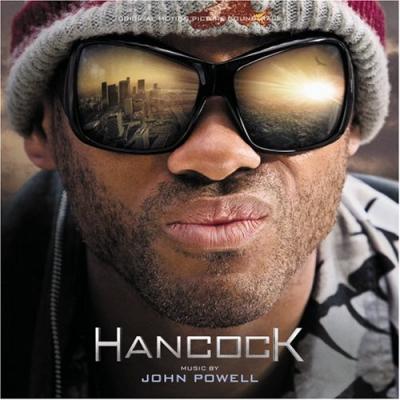
Hancock Album Cover

"Hancock" Soundtrack Lyrics

Movie • 2008

Track Listing


"Hancock (Original Motion Picture Soundtrack)" Soundtrack Description

Hancock 2008 official trailer still used to illustrate the soundtrack’s tone
Hancock – official trailer still, 2008

Overview

What happens when a superhero soundtrack starts with bar-band harmonica and swerves into crunk, prison-funk, and glossy orchestral revelation? Hancock answers with a deliberately messy musical palette that mirrors its hungover, rough-edged hero. The needle-drops lean streetwise and sardonic; the score answers with bruised lyricism and brass-powered muscle.

Composer John Powell anchors the film with a large-orchestra score that gradually sheds sarcasm for sentiment as Hancock remembers who he is. Around it, supervisor-picked cuts—J. Geils Band, Ice-T, The Meters, M.I.A., The Roots—do character work in plain sight, turning chases, PR clean-ups, and jailhouse gags into musical punchlines or pivots. Source: IMDb.

Hancock trailer frame used as a visual cue for the soundtrack overview
Hancock – trailer visual cue for the soundtrack’s tonal mix, 2008

Questions & Answers

Who composed the score?
John Powell wrote the original score; it was recorded with the Hollywood Studio Symphony and released by Varèse Sarabande.
Who handled music supervision?
George Drakoulias supervised the film’s licensed songs and clearances.
What’s the first song we hear?
“Whammer Jammer” by The J. Geils Band plays over the freeway opening, setting a rowdy, unvarnished tone.
Which track scores Hancock’s early, chaotic heroics?
Ludacris’s “Move B***h” blasts during his reckless pursuit—played partly as dark comedy.
What’s the prison cue people remember?
The Meters’ “Tippi-Toes,” and a comic beat with Quincy Jones’s “Sanford and Son Theme.”
Which song closes the film?
The end credits kick off with “Here I Come” by The Roots (edited album version).
Is M.I.A.’s “Paper Planes” in the movie?
Yes—the DFA remix appears during a restaurant arrival sequence.

Notes & Trivia

  • Powell’s score alternates swaggering retro-jazz textures with heroic string writing as the character arc brightens.
  • The “Sanford and Son Theme” gag in prison doubles the scene’s humiliation with a sitcom wink.
  • “Here I Come” (The Roots) appears in edited form for the first end-credits montage.
  • Restaurant arrival uses “Paper Planes (DFA Remix),” not the standard album mix. Source: Wikipedia (soundtrack page).
  • Ryan Adams’s “Two” lends a melancholy Americana vibe to Ray and Mary’s dinner flashback.

Genres & Themes

Bar-band blues & classic rock (J. Geils Band; John Lee Hooker) frame Hancock’s abrasive, unglamorous public image—loud, unruly, and defiantly unheroic.

Old-school funk & TV themes (The Meters; Quincy Jones) play ironic commentary in the prison stretch, undercutting menace with wry humor.

2000s hip-hop (Ludacris; The Roots) fuels kinetic chaos and end-credit release, channeling attitude and forward motion.

Left-field indie/classical crossover (Rachel’s) spotlights Hancock’s isolation—quiet textures before the plot pivots.

Powell’s orchestral action binds the movie emotionally, shifting from cynicism to identity and sacrifice as revelations land. Source: Filmtracks.

Hancock trailer frame underscoring genre shifts in the soundtrack
Hancock – trailer frame that hints at the film’s tonal genre shifts, 2008

Tracks & Scenes

“Whammer Jammer” – The J. Geils Band
Scene: 00:01, opening freeway mayhem; the camera meets a grumpy Hancock as harmonica-led boogie sets a barroom vibe. Non-diegetic.
Why it matters: Signals a scruffy, non-mythic hero; undercuts superhero polish.

“Highway 13” – John Lee Hooker
Scene: 00:02, Hancock wakes on a bench, grumbles to passersby; diegetic-adjacent bar-blues mood bleeds into the cut.
Why it matters: Earthy blues paints his stagnation.

“Move B***h” – Ludacris (feat. Mystikal & I-20)
Scene: ~00:03–00:06, chaotic pursuit and sky-launch; non-diegetic needle that turns action into gallows comedy.
Why it matters: Aggressive chant matches reckless flight; lyrics are censored, which the film plays for irony.

“The 900 Number” – The 45 King
Scene: ~00:05, car beatdown; the iconic sax loop rides the punches. Non-diegetic.
Why it matters: Old-school breakbeat wraps the scene like a mixtape interlude.

“Tippi-Toes” – The Meters
Scene: Prison acclimation montage; non-diegetic funk strut as PR lessons begin.
Why it matters: Funk lightens the “rehab” arc without losing street edge.

“Sanford and Son Theme (The Streetbeater)” – Quincy Jones
Scene: ~00:35, the notorious “head up the other guy’s behind” gag; non-diegetic sting.
Why it matters: Sitcom theme = deliberate tonal undercut of violence.

“Water from the Same Source” – Rachel’s
Scene: ~00:24, morning-in-trailer quiet before the story tilts; non-diegetic chamber textures.
Why it matters: Humanizes Hancock with fragile timbre.

“It Serves You Right to Suffer” – John Lee Hooker
Scene: ~00:16, public outrage after the train derailment; non-diegetic blues lament.
Why it matters: Moral hangover, musically literalized.

“Two” – Ryan Adams
Scene: ~00:54, dinner with Ray & Mary; non-diegetic, wistful Americana during the “how we met” beat.
Why it matters: Seeds the film’s mid-movie relationship reveal with bittersweet tone.

“Paper Planes (DFA Remix)” – M.I.A.
Scene: ~00:54, restaurant arrival; non-diegetic needle following the limo exit, then inside the room.
Why it matters: Cool detachment and swagger before identities collide.

“Best Dressed Chicken in Town” – Doctor Alimantado
Scene: ~00:25, arrival at Ray’s neighborhood; non-diegetic reggae eccentricity.
Why it matters: Offbeat choice that keeps the film’s comedic tilt alive.

“Llego Cachaito” – Roberto Fonseca with Orlando “Cachaíto” López
Scene: ~00:56, second restaurant cue as Hancock opens up; non-diegetic Latin jazz.
Why it matters: Warmer social texture offsets his alienation.

“Here I Come (Edited Album Version)” – The Roots (feat. Malik B., Dice Raw)
Scene: 01:36+, first end-credits song; non-diegetic.
Why it matters: Cathartic release with forward momentum.

“Feelin’ You” – Devin Edwards
Scene: ~01:37+, second end-credits placement; non-diegetic.
Why it matters: Breezier coda after the headline track.

Trailer music note: Marketing spots varied; the theatrical trailer carried generic score/editorial mixes. Source: WhatSong.

Music–Story Links

Early cues weaponize irony. “Whammer Jammer” and “Move B***h” mock superhero grandeur, telling us Hancock’s powers arrive without grace or PR. In prison, “Tippi-Toes” and the “Sanford and Son Theme” recast humiliation as a reset button—music saying “start over” while the character relearns basics.

Mid-film, “Two” and “Paper Planes (DFA Remix)” pivot the tone: melancholy Americana plus stylish cool before the reveal recontextualizes Mary. By the finale, Powell’s scoring carries the emotional freight while “Here I Come” restores propulsive swagger rolling into credits. Trusted source: Filmtracks.

Hancock trailer still used to illustrate character and music interplay
Hancock – trailer still, character–music interplay, 2008

How It Was Made

John Powell’s first collaboration with director Peter Berg leaned on a 100+ piece Hollywood Studio Symphony, recorded at Sony’s scoring stage with Shawn Murphy engineering. Additional music/programming contributions came from Henry Jackman and others. George Drakoulias oversaw song curation and licensing, threading blues, funk, hip-hop, and left-field cuts around Powell’s cues. Source: Wikipedia (soundtrack page).

Reception & Quotes

Critical response to the score highlighted its tonal split—grit first, heart later—mirroring the movie’s two-act personality.

“Powell counterbalances the superhero action with bitterness and despondency… it works wonderfully well.” Movie Music UK
“Transient in its first half… more cohesive ‘revelation’ cues at the end.” Filmtracks

The album’s been readily available since release; streaming editions mirror the 20-track Varèse Sarabande program. Trusted source: Varèse Sarabande.

Additional Info

  • End-credits open with The Roots’ “Here I Come”; an edited album version is used.
  • Restaurant sequence features the DFA Remix of “Paper Planes.”
  • Several licensed tracks (e.g., The Meters, Quincy Jones) serve as tonal jokes, not just background.
  • Some placements differ slightly between theatrical and TV edits (language censoring on “Move B***h”).
  • Score highlights often titled around set-pieces (“Train Disaster,” “John, Meet Ray”) on album editions.
  • Harmonica-forward energy in the opener nods to bar-band Americana rather than caped spectacle.

Technical Info

  • Title: Hancock (Original Motion Picture Soundtrack)
  • Year: 2008
  • Type: Film score with licensed songs
  • Composer: John Powell
  • Music Supervision: George Drakoulias
  • Label: Varèse Sarabande (album release)
  • Notable placements: “Whammer Jammer,” “Move B***h,” “Tippi-Toes,” “Sanford and Son Theme,” “Two,” “Paper Planes (DFA Remix),” “Here I Come.”
  • Release context: Film opened July 2008; soundtrack issued July 1, 2008.
  • Availability: Digital/streaming and CD.

Canonical Entities & Relations

SubjectRelationObject
John PowellcomposedHancock (Original Motion Picture Soundtrack)
Varèse SarabandereleasedHancock (Original Motion Picture Soundtrack)
Peter BergdirectedHancock (film)
George Drakouliassupervised music forHancock (film)
The Rootsperformed“Here I Come” (end credits)
J. Geils Bandperformed“Whammer Jammer” (opening)
Ludacrisperformed“Move B***h” (pursuit sequence)
Quincy Jonescomposed“Sanford and Son Theme” (prison gag)

Sources: Wikipedia (film & soundtrack pages); IMDb Soundtracks; WhatSong; Filmtracks; Movie Music UK; Varèse Sarabande.

November, 10th 2025


A-Z Lyrics Universe

Lyrics / song texts are property and copyright of their owners and provided for educational purposes only.