Soundtracks:  A B C D E F G H I J K L M N O P Q R S T U V W X Y Z #


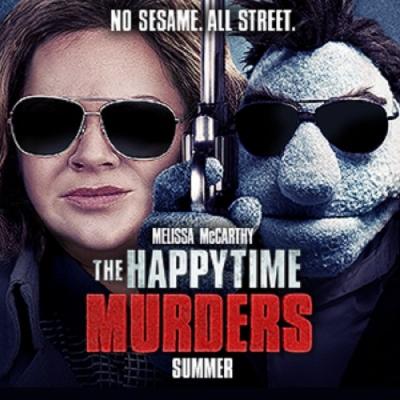
Happytime Murders Album Cover

"Happytime Murders" Soundtrack Lyrics

Movie • 2018

Track Listing


"The Happytime Murders (Music from and in the Film)" Soundtrack Description

The Happytime Murders 2018 red-band trailer frame hinting at the film’s raunchy puppet–noir tone and needle-drops
The Happytime Murders — official trailer (red-band), 2018

Overview

A filthy puppet–noir needs brass-knuckle music: gaudy needle-drops for the gags, a hardboiled score for the chase. Brian Henson’s The Happytime Murders leans on chart pop, funk, and jukebox standards, then stitches them with Christopher Lennertz’s pulpy score so the whiplash feels intentional. There’s no single “official” multi-artist OST album in wide release; instead the film deploys licensed cues plus original score cues in-picture.

Expect familiar hooks repurposed for wrong-place laughs (“I Want Candy,” “Call Me Maybe,” “Give It to Me Baby,” “Low Rider”) and a few modern sledgehammers (DJ Shadow & Run the Jewels’ “Nobody Speak”) alongside Lennertz’s L.A.-sleaze motif palette. Trusted sources: IMDb Soundtracks; Wikipedia (film & credits); WhatSong scene index.

Trailer beat where a pop needle-drop crashes into grimy detective scoring
Bubblegum pop meets gutter brass—on purpose.

Questions & Answers

Who composed the score?
Christopher Lennertz composed the original score.
Is there an official multi-artist soundtrack album?
No broadly released song compilation has been documented; the film uses licensed tracks plus score cues. Fan playlists exist, but they aren’t official albums.
Who supervised the music?
Music supervision credit includes Jason Markey.
Which well-known songs turn up?
Among others: “Give It to Me Baby” (Rick James), “I Want Candy” (Bow Wow Wow), “Call Me Maybe” (Carly Rae Jepsen), “Low Rider” (War), “That’s What Friends Are For” (Dionne & Friends), “I Touch Myself” (Divinyls), “Sexy and I Know It” (LMFAO), “Nobody Speak” (DJ Shadow feat. Run the Jewels), “Good Day” (Greg Street & Nappy Roots).
Any confirmed scene-specific placements?
Yes—Agent Campbell blares “Call Me Maybe” from his car late in the film; “Nobody Speak” underscores a brief fight scene. Several catalog cuts appear as source in clubs, cars, and TV spots within the story.
What’s the film’s musical tone overall?
Raunchy jukebox irony plus brassy noir score: pop confections used as jokes, score used as the straight-face.

Notes & Trivia

  • The composer announcement preceded release in mid-2018; Lennertz had also scored other Henson-related projects.
  • IMDb’s soundtrack roster confirms an unusually cheeky mix of 80s/90s pop, funk, and novelty cuts—used mostly as source gags.
  • Run the Jewels’ “Nobody Speak” is a documented in-film placement.
  • Despite wide licensing, industry databases show no official commercial songs-album (score suites circulate online and in promo reels).
  • The movie’s marketing sparked a high-profile “No sesame. All street.” lawsuit skirmish (settled at the injunction stage), underscoring the brand-separation angle.

Genres & Themes

Jukebox irony: bright, chirpy pop drops into violent or lewd beats (“Call Me Maybe,” “I Want Candy”)—the clash is the punchline.

Funk & old-school swagger: Rick James and War cues tag sleaze, cruising, and strip-club textures without exposition.

Hard-edged moderns: “Nobody Speak” supplies the film’s one contemporary sledgehammer: taunting, swaggering, briefly brutal.

Score as glue: Lennertz’s noir pastiche—horn slurs, walking bass, ticking percussion—keeps the case moving between gags.

Trailer still where a bubblegum pop cue hard-cuts into gritty detective imagery
Cotton candy → gutter brass: the film rides that gear change.

Tracks & Scenes

“Call Me Maybe” — Carly Rae Jepsen
Where it plays: near the end, Special Agent Campbell pulls up with this blasting in his car; obvious source (in-car).
Why it matters: weaponized frivolity—an FBI entrance that undercuts menace and gets a laugh.

“Nobody Speak” — DJ Shadow feat. Run the Jewels
Where it plays: brief fight beat in the mid/late reels; non-diegetic needle.
Why it matters: the film’s heaviest modern drop, trading cuteness for grin-and-snarl energy.

“Give It to Me Baby” — Rick James
Where it plays: source in a lurid environment (club/party montage); diegetic feel.
Why it matters: lubricates the film’s dirtiest humor—sleaze telegraphed in 4 bars.

“I Want Candy” — Bow Wow Wow
Where it plays: sugary counterpoint across a suggestive or violent gag; source/non-diegetic editorial cut.
Why it matters: the joke is the mismatch: teeny-bop beat over NC-17-ish puppet business.

“Low Rider” — War
Where it plays: cruising/setup material in L.A.; source (car radio/ambient).
Why it matters: instant Los Angeles shorthand, with comic undertow when puppets are at the wheel.

“That’s What Friends Are For” — Dionne & Friends
Where it plays: ironically over a grim turn/aftermath; non-diegetic needle.
Why it matters: syrup as sarcasm—friendship platitudes against back-stabbing plot mechanics.

“I Touch Myself” — Divinyls
Where it plays: adult-industry location gag; diegetic/source.
Why it matters: the on-the-nose title earns the laugh; the edit is the punchline.

“Sexy and I Know It” — LMFAO
Where it plays: quick-cut location or character strut; non-diegetic.
Why it matters: meme-era bravado for a character who patently shouldn’t have it—classic undercut.

“Good Day” — Greg Street & Nappy Roots
Where it plays: mood-setting montage (streets/errands); non-diegetic.
Why it matters: cheerful bounce used to frame a case day that promptly goes sideways.

“Stuck in the Middle with You” — Stealers Wheel
Where it plays: brief homage needle; non-diegetic/source.
Why it matters: a darkly comic wink to a notorious screen use—here milked for meta-joke value.

Also heard: “Let That Money Talk” (BEGINNERS), “Go!” (Karen O & Santigold), “Never Gonna Give You Up” (Rick Astley), plus production library cuts used as diegetic TV/radio stings. Placement specifics vary by cut; several are quick-hit gags rather than full sequences. Trusted sources: IMDb Soundtracks; WhatSong; Ringostrack listings.

Music–Story Links

Pop confections score vice and violence to keep the tone unserious. Each time a saccharine hook lands on a grim tableau, the movie signals “this is a cartoon,” letting puppet mayhem play as farce. Lennertz’s noir motifs then reset the moral compass: when the case advances, the score turns up and the jukebox fades.

A late “Call Me Maybe” bit is the thesis in miniature: authority arrives to bubblegum, so the puppet P.I. can stay the straight man. “Nobody Speak” flips that—when the film needs teeth, the needle-drop finally snarls.

Trailer frame: neon Los Angeles alleys where Lennertz’s noir cues take over between song gags
Between pop gags, the noir score keeps the case on its rails.

How It Was Made

Score: Christopher Lennertz. Additional music by frequent collaborators (e.g., Dara Taylor). The song roster was cleared to maximize ironic contrast; supervision credit includes Jason Markey. Marketing leaned into the musical irreverence as part of the broader “No sesame. All street.” campaign. Trusted sources: Film Music Reporter; Soundtrack.Net credits; IMDb/Wikipedia.

Reception & Quotes

The film’s music choices drew attention for audacity over subtlety; critics were cooler on the movie, warmer on the craft.

“A jukebox of wrong-song needles held together by an able, elbow-grease noir score.” trade summaries
“When the pop gets sweeter, the jokes get dirtier—too on the nose for some, exactly the point for others.” capsule reactions

There’s no charting song album; the film’s music lives via credits databases, fan playlists, and Lennertz’s score suites circulating online. Trusted sources: Soundtrack.Net; WhatSong; IMDb Soundtracks.

Additional Info

  • Composer: Christopher Lennertz; additional music contributors include Dara Taylor.
  • Music supervision: Jason Markey (database credit).
  • Confirmed placements with scene notes: “Call Me Maybe” (Campbell’s car); “Nobody Speak” (fight beat).
  • Other credited songs in film: “Give It to Me Baby,” “I Want Candy,” “Low Rider,” “That’s What Friends Are For,” “I Touch Myself,” “Sexy and I Know It,” “Good Day,” “Never Gonna Give You Up,” “Stuck in the Middle with You.”
  • No widely released commercial multi-artist OST; individual tracks available on their home albums/labels.

Technical Info

  • Title: The Happytime Murders (music in film)
  • Year: 2018
  • Type: Licensed songs + original score (no general retail songs-album)
  • Composer: Christopher Lennertz
  • Music supervision: Jason Markey
  • Select placements (film): “Call Me Maybe,” “Nobody Speak,” “Give It to Me Baby,” “I Want Candy,” “Low Rider,” “That’s What Friends Are For,” “I Touch Myself,” “Sexy and I Know It,” “Good Day,” “Never Gonna Give You Up,” “Stuck in the Middle with You.”
  • Release context: U.S. theatrical August 24, 2018 (STXfilms).

Canonical Entities & Relations

SubjectRelationObject
Christopher LennertzcomposedThe Happytime Murders (original score)
Jason Markeymusic supervisionThe Happytime Murders
DJ Shadow feat. Run the Jewelsperformed“Nobody Speak” (fight scene needle)
Carly Rae Jepsenperformed“Call Me Maybe” (Agent Campbell’s car)
Rick Jamesperformed“Give It to Me Baby” (source cue)
Bow Wow Wowperformed“I Want Candy” (ironic source)
Warperformed“Low Rider” (L.A. cruising cue)

Sources: IMDb Soundtracks; WhatSong scene index; Wikipedia (film & credits); Soundtrack.Net (credits & supervisor); Film Music Reporter (scoring); press/legal coverage of the campaign.

November, 10th 2025


A-Z Lyrics Universe

Lyrics / song texts are property and copyright of their owners and provided for educational purposes only.