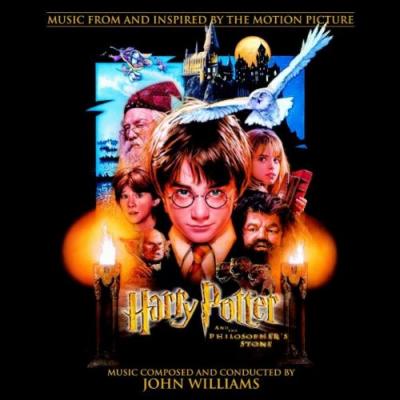
"Harry Potter" Soundtrack Lyrics
Movie • 2001
Track Listing
William Shakespeare
Midlifecrisis
"Harry Potter and the Sorcerer’s Stone (Original Motion Picture Soundtrack)" Soundtrack Description
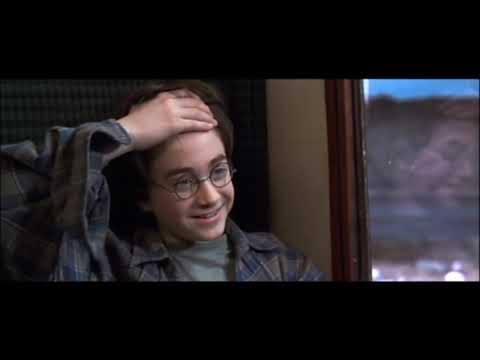
Overview
How do you sonically invent a new “shared language” for magic… that children and adults decode in a second? John Williams solved it with a nursery-rhyme-simple melody dressed in shimmering orchestration—Hedwig’s Theme. The 2001 score doesn’t just support Harry Potter and the Sorcerer’s Stone; it defines the franchise’s musical DNA for a decade.
The album (originally issued October 30, 2001) mixes wonder and ceremony—celeste-led motifs, noble chorales for Hogwarts, playful scherzos for broom-flight, and dark, slithering harmony for Voldemort. Williams’ “concert-style” end-credit suites (“Harry’s Wondrous World,” “Hedwig’s Theme”) make the themes instantly collectible beyond the film. A later archival expansion preserved the full score and the composer’s Children’s Suite sketches, confirming how thoroughly the leitmotifs map to characters and places.
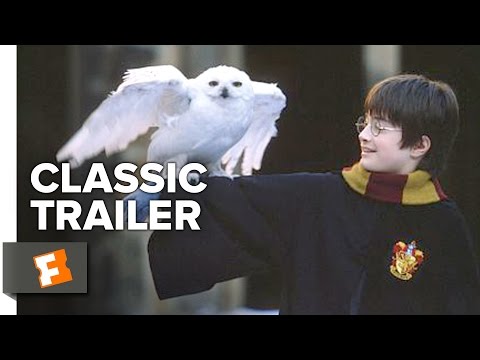
Questions & Answers
- Who composed and recorded the score?
- John Williams composed and conducted; sessions took place August–September 2001 at AIR Lyndhurst and Abbey Road in London with a large London session orchestra.
- When did the album first release, and on what label?
- October 30, 2001, on Atlantic/Warner; the U.S. edition carries Atlantic catalog 83491.
- What themes debuted here and recurred later?
- Hedwig’s Theme (series main motif), Hogwarts chorale, Flying/Nimbus idea, Quidditch action motif, Diagon Alley color, and Voldemort material that returns in sequels.
- Is there a definitive expanded edition?
- Yes. In 2018, La-La Land Records issued a remastered 3-CD presentation of the complete score within a 7-CD John Williams Potter box.
- Did the score receive major awards attention?
- It earned an Academy Award nomination (Best Original Score) and a Grammy nomination.
- What’s the instantly recognizable sound at the start?
- Celeste + strings stating Hedwig’s Theme; it opens the film (“Prologue”) and closes the album as a concert suite.
Notes & Trivia
- Williams previewed Hedwig’s Theme in concert and trailers before the film opened—an uncommon early reveal for a new franchise theme.
- The original U.S. CD and international “Philosopher’s Stone” edition differ in packaging; early EU sets bundled a multimedia disc.
- The 2018 expansion includes the first full album release of the 2001-recorded Children’s Suite and Williams’ trailer cues.
- Charted on Billboard and earned gold certifications in Canada and Japan during the initial run.
- “Leaving Hogwarts” later reappears poignantly in the 2011 series finale’s epilogue.
Genres & Themes
Celeste-led fantasy waltz → “wonder made audible.” The bell-like timbre marks magic’s presence; stepwise melody keeps it singable (kids hum it; orchestras decorate it).
Ceremonial chorale → belonging & tradition. Brass/choir statements frame the institution of Hogwarts—warm, dignified, ancient.
Fleet scherzo & motoric strings → flight and play. For brooms and Quidditch: crisp rhythms, glints of woodwind virtuosity, and snare-driven excitement.
Chromatic low strings & serpentine harmony → Voldemort. Suspense coloring that never overwhelms the PG tone, but signals real danger.
Tracks & Scenes
Selections below align album cues with on-screen moments; cue names follow the official album. Times are approximate where noted.
“Prologue (Hedwig’s Theme)” — John Williams
Where it plays: Opening logos and first pages of the story; a shortened statement returns over closing credits in full concert form.
Why it matters: Establishes the franchise’s signature sound in under a minute.
“Harry’s Wondrous World” — John Williams
Where it plays: End-title suite; also quotes Hogwarts’ chorale heard at first views of the castle.
Why it matters: A summative curtain call weaving the score’s major ideas.
“Visit to the Zoo / Letters from Hogwarts” — John Williams
Where it plays: The snake exhibit mischief and the mail-deluge gag; mischievous woodwinds telegraph uncontrolled magic.
Why it matters: Sets the comic side of the magical palette early.
“Platform Nine-and-Three-Quarters / The Journey to Hogwarts” — John Williams
Where it plays: Boarding the Hogwarts Express and the first reveal of the castle (about 1:50 into the journey cue in album terms).
Why it matters: The noble Hogwarts idea arrives—choral and brassy—as the school first appears.
“Entry into the Great Hall / The Banquet” — John Williams
Where it plays: Sorting and first feast; stately, processional writing underscores tradition and ritual.
Why it matters: Embodies “belonging,” the non-action heart of the film.
“Mr. Longbottom Flies” — John Williams
Where it plays: Neville’s broom chaos; scherzo textures and snare-driven bounce.
Why it matters: Comic action template the series reuses for light peril.
“The Quidditch Match” — John Williams
Where it plays: Full match sequence; triumphant flying motif in rhythmic set-pieces.
Why it matters: Signature action cue; Williams calibrates momentum without losing clarity.
“Fluffy’s Harp” — John Williams
Where it plays: The three-headed dog and trapdoor guardianship; source-like harp becomes a plot device.
Why it matters: An example of score-as-prop, blending diegetic and non-diegetic tension.
“In the Devil’s Snare / The Flying Keys” — John Williams
Where it plays: Plant entanglement to key-room gauntlet; texture shifts from suffocating to glittering chase.
Why it matters: Modular set-piece writing that tracks puzzle-solving beats.
“The Chess Game” — John Williams
Where it plays: Life-size chess sacrifice sequence; stern, inexorable pulse.
Why it matters: Stakes and strategy in music—arguably the film’s gravest cue.
“The Face of Voldemort” — John Williams
Where it plays: Final confrontation and reveal; low strings, choir, then catharsis.
Why it matters: Binds Voldemort’s material to Harry’s resolve.
“Leaving Hogwarts” — John Williams
Where it plays: Term’s end and goodbyes; later quoted in the 2011 finale’s epilogue.
Why it matters: Emotion without sentimentality—one of the series’ most beloved cues.
Music–Story Links
When the train rounds the lake and the castle emerges, the Hogwarts chorale doesn’t just score a location—it certifies that Harry has found a home. The flying motif grows from mischief (zoo prank woodwinds) into competence (broom flight, Quidditch), mirroring his self-belief. And with Voldemort, Williams keeps the harmony simple and cold; dread never drowns the PG tone, but you feel the chill whenever the bassline slides.
How It Was Made
Recording took place in London (AIR Lyndhurst, Abbey Road) with a 100+ player ensemble and choir. Orchestrations credit John Williams alongside Alexander Courage, Conrad Pope, John Neufeld, Eddie Karam, Pete Anthony, Benjamin Wallfisch, and Larry Rench. The commercial album emphasized thematic suites and prime set-pieces; a later archival set reconstructed the full film chronology and added Williams’ Children’s Suite and trailer recordings.
Production context matters: the score bowed into the same awards season as The Lord of the Rings: The Fellowship of the Ring, which took the Oscar. Even so, Williams’ themes became the franchise’s throughline—quoted in subsequent films and wider Wizarding World media.
Reception & Quotes
Contemporary and retrospective reviews highlight the immediate classic status of Hedwig’s Theme and the ceremonial Hogwarts music, with some critics noting Williams’ comfort-zone fingerprints.
“A strong foundation for the franchise … the best performances of the famous recurring themes.” Filmtracks
“Overly insistent … lacks subtlety and bludgeons us with crescendos.” USA Today
“Nominated for an Academy Award and a Grammy.” Trade/album notes summary
Availability has improved over time: the original 2001 Atlantic/Warner disc remains common; the 2018 archival box sold out in waves but resurfaces via specialty outlets.
Additional Info
- The U.S. album carries Atlantic catalog #83491; runtime ~73 minutes (19 tracks).
- International editions use the title Philosopher’s Stone and similar program; early EU packages sometimes added a multimedia disc.
- 2018 expansion: complete film score across two discs, plus bonus material (trailers, Children’s Suite extracts) on a third.
- Key “first-time” reveals on expansion include source/choral bits and alternates that fans traded as bootlegs for years.
- The Hogwarts chorale often aligns with first castle shots in this film and the next two Williams entries.
- Certification notes: gold in Canada and Japan during the original cycle.
Technical Info
- Title: Harry Potter and the Sorcerer’s Stone (Original Motion Picture Soundtrack)
- Year: 2001
- Type: Symphonic film score
- Composer/Conductor: John Williams
- Studios: AIR Lyndhurst Hall; Abbey Road Studios (London)
- Album Label: Atlantic / Warner (U.S.); equivalent “Philosopher’s Stone” issue internationally
- Key cues (album titles): “Prologue (Hedwig’s Theme),” “Harry’s Wondrous World,” “The Quidditch Match,” “The Chess Game,” “Leaving Hogwarts.”
- Awards: Academy Award nomination (Best Original Score); Grammy nomination
- Archival edition: La-La Land Records, 2018 (3×CD complete score within 7×CD Williams Potter set)
Canonical Entities & Relations
| Subject | Relation | Object |
|---|---|---|
| John Williams | composed | Harry Potter and the Sorcerer’s Stone (score) |
| Atlantic Records | released | 2001 original soundtrack album |
| La-La Land Records | issued | 2018 expanded 3-CD complete score (in 7-CD box) |
| Hedwig’s Theme | serves as | series main motif |
| Hogwarts chorale | underscores | first castle reveal / institutional scenes |
| “Leaving Hogwarts” | quoted in | series epilogue (2011) |
Sources: Wikipedia (soundtrack page; Hedwig’s Theme), AllMusic, La-La Land Records notes, Filmtracks review/notes, Apple Music, Billboard/Certifications reporting, Warner Bros (official trailer).
November, 10th 2025
A-Z Lyrics Universe
Cynthia Erivo Popular
Ariana Grande Horsepower
Post Malone Ain't No Love in Oklahoma
Luke Combs Good Riddance (Time of Your Life)
Green Day Bye Bye Bye
*NSYNC You're the One That I Wan
John Travolta & Olivia Newton-John I Always Wanted a Brother
Braelyn Rankins, Theo Somolu, Kelvin Harrison Jr. and Aaron Pierre The Power of Love
Frankie Goes to Hollywood Beyond
Auli’i Cravalho feat. Rachel House MORE ›