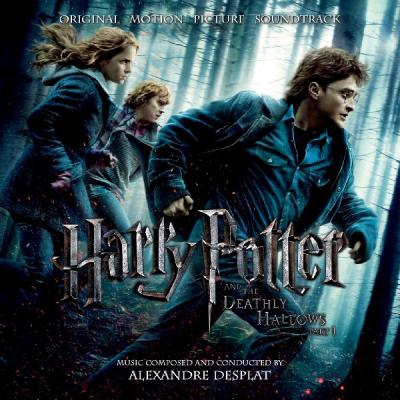
"Harry Potter and Deathly Hallows Part One" Soundtrack Lyrics
Movie • 2010
Track Listing
Alexandre Desplat
Alexandre Desplat
Alexandre Desplat
Alexandre Desplat
Alexandre Desplat
Alexandre Desplat
Alexandre Desplat
Alexandre Desplat
Alexandre Desplat
Alexandre Desplat
Alexandre Desplat
Alexandre Desplat
Alexandre Desplat
Alexandre Desplat
Alexandre Desplat
Alexandre Desplat
Alexandre Desplat
Alexandre Desplat
Alexandre Desplat
Alexandre Desplat
Alexandre Desplat
Alexandre Desplat
Alexandre Desplat
Alexandre Desplat
Alexandre Desplat
"Harry Potter and the Deathly Hallows – Part 1 (Original Motion Picture Soundtrack)" Soundtrack Description
Overview
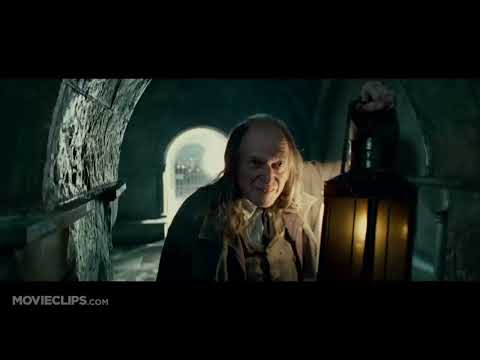
How do you score a wizarding road movie where safety vanishes and friendships wobble? Alexandre Desplat answers with a colder color palette, glassy strings, and pulsing low-end that make tents, forests, and empty motorways feel haunted. His main cue, “Obliviate,” wipes the board clean in the opening minutes—the sound of memory loss and a series shedding its school-year comforts.
The album arrived via WaterTower Music on November 16, 2010, three days before the film’s release. Recorded at Abbey Road with the London Symphony Orchestra, it runs ~74 minutes and favors long-lined suspense over theme fireworks. A single needle-drop—Nick Cave & The Bad Seeds’ “O Children” (from the 2004 album Abattoir Blues / The Lyre of Orpheus)—provides the film’s lone oasis of warmth: a fragile dance in a tent that briefly steadies Harry and Hermione while everything else falls apart.
Questions & Answers
- Who composed the score and where was it recorded?
- Alexandre Desplat composed and conducted; sessions were held at Abbey Road Studios with the London Symphony Orchestra.
- When did the album release and on which label?
- November 16, 2010 on WaterTower Music (digital/CD).
- Is John Williams’ “Hedwig’s Theme” used?
- Yes—quoted sparingly as a continuity thread amid Desplat’s new material.
- What non-score song appears in the film?
- “O Children” by Nick Cave & The Bad Seeds underscores the tent dance; it originates from their 2004 double album.
- How long is the film and what tone did the score support?
- 146 minutes; the score leans on tension, desolation, and furtive movement rather than grand school-pageantry.
- Was there a deluxe edition?
- Yes—a three-disc Limited Edition Collector’s Box followed in December 2010.
Notes & Trivia
- “O Children” (2004) playing in a 1997-set scene creates a minor timeline anachronism—used deliberately for mood.
- Conrad Pope served as supervising orchestrator/producer, shaping the recording and continuity touches.
- Cue titles map cleanly to plot beats: “Snape to Malfoy Manor,” “Ministry of Magic,” “Godric’s Hollow Graveyard,” “Farewell to Dobby.”
- The score’s opening wipe—“Obliviate”—became a fan shorthand for the series’ tonal reset.
Genres & Themes
Nervy chamber-to-symphonic suspense: tremolo strings, bass pulses, and restrained brass sketch paranoia and movement through unsafe spaces.
Elegiac lyricism: long phrases for grief and loyalty (“Farewell to Dobby”) that avoid sentimentality.
Continuity signals: brief, cool statements of “Hedwig’s Theme” to remind us of the world we’re losing.
Diegetic respite: “O Children” functions as a human reset—no magic, just two friends choosing hope for three minutes.
Tracks & Scenes
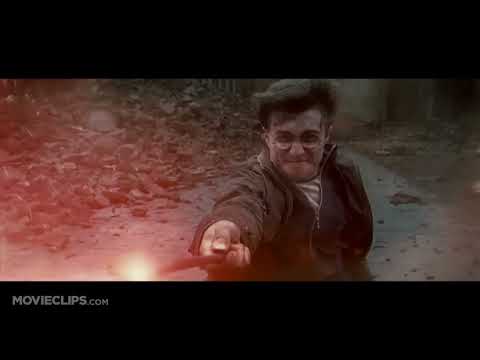
Scene placements reference on-screen moments and official cue titles; exact timestamps vary by cut/home release.
“Obliviate” — Alexandre Desplat
Where it plays: Opening sequence (non-diegetic). Hermione’s memory spell and the trio’s separation from normal life.
Why it matters: Announces the tonal reset and the score’s glassy, grieving language.
“Snape to Malfoy Manor” — Alexandre Desplat
Where it plays: Cold open at the Death Eaters’ table (non-diegetic).
Why it matters: Low, ceremonial menace establishes the regime that now controls everything.
“Ministry of Magic” — Alexandre Desplat
Where it plays: Infiltration of the Ministry under Polyjuice (non-diegetic).
Why it matters: Ticking textures and harmonic turns mirror a heist that could implode any second.
“O Children” — Nick Cave & The Bad Seeds
Where it plays: Tent dance after Ron’s departure (diegetic via radio).
Why it matters: The franchise’s most intimate musical moment; a respite that deepens Harry–Hermione’s bond.
“Godric’s Hollow Graveyard” / “Bathilda Bagshot” — Alexandre Desplat
Where it plays: Midnight visit and the snake reveal (non-diegetic).
Why it matters: From hushed reverence to body-horror strings—evidence of the score’s dynamic range.
“The Locket” — Alexandre Desplat
Where it plays: The Horcrux’s corrupting influence (non-diegetic).
Why it matters: Oscillating figures and dark color suggest psychological abrasion.
“Dobby” / “Farewell to Dobby” — Alexandre Desplat
Where it plays: Rescue from Malfoy Manor and the beach-side goodbye (non-diegetic).
Why it matters: The score’s emotional apex—pure elegy without melodrama.
Trailer use: Marketing leaned on Desplat’s cues; no separate pop-compilation was issued.
Music–Story Links
Desplat’s writing assigns place before people: the countryside hums with risk, so characters move quietly or not at all. When “Hedwig’s Theme” peeks out, it’s a memory shard—home is gone. The tent dance turns the radio into a character; “O Children” reframes despair as friendship-in-motion. And in the burial scene, spacious voicing and slow harmonic rhythm give Dobby dignity that dialogue can’t.
How It Was Made
Recorded in summer 2010 at Abbey Road; Desplat led the London Symphony Orchestra with Conrad Pope as supervising orchestrator/album producer. The production emphasized clarity—layered strings and careful low-brass to keep dialogue crisp while sustaining dread. Desplat integrates brief, respectful nods to John Williams’ franchise motif but otherwise establishes his own harmonic voice for the run-and-hide structure.
Reception & Quotes
Specialist outlets praised the craft and control; some listeners missed the earlier films’ big singable themes. Representative snapshots:
“Generous 73 minutes… intricate, darkly compelling.” Movie Music UK
“Technical prowess… intelligently integrates his and Williams’ themes.” Filmtracks
“The dance to Nick Cave’s ‘O Children’ is a tender, grown-up pause.” Wired
Additional Info
- Album length ~73:38; 26 cues on standard edition.
- A three-disc Collector’s Box followed on December 21, 2010.
- Only one non-score song is used in-film: “O Children.”
- Film runtime: 146 minutes; U.S. release November 19, 2010.
- Desplat returned for Part 2; the two scores form a continuous sound-world.
Technical Info
- Title: Harry Potter and the Deathly Hallows – Part 1 (Original Motion Picture Soundtrack)
- Year: 2010
- Type: Symphonic film score + one licensed song
- Composer/Conductor: Alexandre Desplat
- Orchestra: London Symphony Orchestra
- Recording: Abbey Road Studios, London (Summer 2010)
- Label: WaterTower Music (release: Nov 16, 2010)
- Notable cue placements: “Obliviate” (opening); “Ministry of Magic” (infiltration); “Godric’s Hollow Graveyard” & “Bathilda Bagshot” (attack); “Farewell to Dobby” (beach burial); “O Children” (tent dance, diegetic).
Canonical Entities & Relations
| Subject | Relation | Object |
|---|---|---|
| Alexandre Desplat | composed | Harry Potter and the Deathly Hallows – Part 1 (score) |
| London Symphony Orchestra | performed | Deathly Hallows – Part 1 (recording sessions) |
| Conrad Pope | supervising orchestrator / producer | Soundtrack album |
| WaterTower Music | released | Original soundtrack (2010) |
| “O Children” | performed by | Nick Cave & The Bad Seeds |
| “Farewell to Dobby” | underscores | Dobby’s burial scene |
| “Obliviate” | opens | Film’s first sequence |
Sources: Wikipedia (soundtrack & film entries), MusicBrainz, Discogs release pages, AllMusic, Movie Music UK, Filmtracks, Wired, Business Insider.
November, 10th 2025
A-Z Lyrics Universe
Cynthia Erivo Popular
Ariana Grande Horsepower
Post Malone Ain't No Love in Oklahoma
Luke Combs Good Riddance (Time of Your Life)
Green Day Bye Bye Bye
*NSYNC You're the One That I Wan
John Travolta & Olivia Newton-John I Always Wanted a Brother
Braelyn Rankins, Theo Somolu, Kelvin Harrison Jr. and Aaron Pierre The Power of Love
Frankie Goes to Hollywood Beyond
Auli’i Cravalho feat. Rachel House MORE ›