Soundtracks:  A B C D E F G H I J K L M N O P Q R S T U V W X Y Z #


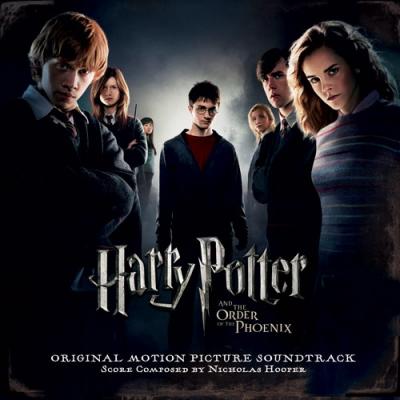
Harry Potter and the Order of the Phoenix Album Cover

"Harry Potter and the Order of the Phoenix" Soundtrack Lyrics

Movie • 2007

Track Listing


"Harry Potter and the Order of the Phoenix (Original Motion Picture Soundtrack)" Soundtrack Description

Order of the Phoenix official trailer still with Harry, tonal setup of darker Year Five
Harry Potter and the Order of the Phoenix — official trailer imagery, 2007

Overview

How do you follow three films defined by John Williams and a fourth by Patrick Doyle—and still sound like Hogwarts? Nicholas Hooper’s answer in 2007 was restraint and purpose: intimate textures that flower into orchestral muscle when the story breaks wide open.

The score’s identity rests on two new pillars—an insistent, sugary-venom motif for Dolores Umbridge and a darker harmonic profile for Voldemort’s pressure inside Harry’s mind—threaded through returning DNA like “Hedwig’s Theme.” Recorded at Abbey Road with the Chamber Orchestra of London, the album moves from hushed paranoia to cathartic spectacle: underpass Dementors, a clandestine training montage, firework-led revolt, and a glass-shattering Ministry showdown. Warner Bros. Records issued the album in July 2007; Billboard tracked its US chart debut, while the Los Angeles Times spotlighted Hooper’s “simpler” palette set against a darker film.

Room of Requirement montage visual from trailer, suggesting DA training energy
Order of the Phoenix — training energy in trailer stills, 2007

Questions & Answers

Who composed the score and where was it recorded?
Nicholas Hooper composed; sessions took place at Abbey Road with the Chamber Orchestra of London.
Does the film reuse John Williams material?
Yes—“Hedwig’s Theme” appears as motivic fragments inside cues like “Another Story,” “The Room of Requirement,” and “Hall of Prophecy.”
Is there non-score music in the movie?
Yes; licensed trailer cues appear (e.g., library tracks), and one diegetic pop needle-drop is credited off-album.
What new themes define this chapter?
Umbridge’s prancing, brittle motif (bright surface, cruel core) and music for Voldemort’s encroachment on Harry (low strings, percussion weight).
How does the soundtrack handle the Ministry battle?
By escalating from tense, glassy textures in “Hall of Prophecy” to urgent action and the grief-driven “Death of Sirius,” then release in “Possession.”
Is there a special edition of the album?
Yes; a limited box with booklet and premium packaging accompanied the 2007 release.
Did the album chart?
It debuted on the US Billboard 200 and placed on Top Soundtracks; sales figures were reported in trade press.

Notes & Trivia

  • First Potter score by Nicholas Hooper; he returned for Half-Blood Prince two years later.
  • Trailer campaigns leaned on library tracks (e.g., X-Ray Dog) rather than album cues.
  • Umbridge’s theme intentionally undercuts her pink aesthetics with sly harmonic “smirks.”
  • Score recording reportedly neared two hours of music; the album carries ~52 minutes.
  • A limited “velveteen” box edition accompanied the standard CD in 2007.

Genres & Themes

Orchestral suspense underlines institutional gaslighting: low strings and muted brass make Hogwarts feel watched. Jaunty woodwinds & glockenspiel sketch Umbridge’s performative civility—the giggle that bites.

Action ostinati & percussion (toms, taiko) power broom chases and the Ministry duels. Melodic memory (shavings of “Hedwig’s Theme”) anchors continuity: the world is the same, the stakes have grown up.

Dolores Umbridge motif mood in trailer frame, prim and poisonous
Character music cues — prim surfaces, coercive power, 2007

Tracks & Scenes

"Another Story" — Nicholas Hooper
Where it plays: Early film setup and title sequence, easing us from Muggle summer into wizarding crisis; non-diegetic.
Why it matters: Establishes the thinner, nervier soundscape and gently folds in a sliver of “Hedwig’s Theme.”

"Dementors in the Underpass" — Nicholas Hooper
Where it plays: Little Whinging underpass attack on Harry and Dudley; non-diegetic with cold string figures and low brass.
Why it matters: Signals the series’ tonal pivot—street-level danger before Hogwarts safety can take hold.

"Flight of the Order of the Phoenix" — Nicholas Hooper
Where it plays: Escort flight from Privet Drive to 12 Grimmauld Place; non-diegetic, aerial rhythms and propulsive ostinato.
Why it matters: Introduces covert-resistance swagger and expands the score’s action vocabulary.

"Professor Umbridge" — Nicholas Hooper
Where it plays: Umbridge’s first classes and faculty confrontations; non-diegetic with prim trills and tip-toeing strings.
Why it matters: Character branding—pleasant on the surface, iron underneath.

"The Room of Requirement" — Nicholas Hooper
Where it plays: DA training sessions montage; non-diegetic, warm chords and encouraging pulse.
Why it matters: Gives the rebellion a heartbeat; you feel competence grow bar by bar.

"Dumbledore’s Army" — Nicholas Hooper
Where it plays: Recruitment beats and group bonding; non-diegetic.
Why it matters: The cue’s lift frames friendship as strategy, not just comfort.

"The Kiss" — Nicholas Hooper
Where it plays: Harry and Cho in the Room of Requirement; non-diegetic, fragile textures.
Why it matters: A quick exhale before the crackdown; intimacy inside surveillance.

"Fireworks" — Nicholas Hooper
Where it plays: Fred & George interrupt OWL exams with a fireworks blitz; non-diegetic but synced to on-screen chaos.
Why it matters: Musical catharsis; the score smiles as authoritarian posters burn.

"The Ministry of Magic" — Nicholas Hooper
Where it plays: Harry’s disciplinary hearing arrival; non-diegetic with institutional weight.
Why it matters: Bureaucracy as menace, not wallpaper.

"Hall of Prophecy" — Nicholas Hooper
Where it plays: DA navigates shelves of glass orbs in the Department of Mysteries; non-diegetic, eerie harmonic suspensions.
Why it matters: Suspense architecture that lets the set design sing without over-scoring.

"The Sirius Deception" — Nicholas Hooper
Where it plays: Harry races to the Ministry on a false vision; non-diegetic, urgent pacing.
Why it matters: Locks the final movement in place; personal stakes disguised as rescue.

"Death of Sirius" — Nicholas Hooper
Where it plays: The veil scene after the duel; non-diegetic, lamenting strings.
Why it matters: The franchise’s first true bereavement cue for Harry— restrained, devastating.

"Possession" — Nicholas Hooper
Where it plays: Voldemort invades Harry in the atrium as Dumbledore pushes him back; non-diegetic with heavy percussion and then release.
Why it matters: Climactic thesis—love as shield, executed musically by collapsing tension into light.

Also heard in marketing: trailer libraries rather than album cues (e.g., epic trailer tracks). Not on the OST: one credited diegetic pop needle-drop in the common room; appears in cue sheets, not the album.

Music–Story Links

When Harry agrees to teach DA, the confident lift in “The Room of Requirement” reframes him from isolated witness to active mentor. Umbridge’s motif keeps intruding—even in quiet scenes—because her power is procedural, not just explosive. During the Ministry chase, the incremental build from “Hall of Prophecy” to “The Sirius Deception” mirrors the move from uncertainty (is the vision real?) to irreversible cost. Finally, “Possession” resolves the chapter’s thesis: Voldemort can occupy Harry’s headroom, but not the space his friends occupy in his heart; the orchestrations literally open up to prove it.

Ministry of Magic atrium duel mood from trailer frame, blue light and glass
Ministry atrium mood — blue light, glass, and a collapsing motif, 2007

How It Was Made

Hooper, a frequent collaborator of director David Yates before his Potter tenure, wrote a largely new thematic set while retaining “Hedwig’s Theme” as connective tissue. Orchestrations came via Alastair King and colleagues; the sessions used a ~90-piece ensemble at Abbey Road with choir contributions tracked for key peaks. Trade coverage and album notes confirm a special-edition release alongside the standard CD. For context pieces and interviews, the BBC and film-music press documented the franchise hand-off to a new composer and the wish to pare back grandiosity until it truly counted.

Reception & Quotes

Response landed between admiration for restraint and nostalgia for prior grandeur. The album charted modestly but widely and has grown in esteem at live-to-picture concerts.

“Pleasing, if not as groundbreaking as its predecessors.” Movie Music UK
“Effective in-film writing; weaker as a standalone program.” Filmtracks

Availability: digital and CD since 2007; a premium box edition accompanied first release windows.

Additional Info

  • Library trailer tracks (not on the OST) dominate marketing cuts.
  • Small, character-led woodwind writing helps the humor land without breaking tone.
  • Select motifs from this score were repurposed or referenced in later entries in subtle edits.
  • Live concert screenings use slightly adapted concert mixes for clarity.
  • Album sequencing favors narrative flow over strict chronology.
  • A handful of recording-session cues remain unreleased officially.
  • Trade press noted US first-week sales ~16k and strong global follow-through.

Technical Info

  • Title: Harry Potter and the Order of the Phoenix (Original Motion Picture Soundtrack)
  • Year / Type: 2007 — Film score
  • Composer: Nicholas Hooper
  • Orchestrations / Conducting: Alastair King et al.; sessions with the Chamber Orchestra of London
  • Key Performers: Large orchestra; choir used for climaxes
  • Studio: Abbey Road Studios, London
  • Label / Catalogue: Warner/Sunset (Warner Bros. Records)
  • Selected placements: “Dementors in the Underpass,” “The Room of Requirement,” “Fireworks,” “Hall of Prophecy,” “Death of Sirius,” “Possession”
  • Release context: Album streeted July 10, 2007, ahead of film’s July wide release
  • Chart notes: Debuted on the US Billboard 200; Top Soundtracks placement documented in trades
  • Editions: Standard CD/digital; special box with booklet

Canonical Entities & Relations

SubjectRelationObject
Nicholas HoopercomposedHarry Potter and the Order of the Phoenix (Original Motion Picture Soundtrack)
Chamber Orchestra of LondonperformedScore recording sessions at Abbey Road
Alastair Kingconducted / orchestratedRecording sessions & cue preparations
Warner Bros. RecordsreleasedOriginal 2007 soundtrack album
John Williamstheme quoted“Hedwig’s Theme” within several cues
David YatesdirectedHarry Potter and the Order of the Phoenix (film)
Warner Bros. PicturesdistributedHarry Potter and the Order of the Phoenix (film)
Dolores Umbridge (character)is scored bynew character motif (“Professor Umbridge”)
Ministry of Magic (location)set-piece underscored by“Hall of Prophecy,” “Death of Sirius,” “Possession”

Sources: Warner Bros. Records; Billboard; Los Angeles Times; BBC.

November, 10th 2025


A-Z Lyrics Universe

Lyrics / song texts are property and copyright of their owners and provided for educational purposes only.