Soundtracks:  A B C D E F G H I J K L M N O P Q R S T U V W X Y Z #


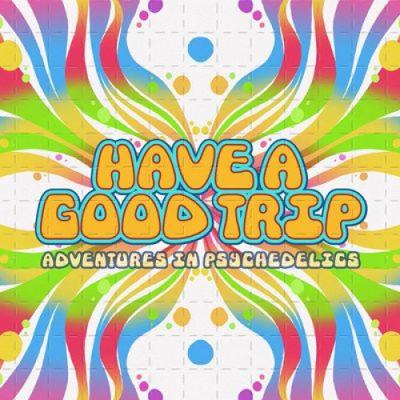
Have a Good Trip: Adventures in Psychedelics Album Cover

"Have a Good Trip: Adventures in Psychedelics" Soundtrack Lyrics

Movie • 2020

Track Listing


"Have a Good Trip: Adventures in Psychedelics — Original Score by Yo La Tengo" Soundtrack Description

Netflix trailer frame for Have a Good Trip with neon, hand-drawn animations, and interview montage
Have a Good Trip — official Netflix trailer imagery, 2020

Overview

Can a documentary built from celebrity trip stories feel musically coherent? Here, the through-line is Yo La Tengo’s original score: modest, textural cues that stitch together interviews, animated PSAs, and reenactments without turning the film into a mixtape. The music favors pulse and halo—small guitars, soft keys, brushed drums—so the punchlines and cautionary beats land clean.

The film’s approach is interview-first; licensed needle-drops are minimal. A band-as-composer solution keeps tone consistent as the movie swings from deadpan comedy to sobering advice. Credits name Yo La Tengo as the original music team and Kim Huffman Cary as music supervisor, a pairing trade coverage and credit sheets corroborate. Variety and The Hollywood Reporter both note the band’s involvement; Metacritic’s credits page lists Yo La Tengo under “original music.”

Trailer frame of animated safety PSA with saturated colors and educational gag timing
Animations and reenactments — the score keeps a steady keel, 2020

Questions & Answers

Who composed the original score?
Yo La Tengo composed and performed the original score.
Is there an official soundtrack album?
No commercial OST has been issued as of now; playlists “inspired by” the film exist on streaming, but they are not the film’s score.
Who handled music supervision?
Kim Huffman Cary is credited as music supervisor; Jody Friedman is credited as music consultant.
Does the movie use famous psychedelic-era songs?
Not prominently. The structure leans on score and dialogue; licensed tracks (if any) are incidental rather than set-piece drivers.
What’s distinctive about the score?
It’s intentionally understated: light motorik pulses, chiming guitars, and ambient pads that let stories and jokes stay front and center.
When did the film release and on what platform?
May 11, 2020, on Netflix; it was originally slated for SXSW 2020 before the festival’s cancellation.

Notes & Trivia

  • Yo La Tengo contributed “over two dozen” original score cues for the film.
  • The project was intended to premiere at SXSW 2020; the Netflix launch replaced the canceled debut.
  • The documentary includes on-screen “bad trip” safety tips delivered as vintage-style PSAs with score stingers.
  • The credits list Nick Offerman as the lab-coat “host,” with the score keeping those interstitials breezy rather than ominous.

Genres & Themes

Indie ambient/minimal motorik underpins story cadence: steady pulses for narration, muted bass for tension, single-line guitar for reflection. Lo-fi psychedelia flavors animations—warbly keys, slight tape-wow, tremolo swells.

Gentle pop varnish (clean chords, brushed kit) smooths tonal jumps between cautionary advice and comic cutaways; sound-design flourishes (reverse tails, whooshes) nod to altered perception without stereotyping it.

Trailer split-screen of interviewees with colorized b-roll where soft guitars and pulses make room for dialogue
Styles mapped to meaning — pulses for stories, shimmer for memory, 2020

Tracks & Scenes

Opening Montage — Yo La Tengo
Where it plays: After the psychedelic cartoon titles, over the first volley of “what happened to me” anecdotes; non-diegetic.
Why it matters: Sets the house tempo—unhurried, inviting—so the film can pivot between humor and caution without whiplash.

“Bad Trip” PSA Stingers — Yo La Tengo
Where it plays: Vintage after-school–style vignettes with Adam Scott and ensemble; non-diegetic bumpers and button cues.
Why it matters: Short, witty hits bookmark the rules-of-thumb segments (set, setting, sitter), keeping the PSA motif playful rather than scolding.

Sting’s Ayahuasca Tale — Yo La Tengo
Where it plays: Under Sting’s long-form recollection; non-diegetic, subdued drones and cyclical guitar.
Why it matters: The cue stays transparent, letting the cadence of his voice carry the scene.

ASAP Rocky Segment — Yo La Tengo
Where it plays: Cutaway beats and animated interludes around Rocky’s story; non-diegetic with light percussion and synth pads.
Why it matters: Gives a contemporary sheen without distracting from the testimony.

“Just Hang On” Gag & Mid-Credits — Yo La Tengo
Where it plays: Fred Willard’s recurring bit and mid-credits tags; non-diegetic musical buttons.
Why it matters: Comedy punctuation—tiny motifs that make the taglines land.

Closing Sequence — Yo La Tengo
Where it plays: Final montage into end credits; non-diegetic, the score becomes most song-like here.
Why it matters: Critics singled out how the band’s sound flowers most clearly at the close.

Trailer music: The Netflix trailer mixes dialogue with documentary score textures; it does not advertise a separate pop single.

Music–Story Links

When the film moves from comic misadventure to safety guidance, the score swaps shimmer for clarity—steady rhythm, less reverb—signaling “listen up.” In longer confessions (Sting, Sarah Silverman), Yo La Tengo thins to drones and simple figure-eights so the storyteller’s timing dictates the cut. The animated PSAs get crisp stingers to frame each rule; the cue design itself behaves like a friendly guide.

Trailer end card with kaleidoscopic graphics as the end-credits cue blooms into a fuller band texture
End-credit bloom — the score finally takes center stage, 2020

How It Was Made

The film was directed and written by Donick Cary and produced over more than a decade of on-and-off interviews. Yo La Tengo delivered the original music; Kim Huffman Cary supervised clearances/placements, with Jody Friedman consulting. The project was slated for SXSW 2020 and pivoted to a Netflix launch after the festival’s cancellation.

Reception & Quotes

Reviews were mixed-positive on entertainment value and skeptical on depth; coverage consistently notes Yo La Tengo’s score and the film’s celebrity bench.

“Indie rock legends Yo La Tengo contributed the original score.” Variety
“Music: Yo La Tengo.” The Hollywood Reporter

Availability: Streaming on Netflix globally (title page regions vary). No official OST release announced.

Additional Info

  • Planned SXSW premiere with a live music component was canceled; Netflix release followed shortly after.
  • Yo La Tengo’s label messaging emphasized “over two dozen” original cues composed for this film.
  • Some streaming playlists labeled “soundtrack” are editorial/inspired collections, not the film’s actual score.
  • The film includes mid-credits and end-credits tags; the score supplies the button cues.
  • Nick Offerman’s lab-set host bits use the score as a sonic “white coat” — tidy, slightly clinical motifs.

Technical Info

  • Title: Have a Good Trip: Adventures in Psychedelics
  • Year / Type: 2020 — Documentary
  • Original Music: Yo La Tengo
  • Music Supervision: Kim Huffman Cary (music supervisor); Jody Friedman (music consultant)
  • Release: May 11, 2020 (Netflix); planned SXSW 2020 premiere canceled
  • Label/Album status: No commercial OST release to date
  • Trailer ID (YouTube): FmQygtqDLHs
  • Runtime: ~85 minutes
  • Production: Sunset Rose Pictures; Sugarshack 2000; Netflix

Canonical Entities & Relations

SubjectRelationObject
Yo La TengocomposedOriginal score for Have a Good Trip: Adventures in Psychedelics
Kim Huffman Carymusic supervisedHave a Good Trip: Adventures in Psychedelics
Jody Friedmanmusic consultantHave a Good Trip: Adventures in Psychedelics
Donick Carywrote & directedHave a Good Trip: Adventures in Psychedelics
NetflixdistributedGlobal streaming release
South by Southwest (SXSW)scheduled premiere2020 festival (canceled)

Sources: Variety; The Hollywood Reporter; Metacritic Credits; Wikipedia; Pitchfork.

November, 10th 2025


A-Z Lyrics Universe

Lyrics / song texts are property and copyright of their owners and provided for educational purposes only.