Soundtracks:  A B C D E F G H I J K L M N O P Q R S T U V W X Y Z #


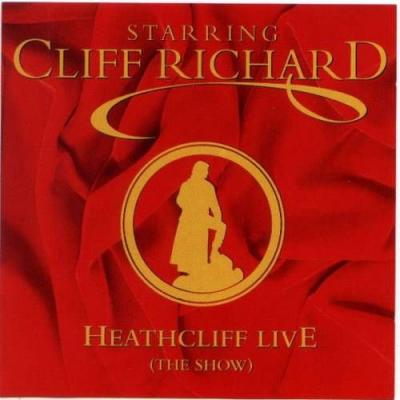
Heathcliff Album Cover

"Heathcliff" Soundtrack Lyrics

Musical • 1996

Track Listing


"Heathcliff: Live (Original 1996 Birmingham/London Cast)" Soundtrack Description

Overview

Can an arena-scale pop musical make Emily Brontë’s bleak romance feel intimate? Heathcliff (1996) answers by putting a guitar-driven score and period-flavored waltzes around the volcanic center of its title character. The result is a soundtrack that swings between moorland melancholy and confrontational rock, letting songs carry what spoken dialogue would dilute.

Composer John Farrar (longtime collaborator of Olivia Newton-John) writes clear melodic hooks; lyricist Tim Rice sharpens them into confessions, reproaches, and vows. Orchestrations (with string weight and folk colors) frame Cliff Richard’s brooding leads, while dance cues and onstage troubadour passages keep the story kinetic in an arena setting. The live cast album captures the show’s arc from yearning (“A Misunderstood Man”) to obsession (“Be With Me Always”) without listing every number in sequence.

Questions & Answers

Who wrote the music and lyrics?
Music by John Farrar; lyrics by Tim Rice. The book is by Cliff Richard and Frank Dunlop.
Is the album a studio concept or stage recording?
Both exist: the 1995 studio set Songs from Heathcliff and the 1996 double-disc Heathcliff: Live recorded during the UK tour.
Where was the filmed performance captured?
At London’s Hammersmith Apollo during the 1997 leg; it was released on VHS/DVD and topped the UK video chart for weeks.
What’s distinctive about the sound world?
A blend of rock balladry, folk-tinged troubadour interludes, pseudo-period waltzes, and choral textures—scaled for arenas but cut for narrative focus.
Which single defined the campaign?
“A Misunderstood Man” led the promotion; “Be With Me Always” and the duet “Had to Be” (with Olivia Newton-John) amplified it.
Does the live album include all dialogue?
No. It focuses on principal songs and set pieces; spoken text (sourced from the novel) is largely trimmed for audio flow.
How did critics vs. fans respond?
Reviews were mixed-to-cold, while fans drove record advance sales and strong video performance.

Notes & Trivia

  • The production launched in arenas (Birmingham’s National Indoor Arena) before traditional theatres—unusual for a literary stage musical.
  • An onstage troubadour (guitarist Gordon Giltrap) bridges scenes with folk-styled instrumentals.
  • The orchestrator credit includes Sean Callery—later known for television scoring.
  • Marketing cheekily quoted hostile reviews on posters alongside glowing fan reactions.
  • The live album credits the ensemble “Elements” as onstage vocalists within the drama.

Genres & Themes

Rock ballads → Obsession & confession: Power-ballad architecture gives Heathcliff first-person testimony—verses brood, choruses erupt, mirroring his all-or-nothing love.

Waltzes & salon cues → Social polish vs. impulse: Orchestral dance numbers at the Grange signal class aspiration and Cathy’s tug-of-war between status and passion.

Folk/trobador passages → Memory & fate: Acoustic interludes function as a chorus, nudging transitions and foreshadowing returns to the moors.

Choral/ensemble writing → Community pressure: Group textures embody gossip, family strictures, and the moral frame Heathcliff defies.

Tracks & Scenes

“A Misunderstood Man” – Cliff Richard
Where it plays: Early in Act I as Heathcliff frames his own legend; staged as a direct-address confession with band onstage (non-diegetic).
Why it matters: Establishes his grievance and romantic absolutism, a thesis song the show revisits later as a credo.

“The Grange Waltz” – Company
Where it plays: Thrushcross/Grange social scene; formal dance sequence under chandeliers (diegetic within the party).
Why it matters: Musically marks Cathy’s seduction by status and Edgar’s world; periodic triple meter contrasts the moors’ freedom.

“Had to Be” – Cliff Richard & Olivia Newton-John (studio single antecedent)
Where it plays: Concept-album moment representing the youthful bond; incorporated in promotional materials; not all live stagings included the duet in identical form.
Why it matters: The pop sheen previews Farrar’s melodic palette and the Heathcliff–Cathy inevitability motif.

“When You Thought of Me” – Cliff Richard & Company
Where it plays: Act I closing stretch as separation looms; staged with moving platforms and tableau (non-diegetic foreground).
Why it matters: Converts memory into dramatic propulsion; melodic cells recur in the Act II reprise.

“Mrs. Edgar Linton” – Company (featuring Cathy)
Where it plays: After Cathy’s choice; ensemble frames her new identity at the Grange (part-diegetic, stylized narration).
Why it matters: Ironically celebrates security while underscoring loss and the class gulf that drives Act II.

“Gypsy Bundle” – Troubadour & Company
Where it plays: Mid-Act I travel/interlude; guitarist opens with folk riff as scene shifts (diegetic within staging device).
Why it matters: Adds earthy color and kinetic momentum; the cue helps the arena staging breathe between heavy scenes.

“I Do Not Love You, Isabella” – Heathcliff / Isabella
Where it plays: Early Act II confrontation; stark staging and frontal delivery (non-diegetic, dramatic aria style).
Why it matters: Strips romance of glamour; the cruelty clarifies revenge as pathology, not heroism.

“The Gambling Song” – Ensemble
Where it plays: Act II social underbelly sequence; rhythmic ostinato with percussive staging (semi-diegetic tavern energy).
Why it matters: Shows Heathcliff’s corrosive influence on those around him; musical texture turns jagged, not lush.

“The Madness of Cathy” – Cathy
Where it plays: Late Act II breakdown; isolating light, reduced accompaniment (non-diegetic inner monologue).
Why it matters: Gives Cathy a psychological center and prepares the ghostly coda.

“Be With Me Always” – Heathcliff & Cathy
Where it plays: Climactic vow and spectral after-image near the end (non-diegetic, then staged as afterlife tableau).
Why it matters: The score’s catharsis; motive returns in a brief reprise to close the circle.

Reference touchstones frequently cited by fans and discographies include Official Charts Company data, MusicBrainz credits, and Discogs release notes.

Music–Story Links

Heathcliff’s opening statement (“A Misunderstood Man”) primes us to accept his self-mythologizing; when “Mrs. Edgar Linton” arrives, the score musically “civilizes” Cathy, confirming the wedge he narrates. The duet vocabulary (“Had to Be” in the concept era; “Be With Me Always” onstage) bookends their bond—first as adolescent inevitability, finally as an otherworldly fixation. The brittle pulse of “The Gambling Song” and the plain-spoken “I Do Not Love You, Isabella” track the character’s slide from grievance to harm. Cathy’s solo prism (“The Madness of Cathy”) plays like an answer song to Heathcliff’s thesis, revealing the cost of his absolutism.

How It Was Made

Cliff Richard pursued the role for years; once Tim Rice joined, John Farrar developed a song stack that could work as both a concept album and a live score. Rehearsals were staged at scale for arenas, with production music director Mike Moran coordinating band and playback needs. Gordon Giltrap’s onstage guitar provided connective tissue between scenes, while Sean Callery’s orchestration work added cinematic weight. A film capture at the Hammersmith Apollo preserved the production and fed the album’s afterlife.

Reception & Quotes

Critical response skewed skeptical even as audiences filled venues. Pre-sale figures set attention-grabbing records for a UK musical tour; the home-video release then dominated the UK chart for weeks.

“Withering rather than Wuthering.” — a widely quoted critical jibe reprinted in show marketing
“Living dull.” — a terse pan echoed in press roundups

Fan press and mainstream outlets noted the contrast. BBC News and The Independent both chronicled the phenomenon of negative reviews vs. strong sales.

Availability: the live album remains streamable; the filmed performance is available on DVD and persists in library/collector circuits.

Additional Info

  • Opening advance takings were reported at roughly £8.5 million for the tour’s launch.
  • The video edition was issued by VCI; a companion “making of” title followed.
  • Key single releases around the rollout: “A Misunderstood Man,” “Had to Be,” “Be With Me Always.”
  • Olivia Newton-John features heavily on the 1995 studio album; live staging centers Cliff Richard and Helen Hobson.
  • The live album sequencing groups numbers by dramatic flow; some reprises and bridges differ from performance order.
  • Arena acoustics were addressed with robust sound design and visible band elements—uncommon for literary adaptations at the time.
  • Some promotional TV spots used performance clips rather than a bespoke “trailer.”

Technical Info

  • Title: Heathcliff: Live (Original 1996 Birmingham/London Cast)
  • Year: 1996 (album); filmed performance released 1997 (VHS/DVD)
  • Type: Live cast recording from stage musical
  • Composers: John Farrar
  • Lyricist: Tim Rice
  • Book: Cliff Richard, Frank Dunlop
  • Orchestrations: Sean Callery
  • Music direction: Mike Moran
  • Principal cast: Cliff Richard (Heathcliff), Helen Hobson (Cathy), Gordon Giltrap (Troubadour), Jimmy Johnston, Sara Haggerty, et al.
  • Label / release status: EMI/Parlophone (2×CD); widely available via major digital services
  • Notable placements (stage moments): “A Misunderstood Man,” “Mrs. Edgar Linton,” “I Do Not Love You, Isabella,” “The Madness of Cathy,” “Be With Me Always.”
  • Video capture: Hammersmith Apollo, London; UK retail by VCI (VHS/DVD); strong UK Official Video Chart run.

Canonical Entities & Relations

SubjectRelationObject
Heathcliff (1996 stage musical)music byJohn Farrar
Heathcliff (1996 stage musical)lyrics byTim Rice
Heathcliff (1996 stage musical)book byCliff Richard; Frank Dunlop
Heathcliff: Live (album)is part ofHeathcliff (stage musical)
Heathcliff: Live (album)performed byCliff Richard & company
Heathcliff (video, 1997)filmed atHammersmith Apollo, London
Heathcliff (video, 1997)publisherVCI (Video Collection International)
Gordon Giltrapappears asTroubadour (onstage guitarist)
Official Charts CompanychartedHeathcliff (video) – UK Video Chart

Sources: Official Charts Company; BBC News; The Independent; MusicBrainz; Discogs; Apple Music; Spotify; IMDb.

November, 10th 2025


A-Z Lyrics Universe

Lyrics / song texts are property and copyright of their owners and provided for educational purposes only.