Soundtracks:  A B C D E F G H I J K L M N O P Q R S T U V W X Y Z #


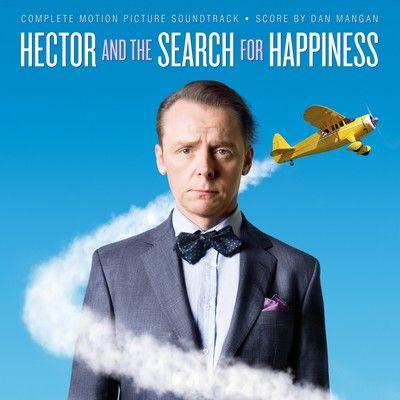
Hector and the Search for Happiness Album Cover

"Hector and the Search for Happiness" Soundtrack Lyrics

Movie • 2014

Track Listing


"Hector and the Search for Happiness (Original Motion Picture Soundtrack)" Soundtrack Description

Hector and the Search for Happiness 2014 official trailer still of Simon Pegg as Hector beginning his journey
Hector and the Search for Happiness — official trailer art (2014)

Overview

Can a travel comedy-drama juggle monastery calm, Shanghai neon, and a warlord’s compound without sounding like a playlist? This soundtrack does, because it treats those stops as chapters in a single diary. The core is an original score by Dan Mangan and Jesse Zubot—short cues that sketch moods fast—interleaved with choice source tracks that color specific places and crowds.

Mangan & Zubot keep cues lean (often two–three minutes), with bowed strings, brushed percussion, and nimble guitar figures that let scenes breathe. When the film needs cultural texture, it drops in cuts like Parov Stelar’s electro-swing for Shanghai nightlife or vintage dance-band material for retro contrast. Release metadata and credits align across Spotify and Apple Music; composer credits are consistent with Wikipedia and IMDb.

Trailer frame of Hector on a plane, signaling the film's recurring airport motif
Airports & thresholds — a recurring musical motif

Questions & Answers

Who composed the score?
Dan Mangan and Jesse Zubot wrote the original score performed by small ensemble with string emphasis.
Is there more than one album?
Yes. A 14-track composer album (score + a few licensed cuts) and an expanded “Various Artists” version (22–23 tracks) exist on digital platforms.
What’s the overall sound?
Indie-chamber score cues with acoustic textures; add-on source music ranges from electro-swing to highlife-adjacent grooves and vintage big-band.
Do the cue titles map to story beats?
Often. Titles like “Prayer Flags (Hallucinations),” “Terminal,” “Baresco’s Carjack,” and “Jude in the Booth” mirror on-screen chapters.
Where can I verify credits quickly?
Filmmusicreporter and moviemusic.com list official track details; Spotify and Apple Music carry the released albums.
Trailer song info?
Marketing used score excerpts and library cues; the official trailers chiefly spotlight the film’s theme palette rather than a single pop sync.

Notes & Trivia

  • The cue set is short by design: the 14-track album runs ~32 minutes; many cues are under three minutes.
  • “Room Service” by Parov Stelar appears on the official soundtrack and is associated with the Shanghai nightclub chapter.
  • Vintage dance-band cut “Allah’s Holiday” (Ted Lewis & His Orchestra) provides a playful retro contrast amid modern cues.
  • An expanded “Various Artists” edition adds African-scene selections like “Hearts Ne Kotoko” (Hedzoleh Soundz) and Abraham’s Seed tracks.
  • Composer Dan Mangan also released a separate “Vessel (Extended Film Version)” tied to the campaign.

Genres & Themes

Indie chamber score → Introspection: Plucked guitar, close-miked strings, and light percussion frame Hector’s notebook aphorisms without sentimental overload.

Electro-swing & club forms → Hedonism vs. distraction: A glossy, beat-driven track sells the Shanghai nightlife as instant happiness—fun, but hollow.

Traditional/retro cues → Memory & irony: Early-20th-century dance-band color undercuts the “search” with a wink, reminding us that joy is often borrowed from the past.

Afro-grooves & communal rhythm → Belonging: Drum-centered cues and highlife-flavored selections turn crowd scenes into shared ritual rather than backdrop.

Trailer frame of neon Shanghai nightlife that pairs with the film’s club music color
Shanghai palette — brass, beats, and neon

Tracks & Scenes

“Vessel (Extended Film Version)” — Dan Mangan + Blacksmith
Where it plays: Featured in campaign materials and over early narrative passages; non-diegetic thematic statement.
Why it matters: Establishes the score’s warm-grain timbre and “set out, take notes” pulse; the melody threads later cues.

“Prayer Flags (Hallucinations)” — Dan Mangan & Jesse Zubot
Where it plays: Mountain monastery visit; non-diegetic with airy textures and bowed harmonics.
Why it matters: Signals Hector’s attempt at contemplative happiness—serene on top, restless underneath.

“Room Service” — Parov Stelar
Where it plays: Shanghai nightclub sequence; effectively diegetic club atmosphere spilling into montage.
Why it matters: A modern hedonism cue—slick swing beats that contrast the film’s gentler score language.

“Terminal” — Dan Mangan & Jesse Zubot
Where it plays: Airport transitions; non-diegetic, brisk ostinato and short phrases.
Why it matters: Travel as liminal headspace—the cue resets tone between chapters.

“Baresco’s Carjack” — Dan Mangan & Jesse Zubot
Where it plays: Colombia chapter; tense non-diegetic rhythm under the kidnapping/escort by the drug lord’s men.
Why it matters: Tightens the film’s light mood into real peril without abandoning the chamber palette.

“Hearts Ne Kotoko” — Hedzoleh Soundz
Where it plays: African village celebration; partially diegetic dance energy during communal scenes.
Why it matters: Grounds a key lesson in shared joy—music as group heartbeat, not background filler.

“Allah’s Holiday” — Ted Lewis & His Orchestra
Where it plays: Light interlude underscoring retro-tinged montage; non-diegetic needle-drop.
Why it matters: Vintage brightness creates ironic distance, then lets the film slide back into sincerity.

“Jude in the Booth” — Dan Mangan & Jesse Zubot
Where it plays: Late-film emotional pivot around Hector’s London relationships; intimate, non-diegetic close-miking.
Why it matters: Brings the search home; the melody answers the early “Vessel” idea with fuller acceptance.

For verification of titles/placements and release info, see Filmmusicreporter, moviemusic.com, Spotify, and Apple Music.

Music–Story Links

Score cues mirror notebook “lessons”: terse phrases for tentative insights, fuller cadences when an idea lands. Electro-swing in Shanghai tempts Hector to mistake stimulation for meaning; monastic textures pare the mix down to breath and bow noise, aligning with quiet observation. Communal African grooves flip the perspective—the camera watches Hector join in rather than judge from the edge—so when London motifs return, they feel less cramped and more humane.

Trailer frame of Hector among a joyful crowd, matching the soundtrack’s communal percussion
Community scenes — percussion, call-and-response, shared pulse

How It Was Made

Director Peter Chelsom favored compact cues to keep travel scenes nimble. Dan Mangan and Jesse Zubot delivered a chamber-scale score that could pivot quickly between settings. The music team folded in licensed tracks as “postcards” from each stop rather than wall-to-wall pop. Production notes place key scenes across South Africa (doubling for multiple locales), Vancouver interiors, and Shanghai, explaining the mix of studio score and location-flavored source music.

Reception & Quotes

Critical reception leaned mixed, but most singled out the film’s travel energy and gentle tone. The soundtrack’s modesty—never overselling “happiness”—helped the film avoid a wall-to-wall feel-good glaze.

“Chelsom has mistaken blokish fantasy for happiness; whatever enlightenment there is here proves far too easily gained.” The Guardian
“Village celebration… whooping it up… Hector drinks wine and dances with them.” RogerEbert.com (scene description)

Availability: the 14-track composer album and an expanded “Various Artists” edition stream widely on major platforms.

Additional Info

  • The composer album logs 14 tracks; the expanded digital set lists 22–23 tracks depending on region/platform.
  • Parov Stelar’s “Room Service” is an officially credited sync on the album versions.
  • Catalog entries consistently attribute music to Dan Mangan & Jesse Zubot; release label commonly shown as Music.Film.
  • Trailer campaigns used multiple cuts; no single viral pop song defined the marketing.
  • Region availability: both albums appear across Spotify/Apple Music with minor date differences by storefront.

Technical Info

  • Title: Hector and the Search for Happiness (Original Motion Picture Soundtrack)
  • Year: 2014
  • Type: Film soundtrack (score + selected source tracks)
  • Composers: Dan Mangan; Jesse Zubot
  • Selected notable placements: “Room Service” (Shanghai club); “Prayer Flags (Hallucinations)” (monastery); “Baresco’s Carjack” (Colombia peril); “Terminal” (airports); “Hearts Ne Kotoko” (village celebration)
  • Release context: 14-track album (composer-led) plus expanded digital “Various Artists” edition
  • Label/edition notes: Music.Film (digital); multi-territory storefronts

Canonical Entities & Relations

SubjectRelationObject
Hector and the Search for Happiness (film)directed byPeter Chelsom
Hector and the Search for Happiness (film)music byDan Mangan; Jesse Zubot
Hector and the Search for Happiness (Original Motion Picture Soundtrack)record labelMusic.Film (digital)
Parov Stelarappears on soundtrack with“Room Service”
Ted Lewis & His Orchestraappears on soundtrack with“Allah’s Holiday”
Hedzoleh Soundzappears on expanded edition with“Hearts Ne Kotoko”

Sources: Filmmusicreporter; Spotify; Apple Music; moviemusic.com; IMDb; Wikipedia; The Guardian; RogerEbert.com.

Very, extremely, immensely, amazingly fascinating film with a magnificent, beautiful, tremendous sense of humor. Dedicated to all lovers of travel and self-discovery. The essence of the film: British psychologist, a typical representative of the upper middle class discovers that his life is a solid routine and boredom of walking in the circles. And he asks himself if he is happy. And answered himself honestly that no. Well, he decides to go on a long journey, to know what the happiness is. And going on an incredible adventure, among which there are serious mishaps, such as waiting for a lethal execution in moist African prison, he still gets the answer to the question, what is happiness. What conclusion should be received from the audience of this movie? With only traveling and getting to know other people, visiting different places and seeing other countries, we not only receive cultural diversity, but also answering themselves the question: "What is happiness?" But perhaps a more specific, for personal usage – "Am I happy"? In the collection we will hear artists such as Gorillaz and Abraham's Seed and will listen songs like pop, jazz (Room Service), folk (Party Like HotDog), rap and rock (Vessel). Of the 16 songs of the collection, the Internet provides only exactly half. But it's enough to say that music producers made a selection of single direction – folk. To give the listener to feel the breeze of freedom in their hair. Let this wind of change brings us what we want from it. And we will be able to understand that the world is waiting for us. If not with open arms – it’s okay. We all only the guests on this planet, wherever we live.

November, 10th 2025

Movie profile on IMDb, Rotten Tomatoes
A-Z Lyrics Universe

Lyrics / song texts are property and copyright of their owners and provided for educational purposes only.