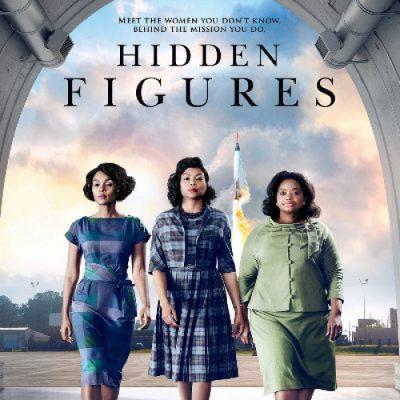
"Hidden Figures" Soundtrack Lyrics
Movie • 2016
Track Listing
Pharrell Williams
Pharrell Williams
Lalah Hathaway
Mary J. Blige
Pharrell Williams
Alicia Keys
Janelle Monae
Pharrell Williams
Janelle Monae
Kim Burrell
"Hidden Figures (Music From & Original Score)" Soundtrack Description
Overview
How do you score orbital math and office sprints with the same pulse? Hidden Figures (2016) splits its music into two interlocking releases: Hidden Figures: The Album — Pharrell Williams’s period-flavored songs with guests — and Hidden Figures (Original Score) by Hans Zimmer, Pharrell Williams, and Benjamin Wallfisch. Together they fuse early-’60s soul, gospel uplift, and modern textures into a single dramatic engine.
The songs tilt human — claps, horns, church-trained choirs — while the score adds navigational grit: analog pulses, female vocal ensembles, and piano figures that suggest Katherine Johnson’s thought process. Interviews and trade coverage note the intent to avoid the usual “space = brass fanfare” cliché and instead center Black female voices and a diversified orchestra. (Variety; The Hollywood Reporter; Vulture)
Questions & Answers
- Are there two official music releases?
- Yes: a songs album (Hidden Figures: The Album) produced and largely written by Pharrell Williams, and a separate Original Score by Zimmer/Williams/Wallfisch.
- Who handled music supervision?
- Anton Monsted oversaw music supervision on the score side; the songs album was spearheaded by Pharrell with Columbia/i am OTHER/Sony Classical.
- What artists feature on the songs album?
- Guest vocals include Kim Burrell, Lalah Hathaway, Mary J. Blige, Alicia Keys, and Janelle Monáe; Pharrell appears as writer/producer and artist.
- Any notable period tracks in the film not on the Pharrell album?
- Yes: Ray Charles’s “Sticks and Stones,” Miles Davis’s “So What,” Ruth Brown’s “Have a Good Time,” Wynonie Harris’s “Don’t Take My Whiskey Away From Me,” among others.
- Why was the score ineligible for Oscar shortlisting?
- Academy rules disqualified it due to multiple principal composers; it was, however, Golden Globe– and Grammy-nominated.
- What’s the musical conceit behind the score?
- Blend gospel harmonies, women’s voices, and tape-era electronics to echo the protagonists’ perspective and the era’s technology.
Notes & Trivia
- The songs album arrived December 2016; the score album followed in January 2017.
- Pharrell road-tested material live at TIFF before release; “I See a Victory” previewed there.
- Herbie Hancock contributed piano on the score; choir arrangements involved gospel specialists.
- The trailer campaign prominently used Pharrell’s “Runnin’.”
- Several vintage R&B/jazz cues appear in-film but not on The Album.
Genres & Themes
Gospel & hand-clap soul — resolve, community, and forward motion; used for victories, church scenes, and post-mission catharsis.
Analog pulses & piano ostinatos — computation and focus; repeating figures mirror Katherine’s mental “loops.”
Early-’60s R&B/jazz — cultural ground truth; cafeteria radios and dances place NASA’s segregated Virginia in a lived sound world.
Tracks & Scenes
Selected placements from reliable soundtrack listings and press; exact timecodes vary by cut.
“Runnin’” — Pharrell Williams
Where it plays: montage threads of Katherine’s long bathroom dashes and workdays; non-diegetic, intercut with Langley campus hustle.
Why it matters: the lyric-to-picture fit is literal — motion as survival and professionalism under pressure.
“Surrender” — Lalah Hathaway & Pharrell Williams
Where it plays: after setbacks, as calculations and personal compromises collide; non-diegetic over office/night exterior transitions.
Why it matters: gospel harmonies frame endurance as a communal practice, not a solo act.
“I See a Victory” — Kim Burrell & Pharrell Williams
Where it plays: late-film celebration/end credits sequence; non-diegetic with choir.
Why it matters: a capstone chorus that reframes a “footnote” in history as headline — the emotional exit music.
“Crave” — Pharrell Williams
Where it plays: buoyant interstitials as the women close in on a solution; non-diegetic.
Why it matters: horn stabs and claps give the drama a dance-floor swing without losing period flavor.
“Mirage” — Mary J. Blige
Where it plays: personal-life cross-cutting; non-diegetic song placement under domestic scenes.
Why it matters: a contemporary soul voice shading the characters’ interior lives.
“Sticks and Stones” — Ray Charles
Where it plays: party/restaurant ambience; diegetic via radio/band mix.
Why it matters: anchors the film’s soundscape in contemporary Black pop of the era.
“So What” — Miles Davis
Where it plays: low-key transitional scene; diegetic/background.
Why it matters: cool-jazz space to breathe — intellect without noise.
Score cue: “Hidden Figures” — Hans Zimmer
Where it plays: problem-solving montage preceding the Friendship 7 launch decisions; non-diegetic.
Why it matters: piano + ticking textures render math as momentum.
Score cue: “Redstone” / “Liftoff” — Zimmer/Williams/Wallfisch
Where it plays: launch-adjacent build and release; non-diegetic with choir swells.
Why it matters: gospel voicings meet mission control tension, emphasizing who’s in the room.
Music–Story Links
- Running vs. standing still: “Runnin’” literalizes Katherine’s commute to a distant restroom, turning systemic barriers into rhythm and hook.
- Community as amplifier: choir-driven songs (“I See a Victory,” “Surrender”) align triumphs with collective voices, not lone-genius tropes.
- Brains have a beat: piano ostinatos and tape-warble textures translate calculation into feel — you can “hear” the solution approach.
- Place & time: Ray Charles, Ruth Brown, Miles Davis tether scenes to the lived 1960–62 soundbed, so the history isn’t abstract.
How It Was Made
Pharrell originated song sketches in a 1960s vein, then co-scored with Zimmer and Wallfisch. The team diversified the session players and foregrounded women’s voices; they brought in Herbie Hancock and layered analog/tape processes to evoke period machinery. Music supervision coordinated rights for vintage R&B/jazz while the studio issued two distinct albums.
Reception & Quotes
Trade press highlighted the atypical NASA sound and the decision to center gospel textures. The songs album earned a Grammy nomination; the score drew Golden Globe and Grammy nods.
“We wanted to get away from assumptions about what space should sound like.” The Hollywood Reporter
“Bridge to modern culture… a more diversified orchestra, with women and African-American musicians.” Vulture
“Two songs were pushed for Oscar consideration: ‘Runnin’’ and ‘I See a Victory.’” Variety
Trusted discographic baselines can be cross-checked on Apple Music and IMDb’s soundtrack page.
Additional Info
- Album release cadence: songs (Dec 2016) → score (Jan 2017).
- Rollout singles: “Runnin’,” “Surrender,” “Crave,” “Able,” “I See a Victory.”
- Not-on-album but in-film: Ray Charles, Miles Davis, Ruth Brown, Wynonie Harris, The Miracles, The Hearts.
- Trailer music frequently spotlighted “Runnin’.”
- Score vocals feature prominent gospel soloists and choirs; arrangements credit gospel specialists.
Technical Info
- Title: Hidden Figures — The Album; Hidden Figures (Original Score)
- Year: 2016 (songs); 2017 (score)
- Type: Song compilation; Original Motion Picture Score
- Composers: Hans Zimmer; Pharrell Williams; Benjamin Wallfisch
- Music supervision: Anton Monsted (score side)
- Labels: Columbia / i am OTHER / Sony Classical (songs); Sony Masterworks (score)
- Selected notable placements: “Runnin’” (bathroom run/work montage); “I See a Victory” (celebration/credits); “Sticks and Stones” (party/restaurant); “So What” (ambient transitional)
Canonical Entities & Relations
| Subject | Relation | Object |
|---|---|---|
| Hidden Figures (film) | directed-by | Theodore Melfi |
| Hidden Figures: The Album | produced-by | Pharrell Williams |
| Hidden Figures (Original Score) | composed-by | Hans Zimmer; Pharrell Williams; Benjamin Wallfisch |
| Anton Monsted | music-supervision | Hidden Figures (score) |
| Kim Burrell | performed-vocals | “I See a Victory” |
| Lalah Hathaway | performed-vocals | “Surrender” |
| Mary J. Blige | performed-vocals | “Mirage” |
| Ray Charles | performed | “Sticks and Stones” (in-film only) |
| Miles Davis | performed | “So What” (in-film only) |
Sources: Variety; The Hollywood Reporter; Vulture; Wikipedia; Apple Music; IMDb Soundtracks; PopSugar; Benjamin Wallfisch official site.
The film is an encouraging thing, depicting the fight for their civil rights of three main characters, black women in the era of aeronautics birth, backgrounded with their work in NASA, where they became the lead mathematicians to calculate the orbit of the space shuttle that must fly from the Earth. One of the big politicians ordered to NASA – either they make a man fly to space or he shuts down NASA at all, as no one need the space agency that does not actually send anyone to space. The antagonists here are heroes of Kirsten Dunst and Jim Parsons, who can’t accept the fact of black-skinned people working together with them at extremely important space project. They are making obstacles to protagonists all the time. The latter are supported by Kevin Costner, who is trying to eliminate those hindrances and to make the entire project work, as it is required from it. Lately, there were many films that exploit the topic of blacks vs. whites fight. The main essence of them all is unified – someone was harshly suppressed (like in this film, when the toilet for “colored” was somewhere in the boonies, which was changed later), they fought back, they suffered a lot during a fight, but they managed to overcome it & to succeed. This is pretty the result of this film. The music isn’t too flamboyant. The mainstream is represented by Pharrell Williams, who is the author of many songs in the collection. The rest is Alicia Keys and Mary J. Blige among the celebrities. The lyrics aren’t too diverse in the songs either – the most part is about believing in yourself and achieving goals even you must overcome the hardships every day. A song Able is about it. I See a Victory, as it is obvious from the name, has the inspiriting lyrics, too. Only Jalapeno song diverges from the rest with its rather food name.November, 10th 2025
More about "Hidden Figures": Official Movie Site, IMDb Profile, Wikipedia PageA-Z Lyrics Universe
Cynthia Erivo Popular
Ariana Grande Horsepower
Post Malone Ain't No Love in Oklahoma
Luke Combs Good Riddance (Time of Your Life)
Green Day Bye Bye Bye
*NSYNC You're the One That I Wan
John Travolta & Olivia Newton-John I Always Wanted a Brother
Braelyn Rankins, Theo Somolu, Kelvin Harrison Jr. and Aaron Pierre The Power of Love
Frankie Goes to Hollywood Beyond
Auli’i Cravalho feat. Rachel House MORE ›