
"History Boys" Soundtrack Lyrics
Movie • 2006
Track Listing
Gracie Fields
New Order
The Smiths
Samuel Barnett & Richard Sission
The Clash
Samuael Barnett & Richard Sission
Echo & The Bunnymen
The Cure
Pigbag
Rufus Wainwright
Rufus Wainwright
The Beat
Aztec Camera
The Pretenders
"The History Boys (Original Soundtrack)" Soundtrack Description
Overview
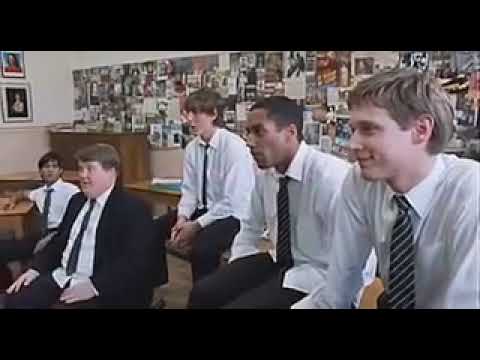
How do torch songs from the 1930s sit next to indie anthems from 1983 and still tell one story? The film’s answer is simple: let teenagers, teachers, and a piano do the stitching. Set in Sheffield in 1983, the soundtrack swings from staff-room nostalgia to sixth-form restlessness, using cabaret standards sung in class to counterpoint post-punk and synth-pop needle-drops.
The official album blends cast performances arranged for piano with era-defining cuts from The Smiths, New Order, The Cure, Echo & the Bunnymen, Pigbag, and The Clash. Around them, composer George Fenton provides the film score framework while on-screen pianist Scripps (Jamie Parker) folds Rachmaninov’s romantic melancholy into lessons and corridors. It’s a neat trick: the music sounds like memory and adolescence at once. A dependable reference here is AllMusic’s release listing.
Questions & Answers
- Who composed the film’s score?
- George Fenton is credited as the film’s composer; the album otherwise leans heavily on licensed songs and cast performances.
- Are the classroom songs performed by the actors?
- Yes. Numbers like “Bewitched” and “L’Accordéoniste” are performed in-character by Samuel Barnett, Jamie Parker, and company, with Richard Sisson as musical director/arranger.
- Which 1980s tracks anchor the period setting?
- Key cuts include “Blue Monday” (New Order), “This Charming Man” (The Smiths), “A Forest” (The Cure), and “Never Stop (Discotheque)” (Echo & the Bunnymen).
- Is “Bye Bye Blackbird” the funeral song?
- Yes. The boys sing it at Hector’s memorial service; a cast rendition appears on the album.
- Was the soundtrack released physically?
- Yes. A CD release appeared in November 2006 (Korova/Warner), alongside digital EPs in October 2006.
- Does the album include classical music heard in the film?
- Fragments are heard on screen (e.g., Rachmaninov’s Piano Concerto No.2, Adagio), but the commercial album emphasizes songs and cast pieces.
- Is Rufus Wainwright’s version of “Bewitched” part of the package?
- Yes. His studio cover closes out the album selections.
Notes & Trivia
- The play’s original music direction by Richard Sisson carries into the film, preserving the classroom-cabaret feel.
- “Blue Monday” places the story squarely in 1983—the year of its original 12″ release.
- Jamie Parker (Scripps) performs live piano in several scenes, including the Rachmaninov excerpt used as romantic counterpoint.
- Two short digital EPs preceded the full CD, a distribution quirk for a U.K. drama in 2006.
- Some album versions tag The Smiths’ “This Charming Man (New York Vocal)” mix rather than the standard single.
Genres & Themes
Cabaret standards & pre-war pop signal yearning and unrequited desire—Posner’s torch songs externalize feelings he cannot say aloud.
Post-punk / indie (The Smiths, Echo & the Bunnymen) codes cleverness, posture, and the abrasive wit of Oxbridge-bound boys testing personas.
Synth-pop / alternative dance (New Order) marks the wider world intruding—club beats and drum machines frame a generation moving beyond staffroom rules.
Art-rock & new wave instrumentals (Pigbag, Clash’s “Mustapha Dance”) drive kinetic hallway energy and exam-rush momentum.
Romantic piano & late-Romantic classical (Rachmaninov) underline bittersweet mentorships and the film’s elegiac final turn.
Tracks & Scenes
Note: timecodes vary by edition; placements below reflect on-screen usage described in reliable listings and film documentation.
“Blue Monday” — New Order
Scene: Early in the school-year stretch, the track underlines the 1983 setting with a cool, mechanized pulse as the boys move through school spaces; non-diegetic. Approx. early act. Length: excerpt.
Why it matters: It instantly dates the world and contrasts with Hector’s nostalgic repertoire.
“This Charming Man (New York Vocal)” — The Smiths
Scene: Early montage setting the lads’ swagger and banter; non-diegetic needle-drop tying self-invention to jangly guitar attitude. Approx. first third. Length: excerpt.
Why it matters: Marr’s guitar sparkle telegraphs style and irony—an aural wink at Dakin’s allure and Posner’s crush.
“A Forest” — The Cure
Scene: Corridor transitions and night-walk energy; non-diegetic atmosphere during exam prep sequences. Mid-film. Length: excerpt.
Why it matters: Tension and distance—appropriate for boys wandering between bravado and doubt.
“Never Stop (Discotheque)” — Echo & the Bunnymen
Scene: Kinetic cut for group bustle (bus rides / classroom resets); non-diegetic. Mid-film. Length: excerpt.
Why it matters: Propulsive beat underscores collective movement toward Oxbridge interviews.
“Papa’s Got a Brand New Pigbag” — Pigbag
Scene: Brief, brassy punctuation during schoolyard or corridor rush; non-diegetic. Mid-film. Length: excerpt.
Why it matters: A knowing left-field dance cue, signaling cheek and youthful chaos.
“Mustapha Dance” — The Clash
Scene: Up-tempo transitional cue; non-diegetic. Late-mid film. Length: excerpt.
Why it matters: Punk attitude filtered through disco dub—perfect for rule-testing boys.
“L’Accordéoniste” — Michel Emer (classroom performance)
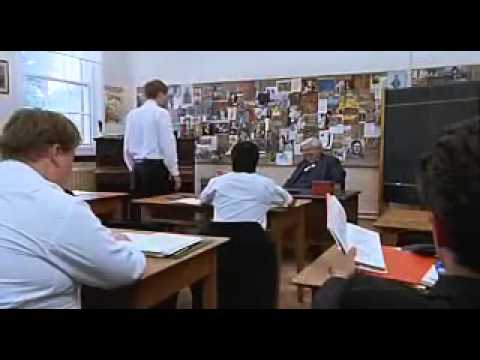
Scene: Posner (with Scripps at piano) performs in General Studies; diegetic, extended classroom moment.
Why it matters: A self-revelation in chanson form—romance, longing, and coded confession.
“Bewitched, Bothered and Bewildered” — Rodgers & Hart (classroom performance)
Scene: Sung by Posner (with Scripps), diegetic; the melody recurs as emotional motif.
Why it matters: Lyrics mirror complicated desire; later echoed by Rufus Wainwright’s studio cover on the album.
“Bye Bye Blackbird” — Dixon/Henderson (cast)
Scene: Sung by the boys at Hector’s memorial service; diegetic, late-film. Length: extended scene performance.
Why it matters: A farewell and a thesis—education as something you pass on.
“Now, Voyager” — Max Steiner (theme quotation)
Scene: Briefly referenced in class as cine-literate play; diegetic/quoted.
Why it matters: The film’s game of cultural echoes—teaching through old Hollywood romance.
Trailer cues (not all on album)
Scene: The U.S./U.K. trailers primarily recycle album inclusions to sell the 1983 tone; non-diegetic marketing cut.
Why it matters: Establishes the compilation identity up front.
Music–Story Links
When Hector encourages performance, Posner’s chansons become safe speech—songs do the talking he can’t. That’s why “Bewitched” lands harder than any confession. In contrast, “Blue Monday” and “This Charming Man” arrive from outside the school, signaling the world these boys are about to enter: fashionable, ironic, competitive. The elegy “Bye Bye Blackbird” closes the circle—classroom music becomes ritual, and the pupils sing for the teacher who taught them to love it.
How It Was Made
Director Nicholas Hytner retained the National Theatre cast and much of the play’s music DNA. George Fenton composed the film score, while Richard Sisson served as musical director/arranger for the cast-sung standards and classroom pieces. Music supervision on the feature is credited to Emily Rogers Swanson, coordinating the period song placements and album coherence. The result is a hybrid: part score, part in-world performance, part 1983 mixtape.
Reception & Quotes
Critics noted the film’s faithful energy and tonal balance. The pop selections were frequently singled out for how neatly they time-stamp the narrative without drowning out the dialogue-driven playwriting.
“Better than the original play… flow and intimacy.” Time
“Brilliant and infectious.” New York
“Witty and pointed.” Rolling Stone
Availability note: AllMusic lists the album release as November 21, 2006, with earlier digital EPs in October 2006; Discogs documents Korova/Warner physical editions.
Additional Info
- Label lineage: Korova (Warner Music UK) handled the CD release.
- Digital EPs split three classroom tracks across two mini-releases as pre-launch teasers.
- Rufus Wainwright’s “Bewitched” provides a contemporary singer-songwriter echo to Posner’s standard.
- Some cues are edited for the film; album versions may differ in mix/length (e.g., “Blue Monday” 12″ length on certain pressings).
- Classical excerpt (Rachmaninov Adagio) is performed on screen by Jamie Parker as Scripps.
- IMDB’s soundtrack page is a quick cross-check for cue authorship and usage.
- The Smiths’ selection typically appears as the “New York Vocal” mix on CD listings.
Technical Info
- Title: The History Boys (Original Soundtrack)
- Year: 2006
- Type: Compilation with cast performances + score
- Composer: George Fenton (film score)
- Musical direction/arrangements: Richard Sisson
- Music supervision (film): Emily Rogers Swanson
- Selected notable placements: “Blue Monday” (New Order); “This Charming Man” (The Smiths); “A Forest” (The Cure); “Never Stop (Discotheque)” (Echo & the Bunnymen); “Mustapha Dance” (The Clash); “Bye Bye Blackbird” (cast)
- Release context: UK theatrical release October 13, 2006; album issued November 21, 2006 (physical), with October 2006 digital EPs
- Label/Album status: Korova/Warner Music UK; widely available in digital catalogues
- Chart/availability: No major chart impact reported; catalog remains active digitally
Canonical Entities & Relations
| Subject | Relation | Object |
|---|---|---|
| The History Boys (film) | directed by | Nicholas Hytner |
| The History Boys (film) | music by (score) | George Fenton |
| The History Boys (Original Soundtrack) | record label | Korova / Warner Music UK |
| Richard Sisson | arranged & directed | Classroom/cast performances |
| Emily Rogers Swanson | supervised | Music for the film |
| New Order | performed | “Blue Monday” |
| The Smiths | performed | “This Charming Man (New York Vocal)” |
| Cast (Barnett, Parker et al.) | performed | “Bewitched”, “L’Accordéoniste”, “Bye Bye Blackbird” |
| Jamie Parker (as Scripps) | performed | Rachmaninov Piano Concerto No.2 (Adagio) excerpt |
Sources: AllMusic; Discogs; IMDb (soundtracks & credits); Wikipedia (film & soundtrack section); Apple Music (digital EP release info).
November, 10th 2025
A-Z Lyrics Universe
Cynthia Erivo Popular
Ariana Grande Horsepower
Post Malone Ain't No Love in Oklahoma
Luke Combs Good Riddance (Time of Your Life)
Green Day Bye Bye Bye
*NSYNC You're the One That I Wan
John Travolta & Olivia Newton-John I Always Wanted a Brother
Braelyn Rankins, Theo Somolu, Kelvin Harrison Jr. and Aaron Pierre The Power of Love
Frankie Goes to Hollywood Beyond
Auli’i Cravalho feat. Rachel House MORE ›