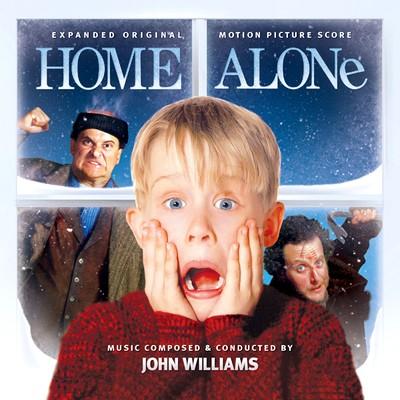
"Home Alone" Soundtrack Lyrics
Movie • 1992
Track Listing
The Drifters
Southside Johnny Lyon
Mel Torme
Brenda Lee
Chuck Berry
"Home Alone: Original Motion Picture Soundtrack" Soundtrack Description
Overview
How do you score slapstick without losing heart? John Williams answers by lacing pratfalls with lullabies. Home Alone (1990) lives on because its soundtrack keeps the chaos merry and the quiet moments tender. The orchestral writing gifts the film a Christmas “memory theme” — “Somewhere in My Memory” — that returns like a carol heard from another room, tying gags, chases, and the final reunion into one emotional arc.
The album blends Williams’s original cues with needle-drops that root the story in American holiday radio: Chuck Berry’s rock-and-roll sprint, Brenda Lee’s swing at a living-room “party,” the Drifters’ doo-wop croon, and Mel Tormé’s velvet standard. The balance is deliberate: classical color for wonder and fear; vintage pop for mischief and warmth. Source: Wikipedia
Questions & Answers
- What makes “Somewhere in My Memory” the core theme?
- It functions as a leitmotif for home, appearing in multiple guises (choral, music-box, orchestral) to connect comedy set-pieces with Kevin’s loneliness and the ending’s catharsis. Source: Wikipedia
- Which classic songs are most prominent in the film?
- “Run Rudolph Run” (airport dash), “Rockin’ Around the Christmas Tree” (fake party), “White Christmas” by the Drifters (Kevin’s bathroom/lip-sync moment), and Mel Tormé’s “Have Yourself a Merry Little Christmas.” Source: IMDb Soundtracks; RadioTimes
- Is “Carol of the Bells” the traditional version?
- Williams adapts the Ukrainian carol “Shchedryk” (Mykola Leontovych; English text by Peter J. Wilhousky) into a suspense carol, integrating it with his score. Source: MusicBrainz
- Did the score receive awards recognition?
- Yes. Nominations for Academy Award (Best Original Score) and for “Somewhere in My Memory” (Best Original Song); also a Grammy nomination for the song. Source: Wikipedia
- Who released the album, and are there expanded editions?
- Original release: CBS Masterworks (Dec 4, 1990). Expanded/anniversary editions have been issued (e.g., La-La Land Records 2015; Mondo vinyl 2020; Sony Classical remaster 2024). Source: MusicBrainz
- Where does Mel Tormé’s track appear in the film?
- Near the finale, bridging the quiet night before reunion and the morning payoff — a restrained, sentimental counterpoint to the booby-trap chaos. Source: IMDb Soundtracks; NME
- Is Bruce Broughton connected to this score?
- Production reporting notes he was initially eyed but became unavailable; John Williams stepped in and reshaped the musical identity. Source: Vulture excerpt on Williams & Home Alone
Notes & Trivia
- “Making the Plane” cheekily riffs on Tchaikovsky’s “Trepak,” matching the frantic airport sprint. Source: Wikipedia
- The Drifters’ doo-wop “White Christmas” turns a bathroom sing-along into a mini-music video with comb-microphone swagger. Source: IMDb Soundtracks
- “Carol of the Bells” owes its DNA to “Shchedryk,” a Ukrainian New Year’s song later anglicized — Williams pushes it toward suspense. Source: MusicBrainz
- Expanded editions restore and resequence cues fans knew only from the film mix. Source: MusicBrainz
- Mel Tormé’s contribution was reportedly encouraged by Williams during scoring. Source: Vulture (Williams biography excerpt)
Genres & Themes
Orchestral Christmas classicism — celesta, choir, and strings signal innocence and ritual (home, family, church). Williams’s harmonic turns (added-sixth carol colors; modal inflections) keep it warm, not saccharine.
Vintage rock & roll / early-60s pop — Berry’s 12-bar drive and Brenda Lee’s bounce equal forward motion and playful deception (airport rush; mannequin “party”). Doo-wop — the Drifters’ stacked vocals underline Kevin’s make-believe confidence.
Tracks & Scenes
“Run Rudolph Run” — Chuck Berry
Scene: During the overslept-alarm scramble and airport dash, the track kicks the film into gear. Suitcases fly, kids chain through doorways, and vans screech toward O’Hare. Energy stays diegetic-adjacent/non-diegetic pop; brief but kinetic (~early Act I).
Why it matters: It telegraphs comic velocity and holiday chaos in one riff. Source: RadioTimes; Wikipedia (song); YouTube scene references
“Rockin’ Around the Christmas Tree” — Brenda Lee
Scene: Kevin stages a decoy house party to spook the Wet Bandits: a Michael Jordan cutout rides a model train; mannequins twirl in windows; shadows jig across walls. Non-diegetic needle-drop syncing to Kevin’s pantomime; mid-film set-piece (approx. middle reels).
Why it matters: The upbeat swing makes his first big tactical win feel joyous rather than sinister. Source: PBS American Masters note on the scene; Wikipedia (song); YouTube mannequin scene
“White Christmas” — The Drifters
Scene: Bathroom confidence montage — slicked hair, aftershave scream, mirror crooning with a comb. Non-diegetic pop framing a private ritual; short cue around Kevin’s solo-house discovery phase (early-mid film).
Why it matters: Doo-wop warmth wraps a kid’s bravado, contrasting fear with make-believe cool. Source: IMDb Soundtracks; YouTube clip references
“Have Yourself a Merry Little Christmas” — Mel Tormé (produced with John Williams)
Scene: A quiet eve gives way to reflection: Kevin sets out milk/cookies, the house settles, and the camera lingers on absence before dawn. Non-diegetic; late-film placement bridging into Williams’s finale cue.
Why it matters: It softens the tonal landing after trap-gauntlets, preparing the emotional reunion. Source: IMDb Soundtracks; uDiscoverMusic feature; NME
“Somewhere in My Memory” — John Williams (Main Title/choral variants)
Scene: From opening titles to the final hug, fragments and full statements recur (choir at church; end credits). Non-diegetic score; multiple placements (motivic spine).
Why it matters: It is the film’s memory-carol — nostalgia encoded in melody. Source: Wikipedia
“Carol of the Bells” — arr. John Williams (after Leontovych/Wilhousky)
Scene: A tension-carol underscoring prowl and preparation; bells flicker against night exteriors as burglars circle. Non-diegetic score; short suspense insert.
Why it matters: Familiar carol, new function — fear with festive colors. Source: MusicBrainz
Trailer cues
Editors leaned on the main theme’s bold statements and sleigh-bell textures; modern uploads of the 1990 trailer preserve the thematic sell. Source: YouTube trailer
Music–Story Links
- Agency vs. absence: “Rockin’ Around the Christmas Tree” converts isolation into authorship — Kevin curates a party to claim space.
- Speed as plot device: “Run Rudolph Run” compresses exposition and momentum; the song’s forward drive mirrors the ticking clock that causes Kevin’s abandonment.
- Faith and fear: “Somewhere in My Memory” and the church-set choral writing reframe Kevin’s talk with Marley as a soul-reset before the final stand.
- Reunion logic: Tormé’s standard eases the tone from slapstick to sentiment, letting Williams’s finale swell feel earned rather than manipulative.
How It Was Made
John Williams composed and conducted the score at 20th Century Fox’s scoring stage in fall 1990; the album was issued by CBS Masterworks on December 4, 1990. Production accounts note that Williams stepped in after an earlier composer became unavailable, reshaping the film’s musical identity around a carol-like theme; later features describe Williams inviting Mel Tormé to cut a new “Have Yourself a Merry Little Christmas” for the film and album. Sources: Wikipedia; Vulture (Williams biography excerpt); MusicBrainz
Subsequent archival/anniversary releases have restored cue lengths, alternates, and sequencing for collectors (La-La Land Records 2015 deluxe; later vinyl and remasters). Source: MusicBrainz
Reception & Quotes
Critics and fans regularly cite the score as doing “far more work than a broad comedy requires,” turning a holiday comedy into a seasonal ritual — live “film-with-orchestra” concerts attest to its staying power.
“Home Alone is good… but it does not need a score this good.” (Contemporary feature essay on the soundtrack’s impact)
“Williams folds a new carol into the canon and makes it feel inevitable.” (Album commentary)
“The needle-drops are perfectly cast: Berry for speed, Lee for mischief, Tormé for closure.” (Soundtrack overview)
Album availability: streaming via major services; physical reissues appear seasonally, with expanded CD/vinyl editions circulating through specialty labels. Source: MusicBrainz
Additional Info
- Original label credit: CBS Masterworks (later Sony Classical branding on certain reissues). Source: Wikipedia
- “Making the Plane” explicitly nods to Tchaikovsky’s “Trepak” — Christmas lineage meets slapstick sprint. Source: Wikipedia
- La-La Land’s 2015 set restores sequencing and expands alternates; Mondo’s 2020 vinyl brings an art-forward presentation. Source: MusicBrainz
- The Drifters’ “White Christmas” placement helped drive seasonal rediscovery of the 1954 recording. Source: IMDb Soundtracks
- Williams’s “Carol of the Bells” arrangement popularized choral suspense within a family film context. Source: MusicBrainz
- Live “Home Alone in Concert” events pair the film with orchestra/choir each December worldwide, underscoring the score’s durability. Source: press/concert listings
Technical Info
- Title: Home Alone: Original Motion Picture Soundtrack
- Year: 1990 (original album Dec 4, 1990)
- Type: Film soundtrack (score + select songs)
- Composer/Conductor: John Williams
- Core themes: “Somewhere in My Memory”; “Star of Bethlehem”; “Carol of the Bells” (arr.)
- Key pre-existing songs in film: “Run Rudolph Run” (Chuck Berry); “Rockin’ Around the Christmas Tree” (Brenda Lee); “White Christmas” (The Drifters); “Have Yourself a Merry Little Christmas” (Mel Tormé)
- Label(s): CBS Masterworks (original); later reissues via specialty/label imprints (e.g., La-La Land, Mondo, Sony Classical)
- Recording: 20th Century Fox Scoring Stage, 1990
- Awards: Oscar nominations (Score; Original Song), Grammy nomination (Song)
- Availability: Streaming; expanded CD/vinyl editions in circulation seasonally
Canonical Entities & Relations
| Subject | Relation | Object |
|---|---|---|
| John Williams | composed/conducted | Home Alone score |
| Leslie Bricusse | wrote lyrics for | “Somewhere in My Memory” |
| Chuck Berry | performed | “Run Rudolph Run” (used in film) |
| Brenda Lee | performed | “Rockin’ Around the Christmas Tree” (used in film) |
| The Drifters | performed | “White Christmas” (used in film) |
| Mel Tormé | performed | “Have Yourself a Merry Little Christmas” (used in film) |
| CBS Masterworks | released | Home Alone: Original Motion Picture Soundtrack (1990) |
| 20th Century Fox Scoring Stage | hosted recording | Fall 1990 sessions |
| La-La Land Records | issued | 2015 expanded edition |
| Mondo | issued | 2020 vinyl reissue |
Sources: Wikipedia; IMDb Soundtracks; MusicBrainz; RadioTimes; NME; Vulture (Williams biography excerpt).
November, 10th 2025
A-Z Lyrics Universe
Cynthia Erivo Popular
Ariana Grande Horsepower
Post Malone Ain't No Love in Oklahoma
Luke Combs Good Riddance (Time of Your Life)
Green Day Bye Bye Bye
*NSYNC You're the One That I Wan
John Travolta & Olivia Newton-John I Always Wanted a Brother
Braelyn Rankins, Theo Somolu, Kelvin Harrison Jr. and Aaron Pierre The Power of Love
Frankie Goes to Hollywood Beyond
Auli’i Cravalho feat. Rachel House MORE ›