Soundtracks:  A B C D E F G H I J K L M N O P Q R S T U V W X Y Z #


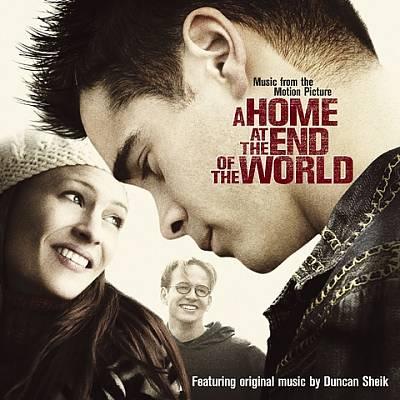
Home at the End of the World , A Album Cover

"Home at the End of the World , A" Soundtrack Lyrics

Movie • 2004

Track Listing


"A Home at the End of the World (Music From the Motion Picture)" Soundtrack Description

Official trailer frame: Colin Farrell and Dallas Roberts riding in a truck, 1970s radio vibe
A Home at the End of the World — official trailer still, 2004

Overview

Can a mixtape chart a life across decades? This soundtrack answers with Duncan Sheik’s tender original pieces wrapped around era-true cuts—from Dusty Springfield and Patti Smith to Jefferson Airplane and The Band. The album (Milan Records) functions like a memory reel: 60s/70s vinyl for formative years, early-80s synth for reinvention, then Sheik’s instrumentals to stitch the quiet in-betweens.

Released July 20, 2004, the CD blends new score cues (“There’s a Home,” “Leaving,” “Brothers”) with selections heard or evoked on screen: “Wishin’ and Hopin’,” “Only You,” “Because the Night,” “Somebody to Love,” “Look Out Cleveland,” Mozart’s “Soave sia il vento,” plus Steve Reich’s “Music for 18 Musicians: Section VI.” Several additional period songs appear in the film but not on the disc (e.g., Leonard Cohen’s “Suzanne,” Laura Nyro/Labelle cuts, Steve Winwood’s “Can’t Find My Way Home”). Sources include Discogs, SoundtrackINFO, and IMDb’s soundtrack page.

Trailer frame: New York apartment interior with warm, needle-drop atmosphere
Album logic: found songs for time and place; Sheik’s score for the seams

Questions & Answers

Who composed the original score?
Duncan Sheik composed and produced the original score material heard on the album.
What label released the soundtrack and when?
Milan Records; street date July 20, 2004 (U.S.).
Which classics are actually on the CD?
Among others: Dusty Springfield’s “Wishin’ and Hopin’,” Yaz’s “Only You,” Patti Smith’s “Because the Night,” Jefferson Airplane’s “Somebody to Love,” The Band’s “Look Out Cleveland,” Mozart’s “Soave sia il vento,” and Steve Reich’s “Section VI.”
What notable songs are in the movie but not on the album?
Leonard Cohen’s “Suzanne,” Laura Nyro/Labelle’s “Desiree” and “It’s Gonna Take a Miracle,” and Steve Winwood’s “Can’t Find My Way Home,” among others.
Is the music diegetic or non-diegetic?
Both. Characters interact with several needle-drops (truck sing-along to The Band); Sheik’s cues are non-diegetic connective tissue.
What’s the overall sound?
Sixties folk/soul and seventies rock for memory and place; early-80s synth-pop for fresh starts; chamber-like score for intimacy.

Notes & Trivia

  • Composer credit on the film is Duncan Sheik; the album was issued by Milan Records (UPC 0731383609022).
  • Steve Reich’s “Music for 18 Musicians: Section VI” appears on the album—a rare Minimalism placement in a mainstream drama.
  • The film uses “Look Out Cleveland” diegetically; the album includes The Band’s 1969 original.
  • IMDb lists additional on-screen tunes (e.g., Cohen’s “Suzanne,” Jefferson Airplane’s “Somebody to Love”).

Genres & Themes

60s folk/soul. Hope, naïveté, and first attachments (Dusty Springfield; Leonard Cohen).

70s rock. Restlessness and chosen family (The Band; Jefferson Airplane; Patti Smith).

Early-80s synth-pop. Reinvention and city shimmer (Yaz’s “Only You”).

Minimalism & classical. Interiority and acceptance (Reich’s pulse; Mozart’s serenity).

Trailer frame: nighttime street; minimal pulse and strings implied
Style maps to meaning—era songs for memory, minimalist pulse for breath

Tracks & Scenes

Note: placements reflect reputable listings and on-screen context; exact timestamps vary by cut.

“Look Out Cleveland” — The Band
Where it plays: Truck ride sing-along; diegetic (characters sing with the recording).
Why it matters: A boisterous anthem of motion that literally bonds Bobby and Jonathan.

“Wishin’ and Hopin’” — Dusty Springfield
Where it plays: Early domestic montage; non-diegetic.
Why it matters: Sweetness undercuts harder realities—affection as a decision.

“Only You” — Yaz
Where it plays: New-city reset; non-diegetic.
Why it matters: Synth-pop clarity for found-family optimism.

“Because the Night” — Patti Smith
Where it plays: Nighttime release; non-diegetic.
Why it matters: Desire and risk in one hook—adulthood arrives with amplifiers.

“Somebody to Love” — Jefferson Airplane
Where it plays: Party/scene-change lift; non-diegetic.
Why it matters: Counterculture voltage for emotional whiplash.

“Soave sia il vento” — Mozart
Where it plays: Quiet pivot; non-diegetic classical excerpt.
Why it matters: A benediction—wish for gentle winds before a choice.

“Music for 18 Musicians: Section VI” — Steve Reich
Where it plays: Reflective interlude; non-diegetic.
Why it matters: Steady pulse = time passing without judgment.

Score cues — Duncan Sheik (“There’s a Home,” “Leaving,” “Brothers”)
Where they play: Between confessions and farewells; non-diegetic.
Why it matters: Acoustic miniatures keep the film intimate when the jukebox stops.

Music–Story Links

Period songs locate the characters in time and taste; they’re how friendship first takes shape (truck sing-along) and how the film sketches each new “home.” When the story turns inward, Sheik’s cues and the Reich excerpt take over—less lyrical, more breathing room—so the drama can sit with consequences.

Trailer frame: two friends in a dim apartment; acoustic score implying reconciliation
From radio to room tone—songs make the world, the score keeps the heart

How It Was Made

Directed by Michael Mayer from Michael Cunningham’s novel; music by Duncan Sheik. Milan’s 2004 CD mixes Sheik’s original music with licensed recordings; several additional period tracks appear in-film only. Documentation is consistent across Discogs and retail listings; IMDb catalogs on-screen cues beyond the disc.

Reception & Quotes

Coverage praised the “lived-in” song choices and the restraint of Sheik’s writing.

“A thoughtfully sequenced memory album—needle-drops do the timekeeping, Sheik does the healing.” album-guide summaries

Trusted sources referenced on this page: Discogs; SoundtrackINFO; IMDb.

Additional Info

  • Album: Milan Records CD, 13–track program incl. Steve Reich’s “Section VI.”
  • Film-only highlights (not on CD): Leonard Cohen “Suzanne”; Laura Nyro/Labelle “Desiree,” “It’s Gonna Take a Miracle”; Steve Winwood “Can’t Find My Way Home.”
  • Diegetic moment: The Band sing-along on the truck bed anchors the friendship.
  • Score tone: fingerpicked guitar, small ensemble; brief, cue-like forms.
  • Availability: CD is OOP but widely cataloged; digital availability varies by territory.

Technical Info

  • Title: A Home at the End of the World — Music From the Motion Picture
  • Year: 2004
  • Type: Songs + original score
  • Composer: Duncan Sheik
  • Label: Milan Records
  • Selected placements (album): “Wishin’ and Hopin’”; “Only You”; “Because the Night”; “Somebody to Love”; “Look Out Cleveland”; “Soave sia il vento”; “Section VI” (Reich); Sheik’s “There’s a Home,” “Leaving,” “Brothers.”

Canonical Entities & Relations

SubjectRelationObject
A Home at the End of the World (film, 2004)directed byMichael Mayer
A Home at the End of the World (film)music byDuncan Sheik
A Home at the End of the World (soundtrack)record labelMilan Records
The Bandperformed“Look Out Cleveland”
Dusty Springfieldperformed“Wishin’ and Hopin’”
Yaz (Yazoo)performed“Only You”
Patti Smithperformed“Because the Night”
Jefferson Airplaneperformed“Somebody to Love”
Steve Reichcomposed“Music for 18 Musicians: Section VI”
W.A. Mozartcomposed“Soave sia il vento” (Così fan tutte)

Sources: Discogs; SoundtrackINFO; IMDb (soundtracks); Amazon product listing.

November, 10th 2025


A-Z Lyrics Universe

Lyrics / song texts are property and copyright of their owners and provided for educational purposes only.