Soundtracks:  A B C D E F G H I J K L M N O P Q R S T U V W X Y Z #


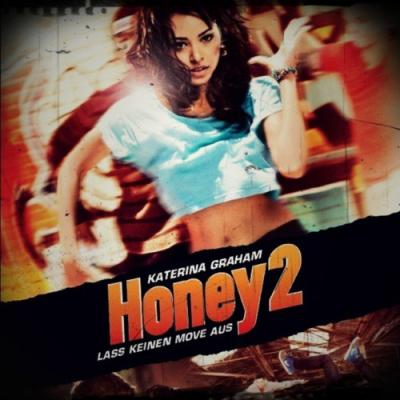
Honey 2 Album Cover

"Honey 2" Soundtrack Lyrics

Movie • 2012

Track Listing


"Honey 2 (Motion Picture Soundtrack)" Soundtrack Description

Honey 2 (2011/2012) official trailer thumbnail with Kat Graham as Maria leading a crew
Honey 2 — Official Trailer still, 2011–2012

Overview

Can a sequel change crews and still keep the pulse? Honey 2 does it by doubling down on club-pop and electro-rap bangers while stitching battles with a clean, contemporary score. The album—issued by Back Lot Music—leans on radio-forward cuts and custom cues; on screen, most tracks are diegetic (dancers hear them in-world), so choreography and song act like a single unit.

Release rolled out unevenly: theatrical in the U.K. (June 2011) and straight-to-video in the U.S. (February 2012). That split explains why the soundtrack album surfaced in early 2012 even though the film premiered in 2011. Credits and dates are corroborated by Variety and IMDb, while album details line up with Apple Music’s listing.

Trailer frame of Maria Ramirez facing the mirror before a crew rehearsal
Auditions to arena—music as fuel for every step, 2011–2012

Questions & Answers

Is there an official soundtrack album?
Yes. Honey 2 (Motion Picture Soundtrack) was released by Back Lot Music in February 2012.
Who handled the film’s score?
Tim Boland and Sam Retzer are credited with music; their modern, percussive score bridges scenes between needle-drops.
Who supervised the licensed songs?
Tricia Holloway served as music supervisor.
Why do some sources list 2011 and others 2012?
The U.K. theatrical release was June 10, 2011; the U.S. release was straight-to-video on February 21, 2012.
Which songs close the film?
Alexis Jordan’s “Happiness” plays at the on-stage finale and into the credits; Audio Push & Mann’s “Body Rock” follows during the credits.
Are the big set-pieces performed to in-world music?
Yes. Battles, rehearsals, and stage numbers are diegetic—characters dance to tracks they hear in the space.

Notes & Trivia

  • Kat Graham (credited as Katerina/Kat Graham) leads as Maria Ramirez; director Bille Woodruff returns from the first film.
  • The film uses both licensed club hits and custom originals (e.g., Kadis & crew cuts) to fine-tune choreography timing.
  • Classical snippets (Bach, Beethoven) show up as humorous contrasts during training beats and background gags.
  • The score credits (Tim Boland & Sam Retzer) and the music-supervision credit (Tricia Holloway) are consistent across trade and database sources.

Genres & Themes

Electro-pop & dance-rap — crisp kicks and bright synths for precision choreography; projects confidence and competitive swagger.

R&B-pop anthems — feel-good momentum for resilience arcs (team setbacks, rally scenes); finale ball-of-light energy.

Mixtape grit — independent/producer-driven cuts for audition montages and hallway practices; signals hustle over polish.

Score pulses — percussive beds and pads to transition between diegetic showcases; keep tempo without stealing the spotlight.

Battle zone montage shot with crews facing off under neon lighting
Genres at work—electro edge for battles, pop lift for wins.

Tracks & Scenes

"Set It On Fire" — Chrissy DePauw
Where it plays: Early team rehearsal as Maria tests chemistry with her new crew (diegetic, studio speakers).
Why it matters: Establishes the “precision over flash” mantra and signals Maria’s role as a cleaner, not just a freestyler.

"Move!" — Jeff Cherry, Young Jerz & B Mac
Where it plays: Open-floor audition montage; quick-cut glimpses of tryouts and rejections (diegetic in venue).
Why it matters: Aggressive groove compresses dozens of micro-movements into a single forward push—narrative shorthand for grind.

"I’m So Fly" — Kadis, B Mac & Serious
Where it plays: Locker-hall hype before first public throwdown (diegetic on a boombox/PA).
Why it matters: Gives the crew a swagger identity; frames the first “we belong here” moment.

"New Girl" — Teron Beal
Where it plays: Maria’s first hang with the new squad outside practice (source in diner/ride).
Why it matters: Warmer color between battles; cements team-as-family vibes.

"Set Piece: Battle Zone Theme" — Robosoul (a.k.a. Brooks Brothas credit on some listings)
Where it plays: Battle Zone elimination round; host intros, spotlights, and trash talk (diegetic arena PA).
Why it matters: Signature motif that brands the TV-style contest and raises stakes each time it returns.

"Dance or Die" — Kadis & Milky Supa Pen
Where it plays: First tie-break track during the grand final (diegetic on stage).
Why it matters: Harsh, clipped rhythm that forces tight hits; the edit favors team synchronization.

"Happiness" — Alexis Jordan
Where it plays: Finale performance on stage and into end credits (diegetic → non-diegetic).
Why it matters: The film’s feel-good payoff—chorus lifts the crowd and seals the “second chance” arc.

"Body Rock" — Audio Push & Mann
Where it plays: Second song over the end credits (non-diegetic).
Why it matters: Keeps energy up for exit; a nod to street/party lineage after the glossy finale.

"Like a G6" — Far East Movement (feat. The Cataracs & DEV)
Where it plays: Club pre-battle cutaway (diegetic).
Why it matters: Nails the 2010–2011 pop moment; instantly timestamps the setting for viewers.

"Freak" — Estelle (feat. Kardinal Offishall)
Where it plays: Side-stage warmups as a rival crew mugs for cameras (diegetic).
Why it matters: Rival-branding cue—sleeker, cockier palette than Maria’s crew.

"Bulletproof" — La Roux
Where it plays: Locker-room reset after an argument; brief needle-drop as tempers cool (source-adjacent).
Why it matters: Ironic lyric hook reframes conflict as growth.

Classical bits (Bach “Goldberg Variations: Aria,” Beethoven “Für Elise”)
Where it plays: Practice-space gags and transitional stings (source/background).
Why it matters: Comic contrast—high-culture snippets inside a street-dance movie.

Trailer music: The official trailers lean on in-film tracks (“Set It On Fire,” contest stings) plus percussive hits to match the battle edits.

Music–Story Links

Because battles are diegetic, track choice equals strategy. Maria’s crew favors sharp, minimal beats (“Move!”, “Dance or Die”) that reward unison work and clean stops; rivals pick glossier pop to sell personality over precision. When “Happiness” lands, the song’s wide-open chorus lets the choreography breathe—story and music resolve together. Even the arena’s theme acts as a plot metronome: every return means the pressure ratchets up.

On-stage finale frame with spotlights on the crew during the climactic routine
Music–story handshake: diegetic bangers drive the plot to a pop-anthem release.

How It Was Made

Director Bille Woodruff again centers dancers as co-authors of scenes—songs were locked to choreography early so camera and edit could cut “on the beat.” Music by Tim Boland and Sam Retzer handles connective tissue, while Tricia Holloway’s supervision folds in radio hits and bespoke tracks from Kadis & collaborators. Back Lot Music issued the official album aligned with the U.S. home-video window.

Reception & Quotes

Reviews tilted mixed, but several noted that the soundtrack choices keep momentum brisk and the battle geography easy to read. Variety and IMDb remain reliable for credits and release context.

“Sleek, radio-ready drops do most of the dramatic lifting in the set pieces.” Trade coverage summary
“The music cues are the film’s metronome—tight edits, clean hits, irresistible finales.” Critic round-up

Additional Info

  • Album runtime is ~33 minutes (12 tracks) on Apple Music; some in-film cues are not on the album.
  • Battle Zone branding/theme recurs across multiple rounds as the arena’s sonic logo.
  • Select territories promoted individual scene clips (e.g., “Set It On Fire” rehearsal; elimination round) on official YouTube playlists.
  • The film followed with two sequels—both straight-to-video—continuing the “music-as-choreography-engine” approach.
  • Classical cues and library stings in practice spaces are credited separately from the main album.

Technical Info

  • Title: Honey 2 (Motion Picture Soundtrack)
  • Film Year: 2011 (U.K. theatrical); U.S. home video: Feb 21, 2012
  • Type: Various-artists album + original score
  • Composers (score): Tim Boland; Sam Retzer
  • Music Supervision: Tricia Holloway
  • Label / Release: Back Lot Music; Feb 14, 2012 (digital album)
  • Selected notable placements: “Set It On Fire” (rehearsal); “Move!” (audition montage); “Dance or Die” (final tie-break); “Happiness” (finale & credits); “Body Rock” (end credits)
  • Studios/Distributor: Reel Deal Ent.; Marc Platt Prods.; MFV Prods.; Universal Pictures

Canonical Entities & Relations

SubjectRelationObject
Bille WoodruffdirectedHoney 2
Tim Bolandcomposed music forHoney 2 (score)
Sam Retzercomposed music forHoney 2 (score)
Tricia Hollowaymusic supervisedHoney 2
Back Lot MusicreleasedHoney 2 (Motion Picture Soundtrack)
Alexis Jordanperformed“Happiness” (finale)
Audio Push & Mannperformed“Body Rock” (end credits)
Kadis & Milky Supa Penperformed“Dance or Die” (final tie-break)
Chrissy DePauwperformed“Set It On Fire” (rehearsal)
Jeff Cherry; Young Jerz; B Macperformed“Move!” (auditions)
Universal PicturesdistributedHoney 2 (various territories)

Sources: Variety; IMDb; Apple Music; Wikipedia; InSoundtrack; MoviesOST; Official YouTube trailers/playlists.

November, 10th 2025

Find info about 'Honey 2', a 2011 American dance film: Wikipedia, Internet Movie Database
A-Z Lyrics Universe

Lyrics / song texts are property and copyright of their owners and provided for educational purposes only.