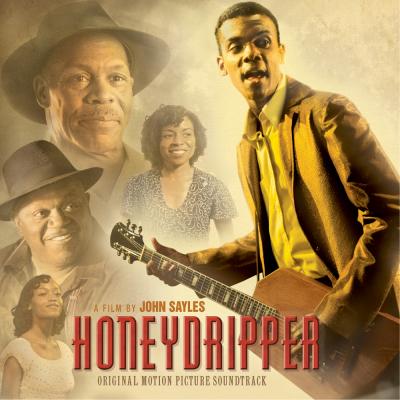
"Honeydripper" Soundtrack Lyrics
Movie • 2008
Track Listing
Aces of Spade
Mable John
New Beginnings
Hank Williams
Lillian Lil Green
Keb' Mo'
New Beginnings
Danny Glover
Memphis Slim
Gary Clark, Jr.
Gary Clark, Jr.
Gary Clark, Jr.
Barrence Whitfield
Ruth Brown
"Honeydripper (Original Motion Picture Soundtrack)" Soundtrack Description
Overview
What does the “birth of rock ’n’ roll” sound like when it’s still finding its feet? Honeydripper answers with juke-joint piano, church shouts, front-porch blues—and a young electric guitar that turns the tide. The film’s soundtrack curates period recordings and fresh performances, while Mason Daring’s original cues knit scenes together without breaking the 1950 spell.
The album (Rhino/Warner) balances archival cuts (Hank Williams, Memphis Slim, Lil Green) with in-film performances by Mable John, Danny Glover, Keb’ Mo’, and breakout guitarist Gary Clark Jr. It’s a historically minded set that still plays like a Saturday-night crowd-pleaser; critics singled out how the selections track the handoff from piano-led R&B to guitar-driven rock. Trusted sources: Apple Music editorial, Discogs release credits, and trade reviews.
Questions & Answers
- Who composed the score?
- Mason Daring composed the original score; his cues sit alongside licensed songs.
- Is there an official soundtrack album?
- Yes. Honeydripper (Original Motion Picture Soundtrack) was issued by Rhino in early 2008 (15 tracks, ~51 minutes).
- Which artists perform on the album?
- Among others: Gary Clark Jr., Mable John, Keb’ Mo’, Danny Glover, Memphis Slim, Ruth Brown, Hank Williams, Lil Green.
- Does the film feature diegetic music?
- Mostly. Club numbers, street blues, and church pieces are performed in-world; Daring’s cues bridge drama and time jumps.
- What’s the signature “birth of rock” moment?
- When the young guitarist plugs in at the Honeydripper Lounge and kicks into jump-blues/early-rock repertoire—crowd transformed.
- Any historically notable recordings?
- Yes—Ruth Brown’s “Things About Coming My Way” was released posthumously and billed as her final recording.
Notes & Trivia
- The soundtrack was released by Rhino (Warner) with shipping/retail dates in February 2008.
- Gary Clark Jr. contributes several cuts, including “Good Rockin’ Tonight” and the Sayles-co-written “China Doll.”
- A pivotal scene hinges on a jukebox blowing a circuit—silence that sets up the electric-guitar “reveal.”
- Church pieces by New Beginnings Ministry bookend Pine Top’s club hustle with spiritual counterpoint.
- Keb’ Mo’ appears on screen as a blind street guitarist; his “Stack O Lee” on the album nods to the folk-blues canon.
Genres & Themes
Juke-joint blues & piano R&B — barroom groove, hand-played swing; frames Pine Top’s past and the club’s old guard.
Gospel call-and-response — moral and communal ballast; the town’s other stage is a church nave.
Honky-tonk & hillbilly boogie — early country (Hank Williams) connecting rhythm sections to coming rock backbeats.
Jump-blues / proto-rock — electric guitar, backbeat, and boast; the film’s “future arriving” sound.
Tracks & Scenes
"Good Rockin’ Tonight" — Gary Clark Jr.
Where it plays: Climactic Honeydripper Lounge set when the “Guitar Sam” draw is finally delivered (diegetic, on stage).
Why it matters: A canonical jump-blues standard delivered by a future star; announces the electric future to a skeptical room.
"China Doll" — Gary Clark Jr.
Where it plays: Rehearsal/club warm-up passages tied to the new act (diegetic).
Why it matters: Co-written within the production; bridges character plot (Melea/“China Doll” in dialogue) to repertoire built for the crowd.
"Stack O Lee" — Keb’ Mo’
Where it plays: Street-corner interlude with the blind guitarist (diegetic, solo performance).
Why it matters: Folkloric ballast; reminds us that the juke’s noise grows out of older, leaner stories.
"No Matter How She Done It" — Mable John
Where it plays: Late-night club set by veteran singer Bertha Mae (diegetic).
Why it matters: A seasoned voice steadying a faltering business; authenticity that buys Pine Top time.
"Goin’ Down Slow" — Danny Glover
Where it plays: Pine Top at the piano, small-hours confession in his own room (diegetic).
Why it matters: Character x-ray; the owner’s blues, not just the club’s.
"Move It On Over" — Hank Williams
Where it plays: Needle-drop/sourced playback in the lounge between sets (source).
Why it matters: Country swing leaning toward rock’s backbeat; the region’s shared radio diet.
"Why Don’t You Do Right?" — Lil Green
Where it plays: Atmosphere cue during a floor-slowdown (source).
Why it matters: Urban blues sophistication crossing into rural Alabama nightlife.
"Bertha May" — Memphis Slim
Where it plays: Jukebox/turntable source in a quiet bar stretch; later echoed by live piano (source → diegetic resonance).
Why it matters: Piano lineage that Pine Top’s hands grew out of—history inside the room.
"Things About Coming My Way" — Ruth Brown
Where it plays: End-set/postlude needle-drop (non-diegetic over montage or source in the room, depending on cut).
Why it matters: A last word from the “Queen of R&B”; the film’s elegy and benediction in one.
"Standing by the Highway" / "You Got to Choose" — New Beginnings Ministry
Where it plays: Church scenes that counterpoint Saturday-night commerce (diegetic).
Why it matters: Moral weather report; the town’s other choir keeps the stakes human.
Trailer music: The marketing leans on in-film blues/jump cues and Daring’s connective score stings to frame the guitar “arrival.”
Music–Story Links
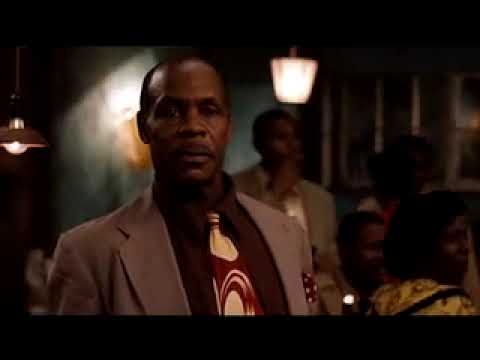
The jukebox failure clears sonic space so the electric guitar can take the floor—plot delivered by orchestration. Church numbers “answer” the juke: guilt, grace, and community pressure. Pine Top’s own performance (“Goin’ Down Slow”) reframes him as musician first, proprietor second. When the new sound catches, the crowd’s rhythm changes—on screen and in the story—signaling a cultural handover rather than a single triumph.
How It Was Made
Writer-director John Sayles centers music as world-building. Composer Mason Daring assembled period-faithful cues and recorded new performances tailored to scenes; Rhino packaged the album for release alongside the film’s late-2007/early-2008 rollout. The music supervisor credit goes to Bryan Carrigan; Diamond Time handled clearances.
Reception & Quotes
Reviews praised the era-true selections and the way the movie moves from blues to early rock without breaking tone.
“A rich, atmospheric fable of musical rebirth.” The New Yorker
“A well thought-out collection of country, blues and gospel that respects the late ’40s/early ’50s.” Apple Music editorial
Additional Info
- Album imprint: Rhino (Warner Music Group); Apple Music lists a February 4, 2008 digital date.
- CD UPC commonly cited: 0081227993870; catalog R2 424316.
- Gary Clark Jr. also performs “Blue Light Boogie” on the album—one of several on-camera/for-camera takes tied to his character.
- Ruth Brown’s contribution was released after her passing; coverage frequently notes it as her final studio appearance.
- Keb’ Mo’s screen role mirrors the film’s “old voices guide the new sound” motif.
- The film premiered at TIFF 2007 and opened in limited U.S. release on December 28, 2007.
Technical Info
- Title: Honeydripper (Original Motion Picture Soundtrack)
- Year: 2008 album (film 2007; wider rollouts 2008)
- Type: Various-artists soundtrack + original score selections
- Composer: Mason Daring
- Music Supervision: Bryan Carrigan (music supervisor); Diamond Time (clearances)
- Label / Release: Rhino Entertainment (Warner); Feb 2008 retail/digital
- Key placements: “Good Rockin’ Tonight” (final set); “China Doll” (rehearsal/club warm-up); “Goin’ Down Slow” (Pine Top solo); “Stack O Lee” (street performance); “Things About Coming My Way” (postlude)
- Setting: Georgiana, Alabama, 1950 (set/shot in Alabama)
Canonical Entities & Relations
| Subject | Relation | Object |
|---|---|---|
| John Sayles | wrote & directed | Honeydripper (film) |
| Mason Daring | composed | Honeydripper original score |
| Rhino Entertainment | released | Honeydripper (Original Motion Picture Soundtrack) |
| Gary Clark Jr. | performed | “Good Rockin’ Tonight”; “China Doll”; “Blue Light Boogie” |
| Mable John | performed | “No Matter How She Done It” |
| Keb’ Mo’ | performed | “Stack O Lee” |
| Danny Glover | performed | “Goin’ Down Slow” |
| Ruth Brown | performed | “Things About Coming My Way” |
| Memphis Slim | performed | “Bertha May” |
| Hank Williams | performed | “Move It On Over” |
Sources: Apple Music (album page/editorial); Discogs (master & release credits); IMDb (film, soundtracks & full credits); Austin Chronicle (album review); The New Yorker (film review); SoundtrackINFO (UPC/label data).
November, 10th 2025
A-Z Lyrics Universe
Cynthia Erivo Popular
Ariana Grande Horsepower
Post Malone Ain't No Love in Oklahoma
Luke Combs Good Riddance (Time of Your Life)
Green Day Bye Bye Bye
*NSYNC You're the One That I Wan
John Travolta & Olivia Newton-John I Always Wanted a Brother
Braelyn Rankins, Theo Somolu, Kelvin Harrison Jr. and Aaron Pierre The Power of Love
Frankie Goes to Hollywood Beyond
Auli’i Cravalho feat. Rachel House MORE ›