Soundtracks:  A B C D E F G H I J K L M N O P Q R S T U V W X Y Z #


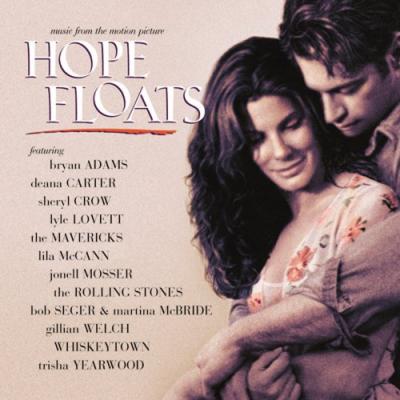
Hope Floats Album Cover

"Hope Floats" Soundtrack Lyrics

Movie • 1998

Track Listing


"Hope Floats: Music From the Motion Picture" Soundtrack Description

Official trailer still for Hope Floats (1998) with Sandra Bullock and Mae Whitman
Hope Floats — Theatrical trailer still, 1998

Overview

Can a small-town romance play like a country mixtape and a character study? The film’s album—Hope Floats: Music From the Motion Picture—says yes. Co-produced by Don Was and director Forest Whitaker for Capitol, it threads contemporary country, alt-country, and roots pop (Sheryl Crow, Bob Seger with Martina McBride, Gillian Welch, Whiskeytown) around Dave Grusin’s gentle score. The song album went to #1 on Top Country Albums, #4 on the Billboard 200, and earned RIAA double-platinum—evidence that the soundtrack became its own 90s staple.

Two parallel releases frame the music: the 13-track songs compilation (April 7, 1998) and Grusin’s 11-cue original score album (May 19, 1998). In 2007, a remastered/expanded edition surfaced with six extras and—famously—the removal of Garth Brooks’ #1 country hit “To Make You Feel My Love” due to his retail exclusivity at the time. (Capitol Records discography entries and Apple Music/Discogs confirm dates and contents.)

Trailer frame: Birdee returns to Smithville, Texas, signaling the soundtrack’s country palette
Country, alt-country and roots pop wrap a Dave Grusin score—place and feeling first.

Questions & Answers

Who composed the score?
Dave Grusin. His separate score album (11 tracks; ~30 minutes) includes cues like “Going Home” and “Justin & Birdie.”
Who produced the songs album?
Don Was and Forest Whitaker for Capitol Records.
How did the soundtrack perform on the charts?
#1 on Top Country Albums, #4 on the Billboard 200, later certified 2× Platinum (RIAA).
Why is Garth Brooks’ “To Make You Feel My Love” missing from the 2007 reissue?
Because of Brooks’ distribution/clearance situation then; the reissue added six tracks but omitted his cut.
Is there scene-specific diegesis?
Yes—several selections function as on-screen/source songs at dances and town events, while most vocal tracks are non-diegetic emotional framing.
Which version of “To Make You Feel My Love” is in the album?
The 1998 CD includes Garth Brooks’ version; Trisha Yearwood’s separate rendition also appears on the album; the 2007 edition drops Brooks’ track.

Notes & Trivia

  • Two “To Make You Feel My Love” recordings appear on the original CD—Garth Brooks and Trisha Yearwood—both sourced from the Dylan composition.
  • “Chances Are” (Bob Seger & Martina McBride) and “In Need” (Sheryl Crow) were recorded for the project and became signature cues for fans.
  • The expanded 2007 edition inserted catalog classics like The Temptations’ “I Can’t Get Next to You” and Paul Davis’ “Cool Night.”
  • Grusin’s score released via BMG/RCA; the songs album via Capitol—two distinct label lines for the same film.

Genres & Themes

Contemporary country & AAA pop — radio-centric writing (“Chances Are,” “What Makes You Stay,” “When You Love Someone”) underscores adult longing and second chances.

Alt-country / Americana — Gillian Welch’s “Paper Wings” and Whiskeytown’s “Wither, I’m a Flower” give Birdee’s return-home arc grit and dust.

Classic songbook re-frames — Lyle Lovett’s “Smile” bends a Chaplin standard toward resilient melancholy; the Stones’ “Honest I Do” nods to deep-cut blues lineage.

Orchestral score miniatures — Grusin’s light-touch cues (“Going Home,” “Justin & Birdie”) connect quiet, interior beats between big needle-drops.

Trailer montage: town dance and porch moments that host multiple songs
Style map—radio polish for romance, Americana for memory, Grusin for breath.

Tracks & Scenes

"Chances Are" — Bob Seger & Martina McBride
Where it plays: Used over an intimate, memory-laden dance sequence with Birdee’s ailing father at his care facility (non-diegetic foreground).
Why it matters: Reframes romantic yearning as familial love and loss, one of the film’s most affecting uses of a new song.

"In Need" — Sheryl Crow
Where it plays: Album feature; used in film as mood-shaping source/underscore around transitional scenes (non-diegetic).
Why it matters: A darker, sinewy Crow track that gives the soundtrack contour beyond straight balladry.

"Paper Wings" — Gillian Welch
Where it plays: Heard as scene-setting Americana texture during Birdee’s re-acclimation to Smithville (non-diegetic).
Why it matters: Anchors the story’s rural tone with unvarnished acoustic color.

"Wither, I’m a Flower" — Whiskeytown
Where it plays: Needle-drop underpinning a reflective, post-conflict stretch (non-diegetic).
Why it matters: Ryan Adams’ cracked-voice alt-country adds vulnerability to Birdee’s “starting over.”

"Honest I Do" — The Rolling Stones
Where it plays: Brief blues counterpoint around town-dance/venue ambience (source-adjacent).
Why it matters: Classic R&B feel places the characters inside a living, listening community.

"What Makes You Stay" — Deana Carter
Where it plays: Late-act reflection on what continuing love might look like (non-diegetic).
Why it matters: Lyric content mirrors Birdee’s wariness and Justin’s steadiness.

"To Get Me to You" — Lila McCann
Where it plays: Toward resolution/credits zone (non-diegetic).
Why it matters: Upbeat reassurance after the film’s toughest parent–child beat.

"Smile" — Lyle Lovett
Where it plays: Quiet, transitional moment underscoring bittersweet acceptance (non-diegetic).
Why it matters: A century-old melody turned modern balm; fits the movie’s “hurt, then heal” rhythm.

"When You Love Someone" — Bryan Adams
Where it plays: Romantic connective tissue in the back half (non-diegetic; also known from MTV Unplugged).
Why it matters: Adams/Kamen/Peters craft a direct statement of commitment that the film pointedly resists over-sweetening.

Score: "Main Title: Going Home" — Dave Grusin
Where it plays: Opening logo and first return to Smithville (non-diegetic score).
Why it matters: Sets the film’s gentle, spacious harmonic world.

Score: "Justin & Birdie" — Dave Grusin
Where it plays: Quiet porch/drive moments between would-be lovers (non-diegetic score).
Why it matters: A light motif for trust, not fireworks—perfect for a guarded lead.

Trailer spotlight: Promo materials leaned on the Seger/McBride duet and Grusin’s cue snippets to pitch a “grown-up romance in a Texas town.”

Music–Story Links

Song choices map cleanly onto the script’s second-chance spine. Alt-country titles carry the weight of memory; contemporary country ballads voice adult hesitation and hope. When the film needs to slow down—Birdee and her father, Birdee and Justin—it leans on brand-new recordings (“Chances Are”) and Grusin’s restrained themes to avoid melodrama. Even catalog picks (“Honest I Do,” “Smile”) feel selected for subtext rather than chart value.

Trailer moment hinting at the town dance where a key duet underscores a pivotal scene
Music–story handshake: songs for the heart, Grusin for air between the beats.

How It Was Made

Forest Whitaker directed; Lynda Obst produced. Don Was co-produced the compilation for Capitol, while Dave Grusin delivered the original score released via BMG/RCA. The 2007 reissue expanded the program with six cuts but—because of artist distribution rights at the time—removed Garth Brooks’ #1 entry. (Trusted sources: Wikipedia overview/reissue note; Discogs line items; Apple Music’s score listing.)

Reception & Quotes

The film’s reviews were mixed, but the album drew steady praise as a stand-alone listen and a late-90s country snapshot; its sales and chart run back that up.

“An excellent collection of contemporary country and rootsy mainstream pop.” AllMusic review consensus
“Reached No. 1 on the country charts and No. 4 on the Billboard 200; later certified double-platinum.” Capitol/industry summaries

Additional Info

  • Original songs album (Capitol) streeted April 7, 1998; score album (BMG/RCA) May 19, 1998.
  • 2007 remaster adds six tracks (incl. The Temptations’ “I Can’t Get Next to You,” Paul Davis’ “Cool Night”) but omits the Brooks cut.
  • Key album-only identifiers: Capitol CDP 7243 4 93402 2 0; UPC 724349340220.
  • “Chances Are” later appeared on Seger’s Greatest Hits 2; Lovett’s “Smile” reappeared on his film-songs anthology.
  • The film credits Dave Grusin as composer; his score cue titles mirror on-screen moments (“Cheerleader Flashback,” “Snappy Snaps”).

Technical Info

  • Title: Hope Floats: Music From the Motion Picture (songs compilation); Hope Floats (Original Score Soundtrack)
  • Year: 1998 (songs: Apr 7; score: May 19); expanded edition 2007
  • Type: Various-artists album + original score (separate release)
  • Composer (score): Dave Grusin
  • Producers (songs album): Don Was; Forest Whitaker
  • Labels: Capitol (songs album); BMG/RCA Victor (score)
  • Chart/Certifications (songs album): #1 Top Country Albums; #4 Billboard 200; RIAA 2× Platinum
  • Selected notable placements: “Chances Are” (care-facility dance); “Paper Wings” / “Wither, I’m a Flower” (return-home Americana texture); “Smile” (bittersweet transition); “To Get Me to You” (resolution/credits); Grusin’s “Going Home” (main title)

Canonical Entities & Relations

SubjectRelationObject
Dave GrusincomposedHope Floats original score
Don Wasco-producedHope Floats: Music From the Motion Picture (Capitol)
Forest Whitakerco-producedsongs compilation (Capitol)
Capitol Recordsreleasedsongs compilation (1998)
BMG / RCA VictorreleasedDave Grusin score album (1998)
Bob Seger & Martina McBrideperformed“Chances Are”
Sheryl Crowperformed“In Need”
Gillian Welchperformed“Paper Wings”
Whiskeytownperformed“Wither, I’m a Flower”
Lyle Lovettperformed“Smile”
Bryan Adamsperformed“When You Love Someone”

Sources: Wikipedia (soundtrack & film pages); Apple Music (Dave Grusin score album); Discogs (1998 Capitol release details); CMT/Capitol reissue notes; Wide Open Country feature on placements.

November, 10th 2025


A-Z Lyrics Universe

Lyrics / song texts are property and copyright of their owners and provided for educational purposes only.