Soundtracks:  A B C D E F G H I J K L M N O P Q R S T U V W X Y Z #


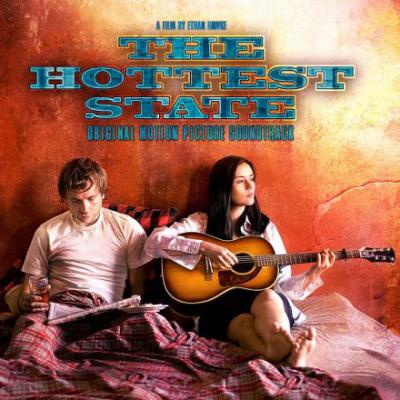
Hottest State Album Cover

"Hottest State" Soundtrack Lyrics

Movie • 2007

Track Listing


"The Hottest State (Original Motion Picture Soundtrack)" Soundtrack Description

The Hottest State trailer frame introducing Ethan Hawke’s romance set in New York and Mexico
The Hottest State — Trailer (2007)

Overview

Love story or mixtape with pictures? Ethan Hawke’s The Hottest State builds its emotions on Jesse Harris’s songs—then asks a chorus of ringers to sing them. The album is all Harris originals, newly recorded for the film by Willie Nelson, Norah Jones, Cat Power, Bright Eyes, Feist, Emmylou Harris, M. Ward, The Black Keys, Brad Mehldau and others, with two pieces of score. That unusual single-writer/various-voices approach gives one narrative a dozen timbres.

The film itself premiered in 2006 (U.S. theatrical rollout in 2007). The soundtrack arrived August 7, 2007 on Hickory Records (a Sony/ATV imprint). Core facts—composer credit, performers, release date/label—are documented in the film’s entry, the label and retail listings, and Harris’s own discography page. Critics split: some praised the concept; others found the uniformly hushed tone too polite. Either way, this is a songwriter’s movie, by design.

Trailer title card; the soundtrack’s folk-jazz palette underlines the romance
Trailer card — folk, jazz, and Americana color the drama

Questions & Answers

Who composed the score and songs?
Jesse Harris wrote the entire songbook and composed the score.
Who performs on the official album?
Willie Nelson, Norah Jones, Cat Power, Bright Eyes, Feist, Emmylou Harris, M. Ward, The Black Keys, Brad Mehldau, Tony Scherr, Rocha, and Harris himself.
Is the album original recordings or compilations?
Original recordings made for the film—Hawke and Harris confirmed the “all recorded for this movie” brief.
What label released it and when?
Hickory Records (Sony/ATV) released the soundtrack on August 7, 2007.
Is the music central to the plot?
Yes. The love story involves a singer; cues appear diegetically and shape scene transitions.
Where can I hear it today?
Streaming services (Apple Music, Spotify) carry the album.

Notes & Trivia

  • Wikipedia’s soundtrack section explicitly notes the “sixteen original songs” concept and names the marquee performers.
  • Pitchfork reviewed the OST in August 2007 (label credit: Hickory).
  • New York Daily News placed the album among its “Top 10 CDs of 2007.”
  • “Rocha” on the album is the Argentine singer Rosario Ortega (credited simply as Rocha in listings).
  • Two short score cues by Harris sit among the vocal tracks to bridge scenes.

Genres & Themes

Sparse folk/jazz ballads → interior monologue: close-miked vocals and soft guitars translate private doubts into texture.

Americana & country tinge → emotional distance/longing: Willie Nelson and Emmylou Harris add lived-in ache to young characters’ big feelings.

Indie/lo-fi colors → youthful immediacy: Bright Eyes and M. Ward bring raw edges that suit breakups, bus rides, and small rooms.

Trailer frame; intimate rooms and travel interludes match the album’s hushed textures
Intimate rooms, long roads — the music stays close to skin

Tracks & Scenes

“Ya No Te Vería Más (Never See You)” — Rocha
Where it plays: Early in the film as an in-room Spanish song by the singer character; diegetic performance.
Why it matters: Foreshadows the relationship’s direction before the audience realizes it.

“Always Seem to Get Things Wrong” — Willie Nelson
Where it plays: Early set-up/intro section as a tone-setter; non-diegetic feature cue.
Why it matters: Establishes the film’s rueful, country-lit vantage on first love.

“World of Trouble” — Norah Jones
Where it plays: A reflective passage underscoring distance and doubt; non-diegetic placement.
Why it matters: Jones’s cool restraint matches the film’s quiet, post-argument drift.

“Big Old House” — Bright Eyes
Where it plays: Movement/transition sequence; non-diegetic.
Why it matters: The track’s open dynamics give the story its biggest breath.

“The Speed of Sound” — Emmylou Harris
Where it plays: Quiet aftermath beat; non-diegetic.
Why it matters: An older voice frames a younger mistake—grace after impact.

“If You Ever Slip” — The Black Keys
Where it plays: Bar/club ambience and travel montage energy; source/non-diegetic blend.
Why it matters: A rare injection of grit among predominantly hushed cuts.

“Crooked Lines” — M. Ward
Where it plays: Night-drive interlude; non-diegetic.
Why it matters: Tape-warm melancholy for geographical and emotional drift.

“Never See You” — Brad Mehldau
Where it plays: Pensive scene bridge; non-diegetic piano feature.
Why it matters: An instrumental lyric that says what the characters can’t.

“It’s Alright to Fail” — Cat Power
Where it plays: After a relational rupture; non-diegetic.
Why it matters: The title is the thesis: acceptance beats grand gestures.

Score inserts — Jesse Harris
Where they play: Short connective cues between dialogue-heavy scenes.
Why they matter: Keep the film moving without breaking the intimate scale.

Trusted source mentions: Wikipedia (album concept & artists); Discogs/retail (Hickory label; Aug 7, 2007 release); interviews with Hawke confirm the “recorded for this movie” brief; Apple Music/Spotify list the album.

Music–Story Links

Hawke and Harris use one writer’s catalog as a prism: different voices narrate the same relationship from slightly shifted angles. Diegetic songs mark the character-as-musician reality; non-diegetic versions of the same writer’s language externalize feelings the leads won’t say. The result reads like a shared diary with many handwriting styles.

Trailer still; performance spaces and bedrooms where songs are heard in and out of story world
Inside the scene / outside the scene — the album toggles both

How It Was Made

Concept: Hawke asked Harris to furnish a full set of songs; the team then recruited distinct singers to interpret each piece, plus two score cues to glue sequences.

Supervision & credits: Music supervision is credited to Rudyard Lee Cullers; the album was released on Hickory Records (Sony/ATV) with Harris and Hawke as executive producers.

Recording notes: Sessions were tailored to each artist’s comfort zone (e.g., Emmylou Harris with producer Brian Ahern), keeping performances intimate and character-first.

Reception & Quotes

Response ranged from warm to dismissive. Some praised the “all-originals, all-interpreted” gambit; others felt the uniform softness dulled the edges.

“All those songs were recorded for this movie.” Ethan Hawke, interview
“Your mom will love it.” Pitchfork review

The album also appeared in the New York Daily News “Top 10 CDs of 2007.”

Additional Info

  • Album concept: one writer (Jesse Harris), many voices; two short score cues included.
  • Label: Hickory Records (Sony/ATV imprint); original U.S. release Aug 7, 2007.
  • Streaming: full album available on Apple Music and Spotify.
  • Performers include Willie Nelson, Norah Jones, Cat Power, Bright Eyes, Feist, Emmylou Harris, M. Ward, The Black Keys, Brad Mehldau, Tony Scherr, Rocha.
  • Film release: Venice 2006; limited U.S. theatrical Aug 24, 2007 (THINKFilm).

Technical Info

  • Title: The Hottest State (Original Motion Picture Soundtrack)
  • Year: 2007 (film: 2006/US release 2007)
  • Type: Various-artists album of Jesse Harris originals + two score cues
  • Composer/Songwriter: Jesse Harris
  • Music Supervision: Rudyard Lee Cullers
  • Label: Hickory Records (Sony/ATV) — release date Aug 7, 2007
  • Availability: Apple Music, Spotify; CD pressings documented on Discogs
  • Selected notable placements: “Always Seem to Get Things Wrong” (Willie Nelson); “World of Trouble” (Norah Jones); “Big Old House” (Bright Eyes); “The Speed of Sound” (Emmylou Harris); “If You Ever Slip” (The Black Keys); “It’s Alright to Fail” (Cat Power)

Canonical Entities & Relations

SubjectVerbObject
Ethan HawkedirectedThe Hottest State (2006/2007)
Jesse Harriswrote/composedsongs & score for The Hottest State
Hickory Records (Sony/ATV)releasedThe Hottest State (Original Motion Picture Soundtrack), 2007
Rudyard Lee Cullersserved asMusic Supervisor (film)
Willie Nelsonperformed“Always Seem to Get Things Wrong”
Norah Jonesperformed“World of Trouble”
Bright Eyesperformed“Big Old House”
Emmylou Harrisperformed“The Speed of Sound”
The Black Keysperformed“If You Ever Slip”

Sources: Wikipedia; Discogs; Apple Music; Spotify; Jesse Harris official site; Pitchfork; ComingSoon.net interviews; The Playlist.

November, 10th 2025


A-Z Lyrics Universe

Lyrics / song texts are property and copyright of their owners and provided for educational purposes only.