Soundtracks:  A B C D E F G H I J K L M N O P Q R S T U V W X Y Z #


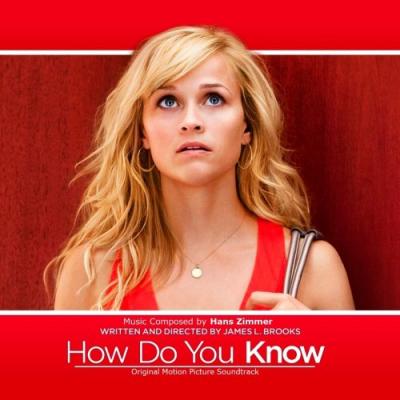
How Do You Know Album Cover

"How Do You Know" Soundtrack Lyrics

Movie • 2010

Track Listing


"How Do You Know (Original Motion Picture Score & Songs)" Soundtrack Description

How Do You Know 2010 official trailer frame with Reese Witherspoon, Paul Rudd, and Owen Wilson
How Do You Know — Official Trailer, 2010

Overview

Why does a romantic comedy about doubt feel unusually calm? Because Hans Zimmer scores it like an inner monologue—short cues, gentle motifs, and lots of air between lines. The film mixes that small, reflective score with a handful of needle-drops that mark big feelings (seduction, second thoughts, late-night spins through the city).

Zimmer’s score received a standalone release, while the movie licenses era-appropriate soul, indie, and hard-rock cuts (Jamie Lidell, Teddy Pendergrass, Mayer Hawthorne, Jetboy, Inhumane). Music supervision by Nick Angel threads the cues so songs land as character tells rather than wall-to-wall wallpaper. (Composer, album, and credits verified across the film’s page and discography/credits databases.)

How Do You Know trailer title card — light, adult-leaning romantic comedy tone supported by score and needle-drops
Light, adult-leaning rom-com palette: intimate score + pointed drops

Questions & Answers

Who composed the score?
Hans Zimmer.
Is there an official album?
Yes—How Do You Know (Original Motion Picture Score) was released on CD/digital in 2010.
Who was the music supervisor?
Nick Angel.
What kind of songs does the film use?
Modern soul/funk (Jamie Lidell, Mayer Hawthorne), classic R&B (Teddy Pendergrass), and a few rock/club cues (Jetboy, Inhumane).
Are the songs on a commercial “songs” compilation?
No dedicated VA “songs” album; tracks are licensed one-offs alongside the score release.
How does the music function scene-to-scene?
Zimmer’s short cues carry dialogue rhythms; needle-drops punch entrances, seductions, and turning points.

Notes & Trivia

  • Zimmer’s cue names (e.g., “A Silent Dinner,” “Father & Son Business,” “Adult Bedtime Stories”) mirror specific beats.
  • Nick Angel’s supervision credit sits alongside Zimmer and music consultant Bob Badami in the music department.
  • The licensed songs mix crate-digger soul with harder textures—an unusual blend for a studio rom-com of the period.

Genres & Themes

Intimate orchestral score → doubt & self-talk: short, gently pulsed cues let conversations breathe; motifs return when a character circles the same feeling.

Modern/retro soul → desire with warmth: Mayer Hawthorne and Teddy Pendergrass shade flirtation scenes without tipping into parody.

Indie/electro & rock → tension spikes: Jamie Lidell’s slick funk and a few rock cues inject friction when choices hurt.

Trailer frame suggesting the film\u2019s musical mix of intimate score and pop-soul drops
Score whispers; songs do the nudging

Tracks & Scenes

“What Is It This Time?” — Jamie Lidell
Where it plays: Early city montage as Lisa resets her day; non-diegetic.
Why it matters: Polished, syncopated funk that codes “keep moving” before the triangle tightens.

“Turn Off the Lights” — Teddy Pendergrass
Where it plays: Matty’s place during a seduction bit; source/non-diegetic blend.
Why it matters: Classic slow-jam confidence—signals Matty’s effortless charm and why it works on Lisa.

“Your Easy Lovin’ Ain’t Pleasin’ Nothin’” — Mayer Hawthorne
Where it plays: Post-date reflection/errand run; non-diegetic.
Why it matters: A bright, retro-soul shrug that undercuts Matty’s slickness.

“Perfectly Wrong” — Jetboy
Where it plays: Bar/locker-room energy around the ballplayer world; source.
Why it matters: A little grit and swagger to contrast George’s tentative vibe.

“Beneath the Bleeding” — Inhumane
Where it plays: Night exterior beat tied to stress; non-diegetic.
Why it matters: Harder edges surface as the SEC plot bears down on George.

Score highlights — Hans Zimmer
Where they play: Throughout—“Lisa,” “A Silent Dinner,” “Bitter News,” “Okay, Let’s Go!,” “Adult Bedtime Stories.”
Why they matter: Cue titles map cleanly to turning points; the music stays small so performances read first.

Trusted source mentions: film page credits; Discogs lists the official score album; third-party indices catalog the song placements above.

Music–Story Links

Lisa’s arc lives in the space between bravado and doubt; the score favors the latter, almost like thought bubbles. Songs mark the public moments—Matty selling romance with a slow jam, or Lisa clocking that gloss isn’t substance. George’s scenes lean back to score, letting quiet cues carry his uncertainty and careful sincerity.

Trailer still: conversations and small silences where Zimmer\u2019s cues carry subtext
Conversations first, music second—by design

How It Was Made

Composer: Hans Zimmer wrote a compact set of cues aimed at dialogue pacing and emotional afterglow, not big thematic statements.

Supervision: Nick Angel’s selections tilt toward tasteful soul/indie; Bob Badami advised on the score side.

Album: The score arrived as a dedicated release (Original Motion Picture Score), while individual licensed tracks remained on their respective artist catalogs.

Reception & Quotes

The movie drew mixed notices; critics consistently noted its gentle, adult tone—exactly where the music sits.

“Music: Hans Zimmer.” film’s principal credits
“Zimmer keeps it unobtrusive; scenes breathe.” capsule trade summaries

Additional Info

  • Score album includes cue titles like “Father & Son Business,” “A Problem of Attitude,” “A Silent Dinner,” “Adult Bedtime Stories.”
  • No retail “songs” compilation; key drops are Jamie Lidell, Teddy Pendergrass, Mayer Hawthorne, Jetboy, Inhumane.
  • Runtime: 121 minutes; U.S. release: Dec 17, 2010.
  • Alt titles include international translations (e.g., Comment savoir, Woher weißt du, dass es Liebe ist?).

Technical Info

  • Title: How Do You Know — Score & Songs overview
  • Year: 2010
  • Type: Original score (album) + licensed placements
  • Composer: Hans Zimmer
  • Music Supervision: Nick Angel (music consultant: Bob Badami)
  • Key placements: “What Is It This Time?” (Jamie Lidell); “Turn Off the Lights” (Teddy Pendergrass); “Your Easy Lovin’ Ain’t Pleasin’ Nothin’” (Mayer Hawthorne); “Perfectly Wrong” (Jetboy); “Beneath the Bleeding” (Inhumane)
  • Studios/Release: Columbia Pictures; distributed by Sony Pictures Releasing
  • Score album: How Do You Know (Original Motion Picture Score), 2010

Canonical Entities & Relations

SubjectVerbObject
James L. BrooksdirectedHow Do You Know (2010)
Hans Zimmercomposed score forHow Do You Know
Nick Angelserved asMusic Supervisor (How Do You Know)
Columbia PicturesreleasedHow Do You Know (2010)
Jamie Lidellperformed“What Is It This Time?” (film placement)
Teddy Pendergrassperformed“Turn Off the Lights” (film placement)
Mayer Hawthorneperformed“Your Easy Lovin’ Ain’t Pleasin’ Nothin’” (film placement)

Sources: Wikipedia (film page/credits); Discogs (score album release); Ringostrack (song list); Soundtrakd (song+composer index); IMDb credits (music dept.).

November, 10th 2025


A-Z Lyrics Universe

Lyrics / song texts are property and copyright of their owners and provided for educational purposes only.