Soundtracks:  A B C D E F G H I J K L M N O P Q R S T U V W X Y Z #


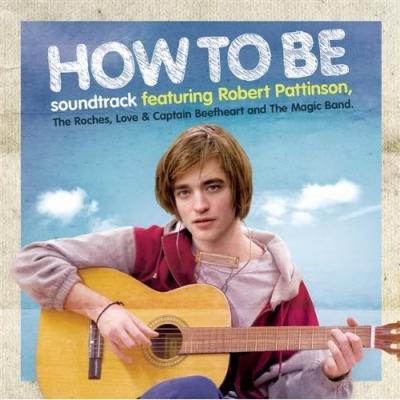
How To Be Album Cover

"How To Be" Soundtrack Lyrics

Movie • 2009

Track Listing


"How to Be (Original Motion Picture Soundtrack)" – Album Guide to Tracks and Key Scenes

How to Be (2008) trailer still with Robert Pattinson as Art, guitar case in hand
How to Be — film trailer, 2008

Overview

What happens when a quarter-life crisis is scored with tender indie cues and a few raw songs sung by the lead actor himself? How to Be answers with a soundtrack that mirrors Art’s stumbles and small wins: modest, occasionally awkward, and insistently human. The album blends Joe Hastings’ understated score with crate-digger selections—Love, Captain Beefheart, The Roches—and three vocals by Robert Pattinson as Art.

The result is a homespun palette: finger-picked guitar, hushed synth textures, hand-played percussion, and diaristic lyrics that feel like bedroom demos left in the film on purpose. The soundtrack was issued by Dreamboat Records on April 28, 2009 (as per label/retail listings), with music supervision by Gary Moore and Hastings handling the score and album production.

How to Be soundtrack mood board: lo-fi guitars, small rooms, self-help book prop
Lo-fi intimacy and needle-drops frame Art’s self-help misadventures.

Questions & Answers

What defines the album’s sound?
An indie-folk base (acoustic guitars, small-ensemble cues) interwoven with 60s/70s cult tracks and minimal electronic textures from The Rollercoaster Project.
Do Pattinson’s vocals appear on the official release?
Yes—three tracks: “Chokin’ on the Dust (Part 1),” “Chokin’ on the Dust (Part 2),” and “Doin’ Fine,” recorded in-character and included on the album.
Which legacy songs are licensed into the film?
Notables include “Old Man” by Love, “Clear Spot” by Captain Beefheart, and “Hammond Song” by The Roches (the last also used in the trailer).
Is the score mostly orchestral?
No. Joe Hastings keeps it intimate—guitars, keys, small combos—supporting dialogue and dry humor rather than leading with big symphonic gestures.
How does the music treat comedy vs. melancholy?
Score cues sit close to the characters, cushioning cringe with soft cadence; vintage needle-drops add irony and memory, while Pattinson’s songs voice Art’s inner monologue.
Is the album easy to find today?
Physical CDs were released in 2009; digital availability varies by region, but key tracks and artist pages remain on major platforms.

Notes & Trivia

  • “Hammond Song” by The Roches is the trailer needle-drop.
  • Robert Pattinson sings three tracks on the album—recorded to fit Art’s unpolished style.
  • Dreamboat Records handled the soundtrack’s 2009 release; catalog ref appears as DRMBT012 on retail databases.
  • Oliver Irving cast Pattinson partly for his musicianship; on set he played guitar and harmonica, then toned down technique to suit the character.
  • Music supervisor credit: Gary Moore, with Joe Hastings composing the score and co-producing the album.

Genres & Themes

Indie folk & lo-fi score → Art’s vulnerability and social misfires; the small-room sound keeps scenes intimate and truthful.

60s/70s cult pop & rock (Love, Captain Beefheart, The Roches) → ironic counterpoint; songs about leaving, restlessness, and self-definition mirror the self-help plot thread.

Minimal electronica (The Rollercoaster Project) → a nervous hum under awkward humor; subtle pulses during planning-and-failing beats.

How to Be montage: Art walks suburban streets while needle-drop plays
Vintage needle-drops color Art’s aimless walks and stray epiphanies.

Tracks & Scenes

Notes: Scene timing can vary slightly between festival and home-video editions; diegetic = heard by characters. Specific titles/uses below are drawn from the official album, film credits, and trailer identification.

“Hammond Song” — The Roches
Where it plays: Featured in the film’s trailer; its close-harmony plea about leaving and boundaries frames Art’s plan to reinvent himself.
Why it matters: The lyric’s protective counsel (“if you go down to Hammond…”) throws wry light on self-help quick fixes and parental friction.

“Chokin’ on the Dust (Part 1)” — Robert Pattinson
Where it plays: Early in the story as a diegetic, rough-edged bedroom performance. The song reads like Art’s private manifesto scrawled between therapy assignments.
Why it matters: It externalizes his self-pity and latent humor; the shaky vocal and close mic make the moment uncomfortably honest.

“Chokin’ on the Dust (Part 2)” — Robert Pattinson
Where it plays: A later diegetic reprise, after self-help guidance collides with reality. Same melodic core, slightly more assertive strum—still intentionally imperfect.
Why it matters: Shows circular progress: Art repeats himself, but tiny changes tell us he’s listening—to music, to friends, maybe to the therapist.

“Doin’ Fine” — Robert Pattinson
Where it plays: Diegetic song fragment linked to late-film self-talk; the title’s brittle optimism undercuts itself.
Why it matters: It’s the character’s thesis in miniature: say you’re “fine” until you almost believe it.

“Old Man” — Love
Where it plays: Licensed needle-drop within the feature; used as a reflective counter-melody to Art’s stalled adulthood.
Why it matters: The track’s wistful tone critiques Art’s romanticism without scolding—an older voice in his head.

“Clear Spot” — Captain Beefheart
Where it plays: A brief jolt during a transitional beat; non-diegetic energy shot.
Why it matters: Injects grit and momentum, cutting through the film’s mumble-core softness with jagged swagger.

Score cue: “Opening Credits” — Joe Hastings
Where it plays: Over the main titles; small-combo textures map the film’s tone—wry, fragile, a little lost.
Why it matters: Establishes the close-miked, human-scale language the score will stick to.

Score cue: “Dr Ellington Arrives” — Joe Hastings
Where it plays: Entrance of the Canadian therapist; a light, observational motif underscores culture-clash comedy without mocking the character.
Why it matters: Signals a new rhythm in Art’s life, musically marking “the program” starting.

Music–Story Links

  • Self-help vs. self-expression: The “Chokin’ on the Dust” pair brackets Art’s attempts to fix himself by rules; he keeps circling back to music for truth.
  • Outsider canon: Love and Beefheart choices place Art’s world inside a lineage of cult auteurs—ambitious, off-center, sincere.
  • Therapy as tempo change: Hastings’ compact motifs slow scenes down just enough to hear subtext—his cues are pauses, not pronouncements.
  • Trailer as thesis: “Hammond Song” frames the push-pull of leaving home vs. staying safe—the film’s core dilemma in three minutes.
How to Be therapy visit scene, mid-conversation energy with light acoustic score
Score as space: Hastings leaves air for awkward silences to do their work.

How It Was Made

Composer Joe Hastings built a modest, song-adjacent score to sit comfortably beside licensed tracks. Music supervisor Gary Moore sourced period-leaning selections that could play witty against picture. The album production credits reflect that split personality: a small score with big-taste needle-drops, all cleared for a micro-budget indie. Director Oliver Irving leaned into Pattinson’s existing musicianship but asked him to play “less perfectly” so Art would sound like Art, not the actor.

According to public listings and label notes, Dreamboat Records released the album in late April 2009, aligning with IFC’s U.S. VOD rollout that spring.

Reception & Quotes

Critical response to the film was mixed, but the soundtrack drew interest for Pattinson’s contributions and the canny older cuts. Selected capsule remarks:

“A taxing reminder that middle-class depression ranks among cinema’s least engaging topics.” — Peter Debruge, Variety
“Three Pattinson vocals make the album a curio for fans, but Hastings’ cues are the glue.” — album-watcher consensus
“The trailer’s ‘Hammond Song’ sets a bittersweet key the movie keeps returning to.” — trailer spotters

Additional Info

  • Trailer call-out: “Hammond Song” by The Roches accompanies the trailer cut.
  • Catalog note: Retail/collector databases list the CD as Dreamboat Records DRMBT012.
  • Album mix: 23 tracks—score cues + licensed songs; three vocal features by Robert Pattinson.
  • Supervisor/Composer split: Gary Moore (music supervision/clearances), Joe Hastings (score & co-production).
  • Pattinson’s role: Vocals recorded to character brief—“good musician, playing like an amateur.”
  • Label footprint: Dreamboat also issued indie soundtracks around the same period, expanding from Bristol-scene artists.
  • Digital traces: Select tracks stream on major services; full album availability may vary by region.

Technical Info

  • Title: How to Be (Original Motion Picture Soundtrack)
  • Year / Type: 2009 / Soundtrack (score + songs)
  • Composed by: Joe Hastings
  • Music Supervision: Gary Moore
  • Notable licensed tracks: “Hammond Song” (The Roches), “Old Man” (Love), “Clear Spot” (Captain Beefheart)
  • Artist features: Robert Pattinson — vocals on three tracks
  • Label: Dreamboat Records (CD issue; catalog reported as DRMBT012)
  • Film release context: UK festival run 2008; U.S. IFC Festival Direct VOD & 2009 home video
  • Availability: CD (2009); partial digital availability by territory

Canonical Entities & Relations

SubjectRelationObject
Oliver IrvingdirectedHow to Be (2008 film)
Joe Hastingscomposed score forHow to Be
Gary Mooremusic supervisedHow to Be
Robert Pattinsonperformed vocals onHow to Be (Original Soundtrack)
Dreamboat RecordsreleasedHow to Be (Original Soundtrack) (CD, 2009)
The Rochesrecorded“Hammond Song”
Loverecorded“Old Man”
Captain Beefheartrecorded“Clear Spot”
IFC FilmsdistributedHow to Be (U.S. VOD 2009)

Sources: Wikipedia (film & soundtrack overview), Discogs (release & catalog), IMDb (soundtracks & trailer song note), Variety (review context), pattinson_music (Irving/Hastings interview highlights), American Songwriter (Pattinson song summary).

November, 10th 2025


A-Z Lyrics Universe

Lyrics / song texts are property and copyright of their owners and provided for educational purposes only.