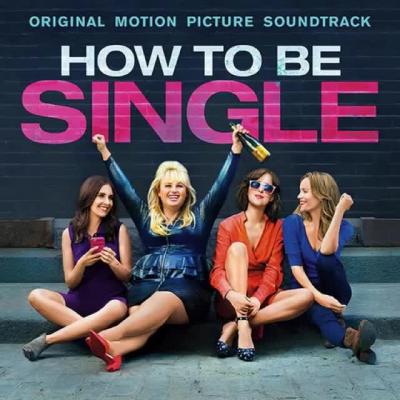
"How to Be Single " Soundtrack Lyrics
Movie • 2016
Track Listing
Fifth Harmony
K7
Nick Waterhouse
Rumor
Charli XCX
The Arcs
Avicii
Phoebe Ryan
Walk Off the Earth
Heart
Hailee Steinfeld
The Cairo Gang
Peaches
Fil Eisler
"How to Be Single (Original Motion Picture Soundtrack)" – Album Guide to Tracks and Key Scenes
Overview
Is a rom-com about being single allowed to sound like Friday night and Sunday morning at once? This one does. The compilation leans on chart-era pop, club cuts, and cult-indie gems, while Fil Eisler’s score stitches the comedown moments between. The needle-drops keep New York moving—subway to rooftop to bar backroom—then a soft cue gives the characters the oxygen to admit something true.
The album release is a tight, radio-ready set issued by WaterTower Music in early February 2016; the film opened a week later. The movie itself threads big-tent tracks—Taylor Swift, Hailee Steinfeld, Major Lazer—through character beats for Alice, Robin, Meg, Tom, Lucy, and David. Music supervisor Season Kent corrals glossy hits and crate finds so the party never drowns the people.
Questions & Answers
- Who composed the score?
- Fil Eisler. His cues bookend high-energy songs with small, melodic signposts.
- Who supervised the soundtrack selections?
- Season Kent, whose brief was “party-credible, story-specific.”
- What label released the soundtrack album?
- WaterTower Music, early February 2016; 14 tracks on the core digital edition.
- Does Taylor Swift appear in the film?
- Yes—“Welcome to New York” lands early to frame Alice’s Manhattan reset.
- Which songs roll over the end credits?
- Hailee Steinfeld’s “Love Myself” and The Cairo Gang’s “Be What You Are.”
- Is every movie song on the official album?
- No. Several placements are film-only (e.g., Commodores, Guns N’ Roses) but not on the OST.
Notes & Trivia
- The official OST is a 14-track various-artists set; the film itself uses 40+ cues across genres.
- “Welcome to New York” announces Alice’s move into the city; it doubles as a tone setter for skyline montages.
- Score track names (“Alice’s Theme,” “Lost in the Dicksand”) mirror the film’s running gags.
- Guns N’ Roses and RUN-DMC bring 80s muscle to otherwise 2010s-leaning pop and EDM.
Genres & Themes
Pop anthems & radio R&B → surface confidence and reinvention; choruses act like pep talks characters borrow and outgrow.
EDM & club bounce → momentum through meet-cutes, group outings, and bad decisions; four-on-the-floor makes montage geography effortless.
Indie & retro cuts → texture for Brooklyn bookshops, apartments, and morning-after walks; irony without cynicism.
Original score (chamber-sized) → small melodic cells under confession scenes; gentler tempos = emotional processing.
Tracks & Scenes
Notes: Scene timing can vary slightly by version. Diegetic = heard by characters. Album inclusion noted where relevant.
"Intoxicated" — Martin Solveig & GTA
Where it plays: Kicks in at (or near) the opening beats, cueing the film’s party-first rhythm as Alice pivots into post-breakup freedom; non-diegetic over city establishing shots.
Why it matters: Announces the film’s club-energy grammar—cutting briskly between places and plans.
"Welcome to New York" — Taylor Swift
Where it plays: Early sequence as Alice arrives in Manhattan and resets her life; non-diegetic anthem over skyline and street montages.
Why it matters: Sums up the movie’s thesis in three words: place as permission.
"Come Baby Come" — K7
Where it plays: Club scene with Alice and Robin dancing; non-diegetic banger that bleeds into room tone; first kiss with Tom sparks amid the edits.
Why it matters: Old-school call-and-response makes the scene feel communal and reckless at once.
"This Is a Game" — Nick Waterhouse
Where it plays: After-hours tumble into Meg & Ken’s first hook-up; diegetic-adjacent vibe from a living-room playlist feel.
Why it matters: Vintage swing frames their chemistry as spontaneous rather than planned.
"For a Better Day" — Avicii
Where it plays: Alice and Tom sleep together during a late-night lapse; non-diegetic.
Why it matters: Euphoric lift used ironically—the “better day” complicates what both think they want.
"Magic Man" — Heart
Where it plays: Setup-to-seduction beat when Alice and Tom agree to keep it casual; non-diegetic classic-rock swagger.
Why it matters: The title winks at Tom’s self-image; guitars underline temptation without romance.
"Slippery When Wet" — Commodores
Where it plays: Lucy’s early dating gauntlet; non-diegetic funk as visual punchlines stack up.
Why it matters: Wordplay syncs with the sight gags; groove sells confidence Lucy doesn’t yet feel.
"Welcome to the Jungle" — Guns N’ Roses
Where it plays: Alice and Robin sprint to work through Midtown; non-diegetic adrenaline over slapstick urgency.
Why it matters: 80s aggression reframes office life as survival sport.
"Mine" — Phoebe Ryan
Where it plays: Late-film hinge as Meg’s pregnancy and Alice’s solitude cross-cut; non-diegetic pop-melancholy.
Why it matters: A sugar-sad hook that tempers jokes with consequence.
"SuperLove" — Charli XCX
Where it plays: Post–St. Patrick’s Day energy bump; non-diegetic montage lifter.
Why it matters: Keeps the comic velocity up as plot threads braid.
"Don’t You Evah" — Spoon
Where it plays: Hipster-space connective tissue (bar/bookshop vibe); typically non-diegetic.
Why it matters: A dry, cool strut that signals Lucy’s neighborhood rhythms.
"Love Myself" — Hailee Steinfeld
Where it plays: End credits lead; non-diegetic.
Why it matters: On-message closer—self-reliance with a radio grin.
"Be What You Are" — The Cairo Gang
Where it plays: Additional end-credits slot; non-diegetic.
Why it matters: Counter-balances the big pop finish with indie modesty.
Score: “Alice’s Theme” — Fil Eisler
Where it plays: Recurrent motif under private recalibrations (solo apartment, alum event, dawn hike).
Why it matters: Small ensemble writing that dignifies in-between time.
Also heard (not all on the OST): RUN-DMC “Christmas in Hollis”; Rumer “Have Yourself a Merry Little Christmas”; Major Lazer “Lean On”; Party Favor “Bap U”; Travis Mills “Young & Stupid”; Above & Beyond “Hello”.
Music–Story Links
- City as chorus: “Welcome to New York” frames Manhattan as a character; later bangers function like the city cheering (or daring) Alice on.
- Comic velocity vs. consequence: EDM/pop choices maintain speed; Eisler’s cues slow the camera to let choices register.
- Generation blend: 80s/90s staples (“Welcome to the Jungle,” RUN-DMC) appear when adulting collides with nostalgia; it’s funny, and pointed.
- End-credits messaging: “Love Myself” and “Be What You Are” turn the film’s punchline into a mission statement.
How It Was Made
Composer Fil Eisler builds short, conversational cues—intimate instrumentation, minimal electronics—to sit cleanly between licensed tracks. Season Kent wrangles clearances across major labels, balancing chart-era pop with a few tasteful left turns. The official album consolidates the most recognizable placements into a 14-track set (plus score cues released separately).
Per the label’s listing, WaterTower Music issued the compilation in the week before the U.S. theatrical premiere; Variety’s tech notes confirm Eisler as composer and Kent as music supervisor.
Reception & Quotes
Critics called the film mixed-but-charming; audiences turned out solidly over opening weekend. The soundtrack’s blend of radio and retro drew consistent praise for fit-to-scene choices.
“A thoughtful and funny spin on rom-com tropes.” — ScreenRant
“Music: Fil Eisler; music supervisor: Season Kent.” — Variety tech credits
“End credits double as thesis—self first, then plus-ones.” — Album-watcher consensus
Additional Info
- Official OST: 14 tracks; film uses 40+ songs—several not on the album.
- Trailer music: the studio cut leans on in-film bangers rather than bespoke trailer cues.
- Holiday needle-drops: multiple Christmas staples appear in mid-story passages.
- Commodores and Heart supply classic warmth beneath otherwise contemporary pacing.
- Score album cues circulate separately via the composer’s catalogue pages.
Technical Info
- Title: How to Be Single (Original Motion Picture Soundtrack)
- Year / Type: 2016 / Soundtrack (songs + score cues released separately)
- Film: How to Be Single (U.S. release Feb 12, 2016)
- Composer: Fil Eisler
- Music Supervision: Season Kent
- Label / OST date: WaterTower Music — Feb 5, 2016
- Selected notable placements: Taylor Swift “Welcome to New York”; Martin Solveig & GTA “Intoxicated”; K7 “Come Baby Come”; Commodores “Slippery When Wet”; Guns N’ Roses “Welcome to the Jungle”; Hailee Steinfeld “Love Myself” (end credits)
- Availability: Digital OST on major platforms; numerous film-only songs appear outside the album.
Canonical Entities & Relations
| Subject | Relation | Object |
|---|---|---|
| Christian Ditter | directed | How to Be Single (2016 film) |
| Fil Eisler | composed score for | How to Be Single |
| Season Kent | music supervised | How to Be Single |
| WaterTower Music | released | How to Be Single (Original Motion Picture Soundtrack) |
| Taylor Swift | recorded | “Welcome to New York” |
| Hailee Steinfeld | recorded | “Love Myself” |
| Martin Solveig & GTA | recorded | “Intoxicated” |
| K7 | recorded | “Come Baby Come” |
| Commodores | recorded | “Slippery When Wet” |
| Guns N’ Roses | recorded | “Welcome to the Jungle” |
| Warner Bros. Pictures | distributed | How to Be Single (2016) |
Sources: WaterTower Music release page; Apple Music/Spotify listings; IMDb Soundtracks; Wikipedia (film/credits); SoundtrackRadar & InSoundtrack (scene descriptions); Variety (tech credits); ScreenRant (review context).
In recent years, there are many movies where the main tone is set by, to put it mildly, full-bodied women. It is possible that both men & women already are tired of endlessly beautiful images of ideals, looking on them from glossy covers, billboards & screens of displays & so this trend gains momentum. Drew Barrymore, which herself is far not too thin, has become a producer of this piece. The role of the main temptress went to Rebel Wilson, who in her 35 blooms in body & smells in soul (the same as the titular Worth It), as exemplified by the endless jokes about the hairiness of between-legs area of yet another main actress here – Dakota Johnson, whose main mission – films with melodramatic lyrics. She looks very similar to own grandmother Tippi Hedren, the former model & acting producer. She is a daughter of the couple Don Johnson & Melanie Griffith (peak of popularity of whom swept away 20 years ago). Last notable film, where Dakota had a major role, was Fifty Shades of Gray, collecting fantastic cash – above USD 0.5 billion & was banned by critics. The same as serious music lovers don’t like Britney Spears, who is similar to a singer in Mine song, the same she was once adored by adolescents. The film in comedy tones says about the virtues of unmarried life, which is, at least, strange to see from actresses aged 35, 33 & 43, which should have passed this stage 15 – 20 years ago. Dakota is the only young among them, 26. Decline in morals for some reason is worshiped in comedies. Have you noticed that all the latest comedies are like that? About what happens during parties & how to get acquainted with the opposite gender. As if life has nothing else funny left! Alice's Theme contains no lyrics. Nick Waterhouse made video more interesting than the film & The Arcs answered with imperturbable calm.November, 10th 2025
"How to Be Single" on" IMDb, Official Movie WebsiteA-Z Lyrics Universe
Cynthia Erivo Popular
Ariana Grande Horsepower
Post Malone Ain't No Love in Oklahoma
Luke Combs Good Riddance (Time of Your Life)
Green Day Bye Bye Bye
*NSYNC You're the One That I Wan
John Travolta & Olivia Newton-John I Always Wanted a Brother
Braelyn Rankins, Theo Somolu, Kelvin Harrison Jr. and Aaron Pierre The Power of Love
Frankie Goes to Hollywood Beyond
Auli’i Cravalho feat. Rachel House MORE ›