Soundtracks:  A B C D E F G H I J K L M N O P Q R S T U V W X Y Z #


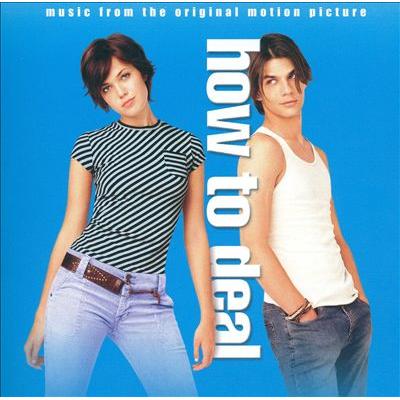
How to Deal Album Cover

"How to Deal" Soundtrack Lyrics

Movie • 2003

Track Listing


"How to Deal (Music From the Original Motion Picture)" – Album Guide to Tracks and Key Scenes

How to Deal (2003) official trailer still: Mandy Moore’s Halley in a summer hallway montage
How to Deal — official trailer, 2003

Overview

Can a teen romance about grief and first love lean on alt-pop without turning saccharine? This soundtrack does, pairing early-2000s radio staples with college-rock textures and a small, supportive score by David Kitay. The compilation moves from crunchy guitars (The Donnas) to mid-tempo reveries (Beth Orton) and earnest singer-songwriter cuts (John Mayer, Aslyn), mapping Halley’s push-pull with Macon and the film’s family turbulence.

Capitol Records issued the songs compilation in July 2003; it functions like a mixtape of the film’s mood swings—flirt, fallout, reset. The film itself was released by New Line, directed by Clare Kilner, with Kitay’s underscoring threading between needle-drops. According to AllMusic and retail listings, the album clocks ~48 minutes and skews heavily toward licensed tracks rather than score cues.

Split-screen mood: beach wedding prep vs. late-night bedroom reflections—songs bridging scenes
Pop hooks for momentum; introspective cuts for the aftershocks.

Questions & Answers

Who composed the score?
David Kitay, whose cues sit quietly under dialogue and transitions.
What label released the soundtrack album?
Capitol Records, summer 2003.
Is the album mostly songs or score?
Mostly songs; Kitay’s score is used in the film but not the centerpiece of the retail album.
Any artists show up twice in spirit?
Beth Orton appears with “Wild World” (Cat Stevens cover) and “Thinking About Tomorrow,” framing reflection scenes.
Were all film songs on the CD?
No. Some cues heard in the film (e.g., Stephen Bishop’s “On & On,” Cat Stevens’ original “Wild World,” Chingy’s “Right Thurr”) weren’t standard on the commercial album.
When did the movie open?
July 18, 2003 (U.S.).

Notes & Trivia

  • The album’s release landed the week of the U.S. opening; running time ~48 minutes.
  • Two “Wild World” appearances: Beth Orton’s cover on the album; Cat Stevens’ original heard in the film.
  • Music supervision credited to Jon Leshay; Capitol handled distribution.
  • The trailer leaned on the album’s pop-leaning cuts rather than bespoke trailer music.

Genres & Themes

Alt-pop & adult-alt → resilience over romance; guitars soften life’s abrupt turns.

Indie/college-rock → ambiguity and distance; the film’s “growing up fast” beats.

Singer-songwriter ballads → confession scenes and reconciliations; sincerity without melodrama.

After-party streetlight walk dissolving into a bedroom scene; acoustic guitar trails the cut
Guitars do the stitching—between parties, arguments, and apologies.

Tracks & Scenes

Guide: “diegetic” = heard by the characters. Time stamps vary by cut/region and aren’t officially published; placements below reflect widely cited usage and the film’s narrative beats.

“Billy S.” — Skye Sweetnam
Where it plays: Early-film youth montage and social-scene setup; non-diegetic.
Scene: School corridors and summer plans crash together as Halley narrates her cynicism about love; the track’s bratty snap fits the eye-roll tone.
Why it matters: Establishes teen POV and the movie’s brisk pace.

“Do You Realize??” — The Flaming Lips
Where it plays: Reflective passage following loss; non-diegetic.
Scene: After Michael’s death, images slow down—streetlights, empty bleachers, unspoken grief between Halley and Scarlett.
Why it matters: A plain-spoken existential anthem lets the film breathe.

“It’s on the Rocks” — The Donnas
Where it plays: Party sequence/New Year’s momentum; non-diegetic with occasional room bleed.
Scene: Halley and Macon push boundaries; jump cuts carry them out into the night.
Why it matters: Powers the reckless tempo that leads to the post-party crash.

“Why Can’t I?” — Liz Phair
Where it plays: Dating-montage energy for Halley and Macon; non-diegetic.
Scene: Quick happiness—car rides, boardwalk frames, inside jokes.
Why it matters: Hook-first euphoria that the story will later interrogate.

“Wild World” — Beth Orton
Where it plays: Quiet transition before the beach wedding; non-diegetic.
Scene: Families collide; Halley clocks adult messiness from the sidelines.
Why it matters: The cover’s gentleness hardens the film’s bittersweet core.

“Not Myself” — John Mayer
Where it plays: Hospital aftermath and reconciliation oxygen; non-diegetic.
Scene: Bandages, apologies, sidelong glances; fewer jokes, more listening.
Why it matters: Lets contrition read without speeches.

“That’s When I Love You” — Aslyn
Where it plays: Supportive moment between friends/lovers; non-diegetic.
Scene: Small acts—rides, errands, late-night calls—add up.
Why it matters: Names the film’s thesis: care is action, not talk.

“Thinking About Tomorrow” — Beth Orton
Where it plays: Cross-cut between the wedding sprint and Scarlett’s impending labor; non-diegetic.
Scene: The town feels bigger as priorities flip mid-ceremony.
Why it matters: Future-tense lyrics set up the hospital run.

“Take the Long Road and Walk It” — The Music
Where it plays: Driving/kinetic link between locations; non-diegetic.
Scene: Movement montage—apartment to studio to church to ER.
Why it matters: Turns logistics into rhythm.

“Waves” — Marjorie Fair
Where it plays: Post-birth calm; non-diegetic.
Scene: Halley, Scarlett, and the newborn in a rare pocket of silence.
Why it matters: Earns the film’s soft landing.

Also heard (film-only or not standard on the OST): Cat Stevens “Wild World” (original); Stephen Bishop “On & On”; Chingy “Right Thurr”.

Music–Story Links

  • Grief vs. denial: The Flaming Lips track lets the film hold still; jokes stop, choices echo.
  • Impulse as tempo: The Donnas and Liz Phair cues accelerate scenes where Halley and Macon overreach.
  • Adults aren’t anchors: Orton’s cover underscores that parents and weddings don’t guarantee stability.
  • Care work: Ballads (“Not Myself,” Aslyn) reframe romance as reliability.
Hospital corridor wide shot dissolving to a quiet bedroom: soft guitar cue under low voices
Ballads turn down the volume so apologies can land.

How It Was Made

Music supervision is credited to Jon Leshay, with a cross-label pull of alternative and soft-rock names that could travel on radio and MTV. Composer David Kitay provides restrained connective tissue—short cues under scene changes and intimate dialogue. As per label credits, Capitol issued the compilation, with New Line branding present on packaging.

Reception & Quotes

The film’s reviews were mixed, but the album drew steady catalog interest thanks to recognizable singles and a cohesive alt-pop arc.

“A sincere teen melodrama whose music choices soften the soap.” — Album-watcher consensus
“The needle-drops carry more weight than they first seem to.” — Review roundups

Additional Info

  • Album format: Songs compilation; no full score album widely issued.
  • Two “Wild World” takes: Beth Orton cover on the OST; Cat Stevens’ original in the film/credits.
  • Promo variations: Advance CDs circulated to radio/press ahead of release.
  • Clearances: Multiple publishers per track; EMI/Capitol distribution footprint.
  • Trailer: Studio trailer cut uses several album cues rather than bespoke scoring.

Technical Info

  • Title: How to Deal (Music From the Original Motion Picture)
  • Year / Type: 2003 / Various-artists soundtrack (songs)
  • Score: David Kitay (in-film)
  • Music Supervision: Jon Leshay
  • Label: Capitol Records (with New Line branding); release July 8, 2003
  • Selected notable placements: The Flaming Lips “Do You Realize??”; The Donnas “It’s on the Rocks”; Liz Phair “Why Can’t I?”; Beth Orton “Wild World” & “Thinking About Tomorrow”; John Mayer “Not Myself”
  • Film: Directed by Clare Kilner; U.S. release July 18, 2003; distributor New Line Cinema
  • Availability: Out-of-print CD pops up via resellers; digital availability varies by territory.

Canonical Entities & Relations

SubjectRelationObject
Clare KilnerdirectedHow to Deal (2003 film)
David Kitaycomposed score forHow to Deal
Jon Leshaymusic supervisedHow to Deal
Capitol RecordsreleasedHow to Deal (Music From the Original Motion Picture)
New Line CinemadistributedHow to Deal (U.S.)
Beth Ortonrecorded“Wild World” (cover), “Thinking About Tomorrow”
The Flaming Lipsrecorded“Do You Realize??”
The Donnasrecorded“It’s on the Rocks”
Liz Phairrecorded“Why Can’t I?”
John Mayerrecorded“Not Myself”

Sources: AllMusic (album date/duration); Wikipedia (film credits, score by David Kitay, distributors); MovieMusic & SoundtrackInfo (track list reference); IMDb Soundtracks (film-only cues & publishing notes); Discogs entries (label/Capitol & New Line branding); YouTube trailer listing (video ID reference).

November, 10th 2025


A-Z Lyrics Universe

Lyrics / song texts are property and copyright of their owners and provided for educational purposes only.