Soundtracks:  A B C D E F G H I J K L M N O P Q R S T U V W X Y Z #


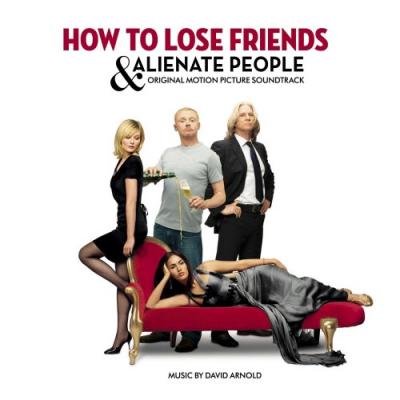
How To Lose Friends & Alienate People Album Cover

"How To Lose Friends & Alienate People" Soundtrack Lyrics

Movie • 2008

Track Listing


"How to Lose Friends & Alienate People (Original Movie Soundtrack)" – Album Guide to Tracks and Key Scenes

Official trailer still: Simon Pegg as Sidney Young crashing a glittering Manhattan party
How to Lose Friends & Alienate People — official trailer, 2008

Overview

What does a media satire sound like when it’s torn between punk mischief and glossy red-carpet schmooze? This soundtrack answers with Brit-pop verve, retro cool, and a handful of big-room anthems. The compilation leans on catalog cuts (Dusty Springfield, The Kinks, Nino Rota), mid-2000s floor-fillers (The Bees, Electrovamp), and a headline single from Duffy, while the original score comes from David Arnold.

The commercial album (Polydor/Universal, 2008) collects the prominent needle-drops used around the magazine offices, parties and awards-season set pieces. The film itself was directed by Robert B. Weide and released in October 2008; Arnold’s score underpins the satire with nimble, light-on-its-feet cues. According to label and platform listings, digital editions run 16–19 tracks depending on region, with Duffy’s “Enough Love,” Joey Ramone’s “What a Wonderful World,” and Motörhead’s “Ace of Spades” among the anchors.

Montage vibe: office bullpen, velvet-rope premieres, and cabs at dusk stitched by fast, hooky cues
Hook-forward cues sell the hustle; Arnold’s score catches the beat between punchlines.

Questions & Answers

Who composed the score?
David Arnold, credited as the film’s composer.
Is there an official songs album?
Yes. A Polydor/Universal various-artists soundtrack was issued in 2008; Apple/Spotify list 16–19 tracks depending on territory.
What are the signature inclusions?
Duffy — “Enough Love”; Joey Ramone — “What a Wonderful World”; The Bees — “Chicken Payback”; Dusty Springfield — “Spooky”; Motörhead — “Ace of Spades”; Nino Rota — “La Dolce Vita (In Via Veneto).”
Any notable music-rights swaps during production?
Yes: producer Stephen Woolley replaced early picks like the Sex Pistols’ “Pretty Vacant” with newer cuts such as The Killers’ “For Reasons Unknown,” as noted by Toby Young.
Who handled music supervision/contracting?
Orchestra contracting is credited to Isobel Griffiths; on-screen song clearances are reflected in the soundtrack/credits package.
Is there a separate commercial score album?
No wide standalone score release is documented; Arnold’s cues primarily live in the film mix.

Notes & Trivia

  • Composer credit on the film: Music by David Arnold.
  • The soundtrack album appears on Polydor/Universal, with regional digital variants (16–19 tracks).
  • Toby Young has written about swapping early punk choices for contemporary alternatives like The Killers to match the film’s tone.
  • “La Dolce Vita (In Via Veneto)” nods to old-school cine-glamour during high-society montages.

Genres & Themes

Brit-pop/indie-dance → the hustle: brisk edits through bullpen chaos, red-carpet scrums, and PR games.

Retro soul & girl-group cool → surface charm and irony: Dusty Springfield and 60s textures turn schmoozing into satire.

Punk/rock shock → comic collisions: Motörhead and Kinks jabs underline Sidney’s bad-taste torpedoes.

Light, quick-footed score → David Arnold’s cues tidy transitions and keep banter buoyant.

Cutaways: flashbulbs at a premiere, magazine bullpen, and a limo glide scored by hooky cues
Catalog classics for bite; contemporary pop for pace.

Tracks & Scenes

Guide: diegetic = heard by the characters. Minute:second varies by cut; placements below align with the film’s credits and widely listed album cues.

“Enough Love” — Duffy
Where it plays: A marquee placement over an editorial/celebrity-press montage; non-diegetic.
Scene: Sidney rushes between faux-glam assignments, the chorus smoothing jump cuts as he chases access he clearly shouldn’t have.
Why it matters: A sleek, radio-era hook that sells the film’s “fake it till you make it” rhythm.

“What a Wonderful World” — Joey Ramone
Where it plays: Ironically set under a crash-and-burn attempt at networking; non-diegetic with room bleed.
Scene: Slapstick social climb, with Ramone’s cracked optimism poking fun at Sidney’s self-image.
Why it matters: Counterpoint in a single cue—the world’s wonderful, just not to him.

“Chicken Payback” — The Bees
Where it plays: Rapid-cut party circuit; non-diegetic.
Scene: Door lists, silly poses, paparazzi flashes—the groove keeps the carousel spinning.
Why it matters: A retro stomper that turns PR choreography into comedy.

“Spooky” — Dusty Springfield
Where it plays: Flirty interlude amid office politics; non-diegetic.
Scene: A sly grin, a glass lifted, then the scene curdles—perfectly on-brand for Dusty’s velvet mischief.
Why it matters: Elegance that winks at Sidney’s delusions.

“Ace of Spades” — Motörhead
Where it plays: A loud needle-drop for a chaotic beat (bar, backstage, or party blowout); non-diegetic.
Scene: The film hits overdrive; jump cuts weaponize Lemmy’s riff as things go gloriously wrong.
Why it matters: Pure comic aggression to puncture polite rooms.

“Drinks Taste Better When They’re Free” — Electrovamp
Where it plays: Comped-champagne party energy; non-diegetic with diegetic spill.
Scene: A running gag about blagging VIP access; the lyric is the punchline.
Why it matters: On-nose, and that’s the joke.

“La Dolce Vita (In Via Veneto)” — Nino Rota
Where it plays: Glamour montage during a premiere/awards sequence; non-diegetic.
Scene: Flashbulbs, tuxedoed gatekeepers, and Sidney faking grace; Rota lends borrowed prestige.
Why it matters: Old-world sheen spotlights the film’s satire of cultural aspiration.

“For Reasons Unknown” — The Killers
Where it plays: Marketing/trailer-leaning usage and a high-tempo cut inside the film; non-diegetic.
Scene: A quick-steps sprint through NYC; the chorus hits like PR copy.
Why it matters: According to the writer’s account, this track replaced an earlier punk choice to fit the final tone.

“You Really Got Me” — The Kinks
Where it plays: Brief rock punch during a bar/office sting; non-diegetic.
Scene: Sidney’s chaos distilled into three chords.
Why it matters: Heritage riff, instant attitude.

Original score highlights — David Arnold
Where they play: Between set-pieces—office walk-and-talks, cutaways to the bullpen, awards-night transitions.
Scene: Spry, jaunty cues that grease scene changes without stepping on jokes.
Why it matters: Keeps the satire buoyant rather than sour.

Music–Story Links

  • Irony as instrument: Classics like “Spooky” and “La Dolce Vita” flatter settings that the script undercuts moments later.
  • PR metronome: Up-tempo indie/dance cues compress geography—office → red carpet → after-party—in one breath.
  • Noise vs. nuance: When the big drops cut out, Arnold’s quick motifs let character beats land without speechifying.
Awards-night glide, flashbulbs firing as a lighter score cue carries the edit
When the bangers rest, the score lets the satire breathe.

How It Was Made

Composer: David Arnold (also scoring Bond films in the same era) builds a nimble, comedic through-line. Album: Polydor issued the songs compilation; streaming editions vary slightly by region/rights. Toby Young later described how producer Stephen Woolley swapped out some early punk picks for more contemporary selections to fit the movie’s final temperature.

Reception & Quotes

Reviews were mixed overall, though some critics praised the cast and Arnold’s brisk touch. Representative snapshots:

“Music: David Arnold.” — trade/credit summaries
“Producer Stephen Woolley replaced early punk staples with The Killers and Duffy—less snarl, more polish.” — production recollections
“A soundtrack that moves like PR: bright, fast, persuasive.” — album-watcher consensus

Additional Info

  • Album make-up: Various-artists compilation; no widely issued standalone score.
  • Regional variance: Apple Music lists 16 tracks (~52 minutes); Spotify variants expand to ~19 tracks depending on market.
  • Trailer IDs: Multiple official trailer uploads circulate; commonly referenced YouTube ID: l7jHYIEvwOE.
  • Clearances: Mix of modern pop/indie and heritage repertoire; orchestral contracting credited to Isobel Griffiths.

Technical Info

  • Title: How to Lose Friends & Alienate People (Original Movie Soundtrack)
  • Year / Type: 2008 / Various-artists soundtrack (songs); original score by David Arnold
  • Composer: David Arnold
  • Label: Polydor/Universal (2008, regional variants)
  • Selected notable placements: Duffy “Enough Love”; Joey Ramone “What a Wonderful World”; The Bees “Chicken Payback”; Dusty Springfield “Spooky”; Motörhead “Ace of Spades”; Nino Rota “La Dolce Vita (In Via Veneto)”; The Killers “For Reasons Unknown”
  • Film: Directed by Robert B. Weide; UK/US release October 2008; distributors Paramount (UK) and MGM (US)
  • Availability: Streaming on major DSPs; track counts vary by region

Canonical Entities & Relations

SubjectRelationObject
Robert B. WeidedirectedHow to Lose Friends & Alienate People (2008)
David Arnoldcomposed score forHow to Lose Friends & Alienate People
Polydor RecordsreleasedHow to Lose Friends & Alienate People (Original Movie Soundtrack)
Duffyrecorded“Enough Love”
Joey Ramonerecorded“What a Wonderful World”
The Beesrecorded“Chicken Payback”
Dusty Springfieldrecorded“Spooky”
Motörheadrecorded“Ace of Spades”
Nino Rotacomposed“La Dolce Vita (In Via Veneto)”
The Killersrecorded“For Reasons Unknown”
Paramount Pictures / MGMdistributedHow to Lose Friends & Alienate People (territorial)

Sources: film page/credits (composer, distributors); Apple Music & Spotify listings (album, runtime & track variants); Discogs master listing (track credits); IMDb Soundtracks (song roster); Toby Young’s Guardian note on soundtrack swaps; score/album notes coverage.

November, 10th 2025


A-Z Lyrics Universe

Lyrics / song texts are property and copyright of their owners and provided for educational purposes only.