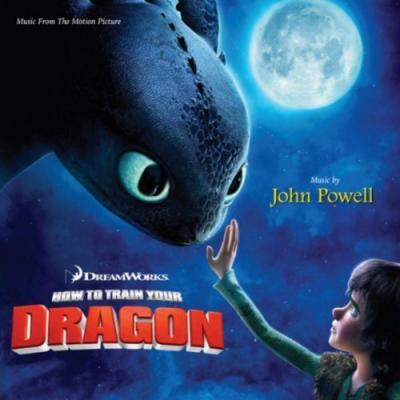
"How To Train Your Dragon" Soundtrack Lyrics
Cartoon • 2010
Track Listing
Jonsi
"How to Train Your Dragon (Music From the Motion Picture)" – Album Guide to Tracks and Key Scenes
Overview
What if a family adventure score had the sweep of golden-age symphonics and the lift of a great pop hook? John Powell’s How to Train Your Dragon does both. The album—released by Varèse Sarabande in March 2010—sets out its themes fast (“This Is Berk”), then evolves them through bonding, flight, and battle, using bold brass, agile strings, choir, and folk-flavored colors to carve character into melody.
The film closes with Jónsi’s “Sticks & Stones,” a buoyant end-credits song that tilts the finale toward celebration. Powell’s score drew sustained critical praise and major award recognition, including an Academy Award nomination and IFMCA wins for Film Score of the Year and Best Animated Score (per official listings and trade summaries).
Questions & Answers
- Who composed the score and who released the album?
- John Powell; the soundtrack was issued by Varèse Sarabande in March 2010.
- What song plays over the first end credits?
- “Sticks & Stones” by Jónsi.
- Did the score receive major awards attention?
- Yes—Academy Award nomination for Best Original Score; IFMCA named it Film Score of the Year and Best Animated Score.
- Are there later editions?
- A Deluxe Edition with expanded content arrived in 2020.
- What instruments color the “Viking” sound?
- Orchestra and choir with folk timbres—bagpipes/warpipes, pennywhistles, fiddles—woven into Powell’s symphonic writing.
- Is this mostly score or songs?
- Mostly score; Jónsi’s single is the primary song placement in the film’s end credits.
Notes & Trivia
- Powell’s themes are introduced within the opening minutes and then permuted across set-pieces.
- The score’s folk color draws on pipes and fiddles alongside full orchestra and choir.
- The 2020 Deluxe Edition expanded the program significantly.
- “Sticks & Stones” functions as a celebratory coda after the final aerial battle.
Genres & Themes
Symphonic adventure → heroism, community, home. Brass fanfares and string ostinatos mark growth and resolve.
Folk-flavored timbres → place and heritage. Pipes, pennywhistles, and fiddle colors turn Berk into a musical identity.
Choral lift → awe and flight. Wordless choir opens the sky in the major set-pieces.
End-credits pop → release. Jónsi’s song reframes survival as joy.
Tracks & Scenes
Guide: film uses primarily non-diegetic score; scene descriptions align with widely cited cue usages.
“This Is Berk” — John Powell
Where it plays: Opening narration and first dragon attack, then daily life reset.
Scene: The cue lays out Berk’s identity—clan bustle, humor, danger—introducing main and Viking motifs.
Why it matters: Theme-setting overture; most leitmotifs are seeded here.
“See You Tomorrow” — John Powell
Where it plays: Early training montage and Hiccup’s tinkering.
Scene: Quick-cut invention: sketches, straps, and failed prototypes.
Why it matters: Pop-bright orchestration turns problem-solving into momentum.
“Forbidden Friendship” — John Powell
Where it plays: Bonding scene in the cove when Hiccup earns Toothless’s trust.
Scene: Chalk lines in the sand, mirrored movements, breath held; the harmony opens as a hand touches scales.
Why it matters: The film’s emotional hinge; melody and orchestration bloom with trust.
“Test Drive” — John Powell
Where it plays: First successful flight with Hiccup’s tail rig.
Scene: Chaos turns to choreography—dives, climbs, cloud breaks—the theme locks when rider and dragon sync.
Why it matters: Kinetic writing makes flight feel tactile; a franchise-defining cue.
“Romantic Flight” — John Powell
Where it plays: Hiccup takes Astrid into the night sky; awe replaces alarm.
Scene: Barrel-roll mischief softens into a waltzing glide over sea mists.
Why it matters: Lyricism and restraint—love theme without words.
“Counter Attack” / “Where’s Hiccup?” — John Powell
Where they play: Village crisis during the Green Death pursuit and reveals.
Scene: Percussive ostinatos and brass calls steer frantic edits and command decisions.
Why it matters: Action writing with clear thematic spine.
“Coming Back Around” — John Powell
Where it plays: Final battle victory into epilogue.
Scene: Themes braid—community, flight, and home—resolving on earned triumph.
Why it matters: Catharsis; a summing-up cue that still soars standalone.
“Sticks & Stones” — Jónsi
Where it plays: First end-credits slot.
Scene: Post-battle image roll, now celebratory rather than tense.
Why it matters: Pops the pressure valve; a melodic handshake with audiences leaving the theater.
Music–Story Links
- Leitmotifs as character arcs: Hiccup’s theme starts tentative and returns broader whenever he chooses courage.
- Place as sound: Pipes and whistles “brand” Berk; when the harmony brightens, community expands to include dragons.
- Flight grammar: Ostinatos = lift; brass calls = resolve. The score teaches you to feel altitude.
How It Was Made
Powell scored the film solo for DreamWorks Animation, building a large orchestral/choral palette and threading in folk timbres (pipes, pennywhistle, fiddle). The album dropped March 23, 2010; Varèse later issued a 2020 Deluxe Edition with additional material. According to official credits and reviews, the score’s thematic density is deliberate—key ideas arrive in the opener and develop across set-pieces.
Reception & Quotes
The score is widely regarded as a modern animation classic. It earned an Oscar nomination (Best Original Score) and swept IFMCA’s 2010/2011 honors for the title and individual cues.
“Powell’s themes soar with the film’s visuals; a career-defining work.” — trade/critic consensus
“Film Score of the Year” — International Film Music Critics Association
“A five-star adventure score.” — Filmtracks
Additional Info
- Live-to-picture: The score has been performed in concert with the film.
- Vinyl: Varèse Sarabande pressed special 2×LP editions in later campaigns.
- Franchise DNA: Motifs and instrumentation seeded here evolve through the sequels.
- Regional note: Japan featured a localized image song (“Emerald”) in promotion.
Technical Info
- Title: How to Train Your Dragon (Music From the Motion Picture)
- Year / Type: 2010 / Original score (plus end-credits song)
- Composer: John Powell
- Song: “Sticks & Stones” — Jónsi (end credits)
- Label / Releases: Varèse Sarabande — Mar 23, 2010; Deluxe Edition Dec 4, 2020
- Selected cues: “This Is Berk”; “See You Tomorrow”; “Forbidden Friendship”; “Test Drive”; “Romantic Flight”; “Coming Back Around”
- Awards (score): Oscar nominee; IFMCA Film Score of the Year & Best Animated Score
Canonical Entities & Relations
| Subject | Relation | Object |
|---|---|---|
| John Powell | composed | How to Train Your Dragon (2010) score |
| Varèse Sarabande | released | How to Train Your Dragon — Music From the Motion Picture |
| Jónsi | performed | “Sticks & Stones” (end-credits song) |
| DreamWorks Animation | produced | How to Train Your Dragon (feature film) |
Sources: Wikipedia (soundtrack & film music sections); Apple Music & Spotify album listings; MusicBrainz release group; IFMCA awards posts; DreamWorks/official trailer listing; Pitchfork coverage of Jónsi’s track; Discogs/Varèse Sarabande release notes.
November, 10th 2025
A-Z Lyrics Universe
Cynthia Erivo Popular
Ariana Grande Horsepower
Post Malone Ain't No Love in Oklahoma
Luke Combs Good Riddance (Time of Your Life)
Green Day Bye Bye Bye
*NSYNC You're the One That I Wan
John Travolta & Olivia Newton-John I Always Wanted a Brother
Braelyn Rankins, Theo Somolu, Kelvin Harrison Jr. and Aaron Pierre The Power of Love
Frankie Goes to Hollywood Beyond
Auli’i Cravalho feat. Rachel House MORE ›