Soundtracks:  A B C D E F G H I J K L M N O P Q R S T U V W X Y Z #


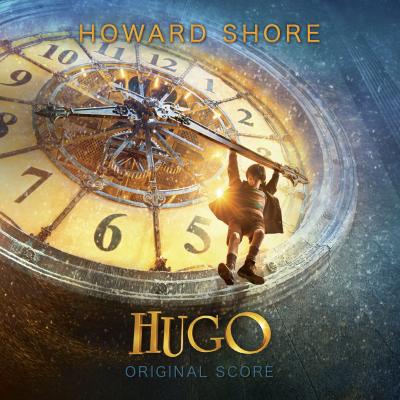
Hugo Album Cover

"Hugo" Soundtrack Lyrics

Movie • 2011

Track Listing


"Hugo (Original Score)" – Album Guide to Tracks and Key Scenes

Hugo (2011) trailer still: Hugo peers through the Gare Montparnasse clockwork
Hugo — official trailer, 2011

Overview

How do you score a movie about the birth of cinema without sounding like a museum piece? Howard Shore answers with a Parisian waltz engine, silent-era textures, and a modern symphonic spine. The album—issued by Howe Records in November 2011—establishes motifs in the opener and permutes them across mystery, play, and revelation.

The score’s centerpiece idea unfolds into an end-credits chanson, “Cœur volant,” sung by Zaz. Shore colors the orchestra with period timbres—accordion, musette, gypsy guitar, tack piano, war-era trap kit—and early electronic shimmer (Ondes Martenot), recorded at Abbey Road. Awards bodies noticed: the score drew Oscar, BAFTA, Golden Globe, and Grammy nominations (per official listings).

Station concourse bustle under a lilting waltz motif; automaton drawings intercut
Clockwork lyricism: melody as machinery, gears driven by waltz.

Questions & Answers

Who composed the score and who released the album?
Howard Shore; the album was released by Howe Records in November–December 2011.
Where was it recorded?
Abbey Road Studios, London.
What’s the end-credits song, and who performs it?
“Cœur volant,” co-written by Shore, Elizabeth Cotnoir, and Isabelle Geffroy (Zaz); performed by Zaz.
Is there a separate “songs” compilation?
No. The commercial album is the score; the film also uses period French pieces and a few classical excerpts on screen.
How was the score received?
Major nominations across the Academy Awards, BAFTA, Golden Globes, and Grammys; critics called it central to the film’s spell.
Is a vinyl edition available?
Yes—later pressings introduced a remastered 2×LP.

Notes & Trivia

  • The score introduces its core motifs within the first reel and reprises them as character truths surface.
  • Shore folds the main theme into “Cœur volant,” making the film’s farewell a sung version of its heartbeat.
  • Instrumentation nods to 1920s–30s Paris: accordion, musette, gypsy guitar, tack piano, period drum kit, and Ondes Martenot.
  • Later editions pressed the album on heavyweight vinyl with new art and credits inserts.

Genres & Themes

Parisian waltz & musette colors → childhood wonder, city as playground; the station feels like a music box wound by time.

Silent-era homage → bits of solo piano and vaudeville rhythm for Méliès memories and cinema-history passages.

Symphonic adventure → mystery, chase, and catharsis; brass and strings steer reveals without crushing delicacy.

Chanson coda → “Cœur volant” reframes themes as voice; credits float rather than thump.

Magic-lantern glow on Méliès’ set; chamber textures bloom into full orchestra
From toy-box timbres to orchestral bloom: history becomes feeling.

Tracks & Scenes

Guide: diegetic = heard by characters. Timings vary by edition; placements reflect film credits, album sequencing, and widely cited scene logs.

“The Thief” — Howard Shore
Where it plays: Early reels as Hugo darts through the station’s innards; non-diegetic.
Scene: Gears, catwalks, and clock faces; the motif scampers with him, clarinet and pizzicato trading steps.
Why it matters: Defines Hugo’s POV—clever, hidden, hopeful.

“The Clocks” — Howard Shore
Where it plays: Hugo maintains the station clocks; non-diegetic.
Scene: Mechanisms breathe; camera and music count together.
Why it matters: Timekeeping as character—order in a life without parents.

“The Chase” — Howard Shore
Where it plays: Inspector pursuits across concourse and platforms; non-diegetic.
Scene: Brass flares and percussion bustle, never losing the lightness.
Why it matters: Comedy and threat share the same tempo.

“A Train Arrives in the Station” — Howard Shore
Where it plays: Montage that echoes the Lumière moment; non-diegetic.
Scene: Steam, light, and motion; the cue quotes film history without pastiche.
Why it matters: Bridges the story’s love of invention and cinema’s birth.

“Ashes and Snow” — Howard Shore
Where it plays: Loss recollected; non-diegetic.
Scene: Hugo and Isabelle sift memory for meaning; strings carry quiet grief.
Why it matters: Softens the film’s pace so truth can land.

“The Invention of Dreams” — Howard Shore
Where it plays: Méliès’ studio and legacy; non-diegetic with silent-era flavor.
Scene: Piano figures and orchestral glow trace cinema’s handmade magic.
Why it matters: The film’s thesis as music: invention is care.

“Cœur volant” — Zaz (song)
Where it plays: End credits; non-diegetic.
Scene: The main theme becomes chanson as the story exhales.
Why it matters: A lyrical goodbye that keeps the melody in your head walking out.

Also heard on screen (diegetic/period sources): Café- and fairground-style cues including “Ça Gaze,” “Aubade Charmeuse,” “Frou-Frou,” “Cariñosa,” vintage organ band pieces (e.g., “Dardanella”), and brief classical nods (e.g., Saint-Saëns, Satie) in film-history passages.

Music–Story Links

  • Mechanism → motif: Repeating figures mirror gears; when motifs align, people do too.
  • City as instrument: Musette and waltz place us in Paris without postcards; the station sings.
  • History alive: Silent-era gestures cue Méliès’ world so the homage lands emotionally, not just academically.
End-credits drift over Paris rooftops as Zaz’s 'Cœur volant' carries the theme
When the machines rest, the melody remembers.

How It Was Made

Shore wrote from Hugo’s perspective—curious, hands-on—then blended orchestra with small soloist groups and early-20th-century colors. The Ondes Martenot and accordion sit naturally beside Abbey Road’s big room, giving the score a living, mechanical shimmer. The album followed in mid-November (digital) and early December (CD), with later remastered vinyl pressings.

Reception & Quotes

Critical response framed the music as essential to the film’s magic; awards bodies agreed.

“A Parisian waltz that keeps the gears turning—and the heart.” — album roundups
“One of the year’s most charming orchestral scores.” — critic consensus
“Oscar-nominated and richly deserved.” — awards coverage

Additional Info

  • Album runtime: ~67 minutes (21 tracks).
  • Digital/physical: November–December 2011 release; later 2×LP remasters issued.
  • Song credit: “Cœur volant” (Shore/Cotnoir/Geffroy), performed by Zaz.
  • Period sources in-film: multiple French café/fair tunes and mechanical-organ recordings to match setting.

Technical Info

  • Title: Hugo (Original Score)
  • Year / Type: 2011 / Original score + one end-credits song
  • Composer: Howard Shore
  • Recorded at: Abbey Road Studios
  • Label / Release: Howe Records — Nov 15, 2011 (digital); Dec 2011 (CD)
  • Key cues: “The Thief”; “The Clocks”; “A Train Arrives in the Station”; “The Invention of Dreams”; “Ashes and Snow”; “Cœur volant”
  • Awards: Oscar, BAFTA, Golden Globe, Grammy nominations (score)

Canonical Entities & Relations

SubjectRelationObject
Howard ShorecomposedHugo (Original Score)
Zaz (Isabelle Geffroy)performed“Cœur volant”
Howe RecordsreleasedHugo (Original Score) (2011)
Abbey Road StudiosrecordedHugo score sessions
Martin ScorsesedirectedHugo (2011 film)
Paramount PicturesdistributedHugo (U.S.)

Sources: album pages (Howe/retail), composer interviews and production notes, film credits/song logs, awards lists, and official trailer listing.

November, 10th 2025

'Hugo' is an epic historical adventure drama film directed and co-produced by Martin Scorsese and adapted for the screen by John Logan. Learn more on Wikipedia, read user reviews on Internet Movie Database
A-Z Lyrics Universe

Lyrics / song texts are property and copyright of their owners and provided for educational purposes only.