Soundtracks:  A B C D E F G H I J K L M N O P Q R S T U V W X Y Z #


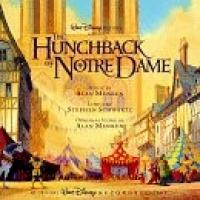
Hunchback Of Notre Dame Album Cover

"Hunchback Of Notre Dame" Soundtrack Lyrics

Movie • 2001

Track Listing


"The Hunchback of Notre Dame (Original Walt Disney Records Soundtrack)" – Album Guide to Tracks and Key Scenes

1996 trailer frame: Notre-Dame’s rose window as the chorus swells in 'Bells of Notre Dame'
The Hunchback of Notre Dame — official trailer (1996)

Overview

Looking for a 2001 soundtrack? The widely released Disney film is 1996; its sequel is 2002. The album here covers the 1996 feature’s music: Alan Menken (score) and Stephen Schwartz (lyrics). It opens with the cathedral-sized prologue “The Bells of Notre Dame,” then alternates lyrical soliloquies (“Out There”) with choral thunder (“Heaven’s Light/Hellfire”), embedding Latin liturgy into a Broadway-informed orchestral palette.

The original song-and-score album arrived on Walt Disney Records in May 1996; a comprehensive 2-disc Legacy Collection expansion appeared in 2021 with remastered cues, demos, and bonus material. According to label and platform listings, core performers include Tom Hulce, Tony Jay, Heidi Mollenhauer, Paul Kandel, David Ogden Stiers, and chorus, with pop single “Someday” issued by All-4-One in the U.S. (Eternal in the U.K.).

Camera sweeps across Paris rooftops as pipe organ and choir establish the score’s moral scale
Organ, choir, and orchestral muscle: sacred sonorities meet Disney musical craft.

Questions & Answers

Who wrote the music?
Score by Alan Menken; lyrics by Stephen Schwartz; vocals by the film cast and chorus.
What’s the official release year of this soundtrack?
1996 (Disney’s animated film). The direct-to-video sequel’s songs are from 2002.
What editions exist?
The original 1996 album and the 2021 Legacy Collection 2-disc expansion with remasters, score cues, and demos.
Which single closes the album in the U.S.?
“Someday” by All-4-One (U.K. single by Eternal).
Is “Hellfire” really built on liturgical Latin?
Yes—Confiteor and Kyrie material interweave with Frollo’s solo, as noted in music credits and analyses.
Are there non-album songs tied to regional language versions?
Yes—local dubs/performers exist worldwide; the 2021 set also nods to the German stage adaptation lineage.

Notes & Trivia

  • “Heaven’s Light/Hellfire” pairs back-to-back views of Esmeralda—pure love vs. obsessive lust—using mirrored motifs.
  • Menken’s score threads organ color and chant-like figures through action cues (“Sanctuary!”, “And He Shall Smite the Wicked”).
  • End-credits pop: U.S. single “Someday” (All-4-One); U.K. single by Eternal; Spanish hit “Sueña” by Luis Miguel.
  • The 2021 Legacy Collection adds demos (Menken/Schwartz), alternates, and remastered score selections.

Genres & Themes

Musical theatre–inflected symphonic score → characters argue in melody; reprises carry moral turns.

Choral/chant sonorities → sacred tension; Latin prayers collide with Frollo’s rationalized sin.

Street-festival color → hurdy dance and band flourishes (“Topsy Turvy”) frame public spectacle vs. private conscience.

Feast of Fools montage: drums, shouts, and brass as Quasimodo is crowned and humiliated
Public noise, private stakes: festival cues hide sharp character moves.

Tracks & Scenes

Guide: narrative songs are performed by characters; large choruses function like a Greek chorus inside the world. Time marks vary by cut.

“The Bells of Notre Dame” — Chorus, David Ogden Stiers, Paul Kandel, Tony Jay
Where it plays: Prologue/origin and cathedral reveal; narrative song.
Scene: From a nighttime chase to dawn over Paris, the chorus stages Quasimodo’s past while the organ and bell motifs brand the city.
Why it matters: It sets the score’s moral scale and seeds leitmotifs used in later climaxes (as per album notes).

“Out There” — Tom Hulce (with Tony Jay intro)
Where it plays: Quasimodo’s rooftop longing; narrative song.
Scene: Hulce moves from timid verse to open-sky refrain as camera lifts above the towers.
Why it matters: The film’s empathy engine—its melody returns whenever courage does.

“Topsy Turvy” — Paul Kandel & Chorus
Where it plays: Feast of Fools; diegetic/staged inside story.
Scene: Clopin emcees the chaos; brass and percussion spin the crowd until celebration turns cruel.
Why it matters: Spectacle with a knife; underscores how public humiliation shapes Quasimodo.

“God Help the Outcasts” — Heidi Mollenhauer & Chorus
Where it plays: Inside Notre-Dame after Esmeralda’s flight; narrative prayer.
Scene: Quiet strings and organ under a plea for mercy as tourists ask for gold and fame.
Why it matters: Centers the story’s compassion; the Legacy set also spotlights a Bette Midler recording from production history.

“Heaven’s Light/Hellfire” — Tom Hulce; Tony Jay & Chorus
Where it plays: Back-to-back night sequence; narrative soliloquy with chant.
Scene: Quasimodo’s tender candlelight gives way to Frollo’s confessional, folding Confiteor/Kyrie into choral counterpoint as flames shape Esmeralda.
Why it matters: The score’s darkest pivot; chant and motif return in later action cues (as noted in critical analyses).

“Court of Miracles” — Paul Kandel & Chorus
Where it plays: Underground tribunal; narrative showpiece.
Scene: Gallows humor in patter and stomp as Clopin flips from clown to judge.
Why it matters: Comedy masking threat; a tonal feint before rescue.

“Sanctuary!” — (Score)
Where it plays: Cathedral siege and bell-tower rescue; instrumental.
Scene: Organ, chorus, and brass recall “Hellfire” materials as Quasimodo claims sanctuary for Esmeralda.
Why it matters: Thematic payoffs converge—city, faith, and personal defiance.

“Someday” — All-4-One (U.S. end-credits single)
Where it plays: Credits; pop coda.
Scene: A radio-ready wrap that reframes the film’s plea for tolerance.
Why it matters: Bridges soundtrack audiences beyond the film; Eternal covers it for the U.K. edition.

Music–Story Links

  • Cathedral as instrument: Organ/bells = authority and awe; when those sonorities support Quasimodo, power realigns.
  • Festival vs. faith: Crowd songs push spectacle; chant-driven cues expose private moral battles.
  • Reprise logic: Melodic returns track character growth—“Out There” harmonies widen as Quasimodo chooses action.
Cathedral rooftop finale: choruses and brass resolve leitmotifs as Quasimodo protects Esmeralda
When themes align, so do characters—the score makes that audible.

How It Was Made

Menken’s orchestral writing folds in pipe-organ heft, medieval-flavored modes, and full chorus; Schwartz’s lyrics balance character interiority with public pageant. The original album sequence mixes songs with key score cues; the 2021 Legacy Collection expands with remastered film cues and early Menken/Schwartz demos (per label documentation and official retailer notes). Contemporary analyses also detail how “Hellfire” extends its chant material into the surrounding score.

Reception & Quotes

The film’s music was singled out for ambition and scale; “Hellfire” in particular is often cited among Disney’s strongest villain set-pieces.

“An unholy marriage of Tridentine Mass and big Broadway.” — retrospective review
“The choral writing gives the drama weight you can feel.” — film-music coverage
“A career-peak for Menken’s dark-hued palette.” — album retrospectives

Additional Info

  • Language versions: International dubs mirror the score with local casts; singles vary by region.
  • Stage lineage: Elements later fed the Berlin musical (Der Glöckner von Notre Dame) and subsequent U.S. stage version.
  • Sequel note: The Hunchback of Notre Dame II (2002) features new songs specific to that film.
  • Availability: 1996 album on major DSPs; 2021 Legacy Collection (2 discs, ~38 tracks) on streaming and CD.

Technical Info

  • Title: The Hunchback of Notre Dame — Original Soundtrack
  • Year / Type: 1996 / Songs + Score
  • Composers/Lyricists: Alan Menken (music); Stephen Schwartz (lyrics)
  • Key cues & songs: “The Bells of Notre Dame”; “Out There”; “God Help the Outcasts”; “Heaven’s Light/Hellfire”; “Court of Miracles”; “Sanctuary!”; end-credits “Someday” (All-4-One/Eternal)
  • Editions: Original 1996 album; 2021 Walt Disney Records – The Legacy Collection (expanded)
  • Label: Walt Disney Records

Canonical Entities & Relations

SubjectRelationObject
Alan MenkencomposedThe Hunchback of Notre Dame score
Stephen Schwartzwrote lyrics forsongs in The Hunchback of Notre Dame
Walt Disney Recordsreleased1996 soundtrack; 2021 Legacy Collection
All-4-One / Eternalperformed“Someday” (U.S./U.K. singles)
Walt Disney Feature AnimationproducedThe Hunchback of Notre Dame (1996 film)

Sources: Disney/label pages and major DSP listings; Wikipedia release/credit summaries; dedicated analyses of “Hellfire”; Disney Music Emporium notes on the 2021 Legacy Collection.

November, 10th 2025


A-Z Lyrics Universe

Lyrics / song texts are property and copyright of their owners and provided for educational purposes only.