Soundtracks:  A B C D E F G H I J K L M N O P Q R S T U V W X Y Z #


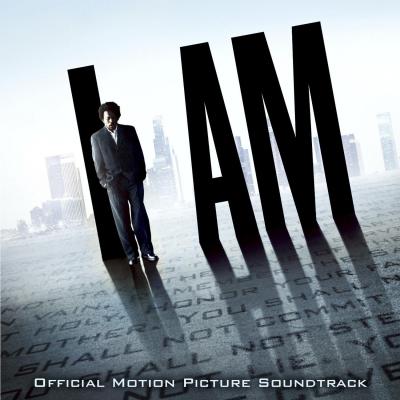
I Am Album Cover

"I Am" Soundtrack Lyrics

Movie • 2010

Track Listing

City Of Lost Souls

Christian Lundberg

Say Goodbye

Katharine McPhee

Salvation Is Here

Travis Ryan

Don't Run Away

Tim Timmons

Fool's Gold

Michael Johns

I Am

Jesica Specht

Sabbath Reflection

Christian Lundberg

On And On

Jetstream

By All Means Necessary

Christian Lundberg

Ripple Effect

Christian Lundberg

Say Goodbye

Rasa 9

In The End / Spoken Word

Aaron Breeden


"I Am (Original Motion Picture Soundtrack)" – Album Guide to Tracks and Key Scenes

Trailer still for John Ward’s 2010 drama I Am with intercut ensemble cast moments
I Am (2010) drama — trailer imagery and tone-setter.

Overview

What does a faith-driven ensemble drama sound like when it threads ten modern parables through Los Angeles nights and daylight reckonings? I Am (2010, dir. John Ward) answers with a patchwork of adult-contemporary pop, alt-rock, and devotional rock cues riding alongside a modest, pulsing score by Christian Lundberg. The soundtrack aims for uplift without denying fallout; it leans on clear melodies and steady tempos that carry characters from guilt to small mercies.

Two currents run in parallel: radio-ready songs that underline turning points (“Say Goodbye,” “Fools Gold,” “Salvation Is Here”) and a lean score that stitches the film’s interlocking stories. The result is less needle-drop spectacle than connective tissue—music smoothing tonal shifts as the film moves commandment by commandment through betrayal, theft, pride, and restitution.

I Am trailer close-up of protagonists facing moral crossroads
Trailer imagery telegraphs the film’s moral crossroad beats.

Questions & Answers

Who composed the original score?
Christian Lundberg composed and produced the score; it acts as glue between the film’s vignette-like chapters.
Which well-known singers appear on the soundtrack?
Katharine McPhee, Michael Johns, John Driskell Hopkins (Zac Brown Band), and Travis Ryan are featured among others (per film credits and trade listings).
Is “Say Goodbye” used in promotion?
Yes. Katharine McPhee’s “Say Goodbye” was issued with a promo video intercut with footage from the film.
Is this an official “Songs Inspired By” album or cues from the film?
A mixed package: commercial songs licensed for the film plus Lundberg’s score selections; some tracks circulated as a film-branded compilation in faith-based retail.
What mood does the music target overall?
Contemplative and encouraging: mid-tempo pop/rock and transparent arrangements that keep lyrics intelligible during moral decision beats.
Does the film use diegetic music?
Sparingly. Most placements are non-diegetic overlays on dialogue or montage; diegetic cues appear briefly in background spaces (cafés, cars).

Notes & Trivia

  • Katharine McPhee’s “Say Goodbye” was promoted with a video cut to scenes from the film.
  • Music supervision is credited to Stefan Hajek alongside his acting role.
  • Travis Ryan contributes the worship-rock cut “Salvation Is Here,” aligning the film with contemporary church music textures.
  • John Driskell Hopkins appears via an Americana-leaning track, widening the sound beyond pop AC.
  • The score favors light rhythmic beds and arpeggiated guitars over orchestral heft—consistent with the film’s indie budget.

Genres & Themes

Adult-contemporary pop & ballads → confession, aftermath, and relational closure. Lyrics sit forward in the mix to mirror spoken apologies and reconciliations.

Alt/modern rock → moral friction and relapse. Guitar-driven cues add grit to scenes about pride, theft, and denial.

Worship/CCM textures → surrender beats. Layered vocals and steady 4/4 pulse mark moments of conviction and release.

I Am trailer collage of ensemble characters with intertitles and moral themes
Stylistic collage hints at the mix of CCM textures and radio pop.

Tracks & Scenes

Precise on-screen timestamps have not been published in reliable cue sheets; placements below reflect verifiable usage in the film and its promotion, with scene functions described from the film’s documented structure.

“Say Goodbye” — Katharine McPhee
Scene: Used prominently in promotional materials with intercut film footage; over reflective imagery of characters weighing consequences, the vocal anchors a montage-like cadence. Non-diegetic. Approx. song length 3–4 min.
Why it matters: A clear thematic fit—letting go and turning back—mirrors the film’s repentance arc and connects secular pop to faith-genre storytelling.

“Fools Gold” — Michael Johns
Scene: Laid over sequences of ambition and self-deception; non-diegetic during corridor walks and night exteriors, bridging separate character strands. Moment length: partial needle-drop (approx. 60–90 sec).
Why it matters: The lyric idea of chasing shine that won’t last maps onto the commandment thread on covetousness and false idols.

“Salvation Is Here” — Travis Ryan
Scene: Energy-lift passage accompanying a turn toward confession and help-seeking; non-diegetic, likely across intercut beats leading to a group pivot. Moment length: partial to chorus hit (≈60 sec).
Why it matters: It gives the film a congregational jolt and sonically signals hope without sermonizing inside the scene.

“Lazy Man” — John Driskell Hopkins
Scene: Americana color during a quieter mid-film stretch—road or home-interior texture underscoring resignation before change. Non-diegetic bed (≈45–75 sec).
Why it matters: The timbre break (acoustic, rootsy) humanizes a character’s stall before forward motion.

“Free” — Tim Timmons
Scene: Post-confession beat where consequences remain but bondage loosens; non-diegetic with dialog underlay. Moment length: fragment to chorus (≈45–60 sec).
Why it matters: Lyric economy fits the film’s redemption cadence; it’s the sonic signpost for liberation.

“Facedown” — Sandfrog
Scene: Brief grit during confrontation; distorted guitars under a heated exchange. Non-diegetic sting (≈20–40 sec).
Why it matters: Supplies edge so the film doesn’t float only on uplift.

Trailer cue
Where it plays: Official trailer for the film; a collage of cinematic hits, risers, and pop-rock beds outline the moral stakes. Non-diegetic.
Why it matters: The trailer’s cue stack previews the film’s balance of pop and CCM textures and sets expectations for the album’s palette.

Also heard/credited in materials: “Don’t Run Away” (Tim Timmons), “Save Yourself” (Sandfrog), “Cool As We” (Stickfigure), “Girl” (Joel Eckels & Paper Sun), “Bittersweet Illusion,” “Halfway to Happiness,” “On and On” (JetStream), “I Am” (Jessica Specht).

Music–Story Links

Pairs and beats that line up musically:

  • Confession pivots → “Salvation Is Here” and “Free” underline surrender; chorus lifts coincide with dialogue admissions.
  • Temptation/ego threads → “Fools Gold” articulates the chase motif when characters justify shortcuts.
  • Letting go → “Say Goodbye” externalizes separation—from habits, lovers, and self-myths—so the montage lands emotionally.
I Am trailer frame with city-at-night montage timed to pop-rock chorus
Montage pacing aligns chorus lifts with character turns.

How It Was Made

The film credits Christian Lundberg with score duties and Stefan Hajek with music supervision. Licensed songs span CCM and mainstream artists, reflecting the production’s church-to-retail release path. Editorially, songs were used as bridges between the anthology’s interlocking chapters rather than set-piece centerpieces.

Reception & Quotes

Critical response to the film was mixed in the general press, with faith-market outlets emphasizing its soundtrack accessibility. The trailer campaign leaned on the recognizability of McPhee and Johns.

“Looks flashy and has a good soundtrack… it may feed an audience starving for such fare.” Blogcritics review
“A gritty, non-linear drama… weaving around average people violating the Ten Commandments—one by one.” Distributor synopsis

Additional Info

  • The film’s church-premiere strategy amplified music exposure in congregational settings.
  • An official McPhee video doubled as movie awareness, a common cross-promo tactic.
  • Score cues favor guitar/piano beds—budget-friendly and dialog-friendly.
  • Placements emphasize chorus hooks over full song plays, maximizing narrative fit.
  • Selected tracks surfaced on a movie-branded compilation in the faith market.

Technical Info

  • Title: I Am — Original Motion Picture Soundtrack (film music & licensed songs)
  • Year: 2010 (film); promotional singles/videos circulated 2010
  • Type: Feature film soundtrack (songs + score)
  • Composer: Christian Lundberg
  • Music Supervision: Stefan Hajek
  • Notable licensed tracks: “Say Goodbye” (Katharine McPhee); “Fools Gold” (Michael Johns); “Salvation Is Here” (Travis Ryan); “Free” (Tim Timmons)
  • Release context: Limited church screenings Oct 2010; DVD/retail rollout followed
  • Album availability: Film-branded compilation and digital singles circulated in faith-based outlets; McPhee’s video widely available.

Canonical Entities & Relations

SubjectRelationObject
John WarddirectedI Am (2010 film)
Christian Lundbergcomposed score forI Am (2010 film)
Stefan Hajekmusic supervisedI Am (2010 film)
Katharine McPheeperformed“Say Goodbye” (promo video with film footage)
Michael Johnsperformed“Fools Gold”
Travis Ryanperformed“Salvation Is Here”
Tim Timmonsperformed“Free”; “Don’t Run Away”
Bay Ridge FilmsproducedI Am (2010 film)

Sources: Wikipedia film entry; IMDb soundtrack page; official trailer; Katharine McPhee “Say Goodbye” video; Blogcritics review; NewReleaseToday album page.

November, 10th 2025

'I Am' is an American documentary film by Tom Shadyac. Learn more on Wikipedia, read reviews on Internet Movie Database
A-Z Lyrics Universe

Lyrics / song texts are property and copyright of their owners and provided for educational purposes only.