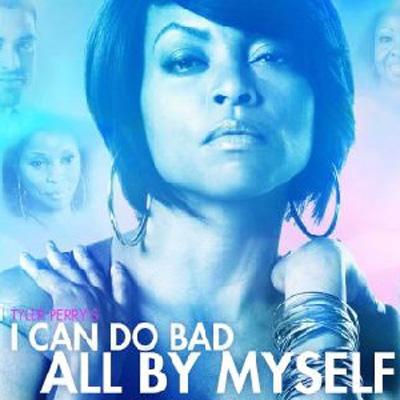
"I Can Do Bad All By Myself" Soundtrack Lyrics
Movie • 2009
Track Listing
Cheryl Pepsii Riley
Ruthie Foster
Gladys Knight
Mary J. Blige
Chocolate Butterfly
Club Indigo Band
Mary J. Blige
Candy Coated Killahz
Club Indigo Band
Gladys Knight and Marvin Winans
Club Indigo Band
Cheryl Pepsii Riley and Marvin Winans
"I Can Do Bad All By Myself (Music From the Motion Picture — songs & score)" – Album Guide to Tracks and Key Scenes
Overview
What happens when a nightclub singer’s life collides with a church choir and three hungry kids? The film answers with two musical engines: Aaron Zigman’s empathetic score and a slate of soul/R&B cues performed in-story and on the soundtrack. Songs aren’t wallpaper here—several arrive on camera, inside April’s club or at Pastor Brian’s church, so character choices feel sung, not just spoken.
Mary J. Blige, Gladys Knight, and Pastor Marvin L. Winans anchor the vocal spine, while catalog sides (Aretha Franklin, Gladys Knight & the Pips) and indie cuts fill the world around April (Taraji P. Henson). A few placements are diegetic performances; others sit under montage and turning points. According to the film’s credits and soundtrack listings, there was no single “Various Artists” retail album—clearances were handled track-by-track.
Questions & Answers
- Who composed the score?
- Aaron Zigman composed the original score; he’s a frequent Perry collaborator.
- Is there an official “songs” soundtrack album?
- No commercial multi-artist album was issued; music appears across artists’ catalogs and within the film.
- Do cast members perform on screen?
- Yes. Mary J. Blige performs in the club; Pastor Marvin L. Winans and Gladys Knight lead a church number.
- Which legacy tracks appear?
- Aretha Franklin’s “Rock Steady” and Gladys Knight & the Pips’ “The Need to Be,” among others.
- What’s the dominant mood of the score?
- Warm, melodic, and supportive—piano/strings that can sit under dialogue and pivot into emotion without crowding the singers.
- Is the music mostly diegetic?
- Roughly split: key cues are performed in-world (club/church), while others play non-diegetically for montage and scene bridges.
Notes & Trivia
- There are ~13 featured songs across the film; several appear as full or partial performances.
- Blige contributed two new tracks for the movie, then performed on camera as the club’s bartender/singer.
- Because rights spanned multiple labels, the studio did not release a single retail “OST (Songs)” album.
- Score is by Aaron Zigman, who also scored other Perry films the same era.
Genres & Themes
Modern R&B & soul → the club world: resilience, desire, self-protection; smooth rhythm sections and spotlight vocals mirror April’s guarded exterior.
Gospel & traditional hymnody → the church world: surrender, community, second chances; call-and-response dynamics underline April’s slow turn toward help.
Warm orchestral score (piano/strings) → connective tissue: Zigman’s cues thread kids’ routines, late-night doubts, and morning resolutions.
Tracks & Scenes
Placements and performer details reflect on-screen performances and the credited soundtrack roster; where precise timestamps vary by edition, descriptions note location and function.
“I Can Do Bad” — Mary J. Blige
Where it plays: Performed in-club by Blige’s character during a late set; lights low, band tight, April watching from the bar. Diegetic (performance).
Why it matters: The lyric thesis—doing “bad” alone—mirrors April’s stance before Sandino and the kids crack it open.
“Good Woman Down” — Mary J. Blige
Where it plays: Club montage and backstage transition; April and Tanya trade glances after a rough night. Diegetic bleed to non-diegetic across cut.
Why it matters: Turns a defiant hook into subtext for April’s self-worth battle.
“Just Don’t Wanna Know (Over It Now)” — Marvin L. Winans & Gladys Knight
Where it plays: Church service sequence led from the pulpit; congregation rises as April quietly takes a back pew. Diegetic (sanctuary performance).
Why it matters: The testimony lyric reframes “strength” as acceptance—April’s defensive humor finally meets community care.
“The Need to Be” — Gladys Knight & the Pips
Where it plays: Used around counsel/encouragement beats tied to Wilma (Knight); either source on radio or non-diegetic over a reflective walk home.
Why it matters: A 1970s classic about identity and purpose—aimed right at April’s “Who am I without the club?” question.
“Rock Steady” — Aretha Franklin (rendered in-film by Cheryl Pepsii Riley)
Where it plays: Up-tempo source at Club Indigo; dancers reset the floor between scenes. Diegetic (stage/PA) shifting to background.
Why it matters: Groove-first energy injects movement into a story full of stalled lives.
“Tears of Pain” — Ruthie Foster
Where it plays: Quiet bridge after a family setback—kitchen nightlight, whispered plans. Non-diegetic.
Why it matters: A blues-soaked lament that gives space to grief before the next try.
“Playboy” — Candy Coated Killahz
Where it plays: Brief club-crowd pass and hallway strut. Diegetic (house track in the venue).
Why it matters: Youthful flash that contrasts sharply with the kids’ real needs waiting at home.
Club Indigo Band cues — “H.D.Y.” / “Indigo Blues” / “Lovers Heat” — Club Indigo Band
Where it plays: House band stings between numbers, underscoring banter and exits. Diegetic.
Why it matters: These cues make the club feel lived-in—a workplace, not just a set.
Music–Story Links
- Isolation vs. community: Club performances stage April’s control; the church number breaks it, inviting witnesses to her pain and hope.
- Self-talk into action: Blige’s titling hook (“I Can Do Bad”) starts as armor; later scenes soften that creed as the score leans warmer.
- Generational voice: Legacy soul (Aretha, Gladys) frames April’s choices as part of a longer lineage of survival and change.
How It Was Made
Score by Aaron Zigman; his approach favors piano-led motifs and small-ensemble strings, giving dialogue room to breathe. Music supervision on the film is associated with Joel C. High’s credit in trade and agency listings. Church and club sequences were designed as live-feeling performances to anchor character decisions rather than as detachable music videos.
Reception & Quotes
Reviews were mixed on the film overall, but many singled out the performances and the musical set-pieces for emotional clarity. The final service sequence, in particular, often gets cited by fans as the “turn.”
“Perry succeeds in mixing broad humor with sincere sentimentality to palatable effect.” Critics consensus summary
“Henson elevates this piece with a committed, complicated performance.” Long-view retrospectives
Additional Info
- No retail “Songs From” album; tracks are from multiple labels/catalogs.
- Several numbers are performed on-camera (club, church), not merely placed under montage.
- Blige appears as Tanya; Knight as Wilma; Winans as Pastor Brian—roles align with their musical moments.
- Streaming editions sometimes surface with trailer extras featuring the music moments.
- If you’re building a playlist, combine legacy recordings with the film’s performance versions where available.
Technical Info
- Title: I Can Do Bad All By Myself — feature film (music highlights guide)
- Year: 2009
- Type: Songs + original score (no commercial “various artists” album)
- Composer: Aaron Zigman
- Music supervision (assoc.): Joel C. High
- Notable placements: “I Can Do Bad” (Mary J. Blige; club); “Just Don’t Wanna Know” (Marvin L. Winans & Gladys Knight; church); “The Need to Be” (Gladys Knight & the Pips); “Rock Steady” (Aretha Franklin, rendered on screen by Cheryl Pepsii Riley)
- US Release: September 11, 2009
- Label/availability: Score and songs spread across artist catalogs; film available via major digital storefronts/streamers.
Canonical Entities & Relations
| Subject | Relation | Object |
|---|---|---|
| Tyler Perry | directed | I Can Do Bad All By Myself (2009) |
| Aaron Zigman | composed score for | I Can Do Bad All By Myself (2009) |
| Mary J. Blige | performed | “I Can Do Bad”; “Good Woman Down” (club sequences) |
| Gladys Knight | performed | “The Need to Be”; church duet |
| Marvin L. Winans | performed | “Just Don’t Wanna Know” (church sequence) |
| Aretha Franklin (catalog) | featured via | “Rock Steady” (rendered in-film) |
| Club Indigo Band | performed | house cues (“H.D.Y.”, “Indigo Blues”, “Lovers Heat”) |
| Joel C. High | music supervised (assoc. credit) | I Can Do Bad All By Myself (2009) |
Sources: Film credits and soundtrack roster; industry databases for composer/supervision; verified trailer and performance clips.
November, 10th 2025
A-Z Lyrics Universe
Cynthia Erivo Popular
Ariana Grande Horsepower
Post Malone Ain't No Love in Oklahoma
Luke Combs Good Riddance (Time of Your Life)
Green Day Bye Bye Bye
*NSYNC You're the One That I Wan
John Travolta & Olivia Newton-John I Always Wanted a Brother
Braelyn Rankins, Theo Somolu, Kelvin Harrison Jr. and Aaron Pierre The Power of Love
Frankie Goes to Hollywood Beyond
Auli’i Cravalho feat. Rachel House MORE ›