Soundtracks:  A B C D E F G H I J K L M N O P Q R S T U V W X Y Z #


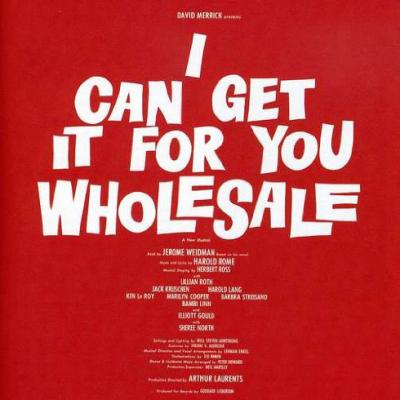
I Can Get It For You Wholesale Album Cover

"I Can Get It For You Wholesale" Soundtrack Lyrics

Musical • 1993

Track Listing


"I Can Get It for You Wholesale – Original Broadway Cast Recording (1993 CD Remaster)" – Album Guide to Tracks and Key Scenes

Overview

Can a cast album be both a time capsule and a fresh punch to the gut? The 1993 CD remaster of I Can Get It for You Wholesale – Original Broadway Cast Recording answers yes. It preserves the 1962 Broadway sound—brassy pits, character-forward vocals—while sharpening the detail so you hear the garment-district grit beneath the showbiz polish.

The score by Harold Rome tracks an anti-hero’s ascent through 1937 Seventh Avenue, where money talks louder than sentiment. What distinguishes this album is character writing: numbers double as plot engines, not decorative turns. Barbra Streisand’s breakout “Miss Marmelstein” is here, of course, but the set also spotlights the cynical propulsion of “The Sound of Money,” the bruised romance of “Have I Told You Lately?,” and the moral hangover of “What Are They Doing to Us Now?” The 1993 mastering makes the orchestration snap—winds cut, brass bites, and the chorus tells the story in crisp ensemble blocks.

Questions & Answers

What exactly is the “1993” release?
A remastered CD reissue of the 1962 Original Broadway Cast album, issued by the Columbia/Sony catalog in the U.S.
Why is this cast album historically important?
It captures Barbra Streisand’s first professional commercial recording, including her show-stopping “Miss Marmelstein.”
Does the album follow the stage plot closely?
Yes. It’s a narrative-driven recording; most songs land at key plot beats in Act I–II and can be followed without dialogue.
How does the 1993 CD differ sonically from earlier pressings?
It features cleaner transfers and tighter EQ, yielding clearer vocals and more presence in the pit orchestra.
Is this the same story as the 1951 film?
No. Both come from Jerome Weidman’s novel, but the film’s plot and protagonist differ; the musical centers on Harry Bogen.
Where can I legally stream the album today?
Major platforms (Apple Music, Spotify, others) host the OBC; metadata may list the original 1962 release under Sony/Columbia.

Notes & Trivia

  • Goddard Lieberson produced the original session; the same legendary Columbia executive who championed major Broadway cast albums.
  • “Miss Marmelstein” became an early Streisand calling card on TV and in compilation sets.
  • The score leans into Jewish folk-inflected motifs, aligning sound world and setting (1937 Garment District).
  • The 2023 Off-Broadway revision reshuffled some numbers; the 1993 CD preserves the 1962 ordering.
  • The album briefly charted on Billboard in 1962; the reissue kept it in print for the CD era.

Genres & Themes

Broadway brass & dance meters → hustle and spin: up-tempo patter, bright trumpets, and punchy reeds mirror sales pitches and back-room deals.

Klezmer-tinged harmony & modal turns → community & conscience: folk-colored lines evoke family, neighborhood, and the moral cost of Harry’s choices.

Crooner ballads & torch fragments → seductive detours: sleek, nightclub-adjacent writing underlines the temptations that pry Harry from Ruthie.

Tracks & Scenes

“Miss Marmelstein” — Barbra Streisand
Where it plays: Act II office scene; Miss Marmelstein vents about being overlooked and pigeonholed (non-diegetic; performance within the scene).
Why it matters: Character comic gold that flips irritation into self-definition; it made Streisand a sensation overnight.

“The Sound of Money” — Company (led by Harry & Martha)
Where it plays: Act I, as Harry spots an opening to undercut a strike and build his delivery venture (non-diegetic).
Why it matters: Theme statement. Rhythmic ostinati and call-and-response sell the thrill of hustling—and the moral corner-cutting baked in.

“Have I Told You Lately?” — Blanche & Meyer
Where it plays: Late Act I, a domestic counterpoint to Harry’s schemes (non-diegetic).
Why it matters: A tender, old-world duet that spotlights the community Harry risks losing; the album balances grit with warmth.

“What Are They Doing to Us Now?” — Miss Marmelstein & Company
Where it plays: Act II creditor crisis; staff and suppliers react to financial fallout (non-diegetic ensemble).
Why it matters: Satiric bite meets anxiety; the number turns bookkeeping into drama.

“A Funny Thing Happened” — Ruthie & Harry
Where it plays: Act II reconciliation attempt (non-diegetic).
Why it matters: Nervy charm masks avoidance; musically, it walks a tightrope between banter and heartbreak.

“Too Soon” — Mrs. Bogen
Where it plays: Act I reflection (non-diegetic).
Why it matters: Parental caution in lyrical, cantorial shades; a conscience song that deepens stakes without speechifying.

“I’m Not a Well Man” — Miss Marmelstein & Mr. Pulvermacher
Where it plays: Early Act I workplace gag spiraling into musical complaint (non-diegetic).
Why it matters: Establishes the office milieu—kvetching, deadlines, and vertiginous rhythms.

“Eat a Little Something” — Mrs. Bogen & Harry
Where it plays: Late Act II (non-diegetic).
Why it matters: A lullaby-advice hybrid—food as love, harmony as forgiveness.

Trailer & promotional cues: The stage musical had no film trailer in 1962; modern promo clips (revivals) use cuts from the above numbers. The 1993 CD includes no bonus trailer audio.

Music–Story Links

When Harry flips a labor dispute into a logistics play, “The Sound of Money” celebrates ingenuity while quietly indicting it—those bright brass hits feel like cash registers and alarm bells at once. As Ruthie keeps choosing hope, her duets with Harry (“A Funny Thing Happened”) grow harmonically smoother even as the lyrics hedge; the music promises what the man won’t. And when Marmelstein detonates her title song, the office stops—music suspends the hierarchy for three minutes, and a nobody writes herself into the narrative.

How It Was Made

The original 1962 session was produced by Goddard Lieberson for Columbia at a time when Broadway cast albums were recorded swiftly after opening. Lehman Engel handled musical direction and vocal arrangements; Sid Ramin’s orchestrations drive the album’s color palette. The 1993 CD reissue stems from Columbia/Sony’s vault transfers and remastering for the Masterworks Broadway line, bringing the title back into circulation for the CD era.

Reception & Quotes

On stage the musical polarized critics, but the album endured because it preserves a sharp, story-first score and a star-making moment. Critics of the 2023 revival praised the material’s darker undercurrent, which the album already hints at in lyric and orchestration.

“Money, love, and music pull in contrary directions—fascinating tension.” Vulture
“A rarely seen score with bite; Julia Lester steals scenes the way Streisand once did.” TheaterMania / Exeunt NY
“Pleasant score using folklife motifs; Streisand the evening’s find.” The New York Times (1962)

Additional Info

  • Album narrative is unusually coherent; you can follow the plot without libretto.
  • The reissue helped keep “Miss Marmelstein” in circulation across later Streisand anthologies.
  • Several modern platforms list the album under “Various Artists” or “Original Broadway Cast”; both are correct cataloging choices.
  • A 2023 Off-Broadway revision adjusted song order and added material; that’s not on the 1993 disc.
  • A new cast recording tied to the recent revival has since appeared; it complements, not replaces, the 1962 document.

Technical Info

  • Title: I Can Get It for You Wholesale – Original Broadway Cast Recording (1993 CD Remaster)
  • Year (this edition): 1993 (original session 1962)
  • Type: Musical / Cast Album (reissue, remastered)
  • Music & Lyrics: Harold Rome
  • Producer (original recording): Goddard Lieberson
  • Orchestrations: Sid Ramin
  • Musical Direction/Vocal Arrangements: Lehman Engel
  • Label lineage: Columbia (original); Columbia/Sony Masterworks (1993 CD)
  • Notable placements (album highlights): “Miss Marmelstein,” “The Sound of Money,” “What Are They Doing to Us Now?,” “Have I Told You Lately?”
  • Availability: Widely streaming; 1993 CD pressings in circulation.

Canonical Entities & Relations

SubjectRelationObject
Harold RomecomposedI Can Get It for You Wholesale (musical)
Jerome Weidmanwrote book forI Can Get It for You Wholesale (musical)
Original Broadway Castperformed onOBC Recording (1962)
Barbra Streisandfeatured on“Miss Marmelstein” and ensemble tracks
Goddard Liebersonproduced1962 cast recording
Columbia Recordsreleased1962 OBC album
Sony/Columbia Masterworksreissued1993 remastered CD
I Can Get It for You Wholesale (album)documents1962 Broadway production

Sources: Columbia/Masterworks Broadway notes; Discogs (1993 reissue listing); Wikipedia (musical & album entries); Apple Music/Spotify listings; Playbill & Classic Stage Company pages; Vulture, TheaterMania/Exeunt reviews; The New York Times (1962).

November, 11th 2025


A-Z Lyrics Universe

Lyrics / song texts are property and copyright of their owners and provided for educational purposes only.