Soundtracks:  A B C D E F G H I J K L M N O P Q R S T U V W X Y Z #


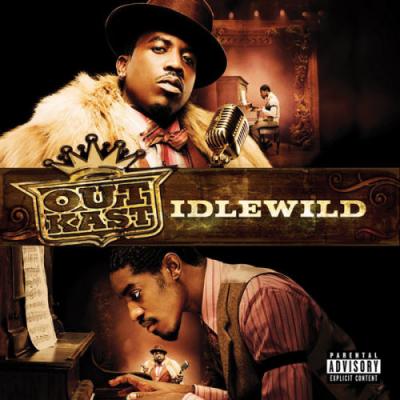
Idlewild Album Cover

"Idlewild" Soundtrack Lyrics

Movie • 2006

Track Listing


"Idlewild (Original Motion Picture Soundtrack / OutKast)" – Album Guide to Tracks and Key Scenes

Idlewild trailer frame: Percival at the piano in the Church club as dancers whirl past deco light
Prohibition pulp, hip-hop heart: OutKast’s juke joint runs on anachronism by design.

Overview

A 1935 Georgia juke joint scored with hip-hop, swing, blues, and brass? Idlewild makes the clash the point. The film is a jukebox musical built from OutKast songs (old and new), with staged numbers for Percival (André 3000) and Rooster (Big Boi) inside the Church club. The companion album—Idlewild by OutKast—dropped August 22, 2006 on LaFace as a hybrid studio/soundtrack set: some cues appear on screen, some live only on the record.

The movie premiered August 25, 2006. On screen, Macy Gray’s Taffy emcees and sings, Paula Patton’s Angel is dubbed by Debra Killings, and choreography leans on jitterbug/Lindy patterns. The song score dominates; a separate orchestral underscore by John Debney threads scene changes and suspense in between club sets.

Trailer still: Rooster fronting the Church band, spotlight slicing cigarette haze
Big-band horns, MPC instincts; the club swings because it cheats time.

Questions & Answers

Is the album a straight lift of the movie’s song list?
No. It’s a studio/soundtrack hybrid. Several album tracks aren’t performed in-film, and some film vocals are edited or rearranged for record.
Who handles the in-film vocals for Angel?
Debra Killings dubs Paula Patton’s character on numbers like “Movin’ Cool (The After Party).”
Who composed the underscore?
John Debney wrote the orchestral score; OutKast wrote/produced the song score and appear as performers in character.
What’s the headline single strategy?
“Mighty ‘O,” “Idlewild Blue (Don’tchu Worry ’Bout Me),” and “Morris Brown” led the album campaign; the first two tie most directly to film tone.
How anachronistic is the music on purpose?
Completely. The film embraces hip-hop/funk/soul inside a 1930s setting; that tension is the aesthetic.
Does the film reuse earlier OutKast cuts?
Yes—numbers like “Bowtie,” “The Rooster,” “Church,” and “She Lives in My Lap” are staged for character moments.

Notes & Trivia

  • Album: Idlewild by OutKast (LaFace, Aug 22, 2006); debuted at #2 on the Billboard 200.
  • Film: released Aug 25, 2006; musical numbers were written/produced chiefly by OutKast.
  • “Morris Brown,” a single from the album, is not performed by characters in the film.
  • Angel’s singing voice: Debra Killings; choreography showcases Lindy Hop/jitterbug forms.
  • Several cues on the album include snippets of film dialogue (“PJ & Rooster,” “The Train”).

Genres & Themes

Hip-hop swagger → Rooster’s survival script: call-and-response hooks, drum machine snap, and horn stabs sell the hustler’s bravado.

Delta blues / torch ballad → Percival’s inner life: brushed drums, piano, and drawling guitar turn shyness into confession.

Jump-blues & hot-jazz brass → the Church’s house style: showband energy that keeps patrons moving while gangsters lurk.

Anachronism as device → myth over museum: the timeline bends so character truths can sing louder than period decor.

Trailer montage: jitterbug flyers over a horn section, then a cut to a tommy-gun silhouette
Social dance vs. underworld pressure—both keep time; only one swings.

Tracks & Scenes

“Greatest Show on Earth” — Taffy (Macy Gray) feat. OutKast
Where it plays: Opening club flourish at the Church, Taffy introducing the night’s spectacle (diegetic performance).
Why it matters: A thesis statement for the venue—vaudeville brass and sly hip-hop cadence welcome us to a time that never was.

“Makes No Sense at All” — Percival (André 3000)
Where it plays: Early set with Percival at the piano, watching the floor instead of owning it (diegetic).
Why it matters: Hesitation wrapped as melody; the lyric brands him a romantic out of step with his era and his boss.

“Bowtie” — Rooster (Big Boi) feat. Sleepy Brown & Jazze Pha
Where it plays: Rooster’s first big entrance number at the Church (diegetic).
Why it matters: Strutting horns and call-outs flip the club from supper room to party—proof he can sell anything, including himself.

“Chronomentrophobia” — Percival
Where it plays: Practice room/after-hours sequence as he composes alone (diegetic-ish rehearsal bleeding to non-diegetic montage).
Why it matters: Time anxiety literalized; the groove ticks while he stalls on choices.

“The Rooster” — Rooster (Big Boi)
Where it plays: A later Church showcase; swaggering reprise after heat from Trumpy (diegetic).
Why it matters: Theme-as-armor: he doubles down on persona as debts tighten.

“Movin’ Cool (The After Party)” — Percival & Angel (Paula Patton, vocal by Debra Killings) with OutKast
Where it plays: Mid-film duet in the club; chemistry finally audible (diegetic).
Why it matters: Angel’s stage confidence meets Percival’s songwriting—two futures in one chord.

“She Lives in My Lap” — Percival
Where it plays: After Angel’s death; a grief performance turned private eulogy (diegetic into non-diegetic).
Why it matters: The film’s rawest needle-drop—Andre’s vocal thins; the room stops.

“When I Look in Your Eyes” — Percival
Where it plays: Quiet confession before the last confrontations (diegetic).
Why it matters: Torch-song focus—no horns, just breath and keys; he decides who he is.

“PJ & Rooster” — Percival
Where it plays: Late-film montage tying separate paths back to the same stage (non-diegetic with on-stage echoes).
Why it matters: Friendship survives the genre mash; melody remembers what bullets forget.

“Mighty ‘O” — OutKast (album single; featured in campaign)
Where it plays: Marketing/main-title energy in some cuts; not staged by characters.
Why it matters: Cab Calloway DNA (“Minnie the Moocher”) laced into a modern flex—perfect bridge between eras.

“Idlewild Blue (Don’tchu Worry ’Bout Me)” — OutKast
Where it plays: Album/feature montage tie; Percival’s sonic palette distilled.
Why it matters: Slide-guitar blues under a pop hook—his interior, simplified.

Also heard/credited but not performed by characters: “Morris Brown” (Big Boi feat. Scar & Sleepy Brown); “Mutron Angel” (OutKast feat. Whild Peach).

Music–Story Links

Rooster’s numbers (“Bowtie,” “The Rooster,” “Church”) sell persona—fast talk, faster feet. Percival’s book songs (“Makes No Sense…,” “When I Look in Your Eyes”) slow time until a choice is unavoidable. Angel’s voice—literally someone else’s voice—becomes the knife: she borrows a sound to buy a future and pays for it. After she’s gone, “She Lives in My Lap” turns the club into a wake. The underscore only nudges; the songs drive.

Trailer still: Rooster in a white tux, mic up; Percival at the piano, eyes down—split by spotlight
Two leads, two tempos: hustle vs. hush.

How It Was Made

Bryan Barber wrote and directed; OutKast wrote/produced the song score and appear in character. The musical numbers lean deliberately anachronistic, offset by period choreography (Hinton Battle). Debra Killings provided Angel’s vocals. John Debney supplied the orchestral underscore. The album (Idlewild) folds film dialogue into several tracks (“PJ & Rooster,” “The Train”) and sequences singles with deep cuts for a long (≈78-minute) listen.

Reception & Quotes

Critics split on the film’s sprawl but praised its showpieces; the album landed high on release and drew mixed-positive notices for ambition over cohesion.

“Breathtaking moments… dance sequences and idiosyncratic flourishes.” major-paper capsule
“Creative overload by midpoint, but the swing-blues experiments and Big Boi bangers hit.” album review

Additional Info

  • Album highlights: “Mighty ‘O,” “Idlewild Blue,” “PJ & Rooster,” “The Train,” “Hollywood Divorce,” “Call the Law.”
  • Album producers include André 3000, Big Boi, Organized Noize, Mr. DJ; guests include Sleepy Brown, Scar, Janelle Monáe (on album tracks).
  • Chart: U.S. Billboard 200 debut #2; year-end Soundtrack Albums top 10.
  • Film setting: fictional town of Idlewild, GA; the Church club is the musical hub.
  • Selected musical numbers (film): “Greatest Show on Earth,” “Bowtie,” “The Rooster,” “Church,” “She Lives in My Lap,” “When I Look in Your Eyes.”

Technical Info

  • Title: Idlewild — film & album
  • Year: 2006
  • Type: Film musical (song score by OutKast) + studio/soundtrack album
  • Composers/Producers (songs): André 3000; Big Boi (with collaborators); Underscore: John Debney
  • Label (album): LaFace Records
  • Release dates: Album — Aug 22, 2006; Film — Aug 25, 2006 (US)
  • Notable placements (film): “Bowtie,” “The Rooster,” “Chronomentrophobia,” “Movin’ Cool,” “She Lives in My Lap,” “When I Look in Your Eyes.”

Canonical Entities & Relations

SubjectRelationObject
Idlewild (film, 2006)written & directed byBryan Barber
Idlewild (film)song score byOutKast (André 3000; Big Boi)
Idlewild (film)underscore byJohn Debney
Debra Killingssinging voice forAngel (Paula Patton)
Hinton Battlechoreographeddance sequences
Idlewild (album)released byLaFace Records
“Bowtie”; “The Rooster”; “Church”performed by (in film)Rooster (Big Boi)
“She Lives in My Lap”; “When I Look in Your Eyes”performed by (in film)Percival (André 3000)

Sources: film page and musical-numbers table; OutKast album page (release, chart, credits); soundtrack/track releases on Apple/Discogs; IMDb soundtrack & full credits (Angel vocals, music dept.); official trailer and licensed scene clips.

November, 11th 2025


A-Z Lyrics Universe

Lyrics / song texts are property and copyright of their owners and provided for educational purposes only.