Soundtracks:  A B C D E F G H I J K L M N O P Q R S T U V W X Y Z #


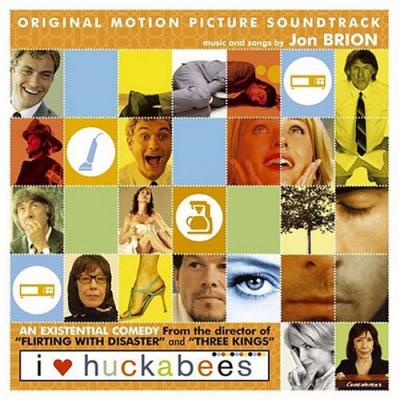
I Heart Huckabees Album Cover

"I Heart Huckabees" Soundtrack Lyrics

Movie • 2004

Track Listing


"I Heart Huckabees (Original Motion Picture Soundtrack)" – Album Guide to Tracks and Key Scenes

I Heart Huckabees 2004 theatrical trailer still with ensemble cast in chaotic montage
I Heart Huckabees film trailer, 2004

Overview

What happens when a pop-savvy composer scores an existential comedy about meaning, coincidence, and corporate branding? Jon Brion’s I Heart Huckabees soundtrack answers with bright melodic hooks, toy-instrument textures, and wry mini-songs that keep the film’s philosophical spiral buoyant rather than bleak. The album blends brisk instrumental cues with a handful of short vocal tracks that feel like dispatches from the characters’ inner monologues.

The record functions as both mood board and narrative glue: per official materials, Milan Records issued the album on October 12, 2004, collecting Brion’s eclectic score and five vocal songs. The film itself leans on a few diegetic moments (most famously Shania Twain’s cameo), while Brion’s cues—chimes, pizzicato strings, jangly guitars—thread the detectives’ investigations, Brad’s image crisis, and Albert’s eco-anxiety into one continuous, slightly off-kilter rhythm. As one contemporary review observed, Brion intentionally soft-pedals his showier instincts to fit the movie’s manic talkiness.

I Heart Huckabees trailer frame: fast-cut city and store imagery underscored by jaunty score
Trailer imagery mirrors the score’s restless energy

Questions & Answers

Who composed the score, and what’s distinctive about it?
Jon Brion. Short cues, mallet percussion, Chamberlin timbres, and compact vocal songs give the film a playful, philosophical pulse.
Is the album a traditional “songs-from-the-film” set?
No. It’s primarily Brion’s score with a few original songs; some prominent diegetic moments (e.g., a pop cameo) aren’t part of the album.
Does the film use advertising music inside the story?
Yes. A retro-styled store jingle appears in in-world commercials featuring Dawn, tying branding to character identity.
What’s the best entry point track on the album?
“Monday” for the main theme’s bounce; “Knock Yourself Out” if you want Brion’s wry, compact songwriting.
How does the music handle the movie’s debates about meaning?
It counters fast, dense dialogue with tidy motifs and gently looping patterns—clarity against chaos.
Is there a big needle-drop everyone remembers?
Yes—Shania Twain appears as herself in a corporate-event set piece; it’s played diegetically and used for comic contrast.

Notes & Trivia

  • The album arrived via Milan Records in October 2004 and sits between Brion’s Punch-Drunk Love and Eternal Sunshine work in his early-2000s run.
  • Several cues use a Chamberlin—tape-based keyboards that predate digital samplers.
  • Shania Twain appears on-screen as herself; it’s one of the film’s most cited cameos.
  • A brief retro “store jingle” exists in multiple in-world ad variants.
  • Some classical source music is credited in the film’s soundtrack listings, contrasting the pop and score cues.

Genres & Themes

Indie pop miniatures → inquiry. Brisk, hummable motifs mirror characters parsing coincidences and identity. The short forms keep pace with rapid-fire dialogue.

Retro ad pastiche → image vs. self. The sunshiney jingle undercuts brand sincerity, highlighting Dawn’s conflict between persona and authenticity.

Chamberlin & small ensemble → intimacy. Tape-keyboard textures and pizzicato strings reduce grand “meaning of life” debates to human scale—close, fidgety, fragile.

I Heart Huckabees trailer collage with department-store branding and domestic scenes
Branding and domesticity collide—so does the music

Tracks & Scenes

“Huckabees Jingle (50’s Version)” — Jon Brion
Scene: Plays within the film’s in-world commercials featuring Dawn (the store’s face). Bright vocals, clipped rhythm guitar, and smiling harmonies sell a prairie-clean image in TV spots and retail-floor loops. Diegetic (ad audio).
Why it matters: The kitschy cheer becomes a mirror for Brad and Dawn’s brand-first worldview, so when Dawn’s self-image cracks, the saccharine jingle reads as ironic counterpoint. (mentioned in official album materials and widely referenced production notes)

“Man! I Feel Like a Woman!” — Shania Twain
Scene: Twain appears as herself at a corporate event; the camera cuts between the stage and tense character exchanges as the glossy country-pop swagger fills the room. The performance is unabashedly diegetic, with crowd noise and on-stage vocals baked into the mix.
Why it matters: An exuberant anthem set against existential angst underscores the movie’s satire: brand spectacle can’t fix personal drift. (listed in film soundtrack credits; on-screen cameo)

“Monday (End Credits)” — Jon Brion
Scene: Rolls over the end credits, a tidy reprise of the main motif—bell tones, clipped percussion, and a lightly bouncing melody that feels like a deep exhale after 100+ minutes of verbal sparring. Non-diegetic.
Why it matters: It bookends the film’s thesis with modest, cyclic harmony: uncertainty persists, but the loop holds.

“Knock Yourself Out” — Jon Brion
Scene: Used on album and associated promotional materials; in-film, it functions as one of Brion’s succinct vocal interludes, framing a character reset with wry, advice-like lyrics. Non-diegetic cue in context.
Why it matters: Brion’s pop craftsmanship compresses a page of dialogue into two minutes, reinforcing the movie’s playful tone.

“Wouldn’t Have It Any Other Way” — Jon Brion
Scene: A brief vocal cue that punctuates a reflective beat—soft-strummed guitar, hushed voice—between argumentative set pieces. Non-diegetic.
Why it matters: These micro-songs act like parentheses around the film’s louder moments, hinting at private admissions the characters can’t say out loud.

Note: Exact timestamps vary by cut/edition; the corporate-event cameo and end-credits placement are stable across releases.

Music–Story Links

  • Dawn’s ads vs. Dawn’s doubt: The sugar-sweet jingle sells a spotless identity; when Dawn trashes the brand image, the same tune feels like a costume she’s outgrown.
  • Brad’s performance persona: A live pop show at a corporate fête flatters his curated image even as the plot strips it away—noise outside, noise inside.
  • Detective “patterns” motif: Repeating mallet figures and plucked strings echo Bernard and Vivian’s diagrams of interconnection—sonic lattices for philosophical webs.
I Heart Huckabees trailer frame of stage lights and store logos suggesting corporate event ambiance
Stage lights and logos: diegesis meets satire

How It Was Made

Brion worked closely with director David O. Russell, spotting to an early cut and sketching cues against scene descriptions—a process consistent with his early-2000s collaborations. According to label notes, the album compiles short cues and five vocal tracks, emphasizing concise ideas over symphonic sprawl. Reviews at the time noted his use of Chamberlin textures, pizzicato strings, and a deliberately restrained approach to avoid adding chaos to already rapid dialogue.

Reception & Quotes

Contemporary coverage was mixed-positive: admirers praised the tuneful miniatures; skeptics found the album uneven compared to Brion’s adjacent classics.

“A frequently inspired but uneven effort that tempers Brion’s audacity.” Pitchfork
“Eclectic pop score with compact vocal songs.” Label materials

Additional Info

  • The retail jingle exists on the album as “Huckabees Jingle (50’s Version),” reflecting the brand’s faux-wholesome aesthetic.
  • Some non-album source music appears in the film; the disc focuses on Brion’s work.
  • The score’s bell and mallet palette nods to Brion’s signature live rig of the era.
  • Album art and sequencing lean into brevity—20 tracks in ~43 minutes.
  • Streaming versions sometimes appear under the variant title “I Love Huckabees.”

Technical Info

  • Title: I Heart Huckabees (Original Motion Picture Soundtrack)
  • Year: 2004 (album release October 12, 2004)
  • Type: Film soundtrack / score
  • Composer/Producer: Jon Brion (producer credits alongside Jonathan Karp on album)
  • Label: Milan Records
  • Notable diegetic placement: Shania Twain cameo performance at corporate event
  • Signature cues: “Monday,” “Knock Yourself Out,” “Huckabees Jingle (50’s Version)”
  • Runtime (album): ~43 minutes
  • Film runtime: ~106 minutes
  • Availability: CD and digital; streaming editions present (regional catalog titles may vary)

Canonical Entities & Relations

SubjectRelationObject
David O. RusselldirectedI Heart Huckabees (2004 film)
Jon BrioncomposedI Heart Huckabees (Original Motion Picture Soundtrack)
Milan RecordsreleasedI Heart Huckabees soundtrack album (2004)
Fox Searchlight PicturesdistributedI Heart Huckabees (film)
Shania Twainappears asherself (diegetic performance in film)

Sources: Milan Records notes; Wikipedia (film & album pages); Pitchfork review (2004); IMDb soundtrack listings; Discogs entry; official trailer video.

November, 10th 2025


A-Z Lyrics Universe

Lyrics / song texts are property and copyright of their owners and provided for educational purposes only.