Soundtracks:  A B C D E F G H I J K L M N O P Q R S T U V W X Y Z #


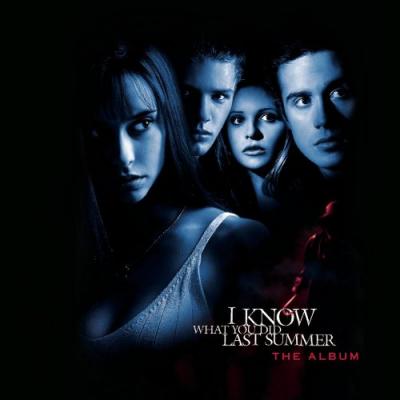
I Know What You Did Last Summer Album Cover

"I Know What You Did Last Summer" Soundtrack Lyrics

Movie • 1997

Track Listing


"I Heart Huckabees (Original Motion Picture Soundtrack)" – Album Guide to Tracks and Key Scenes

I Heart Huckabees 2004 official trailer still with Jason Schwartzman and Dustin Hoffman at the detectives’ office
I Heart Huckabees – trailer imagery, 2004

Overview

What does an “existential comedy” sound like when it refuses to choose between whimsy and dread? Jon Brion’s I Heart Huckabees score answers with clockwork motifs, toy-box timbres, and pop songs that wink at the chaos. The album is compact—20 cues, under 45 minutes—but it pivots fast: winsome themes crash into musique concrète textures, then settle into a bruised, melodic calm.

Released by Milan Records in October 2004, the album blends instrumental cues with several Brion-written pop numbers (“Knock Yourself Out,” “Revolving Door,” “Get What It’s About”). According to Milan’s notes and contemporary reviews, the design keeps the film’s manic energy in check: breezy detective music for Bernard and Vivian, bright retail jingles for the Huckabees brand, and contemplative chamber moments when the philosophy gets heavy.

Trailer frame of Naomi Watts in Huckabees commercial look, matching the album’s bright jingle cues
Retail gloss meets existential static—exactly where the jingles live.

Questions & Answers

Who composed the music?
Jon Brion composed the score and contributed several original songs written for the film’s world.
When did the soundtrack come out, and on which label?
October 12, 2004, on Milan Records (physical and digital editions).
Are there vocals on the album, or only score?
Both. Brion’s vocal tracks (“Knock Yourself Out,” “Revolving Door,” “Get What It’s About,” among others) sit alongside instrumental cues.
Does the film use any classical pieces or needle-drops beyond Brion’s music?
Yes. A Beethoven string quartet appears on the film’s soundtrack listing, and Shania Twain’s “Man! I Feel Like a Woman!” turns up diegetically in a comic ad-context beat.
Is the “Huckabees jingle” on the album?
Yes—there’s a short retro-styled “Huckabees Jingle (50’s Version)” that mirrors the brand’s ad vibe.
Where do the big songs land in the film—during the story or just credits?
Brion’s songs surface during montages and transitions; the album also includes an explicit “Monday (End Credits)” cue that closes the film.

Notes & Trivia

  • The soundtrack’s 20 tracks run about 43–44 minutes; concise by early-2000s standards.
  • Brion threads recurring ostinatos so the detective scenes feel like a clock being wound, not hammered.
  • The Huckabees brand gets multiple sonic “logos,” including a deliberately perky micro-jingle.
  • Several album song titles (“Didn’t Think It Would Turn Out Bad,” “True to Yourself”) double as thematic punchlines.
  • The CD credits list Brion as producer, with additional production support to keep the pop cuts album-ready.

Genres & Themes

Mancini-ish light caper music → curiosity without menace: spry woodwinds and brushed drums make existential sleuthing feel playful.

Chamber/harpsichord colors → analysis paralysis: pizzicato strings, celesta, and harpsichord tick toward overthinking, then dissolve into lullabies.

Power-pop songwriting → human scale: the vocal tunes act like postcards from the characters’ inner chatter—self-deprecating, catchy, unresolved.

Corporate jingle pastiche → manufactured meaning: the Huckabees cues borrow 1950s ad shine to lampoon big-box optimism.

Trailer montage of corporate polish and nature cutaways, echoing the score’s caper-to-chamber pivots
Caper to chamber in a cut: the score mirrors the film’s jump-cuts.

Tracks & Scenes

“Monday” — Jon Brion
Where it plays: Opening motif establishes the film’s breezy-anxious temperature; a companion cue (“Monday (End Credits)”) closes the film (non-diegetic).
Why it matters: A lilting theme in small pulses; it bookends the story so the journey feels circular, not solved.

“Knock Yourself Out” — Jon Brion
Where it plays: Needle-drop during a momentum uptick; also a standalone album highlight (non-diegetic).
Why it matters: Jangle-pop with a grin—carries the film through quick montage cuts without shouting.

“Revolving Door” — Jon Brion
Where it plays: Transition cue for relationship re-mixing; used like a breathing space between comic skirmishes (non-diegetic).
Why it matters: Wry lyric and mid-tempo sway keep the tone humane when the philosophy turns spiky.

“Get What It’s About” — Jon Brion
Where it plays: Late-film connective tissue—characters inch toward clarity (non-diegetic).
Why it matters: Title as thesis; the song gives emotional continuity to a plot built from interruptions.

“Huckabees Jingle (50’s Version)” — Jon Brion
Where it plays: In-world branding beats and ad moments (diegetic as advertising).
Why it matters: A tiny, hyper-cheerful hook that sells the satire in five seconds.

“String Quartet No. 14 in C-sharp minor, Op. 131 (excerpt)” — Ludwig van Beethoven
Where it plays: Reflective, head-down interlude amid the detective process (non-diegetic).
Why it matters: Drops a centuries-old seriousness into a modern farce; the contrast lands the joke and the ache.

“Man! I Feel Like a Woman!” — Shania Twain
Where it plays: Pop-forward, comic ad-context moment featuring Dawn (diegetic / source).
Why it matters: The lyric confidence weaponizes the commercial persona the film keeps scrutinizing.

Note: Album-only vs. on-screen usage can differ slightly; the Brion songs above are present on the official album, while catalog pieces may vary by edit.

Music–Story Links

Whenever Albert’s search unspools, Brion switches to chamber miniatures—pizzicato strings and celesta that literally pick at questions. When Brad and the Huckabees branding take over, a pristine jingle or bright surf of pop shows up, selling meaning the way an ad sells convenience. And when the detectives reset the game, the caper theme returns, gentle and amused, reminding us we’re investigating ourselves as much as any “case.”

Trailer frame of the existential detectives observing, aligned with light caper woodwinds in the score
Observation as melody: the detectives’ leitmotif plays it curious, not ominous.

How It Was Made

Brion worked closely with director David O. Russell, tailoring cues to scene rhythms and the film’s tonal whiplash. The sessions yielded a hybrid: score cues cut to picture and a handful of pop songs that function as emotional summaries more than strict leitmotifs. The label release preserves that mix, including the in-world “Huckabees” sting to document the satire.

Reception & Quotes

Coverage at the time spotlighted the charm of “Knock Yourself Out” and the tidy bookend of “Monday,” while noting the album’s jump between pop songs and instrumental cues.

“A comfortingly Brion-ish theme bookends the film; ‘Knock Yourself Out’ does the heavy lifting with a smile.” Contemporary review summary
“Wry pop detours sit beside toy-box orchestration—disjointed on paper, effective in motion.” Album coverage
“The jingle gags are brief, pointed, and perfectly on brand.” Soundtrack notes

Additional Info

  • Official album length: ~43:30; 20 tracks.
  • Key vocal cuts on the album: “Knock Yourself Out,” “Revolving Door,” “Get What It’s About,” “True to Yourself.”
  • The film’s credits list additional source cues beyond the album’s contents.
  • Digital listings sometimes use the alternate title “I Love Huckabees.”
  • Physical editions identify Milan Records as the releasing label; Brion is credited as producer.

Technical Info

  • Title: I Heart Huckabees (Original Motion Picture Soundtrack)
  • Year: 2004
  • Type: Feature film soundtrack (score + songs)
  • Composer/Songwriter: Jon Brion
  • Label: Milan Records
  • Edition details: 20 tracks; physical CD and digital release
  • Selected notable placements: “Monday,” “Knock Yourself Out,” “Revolving Door,” “Huckabees Jingle (50’s Version)”
  • Film credits context: additional source music includes Beethoven and a Shania Twain hit; end-credits explicitly feature “Monday (End Credits).”

Canonical Entities & Relations

SubjectRelationObject
I Heart Huckabees (film)directed byDavid O. Russell
I Heart Huckabees (film)music byJon Brion
I Heart Huckabees (Original Motion Picture Soundtrack)released byMilan Records
Jon Brionperformed/wrote“Knock Yourself Out”; “Revolving Door”; “Get What It’s About”; “Monday”
Huckabees Jingle (50’s Version)is part ofI Heart Huckabees (Original Motion Picture Soundtrack)
Ludwig van Beethovenwork excerpt heard inI Heart Huckabees (film) — String Quartet No. 14, Op. 131
Shania Twainsong heard inI Heart Huckabees (film) — “Man! I Feel Like a Woman!” (diegetic)

Sources: Milan Records release notes; Discogs master/release pages; Wikipedia (film & album entries); AllMusic listing; Apple/Spotify album entries; trailer channel pages; contemporary reviews (e.g., Pitchfork).

November, 11th 2025


A-Z Lyrics Universe

Lyrics / song texts are property and copyright of their owners and provided for educational purposes only.