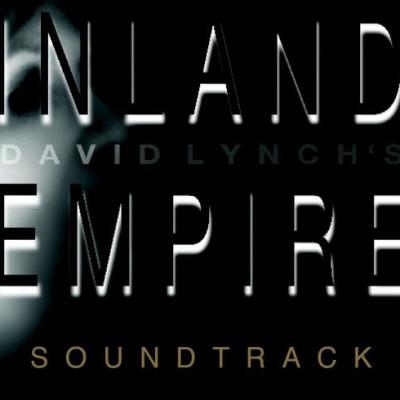
"Inland Empire" Soundtrack Lyrics
Movie • 2007
Track Listing
David Lynch
David Lynch
Mantovani
David Lynch
Dave Brubeck Quartet
Boguslaw Schaeffer
Kroke
Little Eva
David Lynch
National Polish Radio Symphony Orchestra
Joey Altruda
Beck
David Lynch
David Lynch
David Lynch and Marek Zebrowski
David Lynch/ Chrysta Bell
Nina Simone
"Inland Empire (Motion Picture Soundtrack)" – Album Guide to Tracks and Key Scenes
Overview
How do you soundtrack a film that keeps slipping realities? With a collage: minimalist ambience, 60s pop, Polish modernism, jazz cool, soul catharsis. Inland Empire is one of the rare Lynch features where the director authors much of the music himself—moody electronic/ambient cues and pop sketches—threaded with crate-dug cuts that jolt scenes sideways.
The retail album (Inland Empire (Motion Picture Soundtrack)) was issued by the David Lynch Music Company in 2007 (16 tracks, ~74 minutes). It mixes Lynch’s pieces (“Ghost of Love,” “Rabbits Theme,” “Woods Variation,” “Call from the Past”) with selections by Mantovani, Dave Brubeck, Bogusław Schaeffer, Kroke, Little Eva, Etta James, Krzysztof Penderecki, Beck, and the climactic Nina Simone edit of “Sinnerman.”
Questions & Answers
- Who is credited for the score material?
- David Lynch wrote and produced the core ambient/electronic cues (“Ghost of Love,” “Rabbits Theme,” “Woods Variation,” “Call from the Past”).
- What label and release date?
- David Lynch Music Company; September 11, 2007 (CD/digital editions).
- Is this the film with the “Sinnerman” finale?
- Yes—the end-credit dance/tableau runs on Nina Simone’s “Sinnerman” (edited version).
- What’s the famous pop needle-drop mid-film?
- Little Eva’s “The Loco-Motion,” performed in-scene by a chorus of women—one of Lynch’s boldest tonal flips.
- Any Polish music beyond Penderecki?
- Yes—pieces by contemporary artists like Kroke and concert works (e.g., Schaeffer) appear; Lynch also includes a “Polish Night Music” entry.
- Does the album match the film 1:1?
- It captures the key cues and songs; some in-film edits and additional pieces circulate outside the retail sequence.
Notes & Trivia
- The soundtrack carries both diegetic classics (Etta James’ “At Last,” Little Eva’s “The Loco-Motion”) and avant-garde concert works (Penderecki, Schaeffer).
- Beck’s “Black Tambourine” appears in-film (a custom edit on the retail listing).
- “Ghost of Love” is a Lynch vocal cut; it was also issued as a standalone single.
- Jazz turns up via Dave Brubeck’s “Three to Get Ready,” sharpening the film’s off-kilter rhythms.
Genres & Themes
Ambient/noise textures → dread and porous identity. Lynch’s low drones and contact-like tones glue jump-cuts into a single nightmare logic.
Golden-age pop & soul → romantic mirage. Mantovani’s strings and Etta James’ glow stage intimacy that the plot immediately undermines.
Polish modernism → fracture and foreboding. Penderecki and Schaeffer cue spiritual unease—strings splay, time slips.
Jazz & early rock → kinetic rupture. Brubeck’s meter games and Little Eva’s dancefloor sugar rip the frame open when the story needs a hard pivot.
Tracks & Scenes
Representative placements and scene beats (runtime varies by cut). Diegetic noted when clear.
“Ghost of Love” — David Lynch
Where it plays: A recurring mood signature around Nikki/Sue’s slips—dark pop with whispered vocal (non-diegetic).
Why it matters: A love song from a parallel room; it brands the film’s dream-logic romance.
“Rabbits Theme” — David Lynch
Where it plays: Segues tied to the “Rabbits” interiors (non-diegetic motif).
Why it matters: A deadpan fanfare for cosmic sitcom dread.
“Colors of My Life” — Mantovani
Where it plays: On-set/“On High in Blue Tomorrows” preparations; smooth strings wash over brittle exchanges (source-like placement).
Why it matters: Velvet surface against splintered identities; the contrast is the point.
“Three to Get Ready” — The Dave Brubeck Quartet
Where it plays: Transitional city sequences as Nikki’s timelines start cross-feeding (non-diegetic).
Why it matters: 3/4↔4/4 sway mirrors the film’s step-forward/step-back rhythm.
“Klavier Konzert” — Bogusław Schaeffer
Where it plays: Soundstage prowls and “someone disappeared” beats (non-diegetic).
Why it matters: Modernist bite—piano and ensemble slice clean through the haze.
“The Secrets of the Life Tree” — Kroke
Where it plays: A Poland-set connective sequence (non-diegetic).
Why it matters: Folk-rooted melancholy that widens the film’s geography without dialogue.
“The Loco-Motion” — Little Eva
Where it plays: Mid-film apartment dance by the “valley girls”/prostitutes (diegetic, in-scene performance).
Why it matters: Bubblegum choreography as exorcism; the cheer curdles if you watch faces.
“At Last” — Etta James
Where it plays: A noir-lit living-room dance used to soothe heartbreak (diegetic).
Why it matters: Torch-song balm that briefly promises one stable feeling.
“Black Tambourine” — Beck
Where it plays: A jolting insert during a late interior sequence (non-diegetic edit).
Why it matters: A contemporary sting that fractures the film’s vintage palette on purpose.
“Als Jakob erwachte” — Krzysztof Penderecki
Where it plays: Ominous build before one of the identity “breaks” (non-diegetic).
Why it matters: Sacred dread; strings strafe the edges of the frame.
“Sinnerman” (edit) — Nina Simone
Where it plays: End-credit tableau with a crowd of faces and a release-valve dance (non-diegetic).
Why it matters: Catharsis via rhythm; after three hours of pressure, the song finally moves the room.
Music–Story Links
Lynch’s cues are the glue—the hum of the world. When identities split, he punctures the hum with songs that feel almost too bright (Mantovani, Little Eva, Etta). Polish concert works stalk the edges of the narrative like warnings. And then Simone answers everything the film refuses to spell out; the beat absolves nobody, but it lets the body decide.
How It Was Made
The album is a director-curated set released by the David Lynch Music Company in 2007; recording and assembly drew on Lynch’s Asymmetrical Studio work. The track list interleaves his pieces with licensed recordings (Brubeck, Penderecki, Little Eva, Etta James, Beck, Nina Simone). A 2020s reissue campaign and remaster pushed the trailer back into circulation, but the core track roster remains consistent across reputable listings.
Reception & Quotes
Critics often single out the audacity of the pop inserts and the final Simone release; Lynch’s own “Ghost of Love” also shows up in career overviews as a key late-period cut.
“A mixtape of dread where Mantovani can bruise and Nina Simone can heal.” album coverage
“‘Ghost of Love’ encapsulates the film in one haunted pop song.” music features
Additional Info
- Album: 16 tracks, ~1:14:00; David Lynch Music Company (CD/digital).
- Key catalog cues on disc: Mantovani “Colors of My Life,” Brubeck “Three to Get Ready,” Penderecki “Als Jakob erwachte.”
- In-film edits exist for several songs; the Beck and Simone tracks are commonly referenced by viewers for their impact.
- “Ghost of Love” was also issued as a separate single with Lynch on vocals.
- Trailer frames above use the StudioCanal remaster upload.
Technical Info
- Title: Inland Empire (Motion Picture Soundtrack)
- Year: 2007 soundtrack (film: 2006/2007 release window)
- Type: Director-curated soundtrack (original cues + licensed recordings)
- Primary composer/producer: David Lynch
- Label: David Lynch Music Company
- Selected notable placements: Little Eva “The Loco-Motion” (apartment dance, diegetic); Etta James “At Last” (living-room comfort scene, diegetic); Beck “Black Tambourine” (late interior jolt); Nina Simone “Sinnerman” (end-credit dance/tableau).
Canonical Entities & Relations
| Subject | Relation | Object |
|---|---|---|
| Inland Empire (film, 2006) | directed by | David Lynch |
| Inland Empire (Motion Picture Soundtrack) | released by | David Lynch Music Company |
| David Lynch | composed/produced | original cues on the album |
| Little Eva | performs | “The Loco-Motion” |
| Etta James | performs | “At Last” |
| Beck | performs | “Black Tambourine” (film edit) |
| Nina Simone | performs | “Sinnerman” (edit) |
| Dave Brubeck Quartet | performs | “Three to Get Ready” |
| Krzysztof Penderecki | composed | “Als Jakob erwachte” |
| Kroke | performs | “The Secrets of the Life Tree” |
Sources: Apple Music album page; AllMusic release metadata; Discogs release credits; StudioCanal remaster trailer; fan/scene documentation for “Sinnerman,” “Loco-Motion,” and “At Last”; label/store copy summarizing roster.
November, 11th 2025
A-Z Lyrics Universe
Cynthia Erivo Popular
Ariana Grande Horsepower
Post Malone Ain't No Love in Oklahoma
Luke Combs Good Riddance (Time of Your Life)
Green Day Bye Bye Bye
*NSYNC You're the One That I Wan
John Travolta & Olivia Newton-John I Always Wanted a Brother
Braelyn Rankins, Theo Somolu, Kelvin Harrison Jr. and Aaron Pierre The Power of Love
Frankie Goes to Hollywood Beyond
Auli’i Cravalho feat. Rachel House MORE ›