Soundtracks:  A B C D E F G H I J K L M N O P Q R S T U V W X Y Z #


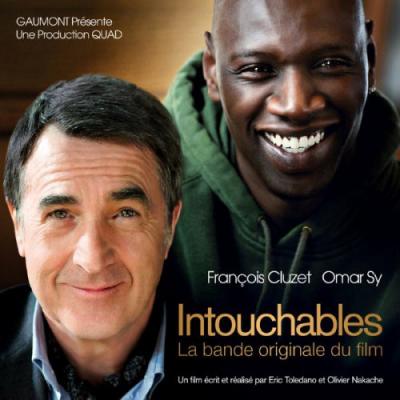
Intouchables Album Cover

"Intouchables" Soundtrack Lyrics

Movie • 2012

Track Listing


"The Intouchables (Original Motion Picture Soundtrack)" – Album Guide to Tracks and Key Scenes

The Intouchables trailer frame with Maserati night drive through Paris, hinting at the film’s kinetic opening and musical contrasts
“The Intouchables” (2011/US 2012) — trailer imagery that sets up friendship, speed, and score.

Overview

What happens when a chamber piano meets disco euphoria? The Intouchables answers with a soundtrack that toggles between Ludovico Einaudi’s spare lyricism and floor-filling classics from Earth, Wind & Fire. The push–pull mirrors the friendship at the film’s core: Philippe’s stillness, Driss’s propulsion.

The official album arrived first in France in late 2011 on TF1 Musique and later in 2012 internationally; editions vary (11–12 tracks) but center on Einaudi cues (“Fly,” “Una Mattina,” “Writing Poems”) and needle-drops like “September,” “Boogie Wonderland,” and Nina Simone’s “Feeling Good.” According to Apple Music and label notes, the U.S. edition runs 11 tracks (~32 minutes), while the French issue adds dialogue bits and classical excerpts.

Trailer still of Philippe and Driss sharing a laugh, encapsulating the album’s blend of poise and pulse
Poise (piano) vs. pulse (funk): the film’s musical axis.

Questions & Answers

Who composed the score?
Ludovico Einaudi. His existing pieces and film cues (“Fly,” “Una Mattina,” “Writing Poems,” “Cache-Cache,” “L’origine nascosta”) anchor the emotional spine.
What label released the soundtrack?
TF1 Musique issued the French release in 2011; an international edition followed in 2012 under TF1 Musique/Sony distribution (11 tracks).
Which famous songs appear alongside the score?
Earth, Wind & Fire’s “September” and “Boogie Wonderland,” Nina Simone’s “Feeling Good,” George Benson’s “The Ghetto,” and Terry Callier’s “You’re Goin’ Miss Your Candyman.”
Are classical works used on-screen?
Yes—Bach, Mozart, Vivaldi feature in concert and “blind test” scenes, contrasting Driss’s taste with Philippe’s canon.
Is the tracklist the same everywhere?
No. The French “édition prestige” (2011) includes extra items (dialogue, classical cuts); the U.S./global 2012 album is a tighter 11-track program.
Where can I stream it?
Major platforms list both editions; start with the 2012 “Original Motion Picture Soundtrack” if you want the essentials.

Notes & Trivia

  • Opening credits lean on “September,” then pivot to piano minimalism—tone-setting through contrast.
  • “Boogie Wonderland” powers the film’s most famous dance gag; the cue wasn’t written for the film but feels tailor-made.
  • Nina Simone’s “Feeling Good” accompanies a literal lift—paragliding—turning metaphor into motion.
  • Some releases include brief actor dialogue tracks (“Des références…,” “Blind Test”), making the record a mini-scene album.

Genres & Themes

Minimalist piano / chamber textures → vulnerability, ritual care, and small victories; slow-build harmonies mirror Philippe’s measured life.

70s/80s funk–disco → agency, mischief, and social oxygen; Earth, Wind & Fire cues let Driss commandeer the room.

Baroque/Classical excerpts → status and tradition; the concert sequence reframes “taste” as a moving target rather than a gate.

Trailer collage: black tie concert hall, Paris streets at night, seaside horizon—mirroring classical, funk, and minimalist strands
Three strands: canon, groove, and quiet clarity.

Tracks & Scenes

“September” — Earth, Wind & Fire
Where it plays: ~0:05 into the film, mid police chase; Driss sings along while finessing the officers with a hospital ruse (diegetic → source bleed).
Why it matters: Day-one thesis—joy as strategy; the groove disarms authority before the friendship flashback begins.

“Writing Poems” — Ludovico Einaudi
Where it plays: ~0:17, between early acclimation beats; cigarettes, sidewalks, small talk (non-diegetic).
Why it matters: Repetitive piano figures suggest routine; tiny variations hint at trust forming.

“Ave Maria, D.839” — Franz Schubert
Where it plays: ~0:20, Philippe’s home; a sacred hush tempers the bustle (diegetic/room playback).
Why it matters: Old-world gravitas sets up Driss to puncture solemnity later.

“Die Zauberflöte” excerpts — W. A. Mozart
Where it plays: ~0:22, move-in/settling sequence; later comic contrasts (diegetic).
Why it matters: Culture clash becomes chemistry, not conflict.

“The Ghetto” — George Benson
Where it plays: ~0:27, rooftop teen moment; cut with Driss hitting his stride as carer (non-diegetic/needle-drop).
Why it matters: Urban warmth without sentimentality; groove as glue.

“You’re Goin’ Miss Your Candyman” — Terry Callier
Where it plays: ~1:00, Driss paints with unexpected focus (source/low-mix).
Why it matters: The film lets taste bend; Driss’s “outside” ear opens Philippe’s world.

Baroque concert set — Vivaldi/Bach (multiple excerpts)
Where it plays: ~1:05–1:10, live orchestra; Driss heckles, then clocks the patterns (diegetic).
Why it matters: The scene reframes “high culture” as rhythm and hooks—gateway to shared jokes.

“Boogie Wonderland” — Earth, Wind & Fire with The Emotions
Where it plays: ~1:11, Driss dances for Philippe; the room breaks protocol (diegetic, exuberant).
Why it matters: The film’s heartbeat—care becomes celebration; the soundtrack’s pop half takes the wheel.

“Feeling Good” — Nina Simone
Where it plays: ~1:23, paragliding release; bodies and camera lift together (non-diegetic into scene).
Why it matters: An affirmation track used literally; the lyric finally earns itself.

“Fly” — Ludovico Einaudi
Where it plays: ~1:40, seaside drive; quiet momentum, open horizon (non-diegetic).
Why it matters: Einaudi’s arpeggios translate motion into memory—friendship at cruising speed.

“Una Mattina” — Ludovico Einaudi
Where it plays: ~1:46, Philippe waits before a first date; end titles follow (non-diegetic).
Why it matters: A contemplative full stop; the melody suggests continuance beyond the frame.

Also heard: Chopin (Nocturne in B-flat minor), additional Bach, and “Blind Test” dialogue stingers. Several of these appear on the French “édition prestige” but not the shorter international album.

Music–Story Links

Driss’s diegetic choices (“September,” “Boogie Wonderland”) aren’t just party tricks; they convert rooms and reset hierarchies. Philippe’s axis runs through Einaudi—measured, precise, composed—so when “Fly” takes the wheel, you can feel his agency returning. Classical cues start as status, then become rhythm jokes; by the concert scene, gatekeeping melts into shared curiosity.

Trailer frame of seaside horizon and open road, echoing Einaudi’s 'Fly' sequence near the film’s close
When the horizon opens up, the piano does too.

How It Was Made

Directors Olivier Nakache and Éric Toledano built the musical palette around Einaudi’s piano language, then threaded in iconic soul/disco and a curated stack of baroque/classical for contrast. The French album (TF1 Musique) landed in Q4 2011; a leaner international edition followed in 2012. As per the film’s credits and album listings, Einaudi’s pieces serve as recurring motifs rather than one-off needle-drops, giving the soundtrack a cohesive arc uncommon for mixtape-style scores.

Reception & Quotes

Viewers and critics routinely singled out the music’s role in the film’s “lightness without triviality,” with the album finding a long streaming afterlife.

“From Nina Simone to Vivaldi, with Einaudi stitching it together—eclectic but never random.” Album/film coverage
“The dance cue lands like oxygen; the room—and movie—exhale.” Feature write-ups
“Minimalist piano that actually moves the plot.” Listener notes

Additional Info

  • French release title: Intouchables — La bande originale du film (TF1 Musique, 2011); international: The Intouchables (Original Motion Picture Soundtrack) (2012).
  • Editions differ: the French issue includes dialogue and more classical excerpts; the U.S. edition trims to core songs/cues.
  • “September” appears in-film as both sing-along and score-adjacent needle-drop.
  • “Feeling Good” use is licensed master, not a cover—an important tonal choice.
  • Einaudi’s “Una Mattina” pre-dated the film but became indelibly tied to its finale for many listeners.

Technical Info

  • Title: The Intouchables (Original Motion Picture Soundtrack)
  • Year: 2011 (FR album); 2012 (international issue)
  • Type: Film soundtrack (score + needles + brief dialogue on FR edition)
  • Composer: Ludovico Einaudi
  • Labels: TF1 Musique (France); TF1 Musique/Sony for international distribution
  • Selected notable placements: “September” (police ruse, 0:05), “Boogie Wonderland” (dance, ~1:11), “Feeling Good” (paragliding, ~1:23), “Fly” (seaside, ~1:40), “Una Mattina” (finale, ~1:46)

Canonical Entities & Relations

SubjectRelationObject
The Intouchables (film)music byLudovico Einaudi
The Intouchables (Original Motion Picture Soundtrack)released byTF1 Musique
Earth, Wind & Fireperformed“September”; “Boogie Wonderland”
Nina Simoneperformed“Feeling Good”
George Bensonperformed“The Ghetto”
Terry Callierperformed“You’re Goin’ Miss Your Candyman”
Antonio Vivaldi / J. S. Bach / W. A. Mozartworks featuredconcert and “blind test” sequences

Sources: Apple Music album listings; IMDb soundtrack credits; SoundtrackRadar scene/timestamp guide; Wikipedia (film & soundtrack overview).

November, 11th 2025

The Intouchables is a 2011 French buddy comedy-drama film directed by Olivier Nakache & Éric Toledano. Find more info on Internet Movie Database and Wikipedia.org
A-Z Lyrics Universe

Lyrics / song texts are property and copyright of their owners and provided for educational purposes only.