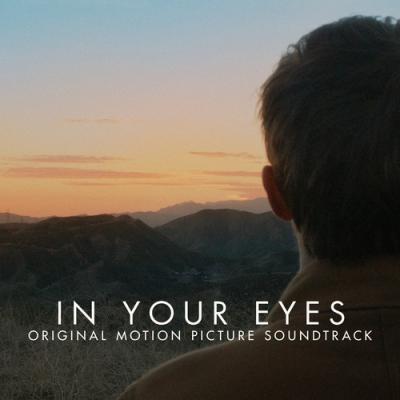
"In Your Eyes" Soundtrack Lyrics
Movie • 2014
Track Listing
Andrew Johnson
Ray Beadle
Iron & Wine
Santigold
Noah Maffit, Jessica Freedman, Written by Joss Whedon
Twinbed
Eddie Ray
Opus Orange
Matt Anderson
Wildlife
Tony Morales
"In Your Eyes (Original Motion Picture Soundtrack)" – Album Guide to Tracks and Key Scenes
Overview
What sound fits two strangers who can feel each other’s lives in real time? The film threads rootsy indie cuts and soft-bloom electronica around a tender orchestral score. The song album folds in Iron & Wine, Santigold vs. Switch & FreQ Nasty, Opus Orange, The Lumineers, and more, while Tony Morales’ score carries the heartbeats between scenes.
Lakeshore Records issued two digital releases on June 10, 2014: a Various Artists soundtrack and Morales’ Original Motion Picture Score; CDs followed in July. The music sits inside a Joss Whedon script and Brin Hill’s direction: intimacy scaled small, emotions scaled big (release details per label notes and trade coverage).
Questions & Answers
- Who composed the score?
- Tony Morales wrote the original score; Lakeshore released it as a separate album with 20 cues.
- Is there a songs compilation as well?
- Yes—In Your Eyes (Original Motion Picture Soundtrack) collects licensed songs (Iron & Wine, Santigold, Opus Orange, Twinbed, etc.) plus “Crumblin’,” written by Joss Whedon.
- When did the albums come out?
- Digital street date: June 10, 2014; CDs followed in early July.
- Any notable in-film songs missing from the CD?
- Some placements heard in the feature (e.g., bar/source cues) don’t appear on the retail album; that’s normal for clearances.
- What’s the trailer ID for images here?
- The widely circulated official trailer uses the YouTube ID cs_Z2OyqW5A.
- Who supervised the film’s musical world?
- Music department led by Lakeshore on releases; composer tracking and recording were handled with Emoto Studios for the score.
Notes & Trivia
- Morales recorded the score in 2013, blending strings, piano and subtle electronics to ride the “mystery” of the connection.
- The soundtrack album includes “Crumblin’,” written by Joss Whedon and performed by Noah Maffit & Jessica Freedman.
- The film premiered at Tribeca (April 20, 2014) and was released online the same day—unusual for a festival debut.
- Opus Orange appear multiple times; their cues knit domestic moments without breaking the spell.
Genres & Themes
Indie folk & Americana → vulnerability: fingerpicked guitars and close-mic voices frame porch talks, drives, and quiet choices.
Alt-pop & downtempo → distance and draw: Santigold’s sheen and Twinbed’s haze paint the friction between longing and risk.
Chamber/electronic score → connection physiology: pulsed piano, hovering strings, and soft synths mark the “shared senses” motif.
Tracks & Scenes
Scene placements and time marks derive from documented cue sheets and track-by-track guides; diegetic status noted when clear. Feature runtime ~108 min.
“Go Get Another Dream” — Andrew Johnston
Where it plays: ~00:03, in Dylan’s beat-up car as he drifts through evening streets (source on radio/non-diegetic blend).
Why it matters: Sets his small-but-stubborn hope against low stakes and long odds.
“Temptation” — Ray Beadle
Where it plays: ~00:07, pool-hall swagger while Dylan sizes up trouble (diegetic bar source).
Why it matters: Greasy blues as misdirection—he wants out, the room wants him back in.
“Resurrection Fern” — Iron & Wine
Where it plays: ~00:13, the long walk home after a fight; Rebecca feels the ache through him (non-diegetic).
Why it matters: A soft hymn to endurance; the lyric floats over their first true “shared” pain.
“Flowers in Your Hair” — The Lumineers
Where it plays: ~00:15, late-for-work hustle to the shop (non-diegetic).
Why it matters: Buoyant strum contrasts the weight of the connection they can’t explain.
“The Riot’s Gone” — Santigold vs. Switch & FreQ Nasty
Where it plays: ~00:38, mid-film conversation as they test boundaries of what they can see/hear (non-diegetic).
Why it matters: Sleek groove = new confidence; they’re no longer spooked, they’re curious.
“In the Dark” — Opus Orange
Where it plays: ~00:41, cards for her / car work for him; the outside world intrudes (non-diegetic montage).
Why it matters: Tethers two ordinary tasks until danger in New Mexico breaks the calm.
“Time of Year” — Opus Orange
Where it plays: ~00:51, Dylan cooks as their conversations warm (non-diegetic).
Why it matters: Domestic tempo for a relationship that hasn’t met a room yet.
“Surface” — Opus Orange
Where it plays: ~00:53, beers with Donna; Rebecca eavesdrops through him (non-diegetic/source mix).
Why it matters: Light pop varnish over jealous undercurrents.
“Glad I Found You” — Eddie Ray
Where it plays: ~01:02, he asks about her marriage—tone turns protective (non-diegetic).
Why it matters: Vintage soul frames a modern long-distance truth talk.
“Crumblin’” — Noah Maffit & Jessica Freedman
Where it plays: ~01:03, they sing together—across states—trading lines like a secret (diegetic to each, magically shared).
Why it matters: The story’s thesis in miniature: music as proof the connection is real.
“Trouble I’m In” — Twinbed
Where it plays: ~01:10, a charged undress meets second thoughts (non-diegetic).
Why it matters: Hushed desire with alarm bells—exactly their line to walk.
“Concerto in D minor for Two Violins (Bach)” — class cue
Where it plays: ~01:12, art-class ambience (diegetic/source).
Why it matters: Order and counterpoint, just before their lives spin again.
“Fired Up” — Matt Andersen
Where it plays: ~01:16, a bar confrontation boils over (diegetic bar source → non-diegetic punch).
Why it matters: Blues riffs as spark plug for consequences.
“Stand in the Water” — Wildlife
Where it plays: ~01:42, closing stretch/credits after the boxcar reunion (non-diegetic).
Why it matters: A forward-leaning send-off—acceptance without certainty.
Score spotlight: “In Your Eyes” — Tony Morales
Where it plays: recurring, with a full statement at opening and across key “sync” hits; 20-track album of cues (non-diegetic).
Why it matters: Piano/strings + light electronics = the film’s nerve endings.
Music–Story Links
Song choices track the pair’s emotional bandwidth. Bar source cues box Dylan into old patterns; indie folk opens the window for Rebecca’s honesty. When they sing “Crumblin’” together, diegesis fractures on purpose—the movie lets the impossible feel normal. Morales’ motif returns whenever their bodies “double”—a quiet metronome for a love story that outruns mileage.
How It Was Made
Composer Tony Morales recorded at Emoto Studios in 2013, building a hybrid palette (strings, piano, subtle synth) to “weave” between romance and mystery. Lakeshore handled both albums: the songs compilation (with Whedon’s original “Crumblin’”) and the separate 20-cue score. The film, written by Whedon and directed by Brin Hill, premiered at Tribeca and was released online the same day—an atypical distribution that made the music a major discovery vector.
Reception & Quotes
Reviews called the movie modest and affecting; listeners gravitated to the comforting song mix and the translucent score.
“A lightweight romance smartly carried by a quietly luminous score.” festival coverage
“The compilation plays like a porch-light mixtape—gentle, unshowy, sticky.” album roundups
Additional Info
- Song album & score both streeted digitally on June 10, 2014; CDs followed in early July.
- Trailer ID used for figures: cs_Z2OyqW5A (official upload).
- Key artists on the song album: Iron & Wine; Santigold vs. Switch & FreQ Nasty; Opus Orange; The Lumineers; Twinbed; Eddie Ray.
- Score album: 20 tracks, ~43 minutes.
- The song guide for the film lists 20+ placements; not all appear on the commercial CD.
Technical Info
- Title: In Your Eyes (Original Motion Picture Soundtrack)
- Year: 2014
- Type: Film soundtrack (songs) + separate score album
- Composer (score): Tony Morales
- Writer/Producer of film: Joss Whedon (writer); produced with Kai Cole & Michael Roiff
- Label: Lakeshore Records
- Release pattern: Digital June 10, 2014; CDs early July 2014
- Notable placements: Iron & Wine “Resurrection Fern”; Twinbed “Trouble I’m In”; Wildlife “Stand in the Water”; Opus Orange “In the Dark/Time of Year”; Whedon’s “Crumblin’.”
Canonical Entities & Relations
| Subject | Relation | Object |
|---|---|---|
| In Your Eyes (film, 2014) | directed by | Brin Hill |
| In Your Eyes (film) | written by | Joss Whedon |
| In Your Eyes (film) | music by | Tony Morales (original score) |
| In Your Eyes (soundtrack) | record label | Lakeshore Records |
| Opus Orange | performs | “In the Dark”, “Time of Year”, “Surface” |
| Iron & Wine | performs | “Resurrection Fern” |
| Santigold vs. Switch & FreQ Nasty | performs | “The Riot’s Gone” |
| Twinbed | performs | “Trouble I’m In” |
Sources: Apple Music album & score listings; Film Music Reporter release notes; Soundtrack.Net track details; IMDb soundtracks; SoundtrackRadar scene-by-scene guide; Wikipedia film page (music/credits); Lakeshore/YouTube previews; official trailer.
The strange plot of the film did not allow it to go to the big screens. It went out only on DVD and the concept of "box office" is not its part. What is it about – somehow two people, a man and a woman of about the same age, from different social worlds, are able to communicate at a distance with one another without the hardware or software. In general, if they speak aloud, they obtain the ability to hear each other. Add to that any means of communication – phone, tablet, notebook, etc. and you’ll get quite a typical story that someone suddenly came across someone in the process of wrong dialing and they were into a sort of romancing in the distance. So, basically, nothing special. The film ends up with some escape to God knows where and boarding the train and embracing. Without further plans, with no hope on anything at all, they just took the train without money and documents, expecting that they will lead a normal life in future. Typically, these stories end in one, maximum 2 weeks, when they wanted as a fugitive, or they end up own scarce cash reserves and have to go back to where they fled. Music producers have done everything possible to make the mood of the film was exceptional. For example, Santigold performed a great catchy melody of R’n’B genre. The Break Up is a composition full of despair that not only slow, but very mournful in addition. Andrew Johnson did a very good representative of the country music genre, which generally is dominant in this collection. Its examples are the Resurrection Fern and Fired Up. Some songs of pop and Indie pop genres only supplement country sounding of all soundtrack, from which tranquility emanates along with small inconsistency. As from the motion picture.November, 11th 2025
In Your Eyes: IMDb profile, Wikipedia pageA-Z Lyrics Universe
Cynthia Erivo Popular
Ariana Grande Horsepower
Post Malone Ain't No Love in Oklahoma
Luke Combs Good Riddance (Time of Your Life)
Green Day Bye Bye Bye
*NSYNC You're the One That I Wan
John Travolta & Olivia Newton-John I Always Wanted a Brother
Braelyn Rankins, Theo Somolu, Kelvin Harrison Jr. and Aaron Pierre The Power of Love
Frankie Goes to Hollywood Beyond
Auli’i Cravalho feat. Rachel House MORE ›