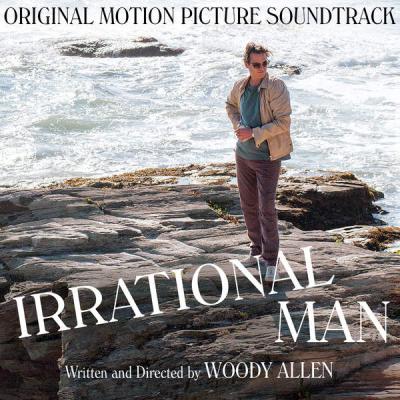
"Irrational Man" Soundtrack Lyrics
Movie • 2015
Track Listing
Ramsey Lewis Trio
Daniel May Jazz Combo
Ramsey Lewis Trio
Johann Sebastian Bach
Paul Eakins
Johann Sebastian Bach
Ramsey Lewis Trio
The Jimmy Bruno Trio
Johann Sebastian Bach
David O'Neal
"Irrational Man (Original Motion Picture Soundtrack)" – Album Guide to Tracks and Key Scenes
Overview
What happens when a philosophy thriller moves like a 1965 club jam? The soundtrack to Irrational Man answers with a single, bold center of gravity: Ramsey Lewis’s “The ‘In’ Crowd” and fellow trio tracks cut the film’s gait, while unexpected classical cues (three compact Bach selections and a solo-cello prelude) needle quiet rooms with order and fate. Around them sit period-flavored sources—parlor organ, small-combo jazz, and a few modern library cuts.
According to Madison Gate Records, the official album (11 tracks, ~35 minutes) gathers the signature Ramsey Lewis cuts (“The ‘In’ Crowd,” “Look-A-Here,” “Wade in the Water”) alongside Bach preludes (BWV 847 & 863), the Cello Suite No.1 prelude, and source selections by Mikey B (“Amalthea”), Daniel May Jazz Combo (“Good To Go”), Paul Eakins (“Let Me Call You Sweetheart”), David O’Neal (“Angel in the Snow”), and The Jimmy Bruno Trio (“Darn That Dream”). As per Film Music Reporter and the retail listings, it’s a straight snapshot of the film’s needle-drops rather than a separate score album.
Questions & Answers
- Is there an official soundtrack album?
- Yes. Irrational Man (Original Motion Picture Soundtrack)—11 tracks, released July 2015 on Madison Gate Records; available on Apple Music/Spotify.
- What’s the recurring main song?
- Ramsey Lewis Trio’s “The ‘In’ Crowd.” It opens the film and recurs as a leitmotif when Abe (Joaquin Phoenix) “switches on.”
- Is there original score?
- No separate score album; the film is carried by licensed recordings and a few library cues.
- Which classical pieces are used?
- Bach’s Prelude in C minor, BWV 847; Prelude in G-sharp minor, BWV 863; and the Cello Suite No.1 in G, BWV 1007 – Prelude.
- Who released the album and when?
- Madison Gate Records released it mid-July 2015, day-and-date with the U.S. limited theatrical run.
- Where can I verify the track list?
- On the label’s page and major services (Spotify/Apple Music); film credits and database listings match the selections.
Notes & Trivia
- Ramsey Lewis’s “The ‘In’ Crowd” functions as Abe’s pulse; when he finds “purpose,” the cue kicks in—sometimes for mere bars.
- The Ramsey Lewis material is a live-era sound (mid-60s) dropped into a contemporary setting for ironic snap.
- The album mirrors the film closely; there isn’t a parallel “inspired by” set.
- Three Bach entries are short: they frame transitions more than they play as full scenes.
Genres & Themes
’60s piano-trio soul-jazz → agency, appetite, “ideas in motion.” The vamp from “The ‘In’ Crowd” turns thinking into striding.
Baroque counterpoint (Bach) → order, inevitability, puzzles. Short preludes signal plans tightening or closing in.
Source nostalgia (parlor organ, small-combo standards) → cozy surfaces masking darker choices; comfort as cover.
Tracks & Scenes
“The ‘In’ Crowd” — Ramsey Lewis Trio
Where it plays: Over the opening and in several bursts across high-momentum passages (non-diegetic). The piano lick often drops in just as Abe’s mood or plan spikes.
Why it matters: A walking-tempo mantra; the cue reframes cynicism as action, then later reads as darkly cheery counterpoint.
“Look-A-Here” — Ramsey Lewis Trio
Where it plays: Campus interludes and drive-time links when the story bounces between Abe, Jill, and Rita (non-diegetic).
Why it matters: Same palette, different riff—keeps the film’s feet light while the ethics get heavier.
“Wade in the Water” — Ramsey Lewis
Where it plays: A later run of confidence and concealment; the arrangement leans more emphatic than “In Crowd” (non-diegetic).
Why it matters: Gospel roots via soul-jazz swagger—irony sharpens as consequences loom.
“Prelude in C minor, BWV 847” — J. S. Bach (Bernard Roberts)
Where it plays: Tight, problem-solving beats—notes, drawers, and deductions; brief needle-drop (non-diegetic).
Why it matters: Musical geometry: the prelude’s relentlessness is a moral metronome.
“Prelude in G-sharp minor, BWV 863” — J. S. Bach (Bernard Roberts)
Where it plays: Between revelation and repercussion; a short hinge (non-diegetic).
Why it matters: Cooler, darker harmonic shade to prime the next move.
“Cello Suite No.1 in G, BWV 1007 – Prelude” — J. S. Bach (Torleif Thedéen)
Where it plays: Private reflection and second-guessing; the room seems larger than the character (non-diegetic).
Why it matters: A momentary invitation to sincerity in a film that resists it.
“Good To Go” — Daniel May Jazz Combo
Where it plays: Café and party bed—chatter over an affable groove (diegetic/source).
Why it matters: Social lubricant; the music smiles so the plot can sharpen the knife.
“Let Me Call You Sweetheart” — Paul Eakins
Where it plays: Parlor/boardwalk organ vibe under a public space (diegetic/source).
Why it matters: Sentimental wallpaper that makes the later chill land harder.
“Darn That Dream” — The Jimmy Bruno Trio
Where it plays: A hushed, late-night interior beat (diegetic low-mix or non-diegetic).
Why it matters: A standard that reads as regret without a single lyric onscreen.
“Angel in the Snow” — David O’Neal
Where it plays: Brief connective tissue; a softer color amid the jazz (source).
Why it matters: Gives one scene a breath before the film tightens again.
“Amalthea” — Mikey B
Where it plays: Establishing ambience; contemporary cue that blends in without breaking the period flavor (source).
Why it matters: Keeps the world current while the record bin skews vintage.
Trailer note: Marketing uses cuts aligned with the jazz-forward identity; the theatrical trailer widely shared by U.S. outlets anchors the film’s attitude without revealing placements.
Music–Story Links
Lewis’s piano vamp equals agency: when Abe feels alive, the band walks beside him. When doubt or danger intrude, Bach takes over—the grid replaces the groove. Source oldies (parlor organ, standards) mask unease in public spaces; their coziness turns sinister as the narrative clarifies what “purpose” costs.
How It Was Made
Allen’s long-running practice—build the film’s feel from period records rather than commissioned score—returns here. The team clears a compact set of tracks and lets repetition do the heavy lifting: the same Ramsey Lewis hook functions as theme, motive force, and ironic chorus. According to label and trade notes, the album is a faithful mirror of those clearances, not an expanded companion.
Reception & Quotes
Reaction to the film was mixed, but the song choices earned frequent mentions for how efficiently they set pace and irony.
“That vamp becomes the movie’s conscience and its accomplice.” Soundtrack coverage
“The ‘In’ Crowd’ turns a campus stroll into a thesis statement.” Feature notes
Additional Info
- Album: 11 tracks (~35–36 minutes). Digital release only at launch.
- Recurring artists: three Ramsey Lewis cuts anchor the program.
- Classical performances are catalog versions (Roberts; Thedéen), not bespoke recordings.
- No separate score album; the compilation is the definitive release.
- The soundtrack aligns tightly with the on-screen clearances (no “inspired by” extras).
Technical Info
- Title: Irrational Man (Original Motion Picture Soundtrack)
- Year: 2015
- Type: Various-artists compilation (licensed recordings)
- Label: Madison Gate Records
- Length: ~35 minutes (11 tracks)
- Signature placements: “The ‘In’ Crowd,” “Look-A-Here,” “Wade in the Water,” Bach preludes BWV 847 & 863, Cello Suite BWV 1007 (Prelude)
Canonical Entities & Relations
| Subject | Relation | Object |
|---|---|---|
| Irrational Man (film, 2015) | directed by | Woody Allen |
| Irrational Man (film) | distributor | Sony Pictures Classics |
| Irrational Man (Original Motion Picture Soundtrack) | released by | Madison Gate Records |
| Ramsey Lewis Trio | performed | “The ‘In’ Crowd”; “Look-A-Here” |
| Ramsey Lewis | performed | “Wade in the Water” |
| Bernard Roberts | performed | Bach preludes BWV 847 & 863 |
| Torleif Thedéen | performed | Bach Cello Suite No.1 – Prelude |
| Daniel May Jazz Combo | performed | “Good To Go” |
| Paul Eakins | performed | “Let Me Call You Sweetheart” |
| The Jimmy Bruno Trio | performed | “Darn That Dream” |
| David O’Neal | performed | “Angel in the Snow” |
| Mikey B | performed | “Amalthea” |
Sources: Madison Gate Records release page; Film Music Reporter; Spotify/Apple Music album entries; IMDb Soundtracks; film overview.
Light and airy, sometimes sad, shading atmosphere of the film, the compositions are mainly represented by instrumental ones without expressed support of voice (Good To Go, The In Crowd). One of the few films that focus on classical and vintage music emphasizes what is happening on the screen, organically placing punctuation marks in a story to include new lines (Johann Sebastian Bach presented in the soundtrack list with his Prelude & Fugue No. 2, Prelude & Fugue No. 18 and Cello Suite No. 1). The famous Ramsey Lewis Trio were included with a several songs in the selection – Look-A-Here, Wade In The Water and The In Crowd, organically shading the character of the protagonist of the film, the essence of his actions that goes in parallel with the fact listed in the title – Irrational Man. Generally, the soundtrack is slightly unusual because the songs for the film were not written specifically, using existing ones. Fans of a great music selection from the distant and not so distant past where words were nothing but melody was everything, must necessarily like this one. Woody Allen once again proved that the master could film almost anything. The quality of his acting work 20 years ago, does not go to any comparison with ingenious masterpieces that he do now, holding the level at such a height that only some of the masters of world cinematography may deal with it. Angel In The Snow by David O'Neal is eclectic and a bit distracting from the overall perspective of all film, because it is the only song with words. As a good exception to the rule, it adds an excellent flavor of its ease, leaving the viewer with a touch of understatement and sadness. It may seem to some that the film continues to relay of earlier Allen’s film, Midnight In Paris, being too ephemeral as one – this is an issue of a personal decision of each person. Emma Stone brings notes of charm wherever she is. Soundtrack is definitely a good one.November, 11th 2025
"Irrational Man" profiles on IMDb and Rotten TomatoesA-Z Lyrics Universe
Cynthia Erivo Popular
Ariana Grande Horsepower
Post Malone Ain't No Love in Oklahoma
Luke Combs Good Riddance (Time of Your Life)
Green Day Bye Bye Bye
*NSYNC You're the One That I Wan
John Travolta & Olivia Newton-John I Always Wanted a Brother
Braelyn Rankins, Theo Somolu, Kelvin Harrison Jr. and Aaron Pierre The Power of Love
Frankie Goes to Hollywood Beyond
Auli’i Cravalho feat. Rachel House MORE ›