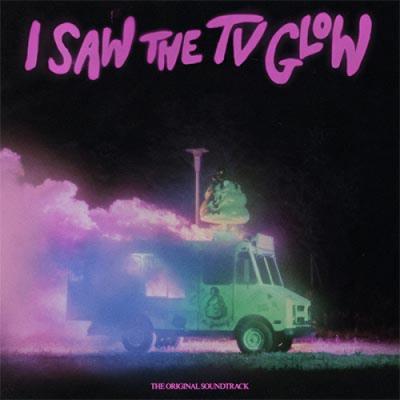
"I Saw The TV Glow" Soundtrack Lyrics
Movie • 2024
Track Listing
yeule
Frances Quinlan
Caroline Polachek
Florist
Bartees Strange
Maria BC
King Woman
Jay Som
L'Rain
The Weather Station
Drab Majesty
Proper. (USA)
Sadurn
King Woman
Sloppy Jane (Ft. Phoebe Bridgers)
Snail Mail
"I Saw the Light (Original Motion Picture Soundtrack)" – Album Guide to Tracks and Key Scenes
Overview
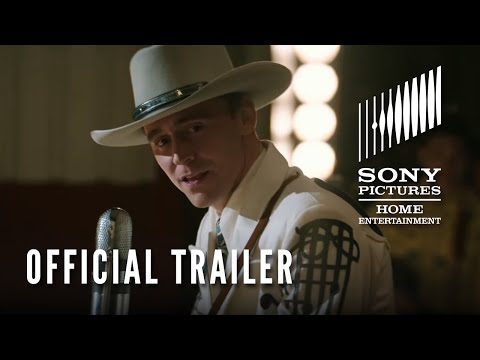
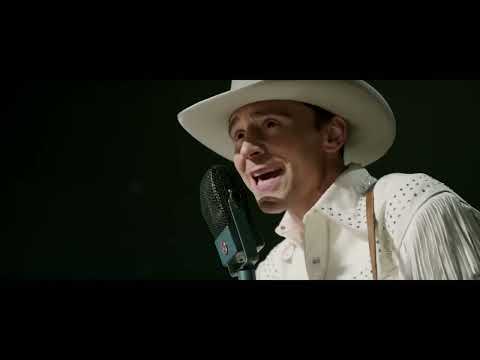
How do you soundtrack a legend whose hits are already American grammar? The album answers by splitting the difference: period originals to fix the era in amber, plus new recordings sung in-character by Tom Hiddleston with the Saddle Spring Boys. It plays like a studio diary of performance scenes—radio booths, beer joints, and a spotlight that never quite forgives.
The commercial release arrived March 25, 2016 on Legacy Recordings, with thirteen tracks running just under half an hour. Seven are Hiddleston-led cuts (“Hey Good Lookin’,” “Move It On Over,” “Jambalaya,” “My Bucket’s Got a Hole in It,” “Honky Tonkin’,” “That’s What’s Knockin’ Me Out,” “Why Don’t You Love Me”). Classic masters from Eddy Arnold, the Delmore Brothers, Jo Stafford, George Morgan, Eartha Kitt and Emmett Miller supply the archival glue (per Legacy’s listing and Apple’s metadata).
Questions & Answers
- Who composed the film’s score?
- Aaron Zigman scored the film; the retail album focuses on songs and performance numbers, not Zigman’s cues.
- Who produced/released the soundtrack album?
- Legacy Recordings (Sony) issued the album in March 2016; Rodney Crowell served as executive music producer for the film project.
- Does Tom Hiddleston actually sing?
- Yes—his vocals front the movie’s on-screen band (the Saddle Spring Boys) and anchor most of the album’s new recordings.
- Is “Lovesick Blues” on the album the Hiddleston version?
- No—the album includes Emmett Miller’s vintage “Lovesick Blues”; Hiddleston performs the song in-film during an Opry breakthrough scene.
- Are these exact Hank Williams masters?
- Not primarily—the album mixes Hiddleston-led re-recordings with era masters by peers/contemporaries and related catalog cuts.
Notes & Trivia
- Street date: March 25, 2016 (album); U.S. theatrical release the same day after a schedule shift from late 2015.
- Album runtime ≈27–33 minutes depending on region; 13 tracks is standard on digital and CD listings.
- Hiddleston trained vocally/guitars under Rodney Crowell before recording and filming key performance scenes.
- The album’s vintage material includes Jo Stafford’s “The Tennessee Waltz,” Eddy Arnold’s “Anytime,” and George Morgan’s “Please Don’t Let Me Love You.”
- “Why Don’t You Love Me” and “Hey Good Lookin’” on the album are Hiddleston-in-character takes tracked with a small combo.
Genres & Themes
Honky-tonk swing & shuffle → public bravado: dance tempos sell the show—bar stages, radio remotes, hayride crowds.
Wistful croon ballads → private fallout: torch-leaning masters (“Anytime,” “Please Don’t Let Me Love You”) color the cost behind the spotlight.
Nasal twang, lap steel, brush kit → documentary realism: arrangements stay small and dry, closer to room-mic truth than glossy reimagining.
Tracks & Scenes
“Hey Good Lookin’” — Tom Hiddleston & the Saddle Spring Boys
Where it plays: Early-stage club sequence and radio-promo montage (non-diegetic in album; performed diegetically on screen).
Why it matters: Flirt built as hook. The band’s snap and the singer’s grin sell the myth of easy charm.
“Move It On Over” — Tom Hiddleston & the Saddle Spring Boys
Where it plays: Barroom set and touring montage; a tight, stomping take (diegetic on screen).
Why it matters: Comic swagger that doubles as damage report; the lyric’s domestic joke lands sharper in context.
“Jambalaya” — Tom Hiddleston & the Saddle Spring Boys
Where it plays: Road-stop dance and fairground imagery (diegetic).
Why it matters: Crowd-pleaser energy; Cajun color widens the palette beyond Nashville polish.
“My Bucket’s Got a Hole in It” — Tom Hiddleston & the Saddle Spring Boys
Where it plays: After a money/personal setback, played on stage like a shrug (diegetic).
Why it matters: The joke title reads like fate; the groove keeps the room dancing anyway.
“Honky Tonkin’” — Tom Hiddleston & the Saddle Spring Boys
Where it plays: Nightlife montage, neon signage, and handbills (diegetic).
Why it matters: Mission statement for the public persona—escape by volume and velocity.
“Why Don’t You Love Me” — Tom Hiddleston & the Saddle Spring Boys
Where it plays: Post-argument stage take that bleeds into personal fallout (diegetic into non-diegetic feel).
Why it matters: The lyric stops being a bit and starts sounding like a note left on the kitchen table.
“Anytime” — Eddy Arnold
Where it plays: Transitional montage between radio success and fraying marriage (non-diegetic master).
Why it matters: A velvet counterpoint—industry smoothness against a rough life.
“The Tennessee Waltz” — Jo Stafford
Where it plays: Dance-hall glide and soft-focus memory beat (source/period master).
Why it matters: Perfectly mannered nostalgia the film can’t live up to.
“Please Don’t Let Me Love You” — George Morgan
Where it plays: Quiet, late-night dissolve after a fight (non-diegetic master).
Why it matters: Classic plea that mirrors the movie’s cycle of wanting and wounding.
“Lovesick Blues” — Emmett Miller (album) / Tom Hiddleston (film performance)
Where it plays: Opry breakthrough in the film (diegetic); album includes Miller’s vintage side as lineage.
Why it matters: The yodel break is a dare; the scene plays like a coronation and a warning.
Music–Story Links
The biopic stages the public Hank in brisk shuffles and show-stoppers, then hard-cuts to the private Hank with satin crooners and slower tempos. When career climbs—bar gigs to Opry bookings—the band cooks. When the life costs mount, the album pivots to archival masters that feel like the world moving on without him. The split is the point.
How It Was Made
Rodney Crowell shepherded performance authenticity (band feel, phrasing), with Hiddleston singing live or pre-record to picture; Carter Little handled music supervision and helped package the album. The soundtrack deliberately mixes fresh studio cuts with era masters to keep one foot in drama and one in documentary. Score by Aaron Zigman lives mostly under the dialogue and isn’t represented on the retail set.
Reception & Quotes
Coverage consistently singled out the performances and Hiddleston’s vocals even when the drama divided critics.
“He does an excellent job capturing some of Williams’ vocal style and stage presence.” Review summary
“The best scenes are those featuring Hiddleston singing one of Williams’ hits.” Contemporary review
“Album blends Hiddleston takes with pristine period sides—smart contextualizing.” Soundtrack write-ups
Additional Info
- Album label: Legacy Recordings (Sony Music). Digital/CD—13 tracks.
- Not on album: Aaron Zigman’s score; some film-only underscored moments.
- Tracklist staples: “Hey Good Lookin’,” “Move It On Over,” “Jambalaya,” “Honky Tonkin’,” “Why Don’t You Love Me,” plus period sides by Eddy Arnold, Jo Stafford, George Morgan, Emmett Miller.
- Hiddleston road-tested material live ahead of release (festivals, promo events) to dial in phrasing.
- Film opened wide in the U.S. on March 25, 2016 after a delayed awards-season plan.
Technical Info
- Title: I Saw the Light (Original Motion Picture Soundtrack)
- Year: 2016 (album); film U.S. release 2016
- Type: Feature film soundtrack (songs-focused; select vintage masters + new recordings)
- Album Label: Legacy Recordings (Sony)
- Executive Music Producer (film): Rodney Crowell
- Music Supervision: Carter Little
- Score Composer (film): Aaron Zigman (not on album)
- Selected notable placements: “Hey Good Lookin’,” “Move It On Over,” “Jambalaya,” “My Bucket’s Got a Hole in It,” “Honky Tonkin’,” “Lovesick Blues” (film performance; album uses Emmett Miller’s recording)
- Distributor (film): Sony Pictures Classics
Canonical Entities & Relations
| Subject | Relation | Object |
|---|---|---|
| I Saw the Light (film, 2015/2016) | directed by | Marc Abraham |
| I Saw the Light (film) | music by (score) | Aaron Zigman |
| I Saw the Light (Original Motion Picture Soundtrack) | released by | Legacy Recordings (Sony) |
| Rodney Crowell | executive music produced | Film music/performance sessions |
| Carter Little | music supervised | I Saw the Light (film) |
| Tom Hiddleston & the Saddle Spring Boys | performed | “Hey Good Lookin’,” “Move It On Over,” “Jambalaya,” etc. |
| Eddy Arnold | performed (catalog) | “Anytime” |
| Jo Stafford | performed (catalog) | “The Tennessee Waltz” |
| George Morgan | performed (catalog) | “Please Don’t Let Me Love You” |
| Emmett Miller | performed (catalog) | “Lovesick Blues” |
Sources: Legacy Recordings album page & press notice; Apple Music/Spotify listings; Sony Pictures Classics film page; IMDb soundtrack/credits; reviews noting Hiddleston’s vocals and performance scenes; general release schedule summaries.
November, 11th 2025
A-Z Lyrics Universe
Cynthia Erivo Popular
Ariana Grande Horsepower
Post Malone Ain't No Love in Oklahoma
Luke Combs Good Riddance (Time of Your Life)
Green Day Bye Bye Bye
*NSYNC You're the One That I Wan
John Travolta & Olivia Newton-John I Always Wanted a Brother
Braelyn Rankins, Theo Somolu, Kelvin Harrison Jr. and Aaron Pierre The Power of Love
Frankie Goes to Hollywood Beyond
Auli’i Cravalho feat. Rachel House MORE ›