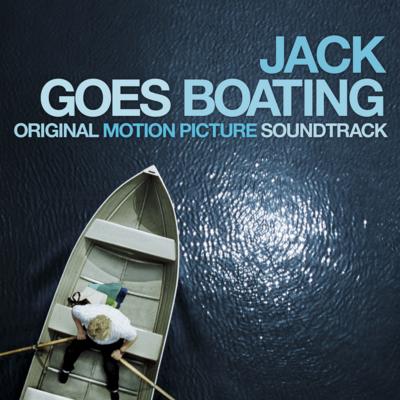
"Jack Goes Boating" Soundtrack Lyrics
Movie • 2010
Track Listing
Fleet Foxes
Grizzly Bear
The Melodians
Evan Lurie
Cat Power
Goldfrapp
Fleet Foxes
Darondo
DeVotchKa
Mel Torme
Evan Lurie
Dave's True Story
Bill Evans
"Jack Goes Boating (Original Motion Picture Soundtrack)" – Album Guide to Tracks and Key Scenes
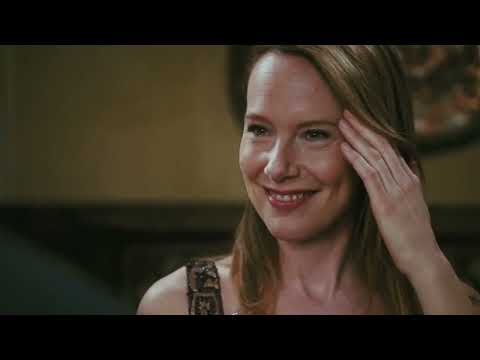
Overview
What happens when a shy limo driver scores his life to a single reggae hymn and then tries—haltingly—to change? Philip Seymour Hoffman’s Jack Goes Boating answers with a soundtrack that holds two poles: tender indie folk and a small, piano-led score. Together they trace Jack’s stumbles toward connection, the music often whispering what the characters can’t.
The album blends existing songs by Fleet Foxes, Grizzly Bear, Cat Power, DeVotchKa, Goldfrapp and vintage crooner cuts with brief cues by composer Evan Lurie. The result is intimate and winter-tinged: acoustic harmonies sketch vulnerability; brief instrumentals steady the pacing; a well-placed classic standard adds irony. According to Apple Music, Lakeshore Records issued the digital album on September 7, 2010, with a CD following shortly after.

Questions & Answers
- Is this an original score or a songs-driven soundtrack?
- Both: Evan Lurie contributes short score cues; most emotional color comes from licensed indie tracks by Fleet Foxes, Grizzly Bear, and others.
- Do songs appear diegetically (heard by characters)?
- Yes. Jack repeatedly plays “Rivers of Babylon” on his own device—his comfort blanket—so the song is directly in the scene.
- Were any tracks created specifically for the film?
- No new pop songs; Lurie’s cues are original underscoring, while the indie songs were licensed from prior releases.
- What’s the album availability?
- Digital release (Lakeshore Records) and a CD edition in 2010; it remains streamable on major platforms.
- How does the music shape tone?
- Indie folk softens awkwardness with warmth; the spare score underlines pauses, snowy city spaces, and fragile attempts at intimacy.
- Any notable trailer music?
- “White Winter Hymnal” by Fleet Foxes circulated in marketing materials and became closely associated with the film’s winter mood.
Notes & Trivia
- Hoffman’s Jack is described as reggae-obsessed; the film pivots on his attachment to “Rivers of Babylon.”
- Grizzly Bear songs appear in the film, but Evan Lurie provides the piano-centric score.
- Music supervision is by Susan (Sue) Jacobs, known for meticulous placement across prestige indies.
- The soundtrack sequencing opens with Fleet Foxes’ “Oliver James,” aligning the album’s arc with Jack’s gentle awakening.
- Classic standards (“Hello, Young Lovers,” “Blue Moon”) counterpoint the contemporary indie palette.
Genres & Themes
Indie folk & chamber pop → vulnerability and tentative hope. Fleet Foxes and Grizzly Bear harmonies create an intimate, hand-knit feel; they make small gestures feel grand without bombast.
Piano-led score (Evan Lurie) → thoughtfulness and reset. Brief, unadorned cues act as breaths between social miscues and emotional resets, especially during winter exteriors and post-dinner fallout.
Mid-century standards → irony and aspiration. A crooner track like “Hello, Young Lovers” nods to tidy, old-Hollywood romance that Jack and Connie can’t quite enact.
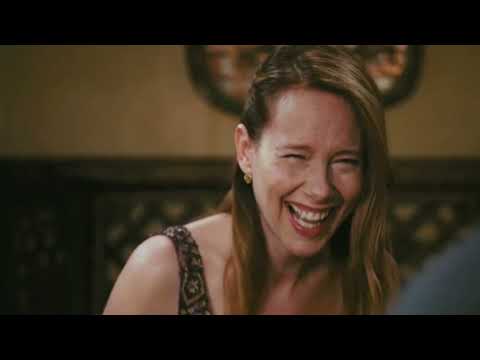
Tracks & Scenes
“Rivers of Babylon” – The Melodians
Scene: Jack moves through his day with headphones on, replaying the track as a private ritual; it surfaces at anxious moments and during solitary commutes (diegetic).
Why it matters: The song externalizes Jack’s need for calm and belonging; when it fades or is interrupted, we feel his equilibrium wobble.
“Oliver James” – Fleet Foxes
Scene: A gentle bookend on the album that mirrors the film’s quiet emotional thaw; used to cradle reflective beats rather than big gestures (non-diegetic).
Why it matters: Its close harmonies align with the story’s hushed trust-building, giving fragile scenes a humane glow.
“All We Ask” – Grizzly Bear
Scene: Laid under transitional city moments and interior beats where characters test boundaries (non-diegetic).
Why it matters: The song’s layered dynamics echo stepwise progress—the kind you barely notice until you’re further along.
“Snow” – Evan Lurie
Scene: A brief, piano-forward cue that underpins wintry interludes and regrouping after social misfires (score; non-diegetic).
Why it matters: Its economy of notes steadies the film’s rhythms, letting silences speak.
“Where Is My Love” – Cat Power
Scene: Used to underscore a solitary, self-questioning beat for Connie; the atmosphere turns inward (non-diegetic).
Why it matters: The minimalist vocal carries Connie’s guarded longing without tipping into melodrama.
“Didn’t I” – Darondo
Scene: Slips in around a tentative flirtation and the glow before things go sideways (non-diegetic).
Why it matters: Soul warmth meets fragile confidence—a classic needle-drop that makes hope feel possible, briefly.
“Dearly Departed” – DeVotchKa
Scene: A post-fallout breather, where characters sit with consequences (non-diegetic).
Why it matters: Its ache matches the film’s honesty about repair: feelings don’t resolve neatly.
“Hello, Young Lovers” – Mel Tormé
Scene: A wry, old-school romantic sheen brushes a scene that can’t live up to it (source-like placement tone; non-diegetic within the film’s flow).
Why it matters: The polished fantasy of classic romance throws the messy now into relief.
Trailer tie-in: “White Winter Hymnal” – Fleet Foxes
Where it plays: Prominently associated with trailers/marketing, setting the snow-dusted mood even before the film (non-diegetic to the feature).
Why it matters: It became the sonic shorthand for Jack Goes Boating’s season and softness.
Music–Story Links
- Jack’s ritual → “Rivers of Babylon”: Repetition equals safety. The moment he can face silence, we read growth.
- Connie’s guardedness → sparse vocals (Cat Power): Minimalist arrangements mirror her careful disclosures.
- The dinner spiral → classic standard irony: Crooner polish clashes with a night that refuses cinematic perfection.
- Aftershocks → DeVotchKa’s ache: The score steps back; a song shoulders the weight of unsaid apologies.
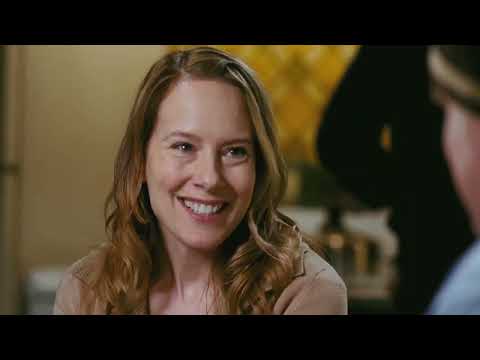
How It Was Made
Music supervision by Susan (Sue) Jacobs shaped the curation of indie cuts alongside Evan Lurie’s short, piano-centric cues. Grizzly Bear tracks are licensed needle-drops—no original GB score—while Lurie’s pieces perform the connective, tonal work between scenes. Band members Ed Droste and Christopher Bear appear in the music department credits as contributing musicians. According to trade and festival coverage, early notices often described the movie’s sound as a blend of Lurie’s gentle score with Grizzly Bear’s harmonies.
Reception & Quotes
Critics regarded the film as a modest but affecting character study; many singled out how music and silence underscore social awkwardness and small acts of courage.
“The actors make it new and poignant… in the story’s limited psychic and physical space.” Roger Ebert
“A must for… Hoffman fans.” Lou Lumenick, New York Post
“Hoffman emerges as a confident film director… maximizing his fellow actors’ work.” The Hollywood Reporter
“A quiet character study… only occasionally exploding in emotion.” Arizona Republic
Availability note: the 13-track album (Fleet Foxes, Grizzly Bear, The Melodians, Cat Power, Goldfrapp, DeVotchKa, Mel Tormé, Dave’s True Story, Bill Evans, Evan Lurie) remains on major DSPs; CD pressed by Lakeshore Records.
Additional Info
- Digital album released Sept 7, 2010; CD streeted a week later.
- Bill Evans’ “Peace Piece” closes the album with reflective gravitas.
- “Blue Moon” here is by Dave’s True Story (lounge duo), not the doo-wop standard cut.
- DeVotchKa’s inclusion connects the film to the mid-2000s indie-cinema sound that Lakeshore often championed.
- The soundtrack sequencing maps emotional temperature from tentative (“Oliver James”) to cathartic (“Peace Piece”).
Technical Info
- Title: Jack Goes Boating (Original Motion Picture Soundtrack)
- Year / Type: 2010 / Film soundtrack (songs + score cues)
- Composers: Evan Lurie (score cues)
- Key Licensed Artists: Fleet Foxes; Grizzly Bear; The Melodians; Cat Power; Goldfrapp; DeVotchKa; Mel Tormé; Dave’s True Story; Bill Evans
- Music Supervision: Susan (Sue) Jacobs
- Label: Lakeshore Records
- Releases: Digital (2010-09-07); CD (2010-09-14)
- Film Release Context: Sundance premiere (Jan 23, 2010); US theatrical (Sept 17, 2010)
- Notable Placements: “Rivers of Babylon” (diegetic motif); Fleet Foxes/Grizzly Bear cuts across transitional and emotional beats
- Availability/Charts: Widely streamable; no major chart placements reported
Canonical Entities & Relations
| Subject | Relation | Object |
|---|---|---|
| Philip Seymour Hoffman | directed | Jack Goes Boating (film) |
| Philip Seymour Hoffman | starred in | Jack Goes Boating (film) |
| Evan Lurie | composed | Score cues for Jack Goes Boating |
| Grizzly Bear | provided | Licensed songs in the film |
| Susan Jacobs | music supervised | Jack Goes Boating (film) |
| Lakeshore Records | released | Jack Goes Boating (Original Motion Picture Soundtrack) |
| Big Beach | produced | Jack Goes Boating (film) |
| Overture Films | distributed | Jack Goes Boating (US) |
Sources: Apple Music; AllMusic; Discogs; Variety/Metacritic critic rollups; Vanity Fair; Christianity Today; Playbill; Pitchfork; SoundtrackINFO; IMDb.
November, 12th 2025
A-Z Lyrics Universe
Cynthia Erivo Popular
Ariana Grande Horsepower
Post Malone Ain't No Love in Oklahoma
Luke Combs Good Riddance (Time of Your Life)
Green Day Bye Bye Bye
*NSYNC You're the One That I Wan
John Travolta & Olivia Newton-John I Always Wanted a Brother
Braelyn Rankins, Theo Somolu, Kelvin Harrison Jr. and Aaron Pierre The Power of Love
Frankie Goes to Hollywood Beyond
Auli’i Cravalho feat. Rachel House MORE ›