
"Jack Ryan: Shadow Recruit" Soundtrack Lyrics
Movie • 2014
Track Listing
Franz Waxman
Geoffrey Edwards
Cecilia Bartoli & György Fischer
Patrick Doyle
Jerry Burnham & Wayne Cook
Damian Valentine
Anna Shurochkina
Yulia Savicheva
"Jack Ryan: Shadow Recruit – Music From the Motion Picture" – Album Guide to Tracks and Key Scenes
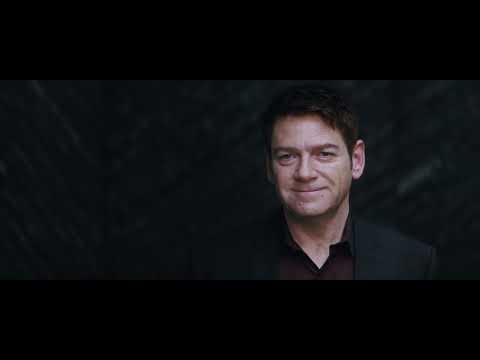
Overview
What does a modern spy score do when the hero starts as an analyst, not a bruiser? Patrick Doyle answers with a sleek blend of orchestral muscle, cool electronics, and a stern Russian-choral spine—music that thinks first, then strikes. The result: propulsion for chases and heists, but also a precise pulse for surveillance, misdirection, and quiet dread.
The album (Varèse Sarabande, 2014) runs a generous 70+ minutes and leans almost entirely on Doyle’s score, with a handful of source cues threaded into the film. Recorded in London with the London Symphony Orchestra and choir, the score favors tight ostinatos, low brass surges, and solemn voices for the villain’s worldview. According to Film Music Reporter, the album went digital in mid-January 2014 with a physical release in early February; Doyle’s collaboration with director Kenneth Branagh shaped the material end to end.

Questions & Answers
- Who composed, and who conducted?
- Patrick Doyle composed; James Shearman conducted and co-orchestrated with Doyle.
- Was a choir used?
- Yes—prominent Russian-choral writing appears in set-piece cues (e.g., “Faith of Our Fathers”).
- Where was it recorded?
- Abbey Road Studios and AIR Lyndhurst (London), with work also at AIR-Edel.
- Is there an official album?
- Yes. Varèse Sarabande released Jack Ryan: Shadow Recruit – Music From the Motion Picture digitally (Jan 14, 2014) and on CD (Feb 4, 2014).
- Any licensed/non-score music in the film?
- A few. Notably Cecilia Bartoli’s performance of the Renaissance aria “Amarilli mia bella” and the prelude from Sorry, Wrong Number.
- Who handled music supervision?
- Maggie Rodford is credited as music supervisor; Christopher Benstead served as supervising music editor.
- Trailer music—was it on the album?
- Theatrical trailers leaned on trailer-house cues (not on the score album); online trackers widely cite Zack Hemsey’s “Vengeance” in early spots.
Notes & Trivia
- Doyle reportedly spent around seven months on this score—longer than his usual schedule for features.
- The London Symphony Orchestra performed; Nick Taylor recorded and mixed; Andrew Walter mastered.
- Russian-language choral forces were contracted specifically for the album sessions.
- Classical drop-ins include a Cecilia Bartoli aria—rare for a modern spy reboot to bookend a villain with early music.
- A Film Forum set-piece uses the 1948 noir Sorry, Wrong Number as diegetic cover for a hand-off—its prelude is credited in the soundtrack list.
Genres & Themes
Hybrid orchestra + electronics → methodical urgency. Short ostinatos, tight percussion, and synth undercurrents mirror data-sifting, surveillance, and calculated risk.
Russian choral writing → ideological weight. Low male chorus and solemn hymn-tones color Viktor Cherevin’s menace with national-myth gravitas.
String/brass swells → analyst becomes field agent. When Jack commits to action (hotel fight, chases), the harmony widens and the mix steps forward—resolve over doubt.
Tracks & Scenes
Note: times vary by edition; scene IDs are described for quick locating.
“Amarilli mia bella” – Cecilia Bartoli (Caccini)
Scene: Opening Moscow clinic introduction of Viktor Cherevin: we first see him from behind as a doctor works on his arm; the aria floats under the image. It returns during Cherevin’s final comeuppance, coldly mirroring the start. Non-diegetic.
Why it matters: Old-world refinement framing modern cruelty. The contrast humanizes nothing; it indicts taste as camouflage.
“Sorry, Wrong Number – Prelude” – Franz Waxman
Scene: Film Forum sequence in New York. Jack uses a revival screening as cover to pass intel; the classic noir prelude plays diegetically from the screen while the tradecraft happens in the aisles.
Why it matters: A phone-centric thriller scored under a spy hand-off—a sly mirror about messages, interception, and panic.
“Jazz Hands” – Geoffrey Edwards
Scene: Brief source/library cue heard as light diegetic background in a social setting (very short, mixed low).
Why it matters: Texture only—neutral ambience so the dialogue and surveillance beats can breathe.
“Stealing the Data” – Patrick Doyle
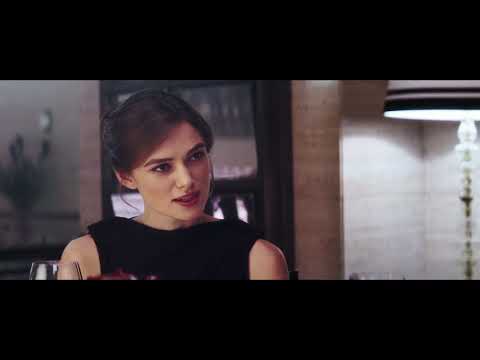
Scene: The Moscow office heist while Cathy distracts Cherevin at dinner across the street. Non-diegetic score drives keyboard-and-string pulse as Jack clones the hard drive and evades building security.
Why it matters: Classic Doyle build: metronomic tension, then an orchestral surge as the net tightens.
“Moscow Car Chase” – Patrick Doyle
Scene: Post-heist pursuit through central Moscow. Non-diegetic. Drum kit and low-brass accents keep steering-wheel tempo tight while the sound design trades punches with the score.
Why it matters: It’s the film’s speed-test; the cue’s clean, modular writing lets editors swing angles without losing momentum.
“The Lightbulb” – Patrick Doyle
Scene: Cherevin’s torture threat with Cathy: “a light bulb will go into her mouth…” Non-diegetic strings grind under Branagh’s monologue until the rescue breaks in.
Why it matters: One of the score’s grimmest colors; harmony stays taut to let the performance carry the horror.
“The Activation” – Patrick Doyle
Scene: Sleeper-plot triggers; NY logistics spool up. Non-diegetic. Synth pulses and snare ticks align with insert shots of phones, maps, and vans.
Why it matters: Procedure as suspense—music and montage speak the same clipped language.
“Jack and Aleksandr” / “Ryan, Mr. President” – Patrick Doyle
Scene: Final New York pursuit to the East River, then debrief at the White House. Non-diegetic; the theme broadens for consequence and aftermath.
Why it matters: The analyst’s arc closes with institutional scale—motifs resolve upward, not triumphant, but assured.
Trailer cues (not on the album): early trailers used trailer-house material; industry trackers widely point to Zack Hemsey’s “Vengeance” under the first long spot.
Music–Story Links
- Aria → villain’s ritual: “Amarilli mia bella” bookends Cherevin—elegance as mask—so later cruelty lands colder.
- Noir prelude → spy hand-off: the Sorry, Wrong Number cue adds meta-commentary: intercepted voices and weaponized messaging.
- Choir → ideology: low-register chorus (“Faith of Our Fathers”) gives Cherevin’s plan national, not personal, weight.
- Ostinatos → problem-solving: analytic patterns become action patterns; the same cells evolve from spreadsheet tension to street pursuit.
How It Was Made
Doyle and Branagh developed themes alongside the edit; the writing window stretched to roughly seven months. The London Symphony Orchestra performed; Shearman conducted/orchestrated; recording took place at Abbey Road and AIR Lyndhurst, with AIR-Edel in the mix for additional work. As per the album credits and trade coverage, Maggie Rodford supervised music, and Nick Taylor engineered/mixed; Andrew Walter mastered. A Russian choir unit and contractors supported the choral cues.
Reception & Quotes
Response to the album skewed positive-mixed: several reviewers praised the propulsion and choral writing, while others felt the long runtime blunted impact on album.
“Patrick Doyle’s pulse-quickening score is a huge asset.” San Francisco Chronicle
“Disappointingly anonymous despite five to ten minutes of solid highlights.” Filmtracks
“Doyle terrifically reboots himself along with Tom Clancy’s analyst.” Assignment X
“Strong material sits among cues that mumble along on pads and loops.” Movie Wave
Additional Info
- Album length ~73 minutes; 24 cues on the standard release.
- Studios: Abbey Road & AIR Lyndhurst; mastering at Abbey Road.
- Key personnel: James Shearman (conductor/orchestrations), Maggie Rodford (music supervisor), Christopher Benstead (supervising music editor).
- Notable cues to sample: “Stealing the Data,” “Moscow Car Chase,” “The Lightbulb,” “Unravelling the Data.”
- Featured classical performance: Cecilia Bartoli’s “Amarilli mia bella.”
- Diegetic film reference: the Film Forum sequence uses 1948’s Sorry, Wrong Number.
- Available on major services (Apple Music, Spotify); CD via Varèse Sarabande.
Technical Info
- Title: Jack Ryan: Shadow Recruit – Music From the Motion Picture
- Year / Type: 2014 / Film score (with select source cues)
- Composer: Patrick Doyle
- Conductor / Orchestrations: James Shearman (with Doyle)
- Orchestra / Choir: London Symphony Orchestra; Russian choir (contracted)
- Music Supervision: Maggie Rodford
- Studios: Abbey Road Studios; AIR Lyndhurst; AIR-Edel
- Label / Releases: Varèse Sarabande — Digital: Jan 14, 2014; CD: Feb 4, 2014
- Selected notable placements: “Amarilli mia bella” (opening & finale), “Sorry, Wrong Number – Prelude” (Film Forum), “Moscow Car Chase,” “The Lightbulb,” “Stealing the Data.”
Canonical Entities & Relations
| Subject | Relation | Object |
|---|---|---|
| Patrick Doyle | composed | Jack Ryan: Shadow Recruit (score) |
| James Shearman | conducted | London Symphony Orchestra |
| Maggie Rodford | music supervised | Jack Ryan: Shadow Recruit (film) |
| Varèse Sarabande | released | Jack Ryan: Shadow Recruit – Music From the Motion Picture |
| Abbey Road Studios / AIR Lyndhurst | hosted recording for | Jack Ryan: Shadow Recruit (score) |
| Cecilia Bartoli | performed | “Amarilli mia bella” (used in film) |
| Franz Waxman | composed | “Sorry, Wrong Number – Prelude” (used diegetically) |
| Kenneth Branagh | directed | Jack Ryan: Shadow Recruit (2014) |
| Paramount Pictures | distributed | Jack Ryan: Shadow Recruit (film) |
Sources: Film Music Reporter; Wikipedia (film & soundtrack); Metacritic credits; Discogs (credits); SoundtrackCollector; Apple Music / Spotify listing; IMDb Soundtracks/Connections; OperaFresh blog; Rotten Tomatoes video clips; Movie Wave; Assignment X; Filmtracks; San Francisco Chronicle review; trailer-music trackers.
November, 12th 2025
'Jack Ryan: Shadow Recruit' is an American action spy thriller film directed by Kenneth Branagh. Learn more on Wikipedia and IMDbA-Z Lyrics Universe
Cynthia Erivo Popular
Ariana Grande Horsepower
Post Malone Ain't No Love in Oklahoma
Luke Combs Good Riddance (Time of Your Life)
Green Day Bye Bye Bye
*NSYNC You're the One That I Wan
John Travolta & Olivia Newton-John I Always Wanted a Brother
Braelyn Rankins, Theo Somolu, Kelvin Harrison Jr. and Aaron Pierre The Power of Love
Frankie Goes to Hollywood Beyond
Auli’i Cravalho feat. Rachel House MORE ›