"Jacques Brel is Alive and Well and Living in Paris" Soundtrack Lyrics
Musical • 2002
Track Listing
"Jackie Brown: Music from the Miramax Motion Picture" – Album Guide to Tracks and Key Scenes
Overview
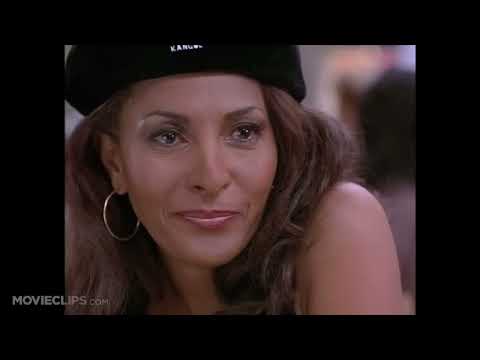
Can a crate of 70s soul do character work? Here, yes. The film opens and closes on Bobby Womack’s “Across 110th Street,” turning a Blaxploitation elegy into Jackie’s interior voice: weary, wised-up, still moving forward. Between those bookends, Tarantino threads silky Philly harmonies, jazz-funk, and quiet-storm R&B so the songs carry plot beats—never wallpaper.
The commercial album (Maverick / A Band Apart) mirrors that design: needle-drops intercut with dialogue, no traditional score. The set runs ~51 minutes with 17 cuts (e.g., Womack, Bill Withers, Johnny Cash, Randy Crawford) and omits several on-screen cues by design. According to Apple Music, it’s the official 1997 release; Discogs corroborates label/credits and the dialogue-plus-songs format.
Questions & Answers
- Is there a separate score album?
- No. The movie leans on curated songs; the retail disc is a compilation interleaving dialogue with needle-drops.
- What song opens and closes the film?
- Bobby Womack’s “Across 110th Street” opens over the LAX travelator and returns over the final drive and credits.
- Which cuts define Jackie & Max?
- The Delfonics—“Didn’t I (Blow Your Mind This Time)” and “La-La (Means I Love You).” Max even buys their cassette in-story.
- What scores Beaumont’s trunk ride?
- The Brothers Johnson’s “Strawberry Letter 23” plays as Ordell drives—a soft groove under a hard act.
- What drives the Del Amo heist walk-throughs?
- Randy Crawford & The Crusaders’ “Street Life,” edited to fit the mall choreography.
- Is Pam Grier on the soundtrack?
- Yes. “Long Time Woman” (from her 1971 work) plays as Jackie is processed into jail.
Notes & Trivia
- Tarantino picked many songs while writing; the edit then obeys that playlist’s rhythm.
- Several film cues are absent from the CD (e.g., The Delfonics’ “La-La,” The Meters’ “Cissy Strut”).
- Johnny Cash’s “Tennessee Stud” plays from Ordell’s car—country steel against L.A. noir.
- “Street Life” ties Jackie Brown back to 70s urban thrillers and deliberately maps Del Amo’s corridors.
- The album credits list Mary Ramos and Michele Huznetsky as music consultants.
Genres & Themes
Philly soul & sweet harmony → intimacy and risk. The Delfonics mark Jackie–Max scenes as tender but adult—longing with boundaries.
Jazz-funk & street-wise R&B → motion and map. “Street Life” functions as a heist metronome: tempo equals timing, chorus equals checkpoint.
Quiet-storm ballads → yearning without naïveté. Bloodstone’s “Natural High” gives attraction the weight of lived-in hope.
Outlaw/country touches → hard pragmatism. Cash’s “Tennessee Stud” underscores stakeouts and waiting with bone-dry resolve.
Tracks & Scenes
“Across 110th Street” — Bobby Womack
Where it plays: 0:00 opening titles (Jackie on the mover); ~2:22 reprise over the final drive and credits. Non-diegetic (bookend motif).
Why it matters: Sets a survivor’s thesis—age, hustle, and geography in one breath.
“Strawberry Letter 23” — The Brothers Johnson
Where it plays: ~0:20, Ordell drives with Beaumont in the trunk, pulls off, and we fade to gunshots. Non-diegetic.
Why it matters: Velvet groove over cold logistics; the dissonance chills the scene.
“Long Time Woman” — Pam Grier
Where it plays: ~0:32, booking and walk to jail. Non-diegetic.
Why it matters: Folds Pam Grier’s 70s career into Jackie’s present—meta that deepens character.
“Natural High” — Bloodstone
Where it plays: ~0:38, Max watches Jackie approach; quiet car ride follows. Non-diegetic.
Why it matters: Yearning without fairy-tale varnish—two grown-ups negotiating trust.
“Tennessee Stud” — Johnny Cash
Where it plays: ~0:44, source in Ordell’s car during a watch-and-wait beat. Source→non-diegetic feel.
Why it matters: A wry Americana counter-texture for L.A. crime work.
“Didn’t I (Blow Your Mind This Time)” — The Delfonics
Where it plays: ~0:53, Jackie cues the LP at home with Max; later ~1:27 Max plays the cassette in his car; brief reprise ~2:13. Diegetic/non-diegetic mix.
Why it matters: Their private language; when it plays, defenses drop a notch.
“La-La (Means I Love You)” — The Delfonics
Where it plays: ~0:56, flows after “Didn’t I” in Jackie’s apartment. Diegetic (turntable).
Why it matters: Extends the motif—affection scored with soft vows.
“Who Is He (And What Is He to You?)” — Bill Withers
Where it plays: ~1:11 at the Cockatoo Inn. Non-diegetic.
Why it matters: Paranoid lyric fits triangulated loyalties.
“Undun” — The Guess Who
Where it plays: ~1:37, Louis hustles Melanie; the day tilts toward mistakes. Non-diegetic.
Why it matters: Minor-key warning label for a doomed pair.
“Street Life” — Randy Crawford & The Crusaders
Where it plays: ~1:38, Jackie and Max drive; Del Amo walkthroughs and bag choreography (single edit). Non-diegetic.
Why it matters: Turns spatial geography into song form—verse/chorus as route markers.
“Midnight Confessions” — The Grass Roots
Where it plays: ~1:38 (van, Melanie sings along) and ~1:47 after the lot incident. Source→non-diegetic flip.
Why it matters: Bubblegum curdles right as tempers snap.
Also heard (not all on the retail CD): “Baby Love” — The Supremes; “Cissy Strut” — The Meters; Roy Ayers library cues (“Exotic Dance,” “Aragon”); Slash’s Snakepit (“Jizz Da Pitt”). Screen-accurate but album-omitted selections keep the film’s texture broader than the disc.
Music–Story Links
- Identity motif: The Delfonics = Jackie⇄Max trust. When Max buys the tape, the movie literalizes it—he’s carrying her tune.
- Heist topology: “Street Life” isn’t just cool; it’s a map. Chorus changes signal position within the plan.
- Violence under velvet: “Strawberry Letter 23” softens image to sharpen unease—kindness of the groove, cruelty of the act.
- Career echo: Grier singing “Long Time Woman” welds 70s Pam to 90s Jackie; the film honors the performer while deepening the character.
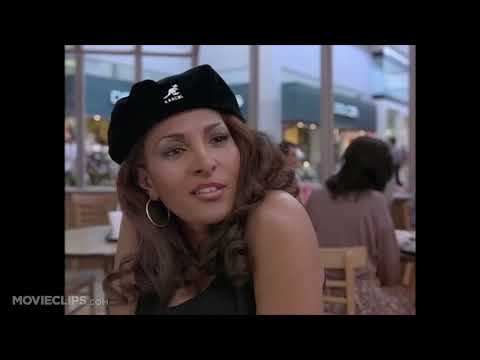
How It Was Made
Album producers: Quentin Tarantino and Lawrence Bender. Music consultants: Mary Ramos and Michele Huznetsky. Tarantino reportedly selects many tracks during scripting; the edit then cuts to those records’ phrasing. “Street Life” appears in an edited form tailored to picture; several diegetic choices (Foxy Brown in-store while Max buys the Delfonics cassette; LP vs. tape) are used as in-scene props to externalize relationships.
Reception & Quotes
Critical consensus keeps circling the same point: this soundtrack works on its own and in the film.
“One of his most cohesive needle-drop albums.” AllMusic
“Rounded out by Bloodstone and the slinky ‘Strawberry Letter 23.’” Rolling Stone
“Grooves that do plot work—never just wallpaper.” Song-placement rundown
Additional Info
- Retail CD issued December 9, 1997; U.S. theatrical opened December 25, 1997.
- Album length ~51:06; 17 tracks (songs + dialogue).
- Not on the CD but in film: “La-La (Means I Love You),” “Cissy Strut,” multiple Roy Ayers cues, “Jizz Da Pitt.”
- Jackie’s Delfonics motif helped introduce a new generation to the group’s catalog.
- “Street Life” usage nods to a lineage of urban thrillers; its single edit matches the Del Amo sequence timing.
Technical Info
- Title: Jackie Brown: Music from the Miramax Motion Picture
- Year / Type: 1997 / Compilation soundtrack (songs + dialogue)
- Labels: Maverick Records; A Band Apart Records
- Album Producers: Quentin Tarantino; Lawrence Bender
- Music Department (film): Music consultants Mary Ramos; Michele Huznetsky
- Selected placements: “Across 110th Street” (open/close); “Strawberry Letter 23” (Beaumont run); “Street Life” (Del Amo); The Delfonics (Jackie–Max); “Long Time Woman” (jail)
- Availability: Widely streamable; retail disc mixes dialogue with songs
Canonical Entities & Relations
| Subject | Relation | Object |
|---|---|---|
| Quentin Tarantino | executive-produced album | Jackie Brown: Music from the Miramax Motion Picture |
| Lawrence Bender | executive-produced album | Jackie Brown soundtrack |
| Mary Ramos | consulted on | Music selection/clearances |
| Michele Huznetsky | consulted on | Music selection/clearances |
| Pam Grier | performed | “Long Time Woman” (used in film) |
| Bobby Womack | performed | “Across 110th Street” |
| The Delfonics | performed | “Didn’t I…”, “La-La (Means I Love You)” |
| Randy Crawford & The Crusaders | performed | “Street Life” |
| The Brothers Johnson | performed | “Strawberry Letter 23” |
| Del Amo Fashion Center | setting for | Heist sequences |
Sources: Apple Music; Discogs; Wikipedia; ScreenRant; SoundtrackRadar; IMDb (Soundtracks); Medium feature on Tarantino song choices; Rolling Stone; AllMusic.
November, 12th 2025
A-Z Lyrics Universe
Cynthia Erivo Popular
Ariana Grande Horsepower
Post Malone Ain't No Love in Oklahoma
Luke Combs Good Riddance (Time of Your Life)
Green Day Bye Bye Bye
*NSYNC You're the One That I Wan
John Travolta & Olivia Newton-John I Always Wanted a Brother
Braelyn Rankins, Theo Somolu, Kelvin Harrison Jr. and Aaron Pierre The Power of Love
Frankie Goes to Hollywood Beyond
Auli’i Cravalho feat. Rachel House MORE ›