
"Jane Eyre: The Musical" Soundtrack Lyrics
Movie • 2000
Track Listing
Original Broadway Cast
Original Broadway Cast
Original Broadway Cast
Original Broadway Cast
Original Broadway Cast
Original Broadway Cast
Original Broadway Cast
Original Broadway Cast
Original Broadway Cast
Original Broadway Cast
Original Broadway Cast
Original Broadway Cast
Original Broadway Cast
Original Broadway Cast
Original Broadway Cast
Original Broadway Cast
Original Broadway Cast
Original Broadway Cast
Original Broadway Cast
Original Broadway Cast
Original Broadway Cast
Original Broadway Cast
Original Broadway Cast
Original Broadway Cast
Original Broadway Cast
"Jane Eyre: The Musical (Original Broadway Cast Recording, 2000)" – Album Guide to Tracks and Key Scenes
Overview
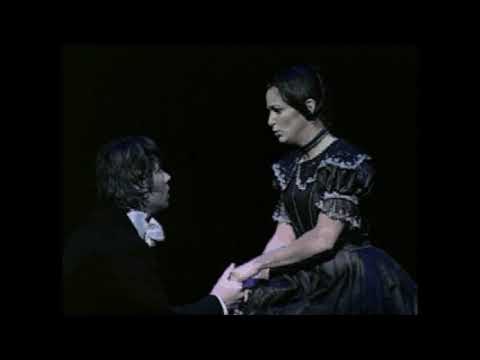
Is a cast album enough to follow Brontë’s plot? Here, yes. Paul Gordon (music/lyrics) and John Caird (book & additional lyrics) shape a through-sung drama; the 2000 Original Broadway Cast Recording (OBCR) preserves that arc cleanly with Marla Schaffel (Jane) and James Barbour (Rochester) front and center. Note: there was no 2000 film of the musical—the widely released recording is this Broadway album.
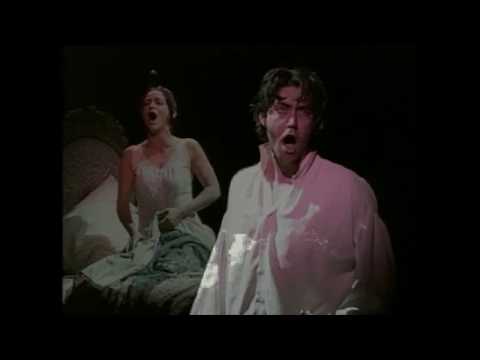
The disc mirrors the show’s two-act flow: Lowood’s cold strictures (“Children of God,” “Forgiveness”) give way to Thornfield intrigue (“Secrets of the House,” “Sirens”), then rupture and return (“Farewell, Good Angel,” “Brave Enough for Love”). Label metadata places the album in November 2000 on Sony’s Broadway imprint; Masterworks’ synopsis aligns song-to-scene order; Playbill reported the retail street date late November.
Questions & Answers
- What exactly is this release?
- The Original Broadway Cast Recording from 2000, recorded just before opening and issued by Sony’s Broadway/Masterworks division.
- How long is it and how many tracks?
- About 68 minutes across 25 tracks (song cues and short reprises included).
- Who are the principals on the album?
- Marla Schaffel (Jane Eyre) and James Barbour (Edward Rochester), with Mary Stout, Andrea Bowen, Stephen Buntrock, Bill Nolte, and others.
- Is this the same as later “revised” versions?
- No. Regional revisions exist; the OBCR documents the 2000 Broadway text/order.
- Was there a 2000 movie of the musical?
- No. The year refers to Broadway. The album is the chief commercial document of that production.
- Where can I hear it?
- Major streaming services carry the OBCR; look for 2000 date and the Schaffel/Barbour cast.
Notes & Trivia
- Street date landed late November 2000, weeks before the official Broadway opening in December.
- Recording sessions took place in early October 2000 in New York.
- Schaffel’s Jane earned a Drama Desk win and a Tony nomination; the show scored five Tony nods overall.
- A shorter “Highlights” CD also circulated in 2000 with a trimmed program.
- Masterworks’ synopsis confirms the album follows the show scene order closely.
Genres & Themes
Romantic through-song & chamber orchestration → inner voice made audible. Strings and woodwinds track Jane’s moral compass; low brass shades Rochester’s volatility.
Motivic recall → memory and conscience. “Sirens” and “Secret Soul” reappear to mark danger and attraction; reprise logic is narrative logic here.
Victorian color vs. contemporary lyric clarity. Period harmony sits with plainspoken text—less melodrama, more resolve.
Tracks & Scenes
Times are act positions; album cues noted in parentheses. Unless specified as an in-world performance, numbers function as integrated musical scenes (non-diegetic).
“The Orphan” — Jane, Ensemble
Where it plays: Act I, prologue at Gateshead/Lowood. (Album opener; ~2–3 min.)
Scene: Young Jane narrates a bruising childhood and moral resolve under Brocklehurst’s rule.
Why it matters: Establishes the show’s first-person frame and austere sound.
“Children of God” — Lowood Ensemble
Where it plays: Act I, Lowood drill. (Early track.)
Scene: A rigid catechism chorus; Jane’s compassion is the counter-melody.
Why it matters: Sets institutional stakes the score keeps revisiting.
“Forgiveness” — Helen Burns, Jane
Where it plays: Act I, infirmary. (Early track.)
Scene: Helen’s credo before her death scene; intimate duet.
Why it matters: The album’s ethical thesis; returns subtextually throughout.
“Sweet Liberty” — Jane
Where it plays: Act I, transition to Thornfield. (Early-mid.)
Scene: Jane chooses life beyond Lowood; orchestration opens out with travel energy.
Why it matters: First clear articulation of agency.
“Secrets of the House / Perfectly Nice” — Mrs. Fairfax, Jane
Where it plays: Act I, arrival at Thornfield. (Mid.)
Scene: Comic orientation tour flips into curiosity about the sealed upper floor.
Why it matters: Lightness that hides dread; tonal balance the album nails.
“As Good as You” — Rochester
Where it plays: Act I, salon confession. (Mid.)
Scene: Rochester sketches his past and Adèle’s story, testing Jane’s measure.
Why it matters: Barbour’s baritone defines the role’s gravity on record.
“Secret Soul” — Jane
Where it plays: Act I, after the bed-fire save. (Mid-late.)
Scene: Private flood of feeling after danger; strings in close mic.
Why it matters: Signature Jane ballad; the album’s emotional center.
“The Finer Things” — Blanche, Ensemble
Where it plays: Act I, house party. (Late.)
Scene: Aristocratic waltz catalogs status over substance.
Why it matters: Social satire that sharpens Jane/Rochester contrast.
“The Pledge” — Rochester, Jane
Where it plays: Act I, post-Mason arrival. (Late.)
Scene: A vow demanded under pressure; harmony strains, then settles.
Why it matters: Seeds the Act II catastrophe.
“Sirens” — Jane / Rochester (and reprise)
Where it plays: Act I late and Act II wedding morning. (Two cues.)
Scene: Intuition-as-alarm; offstage cries and inner voices blur.
Why it matters: Motif flags danger and self-betrayal risk.
“Things Beyond This Earth” — Ensemble
Where it plays: Act II, between attacks and secrets. (Early.)
Scene: Company textures dread as plot machinery turns.
Why it matters: A rare ensemble meditation; expands the world.
“Painting Her Portrait” — Jane
Where it plays: Act II, night before departure. (Early-mid.)
Scene: Jane sketches two portraits to measure herself against Blanche.
Why it matters: Self-knowledge set to a steady pulse.
“In the Light of the Virginia Morning” — Blanche
Where it plays: Act II, garden arithmetic. (Mid.)
Scene: A ledger sung sweetly; money behind manners.
Why it matters: Satire with bite; clarifies Rochester’s choice.
“The Gypsy” — Rochester (in disguise)
Where it plays: Act II, party entertainment. (Mid.) — diegetic fortune-telling set-piece.
Scene: Guests rattled by hard truths; Jane hears subtext.
Why it matters: The only overt “in-world performance” number; tension valve.
“The Proposal” — Rochester, Jane
Where it plays: Act II, garden confession. (Mid-late.)
Scene: Relief and shock; vocal lines finally resolve together.
Why it matters: Earned catharsis pre-revelation.
“Slip of a Girl” — Mrs. Fairfax
Where it plays: Act II, wedding run-up. (Late.)
Scene: Wry concern in counterpoint to romantic momentum.
Why it matters: Human scale amid melodrama.
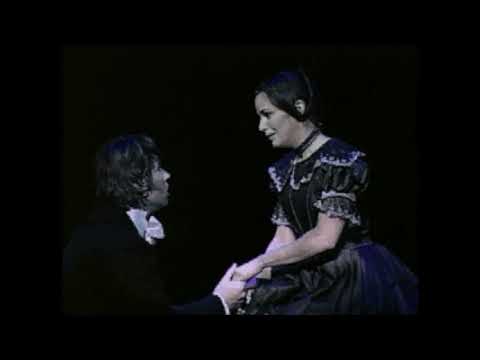
“Farewell, Good Angel” — Rochester
Where it plays: Act II, after the ruined wedding. (Late.)
Scene: Rochester pleads; Jane leaves.
Why it matters: Album’s darkest dramatic drop.
“My Maker / Rain” — Jane
Where it plays: Act II, flight across the moors. (Late.)
Scene: Survival and prayer under open sky.
Why it matters: Stark reset for the final act.
“Poor Sister” — Mason
Where it plays: Act II, aftermath at Thornfield. (Late.)
Scene: News of Bertha and the fire.
Why it matters: Exposition compressed into a grief cadence.
“Brave Enough for Love” — Jane, Rochester
Where it plays: Finale at Ferndean. (End.)
Scene: The acknowledgment scene; wounded man, unbroken woman.
Why it matters: Thesis stated plainly: love joined to conscience.
Music–Story Links
- Conscience motif: “Forgiveness” undergirds Jane’s choices; its cadence returns at ethical crossroads.
- Attraction vs. peril: “Secret Soul” and “Sirens” alternate—pull, then warning.
- Class critique: “The Finer Things” and “In the Light of the Virginia Morning” indict status with waltz and charm.
- Voice across distance: the moor sequence threads solo prayer into the plot’s “call,” then resolves at Ferndean.
How It Was Made
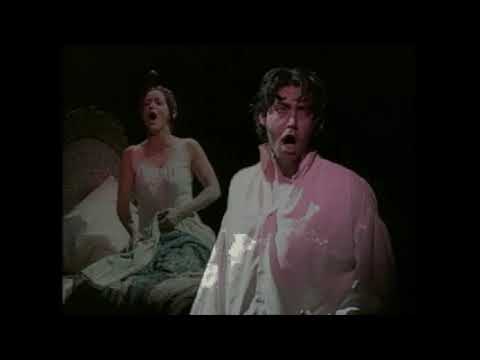
Music & lyrics by Paul Gordon; book and additional lyrics by John Caird. The Broadway run played the Brooks Atkinson Theatre (opened December 10, 2000). The OBCR was recorded shortly before opening and issued that November. Masterworks’ album page lists the principal company and outlines the scene-by-scene synopsis that the track order follows.
Reception & Quotes
Contemporary notices split on tone but repeatedly praised the craft of the score and Schaffel’s lead performance.
“Worthy, decorous, respectable… romantic without succumbing to sentimentality.” Variety
“A luxuriant score, haunting and memorable music, and crisp, intelligent lyrics.” Talkin’ Broadway
“Gloomy and mundane… captures few of the richly available nuances.” The New York Times
Additional Info
- Album metadata on streaming shows 25 tracks, ~68 minutes, ℗ 2000 Sony BMG.
- Playbill reported the CD street date as Nov 21, 2000; opening shifted to Dec 10.
- A “Highlights” edition (shorter program) also appeared in 2000.
- OBCR credits include Andrea Bowen as Adèle; Stephen Buntrock as St. John; Bill Nolte as Mason.
- The Broadway production ran 209 performances after 36 previews.
Technical Info
- Title: Jane Eyre: The Musical (Original Broadway Cast Recording)
- Year / Type: 2000 / Cast recording (album)
- Music & Lyrics: Paul Gordon
- Book & Additional Lyrics: John Caird
- Principals: Marla Schaffel (Jane); James Barbour (Rochester)
- Label: Sony (Masterworks Broadway catalog)
- Length: ~68 minutes; 25 tracks
- Notable numbers: “Forgiveness,” “Sweet Liberty,” “Secret Soul,” “The Finer Things,” “Sirens,” “The Proposal,” “Farewell, Good Angel,” “Brave Enough for Love.”
- Broadway run: Dec 10, 2000 – Jun 10, 2001 (Brooks Atkinson Theatre)
Canonical Entities & Relations
| Subject | Relation | Object |
|---|---|---|
| Paul Gordon | wrote music & lyrics for | Jane Eyre (musical) |
| John Caird | wrote book & additional lyrics for | Jane Eyre (musical) |
| Marla Schaffel | performed as | Jane Eyre (OBCR) |
| James Barbour | performed as | Edward Rochester (OBCR) |
| Sony / Masterworks Broadway | released | 2000 Original Broadway Cast Recording |
| Brooks Atkinson Theatre | hosted | Broadway run (2000–2001) |
Sources: Masterworks Broadway (album synopsis & credits); Playbill (CD street date); Apple Music (album metadata); IBDB (run dates); Variety / Talkin’ Broadway / The New York Times (reviews).
November, 12th 2025
Learn about 'Jane Eyre: The Musical' on Wikipedia and Internet Broadway DatabaseA-Z Lyrics Universe
Cynthia Erivo Popular
Ariana Grande Horsepower
Post Malone Ain't No Love in Oklahoma
Luke Combs Good Riddance (Time of Your Life)
Green Day Bye Bye Bye
*NSYNC You're the One That I Wan
John Travolta & Olivia Newton-John I Always Wanted a Brother
Braelyn Rankins, Theo Somolu, Kelvin Harrison Jr. and Aaron Pierre The Power of Love
Frankie Goes to Hollywood Beyond
Auli’i Cravalho feat. Rachel House MORE ›