
"Jersey Boys" Soundtrack Lyrics
Musical • 2005
Track Listing
Jersey Boys Cast
Jersey Boys Cast
Jersey Boys Cast
Jersey Boys and the Four Seasons
Jersey Boys Cast
Jersey Boys Cast
Jersey Boys Cast
Jersey Boys Cast
Jersey Boys Cast
Jersey Boys Cast
Jersey Boys Cast
Jersey Boys Cast
Jersey Boys Cast
The Four Seasons
Jersey Boys Cast
John Lloyd Young
Jersey Boys Cast
Jersey Boys Cast
Jersey Boys Cast
Jersey Boys Cast
"Jersey Boys: Original Broadway Cast Recording" – Album Guide to Tracks and Key Scenes
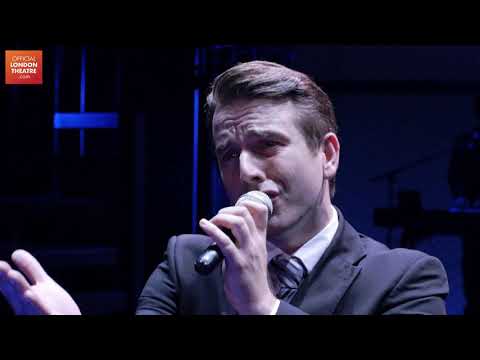
Overview
How do you make a biography sing? Jersey Boys answers by letting four versions of the truth harmonize. The 2005 Original Broadway Cast Recording follows the show’s “four seasons” structure—each band member narrates a chapter—so the album plays like a documentary with a backbeat, pivoting from doo-wop corners to brassy, arena-scale triumph.
The cast album preserves the specific theatrical shape of The Four Seasons’ story: storefront hustles, Brill Building polish, mob entanglements, and a late-career second wind. You hear John Lloyd Young’s falsetto cut through tight vocal charts, the onstage band punch out period-correct riffs, and orchestrations that keep the originals’ DNA while framing character and plot.

Questions & Answers
- Does the album mirror the stage running order?
- Yes. It broadly follows the show’s Spring–Summer–Fall–Winter arc, including transitional dialogue snippets and medleys that bridge scenes.
- Why do some hits appear as short medleys?
- The show often uses “stacked” montages to compress touring, TV spots, and chart rises; the album reflects that editorial choice.
- What’s different from the Four Seasons’ studio singles?
- Keys and vocal balances are tailored for live blend; horn writing is more forward; several numbers carry dialogue underscoring to track character beats.
- Is “Can’t Take My Eyes Off You” staged as a performance or an inner monologue?
- It’s staged as a full performance moment with band and brass; dramatically, it marks Valli’s breakthrough beyond the original quartet.
- Who handled the show’s musical architecture?
- Music supervision/vocal & dance arrangements by Ron Melrose; orchestrations by Steve Orich; album produced by Bob Gaudio.
- How did the cast album fare commercially?
- It peaked on the Billboard 200 and later went Platinum in the U.S., with additional certification abroad.
Notes & Trivia
- The show divides into four narrators—Tommy (Spring), Bob (Summer), Nick (Fall), Frankie (Winter)—mirrored by the album’s sequencing.
- It opens with a French rap sample of “Oh, What a Night” (“Ces soirées-là”) to show the music’s global afterlife.
- Young Joe Pesci appears in the story as the go-between who introduces Bob Gaudio to the band.
- “Fallen Angel” reframes personal loss into a theatrical lament; it functions more like a book ballad than a concert number.
- The recording won the Grammy for Best Musical Show Album.
Genres & Themes
Doo-wop & early rock map to street-corner survival and male-bonding rituals—tight stacks, handclaps, and bass-line “foundations.”
Brill Building pop signals upward mobility and craft: polished harmonies, crisp charts, and producer-driven momentum.
Brass-driven showband colors the crossover era—horn riffs equal ambition; drum hits track career “punches.”
Melodic torch songs (e.g., “My Eyes Adored You,” “Fallen Angel”) carry the private cost of public success.
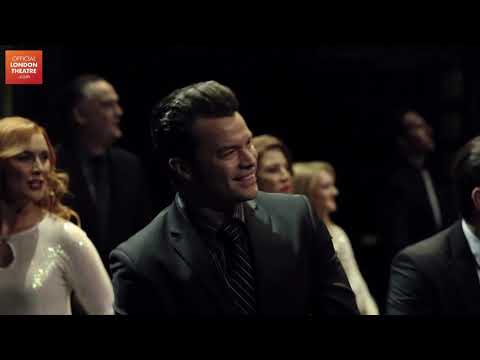
Tracks & Scenes
"Ces soirées-là" – Yannick
Scene: A cold open burst (Paris 2000) flips “Oh, What a Night” into French rap, before we smash back to 1950s Jersey. Not diegetic to the band’s timeline; it’s a framing device.
Why it matters: It proves the catalog’s longevity and sets up the “many versions of the truth” idea.
"Silhouettes" – The Four Lovers (early lineup)
Scene: Act I street-corner harmony—wire fences, sodium light, the guys shaping blend on a sidewalk. Diegetic rehearsal/performance.
Why it matters: Establishes working-class roots and Nick’s ear for parts.
"Cry for Me" – Bob Gaudio & the group
Scene: In-room audition; Bob sits at a piano/guitar, the others layer in parts, the chord stack locks. Diegetic, intimate.
Why it matters: The exact moment the sound—and the partnership—snaps into place.
"Sherry" – The Four Seasons
Scene: Studio-to-airwaves montage; the needle drops, phones light up, the chart rocket begins. Diegetic radio/performance.
Why it matters: The giant first hit; the album captures the crisp tambourine and falsetto that define their brand.
"Big Girls Don’t Cry" – The Four Seasons
Scene: Rapid-fire TV spots and stage choreo; tight suits, tighter harmonies. Diegetic.
Why it matters: Shows machine-like momentum and the group’s visual signature working with the sound.
"Walk Like a Man" – The Four Seasons
Scene: Chart-climb montage punches into confrontations after shows; reprise hits under a debt showdown. Diegetic into underscore.
Why it matters: The “tough” swagger undercuts the fragile finances and egos.
"December, 1963 (Oh, What a Night)" – Bob & company
Scene: Summer narrator shift; lights warm, groove loosens; it’s memory as party. Diegetic stage performance.
Why it matters: Signals Bob’s control of the narrative and the band’s pop sophistication.
"My Boyfriend’s Back" – The Angels
Scene: Tour bill crossfire; flirty call-and-response with The Seasons backstage energy peeking through. Diegetic show-within-the-show.
Why it matters: Places the band in a 60s ecosystem and hints at entanglements on the road.
"My Eyes Adored You" – Frankie Valli
Scene: Marriage fracture and distance rendered as a measured ballad; minimal movement, spotlight tight. Non-diegetic book ballad.
Why it matters: First clear price tag of success; the cast recording favors lyric intelligibility over studio gloss.
"Dawn (Go Away)" – The Four Seasons
Scene: British Invasion pressure montage; bright brass vs. anxiety underneath. Diegetic.
Why it matters: Contrasts optimism onstage with management and money trouble offstage.
"Big Man in Town" – The Four Seasons
Scene: Jail-bill backstory and resentment surface; Nick’s narration sharpens. Diegetic performance segueing into scene.
Why it matters: Seeds the later fracture—ambition vs. responsibility.
"Beggin’" – The Four Seasons
Scene: Frankie redeems a “claim check” with Gyp DeCarlo to settle Tommy’s debts; the groove leans darker, bass forward. Diegetic performance underscoring a mob negotiation.
Why it matters: Music as currency; loyalty costs.
"Stay / Let’s Hang On! / Opus 17 / Bye Bye Baby" – Medley
Scene: A touring carousel—quick cuts of venues, costumes, and smiles that get tighter by the beat. Diegetic montage.
Why it matters: The medley shows how editorial stitching turns singles into story propulsion.
"C’mon Marianne" – Frankie Valli & The Four Seasons
Scene: Late-act energy spike before the personal crash; lights hot, band loud. Diegetic.
Why it matters: The last blast of the original engine before the lineup resets.
"Can’t Take My Eyes Off You" – Frankie Valli
Scene: Brass-lit, spot-hit showstopper; onstage horns punch those famous hits, crowd-as-character roars. Diegetic full performance.
Why it matters: A solo identity is born; the album preserves the punchy horn charts that sell the moment.
"Working My Way Back to You" – Frankie & The Four Seasons
Scene: Rebuild montage; new faces, same grind. Diegetic.
Why it matters: The lyric becomes mission statement—atonement and hustle.
"Fallen Angel" – Frankie Valli
Scene: A quiet, aching address tied to personal loss; staging pares back to voice and chord bed. Non-diegetic book ballad.
Why it matters: The tear in the fabric—fame cannot insulate grief.
"Rag Doll" – The Four Seasons
Scene: Flashback resonance with class themes; spotlight on generosity myths vs. industry realities. Diegetic.
Why it matters: Reconnects success to origin streets without sentimentality.
"Who Loves You" – The Four Seasons & Company
Scene: Induction-style curtain call energy; everyone lands their perspective. Diegetic celebration.
Why it matters: A communal close—each voice had a season, the music remains.
Music–Story Links
- Tommy’s swagger numbers (“Walk Like a Man”) prop up his bravado while debts mount—text and texture diverge for dramatic irony.
- Bob’s narrations turn to craft: “Cry for Me” functions as a thesis about arrangement and partnership.
- Nick’s “Fall” emphasizes order and resentment; placements like “Big Man in Town” frame his breaking point.
- Frankie’s “Winter” arc pivots on two poles: public triumph (“Can’t Take My Eyes Off You”) and private grief (“Fallen Angel”).
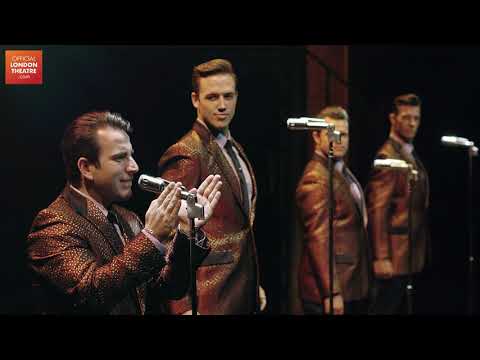
How It Was Made
The musical’s book is by Marshall Brickman and Rick Elice, with songs by The Four Seasons writing team (music Bob Gaudio, lyrics Bob Crewe). According to Playbill, the cast album released on Rhino was produced by Gaudio and recorded to reflect the show’s dramaturgy rather than the singles’ full lengths. As per IBDB and production credits, Ron Melrose handled music supervision/vocal & dance arrangements and Steve Orich provided orchestrations; Des McAnuff directed the original Broadway production and Sergio Trujillo choreographed.
Reception & Quotes
The show was a commercial phenomenon with long Broadway and West End runs and multiple awards. The cast album became a steady catalog seller, riding the stage success.
“A model of the [jukebox] genre.” New York Magazine
“The music is terrific; the story…bland.” The Guardian
“The book is clunky… the structure [is] a ‘VH1 Behind the Music’ model.” Variety
“Still hits all the high notes.” The Guardian (revival)
Per AllMusic and trade coverage, the album’s endurance owes to tight arrangements and the show’s narrative momentum, not just nostalgia.
Additional Info
- Release: Nov 1, 2005 (CD/digital); later digital reissues include bonus material in some regions.
- Chart/Certifications: Entered the Billboard 200; later certified Platinum in the U.S.; also certified in Australia.
- The 2014 film spawned a hybrid soundtrack mixing original Four Seasons masters with new cast recordings.
- The opener quotes Yannick’s French hit “Ces soirées-là,” itself adapted from “December, 1963.”
- Major creative team constants (direction, choreography, music supervision/orchestrations) carried across productions, helping sonic continuity.
Technical Info
- Title: Jersey Boys: Original Broadway Cast Recording
- Year / Type: 2005 • Cast Recording (Stage Musical)
- Core Credits: Music by Bob Gaudio; Lyrics by Bob Crewe; Book by Marshall Brickman & Rick Elice
- Music Team: Music Supervision/Vocal & Dance Arrangements — Ron Melrose; Orchestrations — Steve Orich
- Director/Choreo (stage): Des McAnuff • Sergio Trujillo
- Label: Rhino Entertainment (catalog commonly listed as R2 73271)
- Release context: Previews began Oct 4, 2005; Broadway opening Nov 6, 2005 (August Wilson Theatre)
- Awards: Grammy Award, Best Musical Show Album
- Selected notable placements (album cuts): “Sherry”; “Big Girls Don’t Cry”; “Walk Like a Man”; “December, 1963”; “My Eyes Adored You”; “Can’t Take My Eyes Off You”; “Who Loves You”
- Availability: Widely streaming (Apple Music/Spotify); CD in multiple regions
Canonical Entities & Relations
| Subject | Relation | Object |
|---|---|---|
| Des McAnuff | directed | Jersey Boys (original Broadway production) |
| Sergio Trujillo | choreographed | Jersey Boys (original Broadway production) |
| Ron Melrose | music supervised / vocal & dance arranged | Jersey Boys (stage) |
| Steve Orich | orchestrated | Jersey Boys (stage & album) |
| Bob Gaudio | produced | Jersey Boys: Original Broadway Cast Recording |
| Bob Gaudio & Bob Crewe | wrote | Core Four Seasons songs featured in show |
| Rhino Entertainment | released | Jersey Boys: Original Broadway Cast Recording |
| La Jolla Playhouse | premiered tryout | Jersey Boys (2004) |
| August Wilson Theatre | hosted Broadway opening | Jersey Boys (Nov 6, 2005) |
| John Lloyd Young | starred as | Frankie Valli (OBC) |
Sources: Playbill; IBDB; AllMusic; Discogs; RIAA; Wikipedia (album/musical); Variety; The Guardian; New York Magazine; Time Out.
November, 12th 2025
A-Z Lyrics Universe
Cynthia Erivo Popular
Ariana Grande Horsepower
Post Malone Ain't No Love in Oklahoma
Luke Combs Good Riddance (Time of Your Life)
Green Day Bye Bye Bye
*NSYNC You're the One That I Wan
John Travolta & Olivia Newton-John I Always Wanted a Brother
Braelyn Rankins, Theo Somolu, Kelvin Harrison Jr. and Aaron Pierre The Power of Love
Frankie Goes to Hollywood Beyond
Auli’i Cravalho feat. Rachel House MORE ›