
"Jersey Boys Movie" Soundtrack Lyrics
Movie • 2014
Track Listing
Jersey Boys
Frankie Valli & The Four Seasons
Frankie Valli
John Lloyd Young
John Lloyd Young, Frankie Valli & The Four Seasons
John Lloyd Young
Erich Bergen
John Lloyd Young
John Lloyd Young
John Lloyd Young
Kyli Rae
John Lloyd Young
John Lloyd Young
John Lloyd Young
Frankie Valli & The Four Seasons, John Lloyd Young, Ryan Malloy
John Lloyd Young
Frankie Valli & The Four Seasons, John Lloyd Young
John Lloyd Young
John Lloyd Young
Frankie Valli
Valli & The Four Seasons, John Lloyd Young
John Lloyd Young, Erich Bergen, Michael Lomenda, Vincent Piazza
Frankie Valli & The Four Seasons
Frankie Valli & The Four Seasons
Frankie Valli & The Four Seasons
"Jersey Boys (Music from the Motion Picture and Broadway Musical)" – Album Guide to Tracks and Key Scenes
Overview
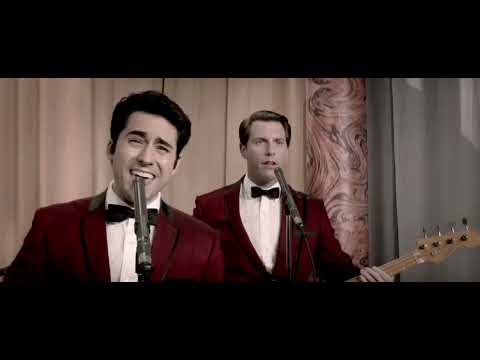
How do you film a jukebox musical without breaking its spell? Clint Eastwood’s Jersey Boys leans on live-on-set vocals and brass-forward arrangements so performances feel like scenes, not cutaways. The movie plays its hits where they “happen”—clubs, radio booths, TV stages—so the soundtrack functions as dramatized history rather than a greatest-hits dump.
The companion album—released by Rhino in June 2014—splices three sources into one through-line: original Frankie Valli & The Four Seasons masters, fresh film-cast performances, and a few cuts from the 2005 Broadway cast disc (according to label materials). That hybrid approach mirrors the film’s structure: four narrators, four “seasons,” one catalog. The result is a timeline you can hum.

Questions & Answers
- Is there an official 2014 soundtrack?
- Yes. Jersey Boys (Music from the Motion Picture and Broadway Musical) was issued by Rhino; it mixes Four Seasons originals with film-cast and Broadway-cast tracks.
- Were vocals recorded live during filming?
- Yes. Eastwood shot many numbers with live singing and band to keep seamless transitions between dialogue and performance (as reported by trade coverage).
- Who handled the film’s music direction on the production side?
- Ron Melrose is credited as music supervisor; orchestrations were handled by Ashley Irwin and Steven Orich on the film.
- What’s the end-credits number everyone remembers?
- A street-party curtain call: “Sherry” rolls into a full-cast “December, 1963 (Oh, What a Night)” reprise.
- Does the album chart well for a catalog-driven film?
- Yes. It reached top-15 on the Billboard 200 and #2 on U.S. Soundtrack Albums.
- Is “Can’t Take My Eyes Off You” staged as a reveal?
- Yes—Detroit’s Roostertail, brass revealed mid-song; the film treats it like a breakthrough moment.
Notes & Trivia
- The album producer is Four Seasons architect Bob Gaudio; the disc combines 1960s masters with new cast recordings.
- Chart run: Billboard 200 peak #15; U.S. Soundtrack Albums peak #2; strong UK soundtrack chart showing.
- Live vocals on set were a creative rule, not an exception, to preserve continuity between talk and song.
- The movie opens with an instrumental tease of “December, 1963” and saves the full vocal blast for the finale dance.
- John Lloyd Young (original Broadway Frankie) reprises his role on screen; several key numbers use his film vocals.
Genres & Themes
Doo-wop/early rock = streetlight brotherhood and survival instincts; block-chords and bass lines as scaffolding. Brill Building pop = professional polish—tight hooks, radio logic, producer-as-character. Showband brass = success made visible; horns equal legitimacy, cash flow, and scale. Torch ballads signal the personal costs stacked beneath public wins.
Because the film keeps songs mostly diegetic (clubs, TV, studios), each needle-drop doubles as plot: a demo becomes a phone pitch, a radio spin equals liftoff, a nightclub reveal cements legitimacy.
Tracks & Scenes
Note: time marks are approximate viewing points in the 134-minute feature.
“(Who Wears) Short Shorts” — The Royal Teens
Scene: Early-days montage of Bob Gaudio’s pre-Seasons success plays like a résumé in motion; posters, jukebox chatter. {~00:07:00; background; diegetic via radio/ambient}
Why it matters: Seeds Gaudio’s credibility before he meets the others.
“Silhouettes” — Frankie Valli
Scene: Street-corner harmonies under sodium light; a trio tests blend and ambition. {~00:10:00; diegetic}
Why it matters: Establishes doo-wop grammar and the story’s ground floor.
“You’re the Apple of My Eye” / “I Can’t Give You Anything but Love” — Variety Trio & Frankie Valli
Scene: Lounge set and after-hours crooning, small rooms and big hopes. {~00:13:00; diegetic}
Why it matters: Shows repertoire before a sound or brand exists.
“My Mother’s Eyes” — Frankie Valli
Scene: Gyp DeCarlo hears Frankie’s tone in a hushed room; respect clicks into place. {~00:18:00; diegetic}
Why it matters: Mob patronage reframed as musical mentorship.
“Cry for Me” — Bob, Frankie, Tommy, Nick
Scene: Apartment tryout; parts lock one by one, the chord stack blooms. {~00:25:00; diegetic}
Why it matters: The band forms on a harmony, not a handshake.
“Sherry” — The Four Seasons
Scene: Phone demo to producer Bob Crewe; cut to studio/radio reaction as the thing takes flight. {~00:47:00; diegetic → montage}
Why it matters: The ignition key; a hit made in motion.
“Big Girls Don’t Cry” — The Four Seasons
Scene: “Eureka” naming gag leads to a brisk TV/stage montage. {~00:53:00; diegetic}
Why it matters: Momentum track—hook and myth arrive in the same breath.
“Walk Like a Man” — The Four Seasons
Scene: Tour/fame carousel; choreo tightens as money pressure mounts. {~00:58:00; diegetic}
Why it matters: Tough posture masking fragile books.
“My Boyfriend’s Back” — The Angels
Scene: Bill-sharing era; backstage bustle and billings flash by. {~01:01:00; diegetic (on bill)}
Why it matters: Places the group in its 60s pop ecosystem.
“My Eyes Adored You” — Frankie Valli
Scene: Domestic fracture rendered with restraint; spotlight feels colder. {~01:22:00; diegetic performance/underscore}
Why it matters: Private cost of public grind.
“Dawn (Go Away)” — The Four Seasons
Scene: British Invasion pressure; perky brass vs. creeping dread. {~01:28:00; diegetic}
Why it matters: Sound of optimism fighting the market.
“Working My Way Back to You” — The Four Seasons
Scene: Rebuild montage; new lineups, old hustle. {~01:33:00; diegetic}
Why it matters: Apology-as-mission-statement.
“Opus 17 (Don’t You Worry ’Bout Me)” — Frankie Valli & The New Seasons
Scene: Transition era; suits change, so does the mix. {~01:39:00; diegetic}
Why it matters: The catalog survives the cast.
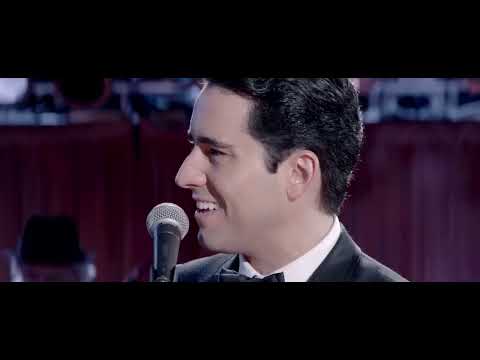
“Can’t Take My Eyes Off You” — Frankie Valli
Scene: Detroit’s Roostertail club. Verse simmers, curtain pulls, horns blaze; the room stands. {~01:47:00; diegetic performance}
Why it matters: Legitimacy, revealed by brass—an earned showstopper.
“Rag Doll” — The Four Seasons
Scene: Late-act victory lap snapshots; the band finally looks like the posters. {~01:54:00; diegetic}
Why it matters: Success reframed as work you can dance to.
“Who Loves You” — The Four Seasons
Scene: Curtain-call energy builds; reconciliations feel possible. {~01:58:00; diegetic}
Why it matters: Communal chorus before the film’s last wink.
“Sherry” → “December, 1963 (Oh, What a Night)” — Full Cast
Scene: End-credits street dance; even departed characters return for one joyous number. {~02:12:00; diegetic/stylized}
Why it matters: Cinema borrows theatre’s bow and sends you out grinning.
Also heard (background/source): “Stay”; “Bye Bye Baby”; “I Still Care”; “Trance.”
Music–Story Links
“Cry for Me” is the origin scene disguised as rehearsal: the harmony arrives before the fame. “Sherry” functions as propulsion—phone-to-radio-to-charts in a single breath. “My Eyes Adored You” drops the spotlight on fallout: the ballad scores absences the crowd never sees. And when the Roostertail brass slams open during “Can’t Take My Eyes Off You,” the movie declares Frankie’s solo credibility in one visual gag—curtain up, career unlocked.
By the finale, the street-dance reprise collapses timelines: band, neighborhood, and myth occupy the same frame. It’s theatre’s curtain call translated into cinema’s endorphin hit.
How It Was Made
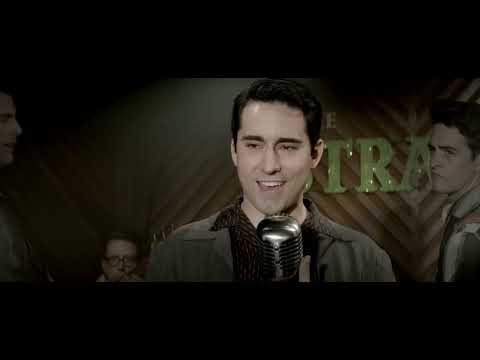
Live takes: Eastwood pursued live vocals and band on set to keep performance scenes porous with dialogue—no obvious pre-record lip-sync (as reported by The Hollywood Reporter and union tech journals). Music department microphoned each singer/instrument individually, then mixed for venue realism.
Music team: Music supervision by Ron Melrose; film orchestrations by Ashley Irwin and Steven Orich; album production by Bob Gaudio. The soundtrack deliberately blends original masters with film/Broadway vocals to follow the narrative (as per label notes).
Reception & Quotes
“The music is sharp and glorious.” Time
“The music sounds great and can still get a toe tapping.” Vanity Fair
“‘Can’t Take My Eyes Off You’… a mold-breaker… brass reveal… the crowd stands.” The New Yorker
Critical notes often split the difference: musical moments praised; narrative pacing questioned. The album, meanwhile, found a sizable audience on release.
Additional Info
- Album: Jersey Boys (Music from the Motion Picture and Broadway Musical), Rhino, June 2014; ~61 minutes, 25 tracks.
- Makeup of album: Four Seasons originals + film-cast performances + Broadway OBC cuts.
- Chart notes: Billboard 200 #15; U.S. Soundtrack Albums #2; UK Soundtrack Top 5.
- Production choice: many vocals recorded live on set; venue acoustics modeled in post.
- Finale: full-cast street medley “Sherry” → “December, 1963.”
- Key scene venue: Roostertail (Detroit) for “Can’t Take My Eyes Off You.”
- Timestamps above are approximate based on public scene logs and official clips.
Technical Info
- Title: Jersey Boys (Music from the Motion Picture and Broadway Musical)
- Year: 2014
- Type: Film soundtrack (hybrid: masters + cast + OBC)
- Director (film): Clint Eastwood
- Music by (film credit): Bob Gaudio
- Music Supervision (film): Ron Melrose
- Orchestrations (film): Ashley Irwin; Steven Orich
- Label / Producer (album): Rhino Entertainment / Bob Gaudio
- Selected notable placements: “Sherry”; “Big Girls Don’t Cry”; “Walk Like a Man”; “My Eyes Adored You”; “Can’t Take My Eyes Off You”; “Who Loves You”
Canonical Entities & Relations
| Subject | Relation | Object |
|---|---|---|
| Clint Eastwood | directed | Jersey Boys (2014 film) |
| Bob Gaudio | produced | 2014 soundtrack album |
| Bob Gaudio | composed/produced songs of | The Four Seasons |
| Ron Melrose | music-supervised | Jersey Boys (film) |
| Ashley Irwin | orchestrated | Jersey Boys (film) |
| Steven Orich | orchestrated | Jersey Boys (film) |
| Rhino Entertainment | released | 2014 soundtrack |
| Warner Bros. Pictures | distributed | Jersey Boys (film) |
| John Lloyd Young | performed as | Frankie Valli (film cast) |
| Erich Bergen | performed as | Bob Gaudio (film cast) |
| Michael Lomenda | performed as | Nick Massi (film cast) |
| Vincent Piazza | performed as | Tommy DeVito (film cast) |
| Christopher Walken | performed as | Gyp DeCarlo (film cast) |
| Roostertail (Detroit) | hosted scene | “Can’t Take My Eyes Off You” reveal (film) |
Sources: Rhino press notes; Wikipedia (film/soundtrack); Apple Music; Discogs; The Hollywood Reporter; The New Yorker; The Numbers; IMDb Soundtracks; official film clips/playlist.
Christopher Walken is a biggest star here. He acts a dude who is well familiar with life, who produces the young talents. The latter are The Four Seasons band, unknown at that time. A band, whose main feature was extremely high voice of soloist. They performed in such genres as pop, Boogie Woogie and rock'n'roll. Most of the songs in the collection are of the first genre. The best-known works are Walk Like A Man and Sherry. The vast majority of melodies sang here by John Lloyd Young, who portrayed in the film the singer of a band. Clint Eastwood has produced and directed the film. The latter has better succeed in life in the role of producer and director than as an actor. The film has collected not very modest, but not an awesome cash box – USD 67 million, against a budget of USD 40 M. at production & marketing. This band also was named in the reality as Jersey Boys, and was renamed for many times. During its existence (and the band still exists!), 27 people participated in it (besides those 5 who are there at the present time). It has a rich history about which another film can be shot or a book written. More you may learn from Wiki. We just say that the film shows the period of the band’s popularity gaining, and the time they released several big hits. Now, a band lives with performances of hits of old days and ownership of rights to the songs. The film also does not show that a band changed its name 8 times in the period 1960 – 2015. Now a band has only one member from the original composition left – Frankie Valli. Beggin' by Madcon we like better. However, the original is not bad also. The film is dedicated to music lovers, and especially ones of creativity of the band “The Four Seasons”. They will be thrilled. Who cares of not so very accurate historical facts in the motion picture?November, 12th 2025
More about Jersey Boys Movie: IMDb, WikipediaA-Z Lyrics Universe
Cynthia Erivo Popular
Ariana Grande Horsepower
Post Malone Ain't No Love in Oklahoma
Luke Combs Good Riddance (Time of Your Life)
Green Day Bye Bye Bye
*NSYNC You're the One That I Wan
John Travolta & Olivia Newton-John I Always Wanted a Brother
Braelyn Rankins, Theo Somolu, Kelvin Harrison Jr. and Aaron Pierre The Power of Love
Frankie Goes to Hollywood Beyond
Auli’i Cravalho feat. Rachel House MORE ›