
"Jesus" Soundtrack Lyrics
TV • 2000
Track Listing
LeAnn Rimes
98 Degrees
Hootie & the Blowfish
Edwin McCain
Sarah Brightman
dc Talk
Patrick Williams
Michael English
Avalon
Jaci Velasquez
Yolanda Adams
Lonestar
Steven Curtis Chapman
"Jesus: Music From & Inspired by the Epic Mini-Series" – Album Guide to Tracks and Key Scenes
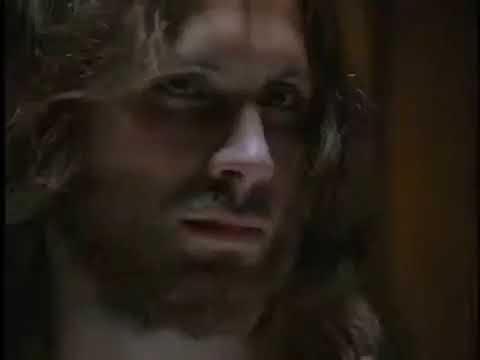
Overview
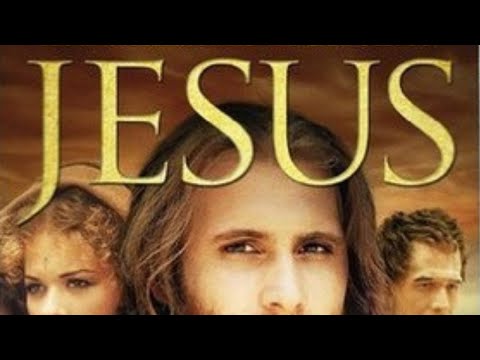
How do you score a life told—and retold—for 2,000 years? This 1999–2000 television miniseries answers with a two-part release strategy: a song compilation fronted by a contemporary single and a separate orchestral score. The compilation, Jesus: Music From & Inspired by the Epic Mini-Series (2000), pairs radio-ready cuts with one theme from the show; the score album (Jesus: The Epic Mini-Series — Original Score) delivers the dramatic backbone.
The broadcast (U.S. air dates in May 2000) leans on Patrick Williams’s orchestral writing—strings in long arcs, measured brass for authority, and focused percussion for crisis. Around it, a pop/CCM tie-in (“I Need You”) powered marketing and radio. According to AllMusic and retailer notes, the score shipped late March 2000 on Angel Records, while the companion song disc arrived earlier in March via the Sparrow/Capitol family.
Questions & Answers
- What’s the “official” album for the TV event?
- A compilation—Jesus: Music From & Inspired by the Epic Mini-Series—plus a separate Patrick Williams score album. They were marketed together but serve different purposes.
- Was “I Need You” actually in the miniseries?
- It functioned mainly as the lead promotional single and theme for the tie-in album; the dramatic scenes rely on Williams’s score.
- Who composed the screen score?
- Patrick Williams. The score album includes set-piece cues (“Walking on Water,” “Gethsemane,” “The Crucifixion”).
- Why is Sarah Brightman’s “Pie Jesu” here?
- It appears on the score album and is credited in the production; the sacred text aligns with Passion/Resurrection sequences.
- When did the U.S. broadcast air?
- Two nights in May 2000; the project had first aired in Italy in December 1999.
- Is the soundtrack mostly diegetic or non-diegetic?
- Non-diegetic. The miniseries uses score to shape tone; songs were largely for album/promo.
Notes & Trivia
- Two official discs exist: a pop/CCM compilation and a dedicated orchestral score.
- LeAnn Rimes’s “I Need You” peaked at #11 on the U.S. Hot 100 and doubled as the project’s radio hook.
- “Pie Jesu” (Andrew Lloyd Webber) is featured alongside Williams’s cues—rare crossover of a modern sacred hit into a TV score program.
- Filming took place in Morocco and Malta; the broadcast cut in the U.S. runs roughly 174 minutes without commercials.
- The portrayal of Satan as a contemporary man aligns with tense, darker scoring in the “Satan” cue.
Genres & Themes
Orchestral drama (strings + brass) = gravity for teachings, trials, and public scenes; choral/sacred color = Passion and Resurrection; lyrical woodwinds = intimacy (family, discipleship).
Pop/CCM tie-ins provide outreach and radio presence; they are album-led rather than scene-led—marketing voice, not narrative underscore. As per the album notes and label listings, the two releases were timed around the U.S. airing to serve both aims.
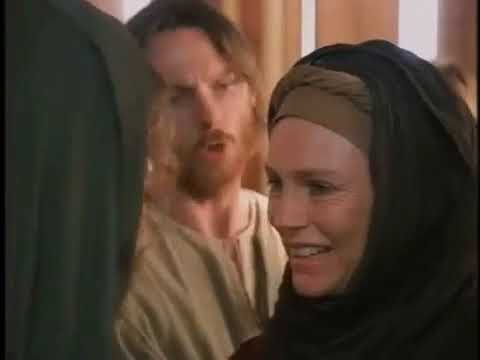
Tracks & Scenes
“Main Titles” — Patrick Williams
Where it plays: Opening credits. Non-diegetic; expansive strings establish scope and a noble, stepwise theme.
Why it matters: States the melodic DNA the score returns to at major turns.
“Walking on Water” — Patrick Williams
Where it plays: Miracle sequence at sea; rippling figures under sustained string lines; non-diegetic.
Why it matters: A calm, luminous color for faith over fear; the cue broadens the canvas without bombast.
“Raising Lazarus” — Patrick Williams
Where it plays: Bethany resurrection scene; hushed strings → restrained swell; non-diegetic.
Why it matters: Holds to understatement—grief to relief in one controlled arc.
“Satan” — Patrick Williams
Where it plays: Temptation/vision passages with Satan depicted in modern attire; darker harmony, low brass, and tremolo strings; non-diegetic.
Why it matters: Marks the film’s sharpest stylistic turn—moral peril without resorting to horror tropes.
“The Last Supper” — Patrick Williams
Where it plays: Upper room; strings with interior clarinet/oboe writing; non-diegetic.
Why it matters: Gives dialogue room to breathe while holding ritual gravity.
“Gethsemane” — Patrick Williams
Where it plays: Garden prayer/arrest; harmonic suspensions, soft percussion; non-diegetic.
Why it matters: Suspense without noise—restraint fits the text.
“The Crucifixion” — Patrick Williams
Where it plays: Golgotha; measured pacing, tolling harmonies; non-diegetic.
Why it matters: The score’s dramatic apex; weight without melodrama.
“Jesus Has Risen” — Patrick Williams
Where it plays: Resurrection; theme returns opened up; non-diegetic.
Why it matters: Melodic resolution—same theme, new light.
“Pie Jesu” — Sarah Brightman (Andrew Lloyd Webber)
Where it plays: Featured on the score album and credited in the production; heard as a sacred insert around Passion/ending contexts; non-diegetic.
Why it matters: A liturgical lens dropped into a screen score; text matches subject and moment.
“I Need You” — LeAnn Rimes
Where it plays: Lead single and broadcast promotion; not a story cue in the dramatic acts; non-diegetic in marketing contexts.
Why it matters: Gave the TV project contemporary radio reach and a chart presence.
Album-only tie-ins (heard on the compilation rather than in scenes): “Spirit in the Sky” (dc Talk), “Shining Star” (Yolanda Adams), and other pop/CCM cuts that carry the project’s outreach tone.
Music–Story Links
Williams keeps miracles transparent: strings and woodwinds carry awe without swamping dialogue. Public pressure scenes (Pilate, crowd turns) shade brass lower and tighten rhythm. Satan’s sequences switch harmony first, not volume, to keep the moral threat inside the frame rather than outside it.
The pop single sits beside the picture rather than in it. Per label materials, that choice let the miniseries keep a classical dramatic voice while the album worked the airwaves.
How It Was Made
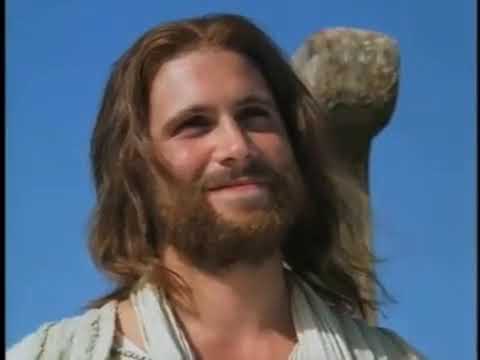
Composer & program: Patrick Williams composed, conducted, and produced the underscore. The score album (Angel Records) sequences the film’s set pieces in narrative order, including “Gethsemane,” “The Crucifixion,” and “Jesus Has Risen.”
Song compilation: The companion disc gathers a Williams theme plus contemporary artists; “I Need You” led radio and promotion. According to the project’s pages and album listings, the two releases bracketed the U.S. broadcast window.
Reception & Quotes
“Buy it… if you’re nostalgic for the sweeping, epic style.” Filmtracks (Patrick Williams review)
“Deliberate… to steer clear of grandiose pretensions.” Cross Rhythms (album review)
“This schlock-deluxe ballad finds Rimes in full-diva mode.” Entertainment Weekly on “I Need You”
“Release Date: March 28, 2000… Angel Records.” AllMusic (score listing)
Additional Info
- U.S. TV air dates: May 14–15, 2000; initial Italy broadcast: December 5–6, 1999.
- Score album label/catalog: Angel Records, 56984; ship date late March 2000.
- Compilation label credits: Sparrow/Capitol; release early March 2000.
- “I Need You” radio impact mid-March 2000; U.S. retail single July 2000.
- Runtime of miniseries (no ads): ~174 minutes.
- Filming locations include Morocco and Malta.
Technical Info
- Title: Jesus: Music From & Inspired by the Epic Mini-Series (compilation)
- Year: 2000
- Type: Compilation (plus separate Original Score album)
- Composer (score): Patrick Williams
- Key featured artists (compilation): LeAnn Rimes, dc Talk, Sarah Brightman, Yolanda Adams, 98 Degrees
- Labels: Sparrow/Capitol (compilation); Angel Records (score)
- Selected notable placements: “Walking on Water”; “Raising Lazarus”; “The Last Supper”; “Gethsemane”; “The Crucifixion”; “Pie Jesu” (featured)
- Release context: Albums timed to U.S. broadcast (May 2000); songs drove promotion, score anchors the narrative
Canonical Entities & Relations
| Subject | Relation | Object |
|---|---|---|
| Roger Young | directed | Jesus (TV miniseries) |
| Patrick Williams | composed & produced | Jesus (Original Score) |
| Angel Records | released | Jesus — Original Score (2000) |
| Sparrow / Capitol | released | Music From & Inspired by Jesus (2000 compilation) |
| LeAnn Rimes | performed | “I Need You” (lead single) |
| Sarah Brightman | performed | “Pie Jesu” (featured on score program) |
| dc Talk | performed | “Spirit in the Sky” (single B-side; album tie-in) |
| Malta / Morocco | filming locations for | Jesus (miniseries) |
Sources: AllMusic; MovieMusic (catalog/track info); Wikipedia (film & soundtrack); Discogs (release refs); LeAnn Rimes single entry; IMDb credits.
November, 12th 2025
A-Z Lyrics Universe
Cynthia Erivo Popular
Ariana Grande Horsepower
Post Malone Ain't No Love in Oklahoma
Luke Combs Good Riddance (Time of Your Life)
Green Day Bye Bye Bye
*NSYNC You're the One That I Wan
John Travolta & Olivia Newton-John I Always Wanted a Brother
Braelyn Rankins, Theo Somolu, Kelvin Harrison Jr. and Aaron Pierre The Power of Love
Frankie Goes to Hollywood Beyond
Auli’i Cravalho feat. Rachel House MORE ›