
"Jobs" Soundtrack Lyrics
Movie • 2013
Track Listing
John Debney
John Debney
I Barocchisti, Diego Fasolis
John Debney
John Debney
Dylan McDonald & Cassidy Cooper
John Debney
Freddy Monday
John Debney
John Debney
Parish Hall
John Debney
John Debney
REO Speedwagon
John Debney
John Debney
John Debney
John Debney
John Debney
John Debney
John Debney
John Debney
John Debney
John Debney
John Debney
John Debney and Josh Debney
John Debney
Toad The Wet Sprocket
John Debney
John Debney
John Debney
John Debney
John Debney
"JOBS (Original Motion Picture Soundtrack)" – Album Guide to Tracks and Key Scenes
Overview
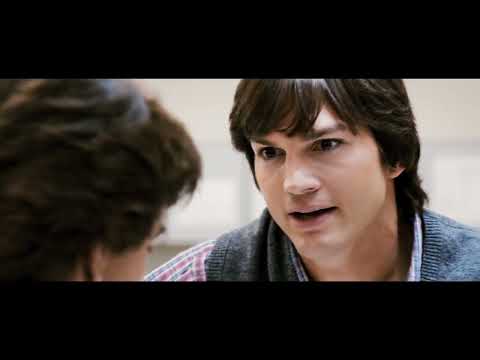
How do you score a biopic that jumps from Reed College barefoot philosophy to IPO swagger to the iPod reveal? JOBS splits duties: John Debney’s score covers the spine of the story while needle-drops flag cultural time stamps — Cat Stevens, Dylan, Joe Walsh, REO Speedwagon, Bach, Chopin. The digital album (Various Artists) runs 33 tracks; the separate La-La Land CD focuses on Debney’s score.
According to Apple Music, the commercial set includes both Debney cues and licensed pieces (e.g., “Brandenburg Concerto No. 3 — Allegro,” “Walk on the Ocean”), while La-La Land’s CD presents a 55-minute score program for collectors. The film’s on-screen placements lean on classic-rock momentum for garage-to-boardroom transitions and on solo piano/strings for reflective beats.
Questions & Answers
- Is there more than one album?
- Yes. A 33-track digital Original Motion Picture Soundtrack (Various Artists) and a separate La-La Land Records CD (Jobs — Original Motion Picture Score) with Debney’s score.
- Who composed the score?
- John Debney. The score album also credits additional music by Josh Debney on select cues.
- What are the headline licensed songs actually heard in the film?
- “Peace Train” (Cat Stevens), “Life’s Been Good” (Joe Walsh), “Roll with the Changes” (REO Speedwagon), “Boots of Spanish Leather” (Bob Dylan), “Walk on the Ocean” (Toad the Wet Sprocket), among others.
- Who handled music supervision?
- Mason Cooper (music supervisor / executive in charge of music); Lola Debney coordinated the score.
- Does the soundtrack include new material from Yusuf / Cat Stevens?
- Yes — “You Can Do (Whatever)” appears in end credits alongside “Peace Train.”
- What’s the film’s U.S. release context?
- Released by Open Road Films on August 16, 2013 after a Sundance (2013) bow; the albums followed in August–September 2013.
Notes & Trivia
- The film used Jobs’ real Los Altos family garage for multiple scenes; authenticity on screen, California-style.
- Vanity Fair noted the first-ever Instagram-specific movie trailer was cut for JOBS — fitting for a tech biopic.
- The score CD (LLLCD 1271) shipped late August 2013; retail date lines up in early September across U.S. shops.
- Some digital listings show “Roll with the Changes (Re:created)” — a fresh master licensed for album consistency.
Genres & Themes
Classic Rock → momentum, scale, bravado. REO Speedwagon and Joe Walsh are used for “we’re taking off” montage energy: garages to show floors, solder smoke to spotlights.
Folk & 60s/70s singer-songwriter → introspection and roots. Cat Stevens and Dylan underline the personal search (Reed, India reveries, late-night note-scribbling).
Baroque & Romantic piano → precision and focus. Bach and Chopin cue obsessive craft — calligraphy to code, aesthetics to execution.
Debney’s orchestral/electronic score → continuity and consequence. Motifs carry the boardroom knives, the exile, the return; modern pads meet thematic strings and brass.
Tracks & Scenes
“Peace Train” — Cat Stevens
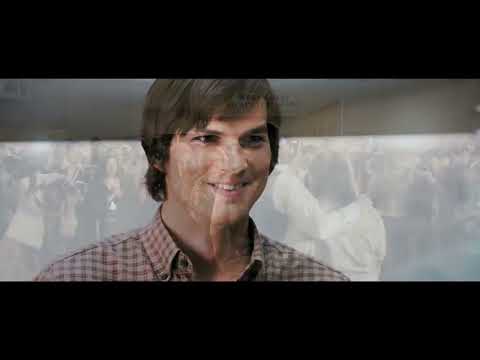
Where it plays: ≈00:04 — morning at Reed; Jobs wakes, drifts across campus, the camera glides with him (non-diegetic).
Why it matters: Frames his idealism before the grind — the optimism he spends the film trying to industrialize.
“Allegro (Brandenburg Concerto No. 3)” — J.S. Bach
Where it plays: ≈00:08 — Jobs bolts into an open field, breath held, mind racing (semi-montage; non-diegetic).
Why it matters: Baroque order versus barefoot chaos; the movie’s thesis in miniature.
“House of the Rising Sun” — The Brymers
Where it plays: After the Homebrew Computer Club presentation; a rumble of attention turns into action (non-diegetic).
Why it matters: Signals the garage-to-company pivot without triumphalism.
“Life’s Been Good” — Joe Walsh
Where it plays: Computer-building sequence; parts stack, orders surge (non-diegetic).
Why it matters: Satiric self-awareness — success can dazzle and distract.
“Silver Ghost” — Parish Hall
Where it plays: Rod Holt arrives on a motorcycle; the team gets a power-supply adult in the room (non-diegetic).
Why it matters: A grit-and-grease cue for the very unglamorous engineering that keeps the dream alive.
“Roll with the Changes” — REO Speedwagon
Where it plays: Post–Apple II introduction; momentum montage (non-diegetic).
Why it matters: Pure velocity — cut like a product reel; the lyric winks at Apple’s iterative ethos.
“Boots of Spanish Leather” — Bob Dylan
Where it plays: ≈1:24 — Jobs alone, making notes before Woz’s resignation news (non-diegetic).
Why it matters: Solitude and cost; folk austerity against Silicon Valley noise.
“Walk on the Ocean” — Toad the Wet Sprocket
Where it plays: ≈1:47 — Jobs with headphones/Walkman; small, human moment amid corporate storms (diegetic).
Why it matters: A 90s cut in a story of 70s-80s rise; time passes, habits don’t.
“You Can Do (Whatever)” — Yusuf / Cat Stevens
Where it plays: First end-credits song (non-diegetic).
Why it matters: A contemporary blessing from the artist who opened the film; circle closed.
“Sacrifice” — The Brymers
Where it plays: End-credits rotation (non-diegetic).
Why it matters: Garage-band DNA bookends the mythmaking.
Score cues — John Debney
Where they play: “Think Different,” “Hey Woz / Dawn of Computers,” “First Deal,” “We Got a Shop / In the Garage,” “The Board Acts / Steve Makes Calls,” “Seven Years Later / Steve Jobs the Gardener,” “Steve’s Theme: Main Title.”
Why they matter: Motifs compress long timelines; electronics add present-tense edge to period frames.
Trailer note: Many trailers and TV spots lean on Debney’s rhythmic cues rather than big pop drops — cleaner editorial control for short-form cuts.
Music–Story Links
- Counterculture to counter-programming: Cat Stevens → Bach pairs youth-movement optimism with strict design thinking — the film keeps toggling that switch.
- Garage myth vs. work: Classic rock powers the montages; Debney handles the meetings, betrayals, and returns — the unshowy beats that actually change trajectories.
- Lonely rooms: Folk ballads and solo piano sit under breaks with friends and family; they soften a portrait otherwise cut in hard angles.
How It Was Made
Score & sessions. John Debney composed; select cues credit additional music by Josh Debney. Engineering credits include Simon Rhodes and Shawn Murphy on the score album. The program is a tight 22-cue presentation designed as a narrative “through-listen.”
Supervision & clearances. Mason Cooper is credited as music supervisor/executive in charge of music; Lola Debney coordinated the score. The licensed slate blends period-correct American rock/folk with emblematic classical works to reflect Jobs’ talk of aesthetics and typography.
Reception & Quotes
“An ambitious but skin-deep portrait of an influential, complex figure.” Rotten Tomatoes – Critics Consensus
“The movie is littered with small details of lore that should make Apple fanatics happy.” The Verge
Album availability remained better than the film’s critical standing; the digital set is easy to find, while the La-La Land score CD became a collector item in some markets.
Additional Info
- Digital OST: 33 tracks, 1h25m; credited to Various Artists (Apple Music listing).
- Score CD: La-La Land Records (LLLCD 1271), c. 55:20 runtime; booklet features composer/director notes.
- End-credits also spin vintage garage rock (“Sacrifice” – The Brymers).
- Yusuf / Cat Stevens confirmed his new song “You Can Do (Whatever)” for the film’s credits.
- Sundance 2013 berth; U.S. release August 16, 2013 (Open Road Films).
Technical Info
- Title: JOBS (Original Motion Picture Soundtrack) — plus Jobs (Original Motion Picture Score)
- Year / Type: 2013 • Film soundtrack (compilation + score)
- Composer: John Debney (additional music: Josh Debney on select cues)
- Music Supervision: Mason Cooper (exec. in charge of music); Score coordination: Lola Debney
- Key placements: “Peace Train”; “Life’s Been Good”; “Roll with the Changes”; “Boots of Spanish Leather”; “Walk on the Ocean”; Bach BWV 1048 Allegro
- Labels: Garage Ingenuity (digital OST); La-La Land Records — LLLCD 1271 (score CD)
- Release context: Sundance 2013; U.S. theatrical Aug 16, 2013; albums Aug–Sep 2013
- Availability: Digital OST widely available; La-La Land CD intermittently OOP in retail
Canonical Entities & Relations
| Subject | Relation | Object |
|---|---|---|
| John Debney | composed | Jobs (2013) score |
| Josh Debney | additional music on | Jobs score (select cues) |
| Mason Cooper | music supervised | Jobs (2013) |
| Lola Debney | coordinated | score production |
| Yusuf / Cat Stevens | performed | “Peace Train”; “You Can Do (Whatever)” |
| Bob Dylan | wrote/performed | “Boots of Spanish Leather” |
| Joe Walsh | performed | “Life’s Been Good” |
| REO Speedwagon | performed | “Roll with the Changes” |
| Toad the Wet Sprocket | performed | “Walk on the Ocean” |
| Garage Ingenuity | released | digital OST |
| La-La Land Records | released | score CD (LLLCD 1271) |
| Open Road Films | distributed | Jobs (U.S.) |
Sources: Apple Music; La-La Land Records; Wikipedia (film & soundtrack section); SoundtrackRadar; Soundtrakd; IMDb (full credits); Vanity Fair; Rotten Tomatoes; The Verge; Open Road Films release list.
November, 12th 2025
'Jobs' is a 2013 American biographical drama film inspired by the life of Steve Jobs. Learn more on Wikipedia and Internet Movie DatabaseA-Z Lyrics Universe
Cynthia Erivo Popular
Ariana Grande Horsepower
Post Malone Ain't No Love in Oklahoma
Luke Combs Good Riddance (Time of Your Life)
Green Day Bye Bye Bye
*NSYNC You're the One That I Wan
John Travolta & Olivia Newton-John I Always Wanted a Brother
Braelyn Rankins, Theo Somolu, Kelvin Harrison Jr. and Aaron Pierre The Power of Love
Frankie Goes to Hollywood Beyond
Auli’i Cravalho feat. Rachel House MORE ›