
"John Carter" Soundtrack Lyrics
Movie • 2012
Track Listing
Michael Giacchino
Michael Giacchino
Michael Giacchino
Michael Giacchino
Michael Giacchino
Michael Giacchino
Michael Giacchino
Michael Giacchino
Michael Giacchino
Michael Giacchino
Michael Giacchino
Michael Giacchino
Michael Giacchino
Michael Giacchino
Michael Giacchino
Michael Giacchino
Michael Giacchino
Michael Giacchino
Michael Giacchino
"John Carter (Original Motion Picture Soundtrack)" – Album Guide to Tracks and Key Scenes
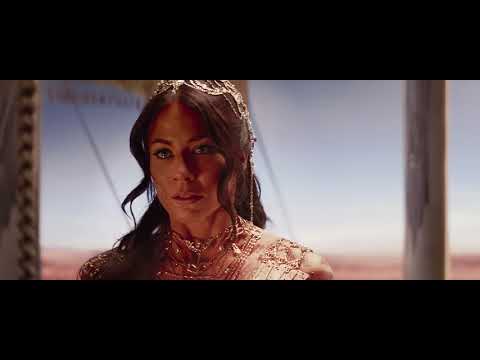
Overview
How do you make red-dust swordfights and ten-legged steeds feel mythic instead of pulpy? Michael Giacchino answers with a big, thematic orchestral score that treats Barsoom like a classic adventure realm. The album plays as a full narrative arc—overture, trials, love theme, and a long end-credits suite that ties it all together.
The soundtrack (Walt Disney Records, 2012) is purely score—no needle drops in the film itself—so character, culture, and action all come from leitmotifs. A bold Carter theme carries the heroism; a more mystical color (low brass, chorus, modal strings) shades the Therns; and a lyrical line warms scenes with Dejah Thoris. The record runs ~74 minutes across 19 cues and is recorded with a large orchestra at Sony’s scoring stage.

Questions & Answers
- Is this a song-driven soundtrack?
- No. The film uses original score only; the album is Michael Giacchino’s orchestral music.
- What’s the standout theme?
- The “John Carter” main theme—noble brass melody with sweeping counters—heard fully in the end-credits suite.
- Does any licensed song appear in marketing?
- Yes. A trailer used “Kings and Queens” by Thirty Seconds to Mars; it’s not in the film or on the score album.
- Where was the score recorded?
- At the Sony Scoring Stage in Culver City with the Hollywood Studio Symphony.
- Who conducted and who mixed?
- Tim Simonec conducted; veteran engineer Dan Wallin recorded and mixed.
- How does the music treat the White Ape arena?
- With propulsive ostinati and hammering brass; the album cue title nods to the sequence.
- Does the album have alternate editions?
- No major expanded official release—standard digital/physical editions from Disney are the common versions.
Notes & Trivia
- Giacchino’s cue titles are full of puns (“Get Carter,” “Thernabout,” “The Blue Light Special”).
- The end credits form a mini-suite—great single-seat listen even outside the film.
- Tim Simonec, Giacchino’s long-time collaborator, handled conducting and co-orchestrations.
- Recording employed veteran mixer Dan Wallin, whose film credits stretch back to the 1950s.
- The movie’s marketing used rock in trailers, but the feature itself stayed all-score.
Genres & Themes
Large-scale symphonic adventure → old-school heroism, clean melodic identity, and clear geography of action. Brass fanfares = Carter’s resolve; low strings and choir = ancient Barsoomian mystique.
Romantic orchestral lyricism → Carter & Dejah’s bond; woodwinds and strings soften the film’s harsher politics with human stakes.
Rhythmic action writing → ostinati, syncopated percussion, and mixed meters underscore arena trials and war sequences without drowning dialogue.
Tracks & Scenes
"A Thern for the Worse" — Michael Giacchino
Scene: Opening movements and early Barsoom reveals. The cue functions like an overture, setting up the Therns’ eerie presence and Carter’s reluctant trajectory. Non-diegetic. {OST: starts at 0:00; length ~7:38}.
Why it matters: Establishes the mystery color (low brass/chorus), so later reveals feel fated rather than random.
"Carter They Come, Carter They Fall" — Michael Giacchino
Scene: Carter’s early scrapes and shifting alliances with Tars Tarkas. Music ducks under banter, then swells as stakes rise. Non-diegetic. {OST: 0:00; ~3:55}.
Why it matters: Fuses the hero theme with Thark textures—unity through conflict.
"The Second Biggest Apes I’ve Seen This Month" — Michael Giacchino
Scene: The gladiatorial White Ape sequence—sand, chains, and a crowd baying for blood. Ostinati and brass hits pace the cat-and-mouse before full release into chaotic struggle. Non-diegetic. {OST: 0:00; ~2:35}.
Why it matters: One of the album’s cleanest action set-pieces; the cue title winks at the spectacle while the writing keeps tension precise.
"The Prize Is Barsoom" — Michael Giacchino
Scene: Late-film mobilization and the turn toward open war. The Carter theme broadens; harmony brightens as alliances lock. Non-diegetic. {OST: 0:00; ~4:29}.
Why it matters: Transitional writing—pre-battle grandeur without blowing the emotional fuse too early.
"The Fight for Helium" — Michael Giacchino
Scene: The climactic battle and airborne duels over the city. Cross-rhythms in percussion with searing brass statements punctuate reversals. Non-diegetic. {OST: 0:00; ~4:22}.
Why it matters: Pays off motives introduced across the album; big but still thematic.
"John Carter of Mars" — Michael Giacchino
Scene: End-credits suite. Presents the main theme in its grandest, most singable form, then cycles through love theme and Thern colors. Non-diegetic. {OST: 0:00; ~8:53}.
Why it matters: Ideal “one-track sampler” of the score’s identity.
Trailer/Marketing — "Kings and Queens" — Thirty Seconds to Mars
Where it plays: Featured in a piece of marketing (trailer), not in the feature cut. {Trailer use; length varies}.
Why it matters: Shows how marketing framed the film with modern rock while the movie itself stayed symphonic.
Music–Story Links
When Carter confronts ritual violence in the arena, the score strips melody and leans on rhythm; the effect is animal, unsentimental—his morality emerges through action rather than speeches. During Carter–Dejah scenes, the theme opens its intervals and thins orchestration so dialogue breathes; the music argues they’re partners first, lovers second. And when Zodanga threatens Helium, harmonic clarity returns—Giacchino signals agency: Carter chooses purpose over exile.
How It Was Made
The music was composed by Michael Giacchino and recorded with the Hollywood Studio Symphony at the Sony Scoring Stage. Tim Simonec conducted and contributed orchestration; Dan Wallin handled recording and mix engineering. Andrea Datzman and others assisted with orchestrations and coordination. According to Movie Music UK’s production notes, the album was produced by Giacchino himself, reflecting his usual hands-on approach.
Reception & Quotes
Contemporary score outlets highlighted the thematic clarity and old-fashioned sweep. Filmtracks noted the robust leitmotif design and presentation. Later write-ups have kept the album in circulation for fans of big symphonic fantasy.
“An enormous action epic, filled with large orchestral flourishes and memorable themes.” Movie Music UK
“Leitmotifs are clearly drawn; end-credits suite is the keeper.” Filmtracks
“The love theme simmers; finales deliver thunder without losing lyricism.” Zanobard Reviews
Availability: the standard Disney album remains the primary release; no official expanded edition has superseded it.
Additional Info
- Album length ~73:56–74:15 depending on edition metadata.
- Cue titles often telegraph scene function—useful for quick scene recall.
- Choir contracting by Bobbi Page; large brass and low choir color the Thern material.
- The score was recorded and mixed by Dan Wallin, one of Hollywood’s most experienced engineers.
- Marketing cuts leaned on contemporary rock to broaden appeal, contrasting with the film’s all-orchestral identity.
- The finale pair (“The Prize Is Barsoom” → “The Fight for Helium”) functions as a through-composed battle diptych.
- The end-credits track is a compact concert suite of the major themes.
Technical Info
- Title: John Carter (Original Motion Picture Soundtrack)
- Year: 2012
- Type: Film score (album)
- Composer: Michael Giacchino
- Conducting/Orchestrations: Tim Simonec (with additional orchestrators)
- Recording/Mix: Dan Wallin
- Studio: Sony Scoring Stage, Culver City
- Label: Walt Disney Records
- Runtime: ~74 minutes (19 cues)
- Notable placements (album cues): White Ape arena (action cue), Helium battle (finale diptych), end-credits suite
- Release context: Film opened March 2012; album released the same week
- Availability: Digital and CD widely available; no official expanded edition
Canonical Entities & Relations
| Subject | Relation | Object |
|---|---|---|
| Michael Giacchino | composed | John Carter (Original Motion Picture Soundtrack) |
| Tim Simonec | conducted / orchestrated | John Carter recording sessions |
| Dan Wallin | recorded & mixed | John Carter score |
| Walt Disney Records | released | John Carter soundtrack album |
| Sony Scoring Stage | hosted recording of | John Carter score sessions |
| Andrew Stanton | directed | John Carter (film) |
| Hollywood Studio Symphony | performed | John Carter score |
Sources: Wikipedia (album & film entries); Apple Music; Spotify; Filmtracks; Movie Music UK; ScoringSessions; Discogs; YouTube official trailers/clips; Ringostrack (trailer cue).
November, 12th 2025
'John Carter' on the Web: Internet Movie Database, WikipediaA-Z Lyrics Universe
Cynthia Erivo Popular
Ariana Grande Horsepower
Post Malone Ain't No Love in Oklahoma
Luke Combs Good Riddance (Time of Your Life)
Green Day Bye Bye Bye
*NSYNC You're the One That I Wan
John Travolta & Olivia Newton-John I Always Wanted a Brother
Braelyn Rankins, Theo Somolu, Kelvin Harrison Jr. and Aaron Pierre The Power of Love
Frankie Goes to Hollywood Beyond
Auli’i Cravalho feat. Rachel House MORE ›