
"John Tucker Must Die" Soundtrack Lyrics
Movie • 2006
Track Listing
The All-American Rejects
Cartel
Stefy
Rock Kills Kid
People In Planes
Motion City Soundtrack
Quiet Drive
Stefy
Ok Go
Nada Surf
Ben Lee
Josh Kelley
Caesars
Rockett Queen
"John Carter (Original Motion Picture Soundtrack)" – Album Guide to Tracks and Key Scenes
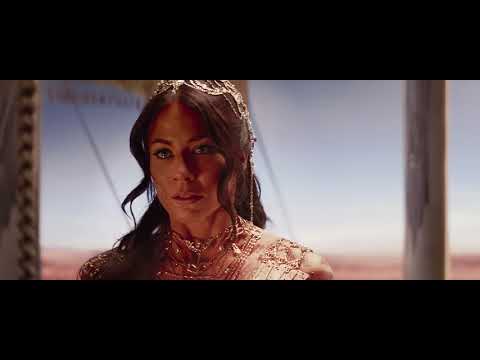
Overview
What happens when a pulp swashbuckler lands in a modern studio with a full symphonic arsenal? Michael Giacchino writes a widescreen, melody-first score that treats Barsoom like a classic adventure realm—chorus for the mystics, brass for the warlords, strings for a bruised romantic. The album runs ~74 minutes and arrived via Walt Disney Records in early March 2012, days before the U.S. release.
According to Walt Disney’s release notes and major catalogs, it’s a 19-cue program built around a bold Carter theme, choral color for the Therns, and set-piece cues (“The Prize Is Barsoom,” “The Fight for Helium”) that bundle motifs into muscular finales. As the New Yorker profile on Andrew Stanton noted, temp ideas leaned choral/near-Middle-Eastern for Mars and more humanistic writing for Carter—the final score absorbs that intent but speaks in Giacchino’s own voice.

Questions & Answers
- Is this mostly score or a mix of songs and score?
- Mostly score. The film uses Giacchino’s orchestral/choral writing almost exclusively; notable pre-release trailers used separate licensed music.
- Who composed and produced the album?
- Michael Giacchino composed and produced; Tim Simonec conducted/orchestrated portions; the album was issued by Walt Disney Records.
- Was the trailer song on the album?
- No. A teaser famously used Peter Gabriel’s cover of “My Body Is a Cage” (Arcade Fire); that track is not on the official OST.
- Where was the score recorded?
- At the Sony Scoring Stage (Culver City), a go-to for large orchestra/choir recordings.
- How long is the album and when did it street?
- ~74 minutes; street date March 6, 2012 (U.S.).
- What themes should I listen for first?
- Carter’s noble main theme (horns/strings), Dejah’s lyrical line, the Thern choral sonority, and a militaristic Zodanga motif.
Notes & Trivia
- Track titles are Giacchino’s trademark puns (“Thark Side of Barsoom,” “Thernabout”).
- The closing suite “John Carter of Mars” functions like an end-credits overture of all major motifs.
- The CD was sold as a standard Disney release; some listings called the pressing “limited,” with no run size confirmed.
- The movie is dedicated to Steve Jobs; several reviews singled out the score as a standout craft element.
Genres & Themes
Symphonic adventure: big-band brass statements for heroism; string countermelodies for romance and resolve.
Choral color (wordless/ethereal): frames Therns/mysticism; adds antiquity rather than liturgy.
Rhythmic action writing: tightly voiced low-brass ostinatos with martial percussion for Zodanga and arena combat.
Americana tint: early “Earth” passages carry western inflections—then give way to Martian harmonies as identity shifts.
Tracks & Scenes
“A Thern for the Worse” — Michael Giacchino
Scene: Opening prologue and early movements of the Therns’ plot on Barsoom; ominous low strings/choir set the stakes. Non-diegetic; early reel; album 7:39.
Why it matters: Plants the choral “otherness” that shadows the whole narrative.
“Get Carter” — Michael Giacchino
Scene: Arizona pursuit and Carter’s introduction before the cave encounter; western-flavored action variant of the main theme. Non-diegetic; early reel; album 4:25.
Why it matters: Establishes his nobility and restlessness—earthbound, not yet “of Mars.”
“Gravity of the Situation” — Michael Giacchino
Scene: Carter’s first attempts to walk/jump in low gravity; comic-nimble orchestration mirrors Bambi-legs chaos. Non-diegetic; early Barsoom; album 1:20.
Why it matters: The motif literalizes the body learning a new world.
“Thark Side of Barsoom” — Michael Giacchino
Scene: Among the Tharks; Dejah’s line peeks through as cultures collide. Non-diegetic; early-mid film; album 2:56.
Why it matters: Begins to braid Carter/Dejah material with Thark colors.
“The Second Biggest Apes I’ve Seen This Month” — Michael Giacchino
Scene: White-Ape arena battle; pounding percussion, shrill winds, frantic brass. Non-diegetic; mid-film set-piece; album 2:36.
Why it matters: Peak action writing; Giacchino’s percussion engine sells the scale.
“The Right of Challenge” — Michael Giacchino
Scene: Thark ritual duel sequence; assertive brass and rhythmic jabs. Non-diegetic; mid-film; album 2:23.
Why it matters: Ceremonial stakes meet personal honor—music makes it feel mythic.
“The Blue Light Special” — Michael Giacchino
Scene: Thern technology reveal/teleportation energy; luminous harmony and choir. Non-diegetic; mid-late; album 4:13.
Why it matters: The score’s quasi-religious sonority signals cosmic manipulation.
“The Prize Is Barsoom” — Michael Giacchino
Scene: Infiltration toward the Helium wedding and looming takeover; motifs collide (Thark chant vs. Zodanga brass). Non-diegetic; late film; album 4:29.
Why it matters: Thematic counterpoint dramatizes warring plans without dialogue.
“The Fight for Helium” — Michael Giacchino
Scene: Airship assault and ground battle crescendo into liberation. Non-diegetic; late film; album 4:34.
Why it matters: Big-canvas action tethered to the Carter theme for catharsis.
“John Carter of Mars” — Michael Giacchino
Scene: End-credits suite that reprises main/romance/Thern materials with choir. Non-diegetic; end credits; album 8:55.
Why it matters: A summation cue—identity accepted, title earned.
Trailer spotlight (not on OST): “My Body Is a Cage” — Peter Gabriel
Where used: Teaser/online spots pre-release; external to the film. Diegesis: promotional only.
Why it matters: Set early expectations—somber, mythic tone—before the film’s symphonic language took over.
Music–Story Links
Carter’s main theme starts earthy and alone, then climbs into chorale-tinted heroism as he commits to Helium and Dejah. The Thern choral sonority marks manipulation from the margins; when it swells late, the score warns that victories have overseers. Zodanga’s angular brass and percussion grind through siege scenes; when Thark chant pushes against it in “The Prize Is Barsoom,” the music stages the political coalition forming on screen. Dejah’s line—often strings first, then fuller winds—keeps the romance grounded amid spectacle.
How It Was Made
Score recorded at the Sony Scoring Stage with large orchestra and choir; Tim Simonec conducted and contributed orchestrations alongside Andrea Datzman, Peter Boyer, Mark Gasbarro, Ira Hearshen, Norman Ludwin, and Cameron Patrick. Veteran engineer Dan Wallin recorded/mixed; Stephen M. Davis served as music editor. As per the New Yorker’s production profile, Stanton’s temp ideas (Perfume for Therns; Syriana for opening timbre) gave Giacchino guideposts that he re-voiced into a unified palette.
Reception & Quotes
While the film’s reception was mixed, the score drew consistent praise in score-centric outlets and fan discussions.
“Large-scale fantasy scoring with strong main themes and significant action set pieces.” — Movie Music UK
“A pleasure to hear… shamelessly melodic and massively orchestral.” — Filmtracks
“Stanton wanted ‘bold musical statements’—Giacchino delivered an old-fashioned orchestral grandeur.” — summary of contemporary reviews
Additional Info
- Album formats: CD and digital; streaming available via major platforms.
- Cue naming mirrors plot beats (“Sab Than Pursues the Princess,” “The Right of Challenge”).
- The end-credits presentation includes sketches/ephemera montage while the suite plays.
- Press at the time previewed selections on radio/online ahead of release.
- Trailers rotated across several official cuts; the Disney UK “Trailer B” became widely shared.
Technical Info
- Title: John Carter (Original Motion Picture Soundtrack)
- Year / Type: 2012 • Original score album
- Composer/Producer: Michael Giacchino
- Conducting/Orchestrations: Tim Simonec (cond./orch.); additional orchestrations by A. Datzman, P. Boyer, M. Gasbarro, I. Hearshen, N. Ludwin, C. Patrick
- Recording/Mixing: Dan Wallin • Music Editor: Stephen M. Davis
- Studio: Sony Scoring Stage (Culver City)
- Label: Walt Disney Records • Street date: March 6, 2012 • Length: ~74 minutes
- Selected on-screen placements: “Get Carter” (Arizona prologue); “The Second Biggest Apes…” (White-Ape arena); “The Prize Is Barsoom” & “The Fight for Helium” (finale); “John Carter of Mars” (end credits)
- Trailer music (not on OST): Peter Gabriel — “My Body Is a Cage” (cover of Arcade Fire)
Canonical Entities & Relations
| Subject | Relation | Object |
|---|---|---|
| Michael Giacchino | composed | John Carter (2012) score |
| Tim Simonec | conducted / orchestrated | John Carter (score recording) |
| Dan Wallin | recorded & mixed | John Carter (score album) |
| Stephen M. Davis | edited music | John Carter (film) |
| Walt Disney Records | released | John Carter (Original Motion Picture Soundtrack) |
| Sony Scoring Stage | hosted recording | John Carter sessions |
| Andrew Stanton | directed | John Carter (film) |
| Peter Gabriel — “My Body Is a Cage” | used in | teaser/marketing (not in OST) |
Sources: Walt Disney Records listings; MusicBrainz; Discogs; Filmtracks; Movie Music UK; Film Music Reporter; SoundWorks Collection; Wikipedia (film & soundtrack); Adtunes forum (trailer song); Spotify/Apple Music album pages.
November, 12th 2025
A-Z Lyrics Universe
Cynthia Erivo Popular
Ariana Grande Horsepower
Post Malone Ain't No Love in Oklahoma
Luke Combs Good Riddance (Time of Your Life)
Green Day Bye Bye Bye
*NSYNC You're the One That I Wan
John Travolta & Olivia Newton-John I Always Wanted a Brother
Braelyn Rankins, Theo Somolu, Kelvin Harrison Jr. and Aaron Pierre The Power of Love
Frankie Goes to Hollywood Beyond
Auli’i Cravalho feat. Rachel House MORE ›