
"Joy" Soundtrack Lyrics
Movie • 2015
Track Listing
Cream
Edgar Ramirez
Lee Morgan
Ella Fitzgerald
Thomas Bullard
Salzburg Bach Choir/Alois Glasser
Edgar Ramirez
Jennifer Lawrence
Bee Gees
The Ronettes
The Rolling Stones
Nat King Cole
Brittany Howard
"Joy (Music From the Motion Picture)" – Album Guide to Tracks and Key Scenes
Overview
How do you score a scrappy American dream without sanding off the edges? Joy does it with a two-lane approach: a needle-drop album heavy on 1960s–70s catalog and cast performances, and a spare original score that keeps to the ribs. The commercial set—Joy (Music From the Motion Picture)—leans into Cream, the Bee Gees, The Ronettes, The Rolling Stones, Nat King Cole, and several in-character vocals (Jennifer Lawrence and Édgar Ramírez). The score, credited to West Dylan Thordson and David Campbell, supplies intimate motifs (“Joy Theme,” “I Am in Love,” “Mop Drawing”).
Music supervision (Susan Jacobs) threads era pop through domestic grind, courtroom tension, and late-night TV triumph. According to the label release, the album carries 21 tracks, opening with Cream’s “I Feel Free,” folding in on-screen duets like “Something Stupid,” and closing with Brittany Howard’s cover of “I Feel Free.”

Questions & Answers
- Who composed the score?
- West Dylan Thordson and David Campbell.
- Who handled music supervision?
- Susan Jacobs.
- Is there an official soundtrack album?
- Yes—ABKCO released Joy (Music From the Motion Picture), a 21-track compilation that mixes catalog cuts, cast vocals, and short score cues.
- Do the actors sing on the album?
- Yes. Édgar Ramírez performs “Águas de Março” and “Mama Told Me Not to Come,” and duets with Jennifer Lawrence on “Something Stupid.”
- Which versions of “I Feel Free” are used?
- Cream’s original appears; Brittany Howard contributes a cover that caps the album.
- Any jazz or seasonal tracks?
- Yes—Lee Morgan’s “The Sidewinder” and The Ronettes’ “Sleigh Ride,” among others.
Notes & Trivia
- ABKCO’s tracklist includes Cream, Bee Gees, The Ronettes, The Rolling Stones, and multiple short score cues alongside cast vocals.
- Lawrence and Ramírez sing “Something Stupid,” a wink to the Frank & Nancy Sinatra hit; Ramírez also handles Portuguese on “Águas de Março.”
- Brittany Howard (Alabama Shakes) contributes a closing “I Feel Free” cover; some editions tag it as a bonus track.
- Lee Morgan’s “The Sidewinder” injects hard-bop strut into early hustle scenes.
- Score authorship in credits: music by West Dylan Thordson & David Campbell.
Genres & Themes
Sixties/Seventies pop & rock → agency and momentum; “I Feel Free,” “To Love Somebody,” “Stray Cat Blues” push against family static.
Latin & jazz colors → charm and elan; “Águas de Março” (in-character) and “The Sidewinder” grease montage gears.
Chamber-leaning score → strings and small ensemble cues track Joy’s inner math: design → risk → resolve.
Tracks & Scenes
"I Feel Free" — Cream
Where it plays: Early stakes-setting over Joy’s split-screen hustle—ideas, bills, kids’ chaos; the guitar riff slices through clutter. Non-diegetic. {opening passages}.
Why it matters: Her thesis in three words; the album opens on it for a reason.
"Sleigh Ride" — The Ronettes
Where it plays: Holiday-season montage as family obligations collide with prototype tinkering; shorthand for cheerful pressure. Non-diegetic. {early}.
Why it matters: Sparkle up top so the later grind lands harder.
"The Sidewinder" — Lee Morgan
Where it plays: Quick-cut errands and phone-tree wrangling; brass hits line up with jump cuts. Non-diegetic. {early-mid}.
Why it matters: Hard-bop swagger sells competence long before success.
"Águas de Março" — Édgar Ramírez
Where it plays: Warm domestic interlude; Tony (Ramírez) sings with a small Latin combo, melody circling like a pep talk. Diegetic performance. {early}.
Why it matters: Humanizes an ex who still roots for her; also foreshadows later in-character songs.
"Mama Told Me Not to Come" — Édgar Ramírez, Ray de la Paz & The Pedrito Martinez Band
Where it plays: Lounge-set gag where charm papers over worry; band punches the joke. Diegetic. {mid}.
Why it matters: Comic relief that doubles as character signal—Tony’s dreams are stubborn.
"Something Stupid" — Jennifer Lawrence & Édgar Ramírez
Where it plays: Two-hander duet, intimate camera; the lyric reads as both apology and history. Diegetic performance. {mid-late}.
Why it matters: A rare quiet room in a loud story; the album’s emotional centerpiece.
"To Love Somebody" — Bee Gees
Where it plays: Setback → second wind; Joy recalibrates as strings and Barry’s vocal ache ride the cut. Non-diegetic. {late-mid}.
Why it matters: Vulnerability without pity—fits the film’s stubborn tone.
"Stray Cat Blues" — The Rolling Stones
Where it plays: Legal/power chess—ink, contracts, and a stare-down. Non-diegetic. {late}.
Why it matters: Dark edge arrives exactly when she needs it.
"A House With Love In It" — Nat King Cole
Where it plays: Epilogue grace note—home, kids, work finally align. Non-diegetic. {late}.
Why it matters: Old-school tenderness as earned payoff.
"Joy Theme" — Score (West Dylan Thordson & David Campbell)
Where it plays: Design-table scenes, patent panic, and the drive to QVC; small ensemble, steady pulse. Non-diegetic. {throughout}.
Why it matters: The film’s spine—keeps perspective when the jukebox gets flashy.
"I Feel Free" — Brittany Howard
Where it plays: Album closer; credits atmosphere tilts from grit to glow. Non-diegetic. {end}.
Why it matters: Contemporary voice reframes the classic as Joy’s victory lap.
Music–Story Links
Catalog singles mark public-facing moves—media, QVC, contracts—while the score hugs private calculus: prototypes, debts, signatures. When songs go diegetic (Tony’s sets, the “Something Stupid” duet), the story pauses to show why this family hangs together at all. It’s not sentimentality; it’s oxygen between fights.
How It Was Made
ABKCO’s release documents the full compilation, including cast vocals tracked for the film. Susan Jacobs (longtime collaborator on David O. Russell projects) supervised clearances and placements. The score cues by West Dylan Thordson and David Campbell are interleaved on album, functioning as connective tissue between the needle-drops.
Reception & Quotes
While reviews of the film were mixed, coverage consistently singled out the song choices and the charm of the in-character performances.
“Cast performances sit alongside Cream, the Stones, and the Bee Gees—an album that plays like Joy’s jukebox.” album roundups
“Music supervisor Susan Jacobs threads classics through domestic chaos and late-night TV euphoria.” industry notes
Additional Info
- Album label: ABKCO Music & Records; 21 tracks (~32 minutes on Apple listings due to many short cues).
- Trailer campaigns prominently used catalog rock; official trailer IDs appear below.
- Score cues on album (selection): “Joy Romantic Theme,” “I Am in Love,” “Mop Drawing,” “Racing in the Street,” “Texas,” “Markham,” “Joy Theme.”
- Other featured artists on album: Ella Fitzgerald with Chick Webb, Choir of King’s College (seasonal choral), Salzburg Bach Choir.
Technical Info
- Title: Joy (Music From the Motion Picture)
- Year: 2015
- Type: Various-artists compilation + embedded score cues
- Composers (score): West Dylan Thordson; David Campbell
- Music Supervision: Susan Jacobs
- Label: ABKCO Music & Records
- Notable placements: “I Feel Free” (Cream); “Águas de Março” (Édgar Ramírez); “Something Stupid” (Jennifer Lawrence & Édgar Ramírez); “To Love Somebody” (Bee Gees); “Sleigh Ride” (The Ronettes); “Stray Cat Blues” (The Rolling Stones); score motifs throughout
- Trailer Video ID (YouTube): uR-2TiQVY-k
Canonical Entities & Relations
| Subject | Relation | Object |
|---|---|---|
| West Dylan Thordson | composed | Joy (score cues) |
| David Campbell | composed / arranged | Joy (score cues) |
| ABKCO Music & Records | released | Joy (Music From the Motion Picture) |
| Susan Jacobs | music supervised | Joy (film) |
| Jennifer Lawrence & Édgar Ramírez | performed | “Something Stupid” (on album/in film) |
| Cream / Brittany Howard | performed | “I Feel Free” (opening classic / closing cover) |
| David O. Russell | directed | Joy (2015) |
Sources: ABKCO’s official album page/tracklist; Filmmusicreporter soundtrack announcement; Spotify/Apple listings; IMDb soundtrack credits; Wikipedia credits for composers; press notes on Susan Jacobs’ supervision; official trailer upload.
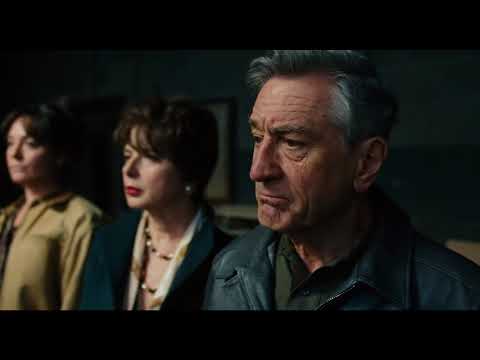
Jennifer Lawrence performs here one song, Something Stupid, and some other actors, who act here along with her, also sing, but not all. For example, Edgar Ramirez sang a couple – Mama Told Me Not to Come and Aguas de Marzo. Along with them, this movie possesses such great personalities as Robert De Niro & Isabella Rossellini. But what is even more interesting – Bradley Cooper is also here, who has starred with her in the movie named Serena. Whether they are simply a good duo or whether they are very accustomed to each other, engender in each other something more than just cooperation or friendship? We can’t say yet, but time will reveal – is it just filming or something more…
It seems that Jennifer Lawrence stars in half of today’s films. She has been spotted, in addition to the franchise that made her famous (Hunger Games), in X-Men (where she played Mystique), and now she goes into drama, where she portrays strong personalities. She is no stranger to playing strong women, exactly the same as she did in Hunger Games, where she led a team of people to change the world, so everyone would be free from their cells. Here she depicts the same personality – in spite of the environment, which told her in her very childhood that she would have a simple, boring life as a housewife, she proves to everyone that she is worth more & can achieve much bigger. In contrast to public opinion, which even her parents did not share, she succeeded in building a business better than many men.
We must note how much Isabella Rossellini has aged. Though she is now much younger than 80+, as she talked about herself in the “Death Becomes Her” & even younger than being artificially aged in the “Immortal Beloved”. But she passed the point when she was the subject of men’s dreams.
November, 12th 2025
A-Z Lyrics Universe
Cynthia Erivo Popular
Ariana Grande Horsepower
Post Malone Ain't No Love in Oklahoma
Luke Combs Good Riddance (Time of Your Life)
Green Day Bye Bye Bye
*NSYNC You're the One That I Wan
John Travolta & Olivia Newton-John I Always Wanted a Brother
Braelyn Rankins, Theo Somolu, Kelvin Harrison Jr. and Aaron Pierre The Power of Love
Frankie Goes to Hollywood Beyond
Auli’i Cravalho feat. Rachel House MORE ›