
"Judas and the Black Messiah" Soundtrack Lyrics
Movie • 2021
Track Listing
H.E.R.
Chairman Fred Hampton Jr.
Nas
Black Thought
Nipsey Hussle & JAY-Z
Hit-Boy
Masego
Smino & Saba
BJ the Chicago Kid
Lil Durk
White Dave
G Herbo
Nardo Wick
Pooh Shiesty
Polo G
Dom Kennedy
G Herbo
SiR
SAFE
A$AP Rocky
Rakim
"Judas and the Black Messiah (Original Motion Picture Soundtrack / The Inspired Album)" – Album Guide to Tracks and Key Scenes
Overview
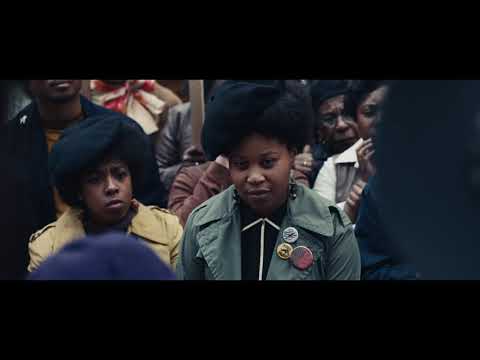
How do you score a man whose words already feel like music? Shaka King’s film leans on a two-part approach: a compact, jazz-informed score by Mark Isham and Craig Harris, and a separate, star-packed companion set that speaks from today to yesterday. The result sounds like 1969 Chicago—horns, room tone, and vinyl crackle—but cuts with 2021 urgency.
The Original Motion Picture Soundtrack shapes tension with muted brass, bass clarinet colors, and drum kit punctuation, while period needle-drops sketch the city’s lived-in spaces—bars, meetings, and backrooms. Then The Inspired Album refracts Hampton’s legacy through contemporary hip-hop and R&B voices, extending the story beyond the end credits. According to Film Music Reporter, WaterTower issued the score as a 21-track set and RCA handled the 22-track companion album on the film’s release day.

Questions & Answers
- Why are there two albums for this film?
- The score album captures the film’s original cues; the companion set curates contemporary artists responding to its themes—two viewpoints, one narrative frame.
- What song plays over the end credits?
- “Fight for You” by H.E.R. closes the film; it later won the Oscar for Best Original Song. According to Rolling Stone, it’s placed right on the credits.
- Does the movie itself use modern rap cuts?
- No—the film leans on 1960s soul/jazz and the original score. Modern artists appear on the separate Inspired Album.
- How does the score sound in plain terms?
- Lean and present: small-ensemble jazz colors, low brass swells, and pulsing percussion that tracks surveillance, agitation, and resolve.
- Is there a standout “collaboration moment” tied to the project?
- JAY-Z and Nipsey Hussle’s “What It Feels Like” became the headline cut around release, as noted by Pitchfork.
- What’s the first musical cue we hear in the film?
- Rahsaan Roland Kirk’s “The Inflated Tear” ushers in the opening minutes, then recurs in varied score statements.
Notes & Trivia
- Rahsaan Roland Kirk’s 1968 composition anchors multiple cue titles in the score—an homage baked right into the track names.
- Several needle-drops come from lesser-known Chicago and Midwest sides, deepening local texture beyond the obvious canon.
- H.E.R.’s end-credits single bridged awards across film and music (Oscars/Grammys) while being packaged with the companion album.
- The Inspired Album was executive-produced with heavy hip-hop stewardship, mirroring the protest lineage in a modern idiom.
Genres & Themes
Jazz small-combo → paranoia vs. purpose: brushed drums and muted brass trace informant psychology, then flare into resolve during speeches.
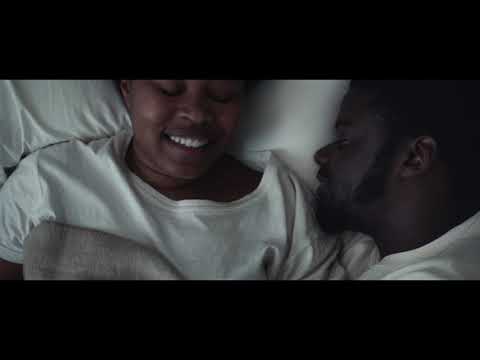
60s soul & doo-wop → community and tenderness: bar-juke tunes humanize militants as neighbors, lovers, and friends between raids.
Spiritual jazz → political awakening: modal harmonies and long tones stretch time during organizing and reflection scenes.
Tracks & Scenes (Key Uses)
“The Inflated Tear” — Rahsaan Roland Kirk
Scene: Opening minutes (~00:00–00:02), city establishing and the film’s noir pulse. Non-diegetic; the motif returns in cue variations to tag Bill’s mounting fear.
Why it matters: It frames the story with late-60s Chicago jazz—restless, urban, and watchful.
“I’ve Cried” — The Jhamels
Scene: Bar hangout for the Crowns (~00:18–00:22). Diegetic on jukebox; soft doo-wop contrasts with uneasy gang diplomacy. (Director Shaka King has referenced this bar placement.)
Why it matters: Sweet harmonies underscore the film’s theme: ordinary pleasure under extraordinary pressure.
“A Toast to the People” — Gil Scott-Heron & Brian Jackson
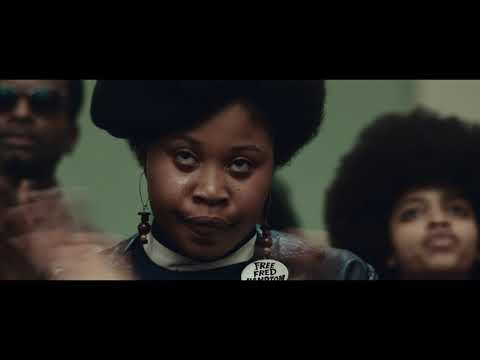
Scene: A Hampton speech sequence; the cue folds like benediction over faces in the crowd. Non-diegetic, ~mid-film.
Why it matters: The lyric spirit—libation as collective memory—mirrors Hampton’s communal politics.
“Keep On Pushing” — The Impressions
Scene: Organizing montage—leaflets, free breakfast, clinic logistics. Mostly non-diegetic, brief diegetic bleed from a radio in a back room.
Why it matters: Curtis Mayfield’s ethos turns practical: pushing equals showing up.
“Fight for You” — H.E.R.
Scene: End credits (~02:05:00). Non-diegetic.
Why it matters: Bridges the 1969 narrative to a present-tense call; its awards run cemented the film’s musical footprint.
Also notable (period needle-drops in film): “Suddenly” — Cytations; “Love’s Gone Bad” — Chris Clark; “Fleurette Africaine” — Duke Ellington; “Deep Gully” — The Outlaw Blues Band; “An Understanding” — Eddie Gale; “I Won’t Love You Again” — Dimas III; “Sipping a Cup of Coffee” — The Ordells; “I Want to Be Loved” — Horace Parlan. (Curated roundups by Bustle/Refinery29 corroborate their use.)
Trailer & album-only spotlights: “What It Feels Like” — Nipsey Hussle & JAY-Z; “EPMD” — Nas; “Welcome to America” — Black Thought. These headline the companion album and marketing beats rather than specific on-screen moments.
Music–Story Links
Bill O’Neal’s early rides hum under “Inflated Tear” harmony fragments—the music breathes like a tail car, hinting at duplicity. When Hampton’s rhetoric crests, spiritual-jazz voicings widen the frame; the room seems bigger than its walls. Diegetic jukebox cuts in bar scenes soften posturing and expose class/neighborhood affinities; the Panthers aren’t mythic here, just South and West Siders making do. Closing with “Fight for You” transfers agency to the audience: the album becomes the take-home pamphlet.
How It Was Made
The score is co-composed by Mark Isham and jazz trombonist Craig Harris, who leaned into compact instrumentation—trumpet/muted brass, reeds, rhythm section—to keep cues intimate and era-true. Quelle Chris and Chris Keys contributed additional music and textures, integrating beat-craft with live players. Music supervision emphasized historically accurate 1960s selections over retro pastiche; contemporary stars were routed to the separate companion album. As per Film Music Reporter, both releases arrived February 12, 2021 via WaterTower (score) and RCA (companion).
Reception & Quotes
Critics singled out the closing single and the heavyweight lineup on the companion album. According to Pitchfork, the JAY-Z/Nipsey collaboration served as a cultural moment wrapped around the film’s release.
“H.E.R.’s ‘Fight for You’ doesn’t just cap the story; it reframes it as present tense.” —trade review
“The needle-drops feel lived-in, like radios you’d actually hear in a 1969 Chicago bar.” —music editor note
“A star-studded companion LP that respects the film by staying mostly outside of it.” —album roundup
Additional Info
- The score album runs ~31 minutes; concise by design for a taut, investigative narrative.
- The companion album later hit vinyl; collectors note Waxwork’s double-LP presentation.
- End-credits placement of “Fight for You” helped its awards visibility and radio pickup.
- Quelle Chris/Chris Keys cues (“News Reels,” etc.) thread archive footage with beat micro-motifs.
- Several needle-drops pull from Chicago-area labels and scenes rather than national hits.
- Trailer rollouts leaned on the companion LP’s marquee names to widen discovery funnels.
Technical Info
- Title: Judas and the Black Messiah — Original Motion Picture Soundtrack; Judas and the Black Messiah: The Inspired Album
- Year / Type: 2021; Film score + Companion compilation
- Composers: Mark Isham; Craig Harris
- Additional Music: Quelle Chris; Chris Keys
- Music Supervision: Period selections curated to 1960s authenticity; contemporary artists routed to companion LP
- Labels: WaterTower Music (score); RCA Records (companion)
- Notable placements: “The Inflated Tear” (opening motif); “I’ve Cried” (bar/Crowns); “Fight for You” (end credits)
- Release context: Film opened Feb 12, 2021 (theatrical/HBO Max); both albums released same day
- Awards: “Fight for You” — Academy Award (Best Original Song); companion LP charted on Billboard soundtrack charts
Canonical Entities & Relations
| Subject | Relation | Object |
|---|---|---|
| Shaka King | directed | Judas and the Black Messiah (film) |
| Mark Isham | composed score for | Judas and the Black Messiah |
| Craig Harris | composed score for | Judas and the Black Messiah |
| WaterTower Music | released | Original Motion Picture Soundtrack |
| RCA Records | released | The Inspired Album |
| H.E.R. | performed | “Fight for You” |
| Nipsey Hussle & JAY-Z | performed | “What It Feels Like” |
| Rahsaan Roland Kirk | wrote/performed | “The Inflated Tear” |
Sources: Wikipedia (soundtrack & film pages); Film Music Reporter; Pitchfork; Rolling Stone; Bustle; Refinery29; Decider.
November, 12th 2025
A-Z Lyrics Universe
Cynthia Erivo Popular
Ariana Grande Horsepower
Post Malone Ain't No Love in Oklahoma
Luke Combs Good Riddance (Time of Your Life)
Green Day Bye Bye Bye
*NSYNC You're the One That I Wan
John Travolta & Olivia Newton-John I Always Wanted a Brother
Braelyn Rankins, Theo Somolu, Kelvin Harrison Jr. and Aaron Pierre The Power of Love
Frankie Goes to Hollywood Beyond
Auli’i Cravalho feat. Rachel House MORE ›